
Orchestrate AI insights into action

Trending
Categories
Air Europa Adds Airbus A350 to Its Long-Haul Fleet Despite Boeing 787 Preference
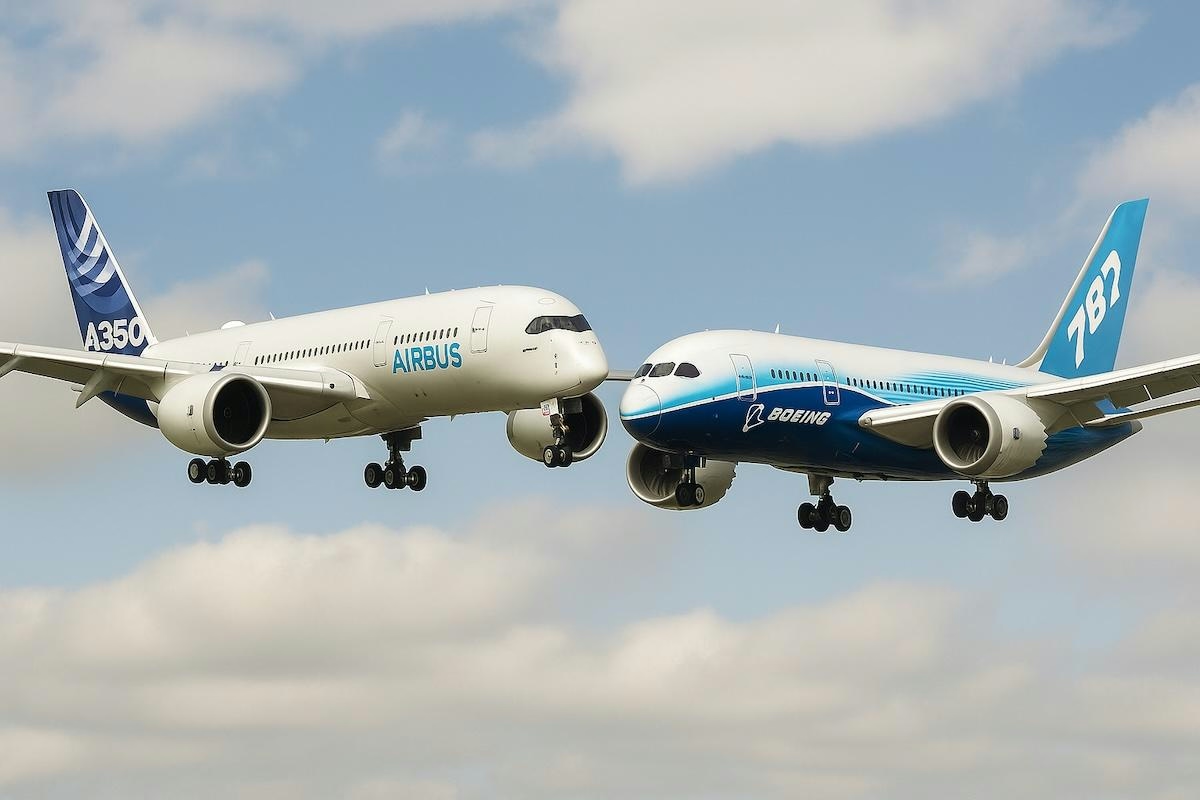
Air Europa Embraces Airbus A350, Signaling Shift from Boeing 787 Fleet
Spanish airline Air Europa has taken a significant step in reshaping its long-haul fleet by signing a Memorandum of Understanding (MoU) with Airbus for up to 40 A350-900 aircraft. Announced at the Dubai Airshow, this agreement marks a departure from the airline’s longstanding reliance on Boeing widebodies, which currently include 10 Boeing 787-8s and 18 787-9s. Although the order remains provisional, with firm commitments and delivery schedules yet to be confirmed, the decision to incorporate the Airbus A350 into its fleet has drawn considerable attention within the aviation industry.
Strategic Implications and Operational Considerations
Air Europa President Juan Jose Hidalgo described the acquisition of the A350-900 as a “strategic milestone,” emphasizing the aircraft’s potential to transform service to key Latin American destinations. He highlighted the A350’s superior cabin experience alongside its operational efficiency and economic advantages, which the airline views as essential for expanding its network without compromising service quality. The choice of the A350-900, rather than the more cost-effective and readily available A330-900neo, underscores Air Europa’s ambition to extend its reach and enhance operational flexibility through an aircraft with longer range and advanced fuel efficiency.
However, the introduction of Airbus aircraft into a previously all-Boeing widebody fleet presents notable integration and operational challenges. Managing a mixed-manufacturer fleet will require adjustments in maintenance, training, and logistics, potentially affecting short-term efficiency. Market analysts have speculated on the motivations behind this shift, with some suggesting it could influence investor confidence. The move also coincides with a period of fleet reassessment among European carriers, while Turkish Airlines—now holding a 20% stake in Air Europa—may revisit its strategic approach in light of this development.
Market Context and Future Prospects
Air Europa’s position within the European aviation landscape remains complex. Earlier plans for acquisition by International Airlines Group (IAG), the parent company of British Airways and Iberia, were abandoned due to regulatory challenges. The recent minority investment by Turkish Airlines adds further complexity, fueling speculation about potential consolidation in the sector. The provisional agreement for up to 40 A350-900s aligns with a broader industry trend toward fleet diversification aimed at enhancing operational resilience and flexibility.
As Air Europa embarks on this significant transition, industry observers will closely monitor how the airline manages the integration of the Airbus A350 alongside its existing Boeing Dreamliners. Questions persist regarding whether this move signals a broader growth strategy or a tactical response to evolving market dynamics. Further details are anticipated once the order is finalized, offering greater clarity on the airline’s long-term fleet and network plans.

Etihad Airways Suspends Airbus A380 Flights on Key Route

Aditya Birla Group Seeks Approval for Aircraft Leasing in GIFT City

Qatar Airways Highlights Innovation and Connectivity at Arabian Travel Market 2026

Hong Kong's Five-Year Plan Includes Andrew Fan's Aircraft Parts Processing Hub Proposal

ACIA Aero Leasing Delivers ATR72-600 to Air Nostrum

RTX Appoints Jill Albertelli as Head of Pratt & Whitney

TAT Technologies Joins Beyond Aero Hydrogen Aircraft Program

AURAK Study Highlights Barriers to Air Taxi Adoption in Emerging Economies

Xiamen Air Selects Altitude for 787 Maintenance at Heathrow

Etihad and Swissport Extend Global Partnership
