
Orchestrate AI insights into action

Trending
Categories
Air India Completes Fuel Switch Inspection, Finds No Issues
Air India Completes Fuel Switch Inspection, Finds No Issues
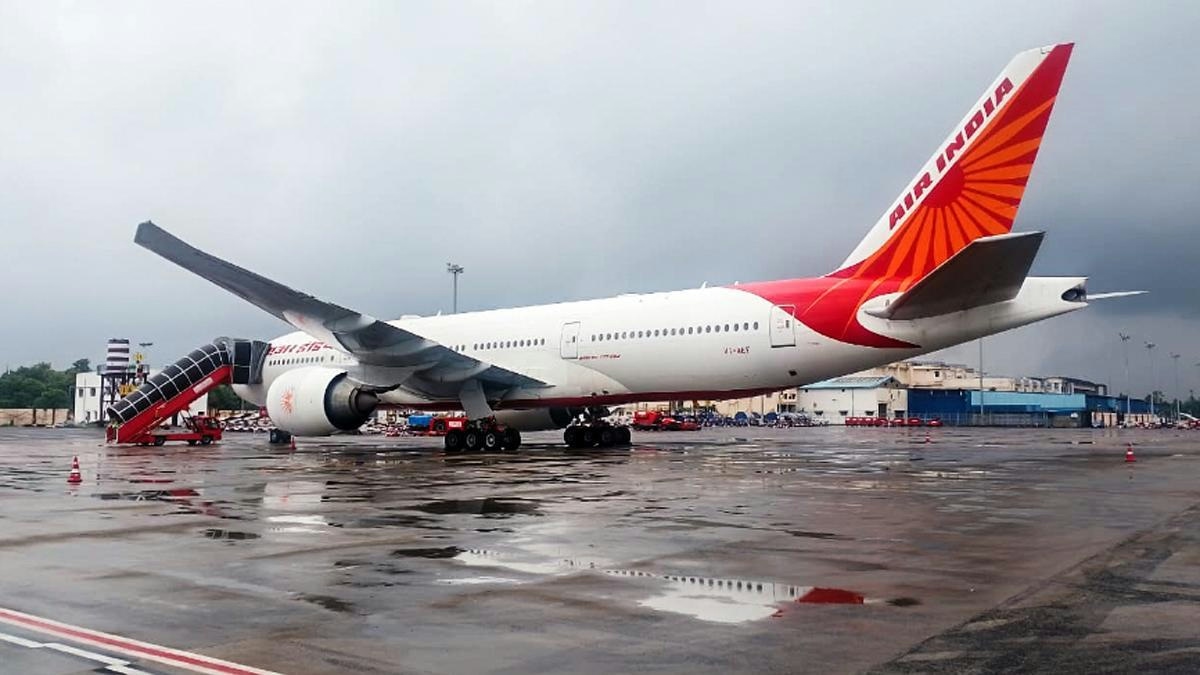
Air India has concluded precautionary inspections of the Fuel Control Switch (FCS) locking mechanisms across its entire fleet of Boeing 787 and Boeing 737 aircraft, reporting no faults. These inspections, which also encompassed the Boeing 737s operated by its low-cost subsidiary Air India Express, were carried out in response to a directive from the Directorate General of Civil Aviation (DGCA). The order followed a recent fatal crash involving a Boeing 787-8 Dreamliner.
Regulatory Response to the Ahmedabad Crash
The DGCA mandated that all Indian carriers complete inspections of the fuel switch locking systems on their Boeing 787 and 737 aircraft by July 21. This directive came after preliminary findings from the Aircraft Accident Investigation Bureau (AAIB) indicated that the fuel switches had been cut off prior to the Air India crash last month. On June 12, Air India flight AI 171, a Boeing 787-8, crashed shortly after takeoff from Ahmedabad en route to London Gatwick, resulting in the deaths of 241 of the 242 people onboard, as well as 19 fatalities on the ground.
Air India stated on Tuesday that no issues were found with the locking mechanisms during the inspections. The airline also noted that it had voluntarily initiated these checks on July 12, ahead of the regulator’s deadline, and completed them within the prescribed timeframe.
Technical Concerns and Broader Industry Impact
The fuel control switches are critical components that regulate the flow of fuel to the aircraft engines. According to the AAIB’s preliminary report, fuel supply to both engines was cut off within one second, causing confusion in the cockpit. Cockpit voice recordings revealed one pilot questioning the other about the fuel cutoff, with both denying responsibility.
The scrutiny of Boeing aircraft safety has extended beyond India. South Korean aviation authorities have also ordered inspections of fuel switches on Boeing jets following the crash. Meanwhile, Germany’s Lufthansa Group conducted re-inspections of its Boeing 787 fleet and similarly reported no faults. These findings, alongside Air India’s results, may help to alleviate some concerns regarding the safety of Boeing aircraft, although market reactions and competitor responses remain uncertain.
Fleet Composition and Historical Context
Several other Indian carriers, including IndiGo, SpiceJet, and Akasa Air, operate Boeing 737 and 787 aircraft. Indian airlines collectively operate over 150 Boeing 737 and 787 jets. Air India’s fleet includes 33 wide-body Boeing 787s, while Air India Express operates approximately 75 narrow-body Boeing 737s. IndiGo’s fleet features seven Boeing 737 MAX 8 and one Boeing 787-9, with Akasa Air and SpiceJet also maintaining Boeing 737 aircraft.
Concerns regarding the FCS locking mechanism are not new. The U.S. Federal Aviation Administration (FAA) first identified potential disengagement issues in 2018 affecting certain Boeing models, including the 787 and 737.
With the completion of these inspections and no issues detected, Air India and its subsidiary have fulfilled regulatory requirements and sought to reassure passengers and stakeholders about the safety of their Boeing fleets.

Etihad Airways Suspends Airbus A380 Flights on Key Route

Aditya Birla Group Seeks Approval for Aircraft Leasing in GIFT City

Qatar Airways Highlights Innovation and Connectivity at Arabian Travel Market 2026

Hong Kong's Five-Year Plan Includes Andrew Fan's Aircraft Parts Processing Hub Proposal

ACIA Aero Leasing Delivers ATR72-600 to Air Nostrum

RTX Appoints Jill Albertelli as Head of Pratt & Whitney

TAT Technologies Joins Beyond Aero Hydrogen Aircraft Program

AURAK Study Highlights Barriers to Air Taxi Adoption in Emerging Economies

Xiamen Air Selects Altitude for 787 Maintenance at Heathrow

Etihad and Swissport Extend Global Partnership
