
Orchestrate AI insights into action

Trending
Categories
Airline to Operate Fastest-Growing Airbus A350 Fleet in 2025
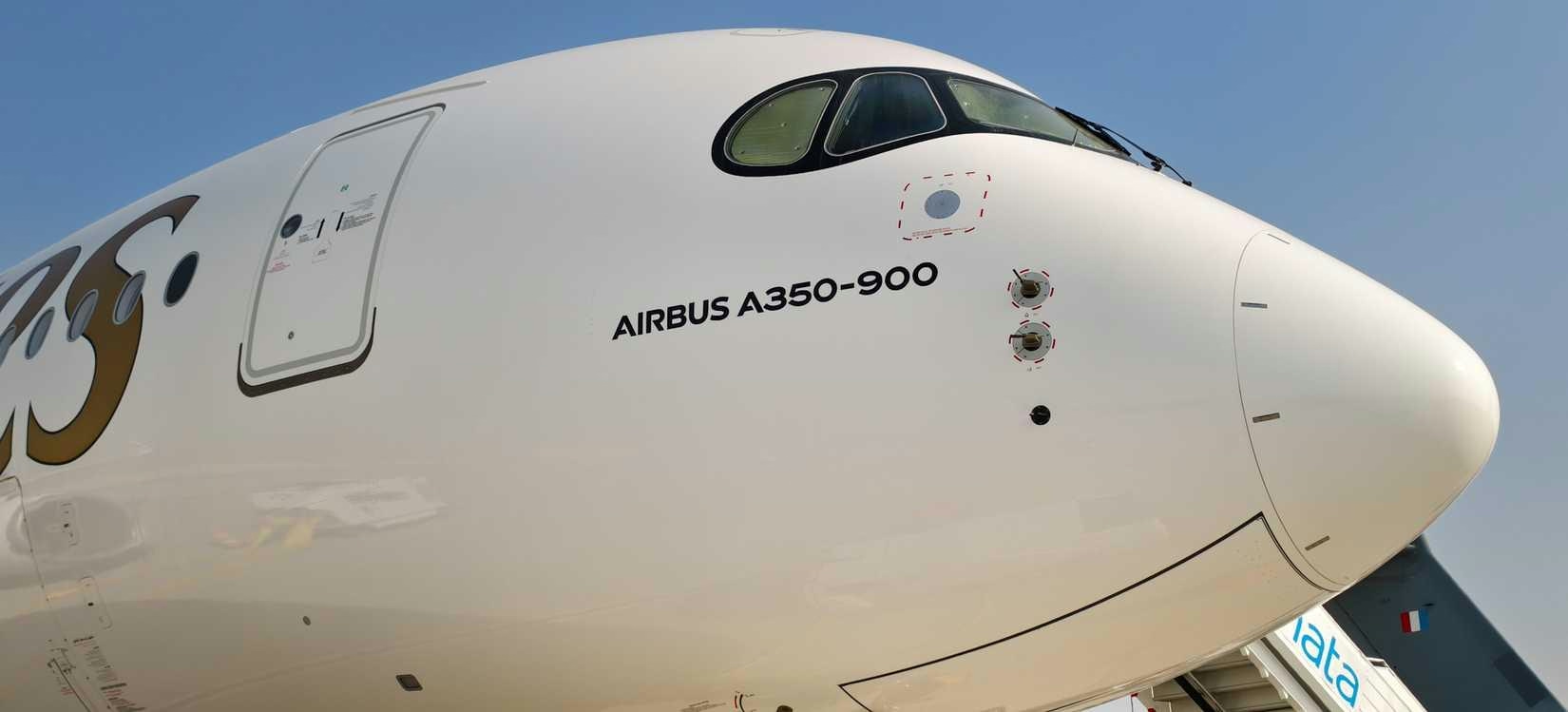
Emirates to Operate Fastest-Growing Airbus A350 Fleet in 2025
Emirates is set to become the leading operator of the Airbus A350 “extra widebody” aircraft in 2025, with plans to take delivery of 13 new A350-900 jets this year. This figure more than doubles the number received by its nearest competitor, Turkish Airlines, which added six aircraft, while Air France followed with five deliveries. According to Airbus data, Emirates’ new acquisitions account for a quarter of all A350s delivered globally in 2025, highlighting the Dubai-based carrier’s growing dominance in the widebody market.
Expanding the A350-900 Fleet
All of Emirates’ recent deliveries are of the A350-900 variant, with no larger A350-1000 models yet incorporated into its fleet. The airline currently has 73 A350-900s on order, including the 13 already delivered and 60 more scheduled for future delivery. Although Turkish Airlines holds the largest overall A350 order book with 110 aircraft, Emirates is poised to surpass Singapore Airlines as the world’s leading A350-900 operator once its backlog is fulfilled, a process expected to continue through 2031.
The A350 represents only the third aircraft type in Emirates’ fleet, alongside the Airbus A380 “Superjumbo” and the Boeing 777. As the smallest of the three, the A350 offers significant advantages, including long-range capability and a 25% reduction in fuel burn compared to older models. This efficiency enables Emirates to serve thinner, long-haul routes that are less economically viable for its larger jets, thereby expanding its network with greater flexibility.
Strategic Implications Amid Industry Challenges
Emirates’ accelerated acquisition of the A350 comes amid ongoing delays to Boeing’s 777X program, which is now more than five years behind schedule, with deliveries unlikely before 2027. The A350 thus fills a critical gap in Emirates’ fleet, providing passengers with a modern cabin experience while allowing the airline to maintain growth momentum as it awaits the next-generation 777X.
However, the rapid expansion of Emirates’ A350 fleet is not without challenges. The global aviation industry continues to grapple with supply-chain disruptions, exemplified by Air Canada’s recent difficulties with its Airbus A220 fleet due to Pratt & Whitney engine issues. Such disruptions could potentially affect Emirates’ delivery schedules and operational reliability. The volatile operating environment, underscored by leadership challenges at other carriers, adds further complexity to fleet management and scheduling.
Market observers have closely monitored Emirates’ commitment to Airbus amid Boeing’s setbacks. Competitors are responding accordingly; FlyDubai has announced ambitious growth plans, while American Airlines has taken swift action to address Airbus recalls, aiming to reassure both investors and passengers.
Since its 2014 debut, the A350—developed by Airbus as a clean-sheet competitor to Boeing’s 787 Dreamliner—has seen increasing demand, particularly for ultra-long-haul routes in the post-pandemic era. Its spacious cabin, high ceilings, and advanced fuel efficiency have made it a cornerstone of Emirates’ fleet modernization strategy, positioning the airline at the forefront of widebody renewal despite ongoing industry headwinds.

Etihad Airways Suspends Airbus A380 Flights on Key Route

Aditya Birla Group Seeks Approval for Aircraft Leasing in GIFT City

Qatar Airways Highlights Innovation and Connectivity at Arabian Travel Market 2026

Hong Kong's Five-Year Plan Includes Andrew Fan's Aircraft Parts Processing Hub Proposal

ACIA Aero Leasing Delivers ATR72-600 to Air Nostrum

RTX Appoints Jill Albertelli as Head of Pratt & Whitney

TAT Technologies Joins Beyond Aero Hydrogen Aircraft Program

AURAK Study Highlights Barriers to Air Taxi Adoption in Emerging Economies

Xiamen Air Selects Altitude for 787 Maintenance at Heathrow

Etihad and Swissport Extend Global Partnership
