
Orchestrate AI insights into action

Trending
Categories
Alaska Airlines Implements AI Technology to Enhance Ramp Safety
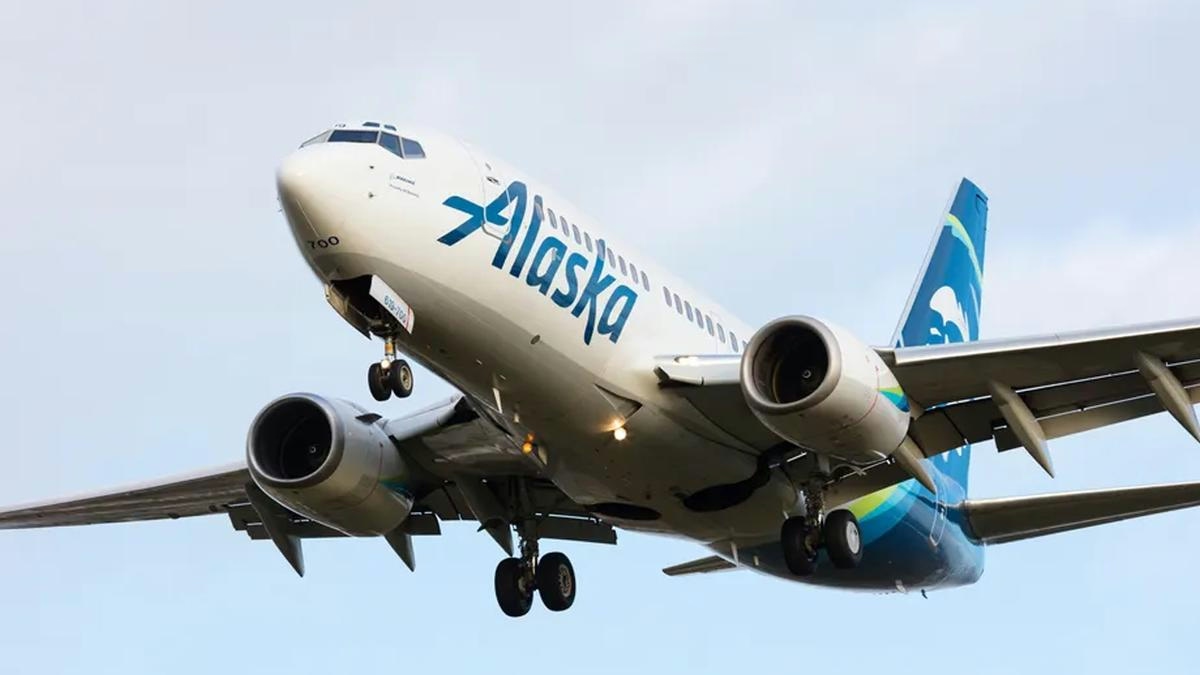
Alaska Airlines Implements AI Technology to Enhance Ramp Safety
Alaska Airlines has introduced artificial intelligence (AI) technology to revolutionize ramp safety, employing data-driven insights to cultivate a culture of continuous improvement. The AI system generates safety alerts accompanied by short video clips and detailed event reports, which supervisors review to verify accuracy and determine the necessity of follow-up coaching.
Transforming Safety Through Data and Coaching
According to Alaska’s safety leader, Over, the system organizes all alerts into a queue, enabling leaders to view each event, document coaching efforts, and monitor behavioral improvements over time. This method has already produced notable results: after an initial four-month baseline observation period followed by active coaching, the airline recorded a 72% reduction in unsafe driving alerts across various categories, including speeding, harsh driving, mobile phone use, and seatbelt violations.
The AI platform allows for granular analysis of performance trends by individual driver, vehicle type, or station, facilitating targeted training and recognition of exemplary conduct. Over explains that the system can track month-over-month performance and compare behaviors, highlighting those who consistently demonstrate safe practices. Central to the program’s philosophy is positive reinforcement. Jnah, another company leader, emphasizes that the initiative is not punitive but supportive, designed to help employees maintain safety. The system is affectionately named Coach Rupert, after the airline’s penguin mascot, symbolizing a friendly guide rather than an enforcer.
Addressing Challenges and Fostering Acceptance
The integration of AI into safety operations has encountered initial resistance from some employees, who expressed concerns about increased monitoring and potential job displacement. Jnah acknowledges that uncertainty generated apprehension but notes that transparent communication and clear explanations helped alleviate fears. This approach has resulted in strong acceptance, with some employees even demonstrating enthusiasm; Over recounts how one ramp agent created a drawing of Coach Rupert in action, reflecting genuine buy-in and understanding that the technology’s purpose is to enhance safety.
Beyond generating behavior alerts, the AI system has proven invaluable for incident investigation and training. Over explains that in the event of a collision or serious incident, the system allows the company to review footage to determine contributing factors such as driver distraction, adverse conditions, or unexpected events. This capability supports more precise coaching and performance tracking, enabling the airline to identify the most effective interventions and areas requiring adjustment.
Navigating Privacy, Culture, and Industry Implications
Despite these advancements, the adoption of AI in safety operations demands significant cultural and organizational shifts. Alaska Airlines continues to address challenges related to staff acceptance, privacy protection, and regulatory scrutiny surrounding AI use in safety-critical environments. Consumer skepticism has emerged regarding the transparency and fairness of AI-driven measures, while competitors observe closely—some contemplating similar technologies, others enhancing existing protocols to maintain competitiveness.
Privacy remains a paramount concern for Alaska Airlines. Over stresses that access to video data is tightly controlled, restricted to a small group of leaders, and that any footage used for training is anonymized to safeguard employee identities.
Looking forward, Alaska Airlines envisions expanding the role of AI to automate aspects of training and onboarding, thereby strengthening the relationship between managers and operators. While the promise of AI adoption lies in improved efficiency and safety, the airline acknowledges that success hinges on balancing technological innovation with human factors, organizational culture, and customer trust.

Etihad Airways Suspends Airbus A380 Flights on Key Route

Aditya Birla Group Seeks Approval for Aircraft Leasing in GIFT City

Qatar Airways Highlights Innovation and Connectivity at Arabian Travel Market 2026

Hong Kong's Five-Year Plan Includes Andrew Fan's Aircraft Parts Processing Hub Proposal

ACIA Aero Leasing Delivers ATR72-600 to Air Nostrum

RTX Appoints Jill Albertelli as Head of Pratt & Whitney

TAT Technologies Joins Beyond Aero Hydrogen Aircraft Program

AURAK Study Highlights Barriers to Air Taxi Adoption in Emerging Economies

Xiamen Air Selects Altitude for 787 Maintenance at Heathrow

Etihad and Swissport Extend Global Partnership
