
Orchestrate AI insights into action

Trending
Categories
All Four Engines Failed at 37,000 Feet, and the Captain Remained Calm
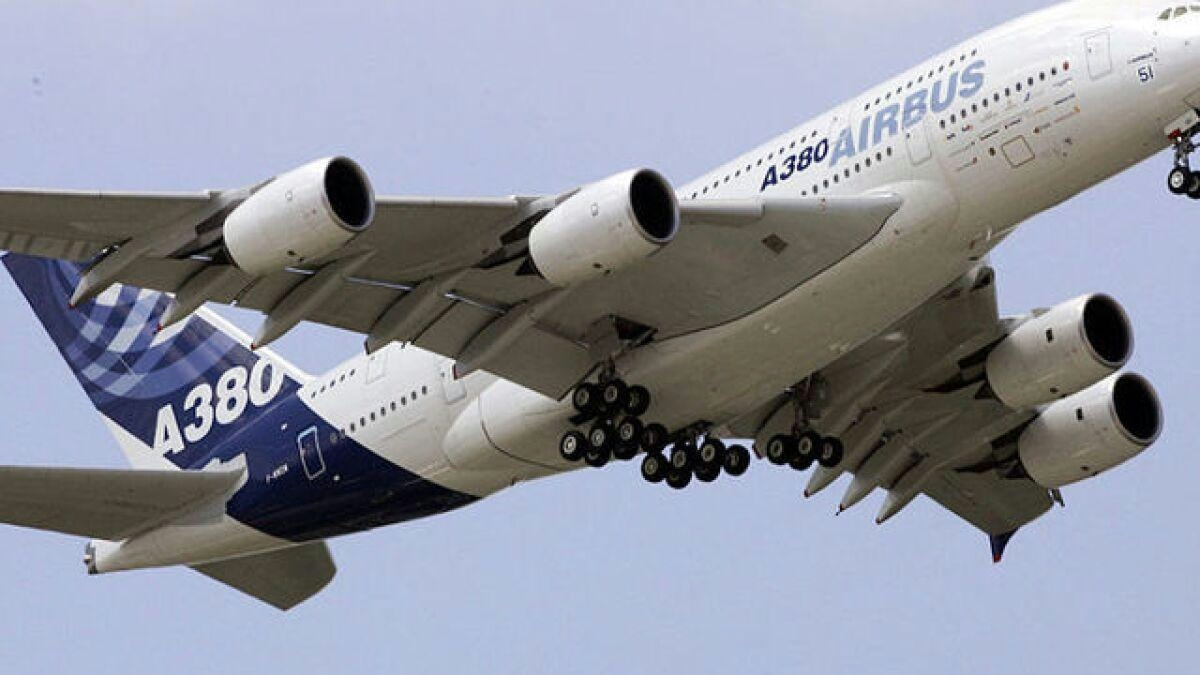
All Four Engines Failed at 37,000 Feet, and the Captain Remained Calm
At 37,000 feet above the Indian Ocean, passengers aboard British Airways Flight 9 were abruptly plunged into an unsettling silence. The familiar roar of the Boeing 747’s four engines ceased without warning. There was no turbulence—only an eerie stillness, accompanied by a faint smell of smoke and dimming cabin lights. Anxiety quickly spread through the cabin as passengers grasped the gravity of the situation. In the cockpit, Captain Eric Moody and his crew confronted an extraordinary emergency: all four engines had failed simultaneously.
The Incident and the Captain’s Response
The 1982 flight, en route from Kuala Lumpur to Perth aboard the Boeing 747 named City of Edinburgh, had unknowingly entered a cloud of volcanic ash emanating from Indonesia’s Mount Galunggung, which had erupted earlier that day. Volcanic ash, invisible to radar and easily mistaken for ordinary cloud, poses a severe hazard to jet engines. Within minutes, the abrasive ash caused all four engines to flame out, transforming the 350-ton aircraft into the heaviest glider in the sky.
Captain Moody’s response to the crisis became emblematic of calm leadership under pressure. Over the public address system, he delivered a measured announcement: “Ladies and gentlemen, this is your captain speaking. We have a small problem. All four engines have stopped. We are doing our utmost to get them going again. I trust you are not in too much distress.” His understated tone helped to steady the passengers, some of whom initially believed the message to be a joke, while others gripped their seats in disbelief. Moody’s composure was precisely what the moment required.
Navigating a Crisis and Its Aftermath
With all engines offline, the 747 began a rapid descent at nearly 2,000 feet per minute. The flight crew calculated they had approximately 23 minutes before reaching the ocean below. Within this narrow timeframe, they faced the daunting tasks of restarting the disabled engines, navigating out of the volcanic ash cloud, managing the aircraft’s structural limits, and reaching a safe altitude with breathable air. Against the odds, after losing nearly 20,000 feet, the crew successfully restarted the engines and executed a safe landing, averting what could have been a catastrophic disaster.
The incident not only became a seminal case study in crisis management but also prompted broader discussions about aviation safety. In its aftermath, scrutiny intensified regarding pilot fitness, particularly as the industry grapples with an aging pilot population, with some captains continuing to fly into their eighties. Concerns emerged about the capacity of older pilots to respond effectively to emergencies, while pilot associations struggled to recover from the operational disruptions caused by the Covid-19 pandemic.
Market reactions reflected increased anxiety among passengers and industry stakeholders about the safety of aging aircraft and the imperative for rigorous pilot training. Competitors sought to reassure the public by emphasizing their own safety protocols and training standards, aiming to distinguish themselves amid a climate of heightened caution. The calm and professional leadership demonstrated on Flight 9 remains a benchmark for handling emergencies, even as the aviation sector continues to confront evolving challenges and expectations.

Etihad Airways Suspends Airbus A380 Flights on Key Route

Aditya Birla Group Seeks Approval for Aircraft Leasing in GIFT City

Qatar Airways Highlights Innovation and Connectivity at Arabian Travel Market 2026

Hong Kong's Five-Year Plan Includes Andrew Fan's Aircraft Parts Processing Hub Proposal

ACIA Aero Leasing Delivers ATR72-600 to Air Nostrum

RTX Appoints Jill Albertelli as Head of Pratt & Whitney

TAT Technologies Joins Beyond Aero Hydrogen Aircraft Program

AURAK Study Highlights Barriers to Air Taxi Adoption in Emerging Economies

Xiamen Air Selects Altitude for 787 Maintenance at Heathrow

Etihad and Swissport Extend Global Partnership
