
Orchestrate AI insights into action

Trending
Categories
American Airlines Uses AI to Enhance Travel Experience and Support Tourism
American Airlines Uses AI to Enhance Travel Experience and Support Tourism
American Airlines has introduced a generative artificial intelligence (AI) tool aimed at revolutionizing the way travelers plan their trips. Soon to be accessible via the airline’s mobile app, this innovative platform harnesses real-time travel trends, customer preferences, and live fare data to provide personalized recommendations. By offering insights into destinations, optimal travel dates, and curated activities, the tool seeks to streamline the booking process and empower users to make well-informed decisions.
Transforming Trip Planning Through AI
The AI-driven system enables travelers to input broad trip concepts—such as a week-long culinary and exploration getaway with friends—and receive immediate, tailored suggestions. These include recommended destinations, fare options, and an interactive map showcasing nearby attractions. Unlike traditional planning tools that focus primarily on locations, American Airlines’ AI emphasizes the experiences travelers desire, making the process more engaging and relevant to individual interests.
This experience-based approach adapts dynamically to user preferences, ensuring that recommendations remain current and personalized. By simplifying the discovery of new destinations and activities, the tool aims to enhance the overall travel planning experience.
Enhancements Beyond AI
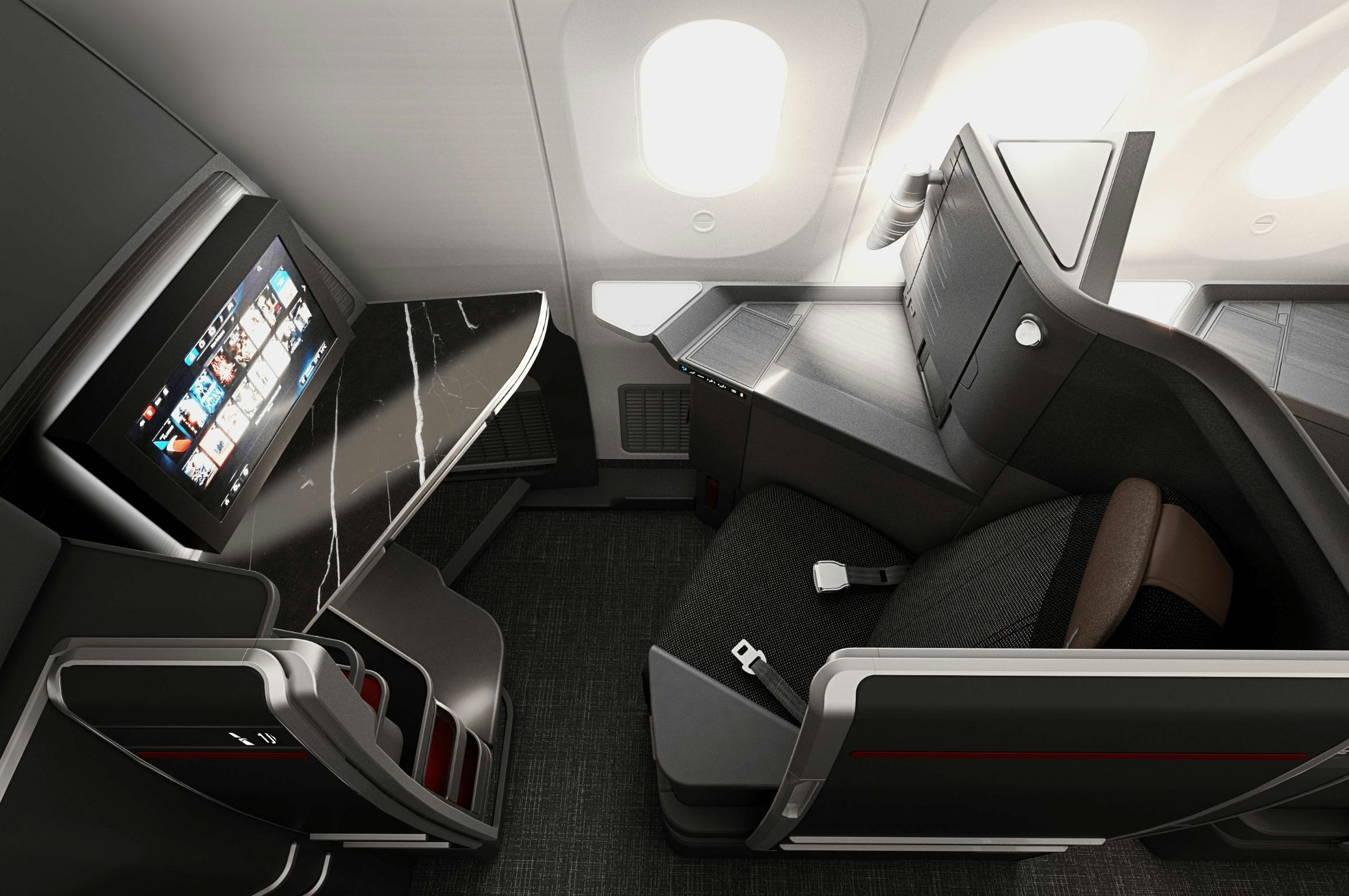
In addition to the AI platform, American Airlines has upgraded its check-in kiosks and introduced a 3D seat map for its Boeing 787-9 aircraft. These improvements are designed to make booking and seat selection more intuitive, further elevating the customer journey from start to finish.
Industry Impact and Emerging Challenges
While American Airlines positions its AI initiative as a significant advancement in customer convenience and tourism promotion, the broader adoption of such technology presents notable challenges. The 2025 Innovation Trends report by Phocuswright highlights concerns about potential job displacement among traditional travel agents, as automated systems increasingly assume roles once performed by humans.
Consumer trust also remains a critical issue. Some travelers express skepticism regarding AI’s ability to replicate the nuanced, personalized service offered by experienced agents. Furthermore, the reliability of AI-generated recommendations has been questioned. A recent survey by Global Rescue pointed to risks such as AI suggesting nonexistent or unsafe landmarks, emphasizing the necessity for stringent safeguards and oversight.
Competitors within the airline industry are closely monitoring these developments, with many expected to introduce similar AI-driven tools to enhance their booking processes and customer experiences. This signals a broader industry shift toward automation and personalization.
Future Outlook
As American Airlines integrates AI into its suite of customer services, the airline aspires to establish a new benchmark for personalized and efficient travel planning. The ultimate success of this technology will depend on its ability to deliver relevant, safe recommendations while effectively addressing the concerns of travelers and industry stakeholders in an increasingly digital environment.

Etihad Airways Suspends Airbus A380 Flights on Key Route

Aditya Birla Group Seeks Approval for Aircraft Leasing in GIFT City

Qatar Airways Highlights Innovation and Connectivity at Arabian Travel Market 2026

Hong Kong's Five-Year Plan Includes Andrew Fan's Aircraft Parts Processing Hub Proposal

ACIA Aero Leasing Delivers ATR72-600 to Air Nostrum

RTX Appoints Jill Albertelli as Head of Pratt & Whitney

TAT Technologies Joins Beyond Aero Hydrogen Aircraft Program

AURAK Study Highlights Barriers to Air Taxi Adoption in Emerging Economies

Xiamen Air Selects Altitude for 787 Maintenance at Heathrow

Etihad and Swissport Extend Global Partnership
