
Orchestrate AI insights into action

Trending
Categories
An-2 Successor Flies for First Time with Russian Engine
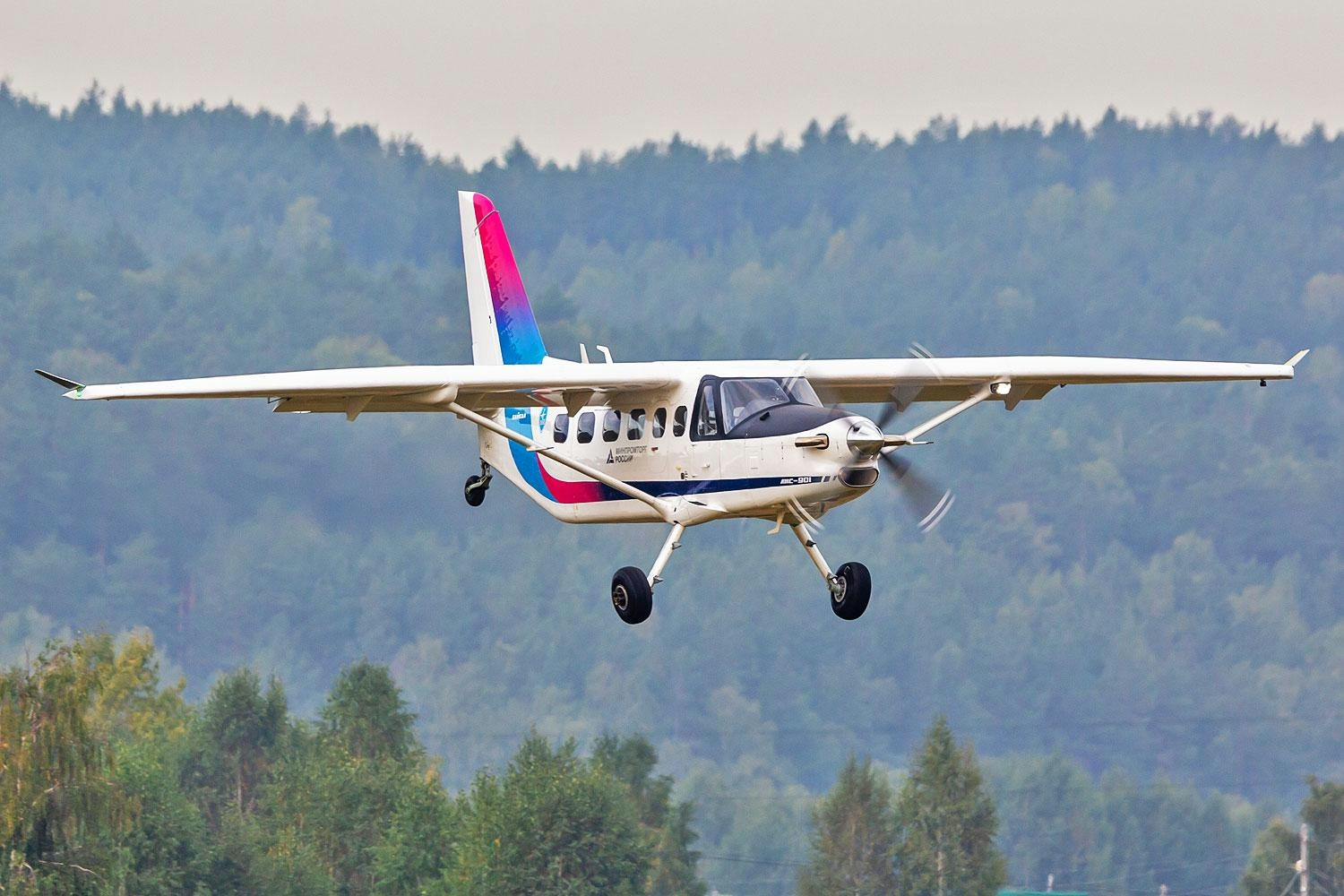
An-2 Successor Completes First Flight with Russian Engine
Russia’s LMS-901 Baikal light utility aircraft has successfully completed its maiden flight powered by a domestically produced engine, marking a pivotal development in the country’s efforts to reduce reliance on Western aerospace technology amid ongoing international sanctions. The third flying prototype, developed by the Ural Civil Aviation Plant (UZGA), took off from the company’s airfield on February 23, conducting a 10-minute flight at approximately 1,000 feet altitude and reaching speeds near 118 mph before landing safely.
This particular prototype, designated serial number 0005, is equipped with the Russian-made VK-800SP turboprop engine paired with the AV-901 propeller. Prior to this flight, the aircraft underwent an extensive ground testing program that evaluated all major systems and assemblies. The successful sortie follows Russia’s strategic push to localize critical aerospace components after Western sanctions, imposed in response to the 2022 invasion of Ukraine, disrupted deliveries of the originally intended General Electric H80 turboprop engine. In response, Russian authorities selected the VK-800 series, an engine adapted from a helicopter turboshaft, to power the new aircraft.
UZGA engineers have incorporated several design modifications based on insights gained from earlier prototype testing. These include adjustments to the wing incidence angle to mitigate premature liftoff in gusty conditions, enhancements to the main landing gear, and a redesigned forward fuselage aimed at improving ergonomics and crashworthiness. Additional updates were made to onboard systems, including engine accessories, the fuel system, and flight controls. The aircraft is now scheduled to undergo further ground evaluations, such as wiring network inspections and vibration testing, before advancing to preliminary and certification flight trials.
Design and Market Positioning
The LMS-901 is intended as a modern replacement for the venerable Antonov An-2 biplane, which has long served remote regions across Russia. This single-engine, high-wing aircraft is designed to accommodate up to nine passengers or carry approximately 3,300 pounds of payload, with a maximum range of around 930 miles and a cruise speed reaching 155 mph. UZGA aims to position the LMS-901 for regional and special-mission operations, particularly in areas with limited airport infrastructure.
The introduction of the LMS-901 occurs amid significant transformation within the global aviation industry. Companies such as Saab and Divergent Technologies are pioneering innovative software-defined fuselage designs, while Embraer focuses on promoting its E2 regional jets over the development of new airliners. Meanwhile, industry giants Airbus and Boeing continue to navigate challenges related to production rates and future aircraft strategies. The LMS-901’s entry into the market has the potential to disrupt the regional and cargo aircraft sectors, especially if it can deliver superior performance or cost advantages. However, it may also face challenges in gaining market acceptance and competing against established manufacturers responding to evolving customer demands.
As the LMS-901 progresses toward certification, its development will be closely monitored both within Russia and internationally, representing not only a technical milestone but also a possible shift in the competitive landscape for regional utility aircraft.

Etihad Airways Suspends Airbus A380 Flights on Key Route

Aditya Birla Group Seeks Approval for Aircraft Leasing in GIFT City

Qatar Airways Highlights Innovation and Connectivity at Arabian Travel Market 2026

Hong Kong's Five-Year Plan Includes Andrew Fan's Aircraft Parts Processing Hub Proposal

ACIA Aero Leasing Delivers ATR72-600 to Air Nostrum

RTX Appoints Jill Albertelli as Head of Pratt & Whitney

TAT Technologies Joins Beyond Aero Hydrogen Aircraft Program

AURAK Study Highlights Barriers to Air Taxi Adoption in Emerging Economies

Xiamen Air Selects Altitude for 787 Maintenance at Heathrow

Etihad and Swissport Extend Global Partnership
