image

AeroGenie — Your Intelligent Copilot.

Ask anything. Analyze everything. Act instantly.

Trending

Categories

APS Receives FAA Certification for Kuala Lumpur MRO Center
April 10, 2025By ePlane AI
APS Receives FAA Certification for Kuala Lumpur MRO Center
0
0
APS
FAA Certification
MRO Center

APS Receives FAA Certification for Kuala Lumpur MRO Center

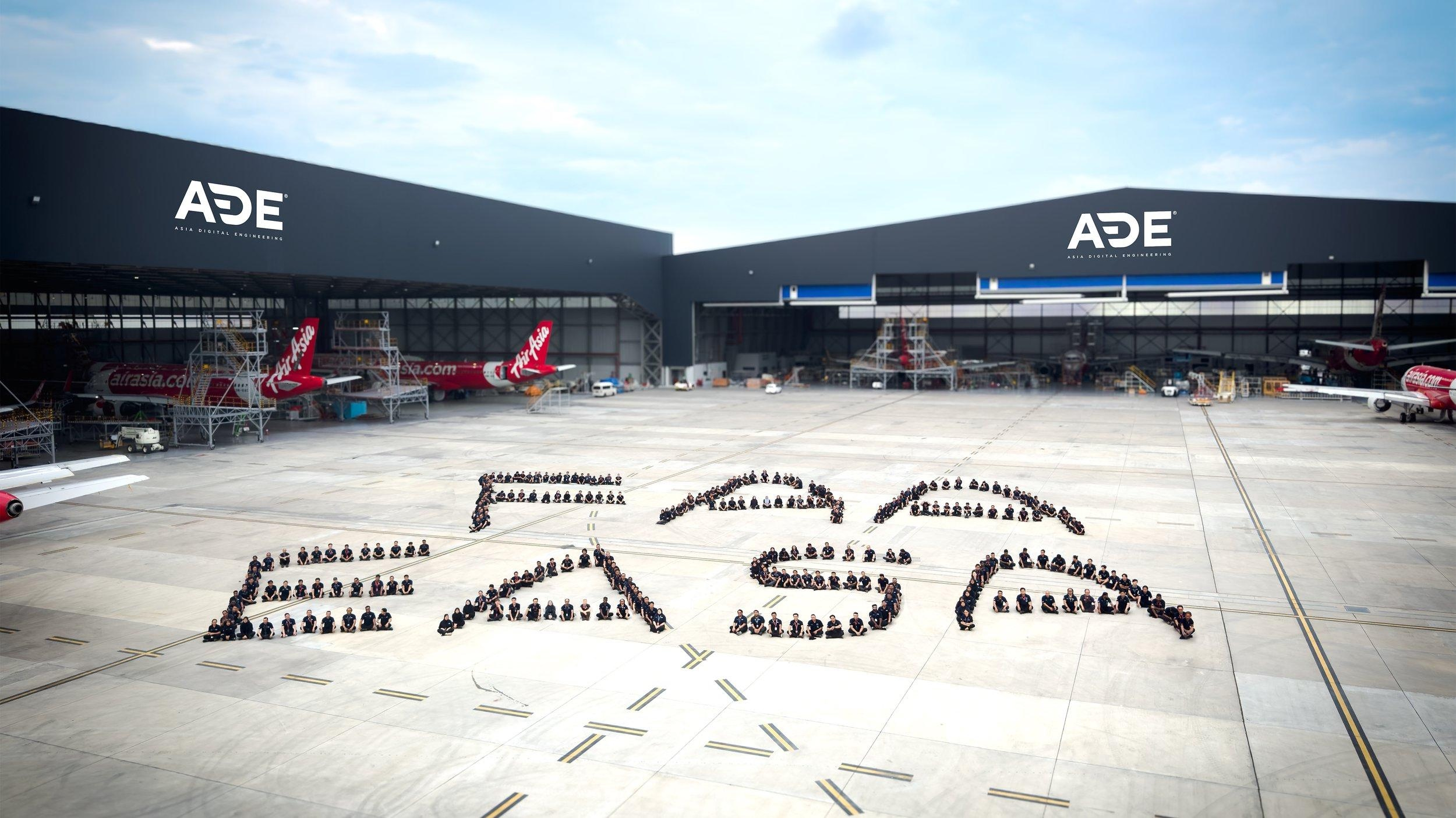
Aircraft Propeller Service (APS), a prominent provider of aircraft propeller maintenance, repair, and overhaul (MRO) services, has achieved a major milestone with the successful completion of a Federal Aviation Administration (FAA) audit for its new facility in Kuala Lumpur. This FAA certification, recognized globally by civil aviation authorities, establishes APS as a leading regional MRO hub and represents a pivotal advancement in the company’s strategic expansion across the Asia-Pacific region.

Strategic Expansion and Market Positioning

APS Asia Pacific remains the sole MRO provider in both Asia and the Americas authorized to perform proprietary 568F propeller repairs under its agreement with Collins Aerospace, the original equipment manufacturer. The Kuala Lumpur centre, equipped with state-of-the-art technology and scheduled to commence operations in the coming months, will initially specialize in propeller maintenance for ATR 72 and Airbus C295 aircraft. APS has indicated intentions to broaden its service portfolio in response to growing regional demand.

Situated strategically in Malaysia, the new facility is poised to leverage the robust turboprop market in the Asia-Pacific, which currently accounts for 37% of the global ATR fleet. Industry forecasts anticipate the region will require nearly 1,000 additional turboprop aircraft over the next two decades, highlighting significant growth opportunities for APS and its competitors.

Daniel Colbert, CEO of APS, emphasized the importance of the Kuala Lumpur facility, stating, “By establishing a dedicated MRO centre in this region, we aim to improve turnaround times and be closer to our customers. We’re not just expanding our footprint – we’re making a long-term commitment to this region. By combining our technical expertise with the skilled workforce in Malaysia, we’re building a ‘centre of excellence’ for propeller MRO that will support the evolving needs of turboprop operators for years to come.”

APS’s entry into the Malaysian market occurs amid intensified competition from established regional MRO providers. Industry analysts suggest that APS’s FAA certification and investment in local infrastructure may stimulate further regional investment and encourage competitors to enhance their service offerings or pursue strategic partnerships to maintain market share.

Commitment to Workforce Development and Regional Collaboration

Beyond its operational objectives, APS is actively collaborating with local educational institutions to cultivate a pipeline of skilled aviation maintenance professionals. This partnership is designed to ensure the availability of qualified talent essential for the facility’s sustained success while contributing to Malaysia’s broader economic development. Colbert remarked, “In doing so, we are not just investing in the infrastructure but in the people who will drive the industry forward.”

As APS prepares to inaugurate its Kuala Lumpur centre, the company’s dedication to technical excellence, regional engagement, and workforce development signals a transformative phase for the Asia-Pacific aviation maintenance sector, with potential implications for the competitive dynamics in the years ahead.

More news
SunTrax in Polk County to Become Nation’s First Air Taxi Testing Hub

SunTrax in Polk County to Become Nation’s First Air Taxi Testing Hub

SunTrax in Polk County to Become Nation’s First Air Taxi Testing Hub Aerial Solutions to Tampa Bay’s Traffic Woes Auburndale, Florida, is on the cusp of a transportation revolution as the Florida Department of Transportation’s (FDOT) SunTrax facility prepares to become the nation’s first dedicated testing hub for air taxis. This initiative represents a major advancement in the field of Advanced Air Mobility (AAM), offering a potential aerial alternative to the region’s notorious traffic congestion, particularly along the heavily traveled I-4 corridor. FDOT officials recently presented the project’s timeline to the Polk County Board of County Commissioners, highlighting the transformative potential of this new mode of travel. Commissioner Becky Troutman emphasized the significance of the development, noting that the introduction of aerial highways could fundamentally change how residents navigate the area. “We have all felt the woes of traveling on I-4, and this truly starts to open up a network of aerial highways,” she said. “With this research, and if it comes to life—which I’m sure it will—it will be a new way of travel for us here in Polk County.” Infrastructure Expansion and Operational Plans The SunTrax campus is currently undergoing its initial phase of expansion to bolster research and development capabilities for AAM technologies. Recently completed construction includes a vertiport—a facility designed for vertical takeoff and landing—and a passenger terminal. A second vertiport is under development to support an aerial test track tailored for battery-powered air taxis capable of trips up to 60 miles. Commissioner Troutman explained the operational concept of these vehicles: “These vehicles take off straight up, so you don’t need a runway or a lot of land. You would order your autonomous vehicle to pick you up, lift you into the sky, and take you a short distance.” This vertical takeoff and landing capability is central to the project’s vision of integrating air taxis into urban and suburban environments without the need for extensive infrastructure. Looking ahead, FDOT’s Phase 2 plans, set to commence in February, include the addition of nine hangars, a 3,000-foot runway, and further vertiports. The department is also advancing the development of Florida’s Aerial Highway Network, initially focusing on the I-4 corridor to identify strategic locations for air taxi services. Challenges and Community Perspectives Despite the enthusiasm surrounding the project, some local residents have expressed concerns regarding the practicalities of air taxi operations. Questions about the logistics of pick-up and drop-off points, fare structures, and overall costs remain at the forefront of public discourse. Resident Josh Palmer voiced these uncertainties, asking, “What I think is going to be unique is how and where does it stop? And how do you pay for it? And what does it cost?” The project also faces regulatory and safety challenges, including the integration of advanced air mobility with existing transportation infrastructure and overcoming potential resistance from traditional taxi services and regulatory authorities cautious about safety and operational readiness. Market response, however, has been largely positive, with urban commuters showing interest in alternatives to conventional ground transportation. The initiative has also spurred competitors to accelerate their own development efforts, particularly in the wake of Waymo’s recent introduction of driverless robotaxis on highways. Local resident Rex Herring highlighted the pressing need for innovative transportation solutions in Florida’s rapidly growing population centers. “With all the people coming into the state of Florida, it’s getting overpopulated. Traffic is crazy everywhere. You have to allow for a lot of time when you leave your house to get where you need to be at a certain time. So, it may help,” he remarked. FDOT aims to have commercial air taxi services operational by late 2026, potentially ushering in a new era of mobility for residents and visitors throughout Central Florida.
Etihad Airways Joins Flyadeal, Air Algérie, and Malaysia Airlines in Expanding Airbus A330neo Orders

Etihad Airways Joins Flyadeal, Air Algérie, and Malaysia Airlines in Expanding Airbus A330neo Orders

Etihad Airways Expands Airbus A330neo Orders Alongside Flyadeal, Air Algérie, and Malaysia Airlines Etihad Airways has joined Flyadeal, Air Algérie, and Malaysia Airlines in a significant expansion of their Airbus A330neo orders, signaling a broader industry trend toward modernizing long-haul fleets. This collective move highlights the increasing demand for the A330neo family, driven by its advanced fuel efficiency, extended range, and enhanced passenger comfort. Airlines worldwide are increasingly prioritizing these attributes as they navigate volatile fuel markets and intensifying competition. The Growing Appeal of the Airbus A330neo The A330neo, an updated iteration of the Airbus A330 family, is rapidly gaining favor among global carriers. Its technological advancements offer substantial reductions in operating costs, particularly on long-haul routes, making it an attractive option amid rising fuel prices and the need for sustainable operations. The aircraft’s lower per-seat costs and improved environmental profile have contributed to a surge in new orders, reflecting airlines’ strategic focus on efficiency and sustainability. Etihad Airways is reportedly in advanced negotiations with Airbus SE to secure additional A330neo aircraft, alongside potential orders for the Airbus A350. This marks a strategic pivot for Etihad, which has historically emphasized other widebody models such as the Boeing 787. The renewed interest in the A330neo aligns with Etihad’s broader growth objectives, including network expansion, increased passenger capacity, and a strengthened presence in the competitive long-haul market. Challenges and Market Implications Integrating the A330neo into existing operations presents challenges, including significant capital investment and the complexities of fleet harmonization. Etihad’s decision, alongside its regional and international peers, to modernize with the A330neo is expected to intensify competition, particularly across Middle Eastern and Asian markets. Rival carriers may respond with similar fleet renewal strategies to preserve market share and enhance operational efficiency. Market analysts have noted Etihad’s strong recent financial performance, characterized by rising profits and a clear commitment to fleet expansion. This positive momentum, coupled with robust demand for the A330neo, bodes well for Airbus’s program. The anticipated announcement of Etihad’s deal with Airbus at the upcoming Dubai Airshow would represent a significant milestone in the airline’s ongoing transformation and the broader industry shift toward more sustainable and cost-effective air travel. As Flyadeal, Air Algérie, Malaysia Airlines, and now Etihad Airways lead the adoption of the A330neo, the aircraft is set to reshape airline operations and global connectivity. The industry’s embrace of this model underscores a strategic emphasis on efficiency, sustainability, and future growth, heralding a new era in commercial aviation.
Rolls-Royce Unveils Hydrogen Engine Concept for Jet Power

Rolls-Royce Unveils Hydrogen Engine Concept for Jet Power

Rolls-Royce Unveils Hydrogen Engine Concept for Jet Power The aviation sector is under increasing pressure to achieve decarbonization by 2050. While Sustainable Aviation Fuel (SAF) offers a near-term solution, concerns remain regarding its scalability and long-term emissions impact. In contrast, hydrogen is gaining attention as a viable alternative, capable of delivering zero carbon emissions at the point of use. British engine manufacturer Rolls-Royce, in partnership with easyJet and leading research institutions, has made a significant breakthrough by developing and testing hydrogen-powered gas turbine engines, potentially transforming the future of jet propulsion. The Promise of Hydrogen in Aviation Hydrogen’s potential as an aviation fuel is not a recent discovery. In the 1950s, the US National Advisory Committee for Aeronautics (NACA), the predecessor to NASA, conducted ground tests on liquid hydrogen-fueled engines. These efforts culminated in the world’s first hydrogen-powered flight in 1957, using a modified Martin B-57 Canberra bomber. While early research primarily focused on performance, contemporary interest is driven by hydrogen’s environmental advantages. Hydrogen combustion produces only water vapor, eliminating carbon dioxide emissions, which are a major contributor to global warming. This characteristic makes hydrogen particularly attractive for decarbonizing aviation, especially when produced through renewable energy sources, known as “green hydrogen.” Additionally, hydrogen combustion generates up to 90% less nitrogen oxides than conventional jet fuel and eliminates particulate matter, thereby improving air quality around airports. Although water vapor emissions from hydrogen combustion can form contrails, studies suggest a 30 to 50 percent reduction in overall climate impact compared to kerosene-powered aircraft. This reduction could increase to between 75 and 90 percent with the adoption of future fuel cell technologies. Beyond environmental benefits, hydrogen offers operational advantages. It contains nearly three times the energy per kilogram compared to kerosene, meaning less fuel weight is required for the same energy output. Hydrogen can theoretically be produced wherever water and electricity are available, potentially enabling airports to generate their own fuel and reducing reliance on complex oil supply chains. Furthermore, the cryogenic properties of liquid hydrogen open possibilities for innovative engine and system designs. Challenges and Industry Outlook Despite its promise, Rolls-Royce’s hydrogen engine concept faces considerable challenges. High development and manufacturing costs, the need for extensive new infrastructure to support hydrogen fuel distribution, and competition from alternative propulsion technologies present significant obstacles. Major aerospace companies such as General Electric and Pratt & Whitney are also actively exploring hydrogen solutions, intensifying the race to establish leadership in the emerging green aviation market. Market response to Rolls-Royce’s announcement has been notably positive. The company’s shares have more than doubled since the beginning of the year, reflecting strong investor confidence in its growth prospects and commitment to sustainable aviation. As Rolls-Royce and its partners continue to advance hydrogen engine technology, the aviation industry is watching closely. The success of these initiatives could signal a pivotal shift toward cleaner skies and a more sustainable future for air travel.
UAE Conducts Successful EVTOL Flight Tests to Boost Tourism

UAE Conducts Successful EVTOL Flight Tests to Boost Tourism

UAE Advances Tourism with Successful EVTOL Flight Tests The United Arab Emirates has marked a pivotal moment in its pursuit to transform the tourism sector through the successful completion of electric vertical takeoff and landing (EVTOL) flight tests in Abu Dhabi. These tests, conducted by Archer Aviation in collaboration with the Abu Dhabi Mobility Team, HOST, and the General Civil Aviation Authority (GCAA), represent a significant stride toward establishing the UAE as a global leader in aerial tourism and introducing air taxis as a novel mode of transportation. Pioneering Advanced Air Mobility in the Middle East The flight trials showcased the capability of EVTOL technology to perform vertical takeoffs and transitions to wingborne flight under the demanding conditions of the desert environment. The participation of the Integrated Transport Centre (ITC) alongside the GCAA highlights Abu Dhabi’s strategic commitment to becoming a regional hub for advanced air mobility. These efforts are aligned with international aviation standards and lay the groundwork for a commercial EVTOL ecosystem that could redefine both tourism and urban transit across the Middle East. Innovation Driving Tourism Expansion The UAE’s adoption of cutting-edge technologies continues to enhance its appeal as a premier tourist destination. The successful demonstration of Archer’s Midnight aircraft is anticipated to accelerate the integration of innovative air mobility solutions, offering tourists rapid, scenic, and environmentally sustainable travel options. Plans are underway to develop more than ten vertiport sites throughout Abu Dhabi, designed to serve as dedicated hubs for EVTOL operations. This emerging network aims to connect key locations, ranging from luxury desert resorts to bustling coastal cities, providing residents and visitors alike with a distinctive way to experience the Emirates. Addressing Challenges Amid Growing Competition Despite the progress, the deployment of EVTOL technology faces several challenges. Regulatory frameworks, safety protocols, and comprehensive certification and pilot training programs remain critical areas of focus. These are being actively addressed in partnership with Etihad Aviation Training to ensure the highest standards of operational safety and reliability. Furthermore, the UAE is entering a competitive landscape, with international companies such as XPeng’s Aridge, AutoFlight, and Eve expressing strong interest in the region. Eve, in particular, has recently secured regional agreements, intensifying the race among firms to obtain partnerships, regulatory clearances, and technological leadership. Commitment to Sustainable and Innovative Transport The UAE’s investment in electric air mobility forms part of a broader strategy to promote sustainability and diversify its tourism offerings. By fostering eco-friendly transportation infrastructure, the country aims to attract a new generation of visitors seeking innovative and environmentally conscious travel experiences. Government support through streamlined regulations and public-private partnerships is central to advancing this vision. Once operational, the EVTOL network will provide tourists and residents with unprecedented aerial views of the UAE’s iconic landmarks, from Abu Dhabi’s luxury resorts to the Al Ain desert and beyond. As the nation continues to push forward with its aerial mobility ambitions, it is positioned to set new benchmarks for tourism and urban transportation throughout the region.
United Airlines to Introduce New Long-Haul Aircraft in 2026

United Airlines to Introduce New Long-Haul Aircraft in 2026

United Airlines to Introduce New Long-Haul Boeing 787-9 Aircraft in 2026 United Airlines is preparing to launch a new generation of long-haul aircraft in early 2026, featuring Boeing 787-9 jets equipped with a redesigned, premium-focused cabin. The airline, which currently operates 47 Boeing 787-9s, will begin receiving additional aircraft configured with the "Elevate" interior—a comprehensive upgrade designed to enhance passenger comfort and strengthen United’s position in an increasingly premium-driven market. Enhanced Cabin Configuration and Seating The new 787-9s will present updated seating across all three classes: Polaris business, Premium Plus, and economy. The "78L" subfleet will introduce United’s most premium-heavy layout to date, comprising 64 Polaris suites with doors and a new front-row "business class plus" product, alongside 35 Premium Plus seats and 123 economy seats. The economy and Premium Plus cabins will feature updated versions of the Collins Aspire and Collins MiQ seats, while Polaris will debut the Adient Ascent suite, reflecting a significant investment in passenger experience. This shift toward a premium-heavy configuration marks a departure from United’s current 787-9 fleet, designated as "78P," which includes 48 Polaris, 21 Premium Plus, and 188 economy seats. Although the airline has not confirmed whether existing aircraft will be retrofitted with the Elevate interior, such upgrades could potentially extend to other models in United’s fleet, including the 787-8, 787-10, and 777-300ER. Market Context and Competitive Pressures United’s move comes amid intensifying competition on long-haul routes, with rival carriers such as American Airlines and Air Canada also expanding their premium offerings. These competitors are introducing new Airbus A321XLR aircraft featuring enhanced business and premium economy cabins, reflecting a broader industry trend toward increased demand for premium seating. This shift is expected to influence ticket pricing and encourage further investment in cabin upgrades across the sector. In addition to seating enhancements, airlines are elevating in-flight services to meet evolving passenger expectations. British Airways plans to offer free Starlink Wi-Fi across its fleet starting in 2026, a development likely to impact travelers’ airline preferences based on connectivity and onboard amenities. Similarly, Singapore Airlines is expanding its premium economy service, launching the product on its Brisbane-Singapore route in November 2026. Fleet Expansion and Strategic Outlook United’s substantial order book includes 141 Boeing 787 aircraft, following a 2022 order for 100 planes with 100 options, and the exercise of 50 options in 2023. While the airline has not detailed the specific breakdown of future variants, its current focus remains on the 787-9 model. As United prepares to introduce its new long-haul cabins, the competitive landscape is becoming increasingly dynamic. Airlines are vying to attract premium travelers through upgraded seating, enhanced service offerings, and improved in-flight technology. United’s Elevate interior is positioned to play a central role in the airline’s strategy to maintain and expand its share of the lucrative transcontinental and international travel markets.
Urban Waste Fuels Advances in Sustainable Aviation

Urban Waste Fuels Advances in Sustainable Aviation

Urban Waste Fuels Advances in Sustainable Aviation In a notable advancement for sustainable aviation, researchers have developed methods to convert municipal solid waste into jet fuel, potentially reducing the aviation industry’s carbon emissions by up to 90%. A collaborative study by Harvard University and Tsinghua University outlines how this innovation could revolutionize urban waste management and reshape the future of air travel. Transforming Waste into Sustainable Aviation Fuel The research demonstrates that non-recyclable municipal waste—including plastics, textiles, and food scraps—can be transformed into sustainable aviation fuel (SAF) through advanced thermochemical processes such as hydrothermal liquefaction and gasification. These techniques involve heating waste under high pressure to produce bio-crude oil, which is subsequently refined into jet fuel. Pilot projects have already validated the feasibility of this approach, with models suggesting that urban waste in the United States alone could supply a substantial portion of aviation fuel demand. A study published in *Nature Sustainability* identifies municipal solid waste as a cost-effective feedstock, potentially enabling SAF production at prices competitive with conventional fossil-based kerosene. Beyond reducing carbon emissions, diverting waste from landfills also mitigates methane emissions, a greenhouse gas with significant global warming potential. Economic and Market Considerations Despite its promise, the widespread adoption of waste-derived SAF faces several challenges. Substantial upfront investments are necessary to establish the infrastructure required for the collection, sorting, and processing of urban waste into aviation fuel. Regulatory frameworks must also evolve to accommodate new fuel standards and certification processes. Nonetheless, market responses have been encouraging. North America is at the forefront of expanding the aviation gasoline market, propelled by increasing SAF adoption. Major energy corporations such as Shell and BP are investing heavily in SAF production, while startups like Creed Fuels and IDunnH2 are exploring innovative approaches, including the conversion of captured carbon dioxide into electro-synthetic SAF. Globally, the European Union has recorded modest progress, with SAF constituting approximately 0.6% of aviation fuel supplied in 2024. Given projections that air travel will double by 2040, advancements in SAF are critical to meeting stringent regulatory and environmental targets. Industry leaders such as LanzaJet have already achieved commercial-scale production of jet fuel derived from ethanol, reflecting growing confidence in alternative fuel technologies. Challenges and Global Innovations Scaling SAF production from urban waste presents logistical and technical challenges. Efficient collection and sorting of waste streams remain complex, and not all waste types yield fuel of sufficient quality. Additionally, there are concerns that incentivizing waste-to-fuel conversion could unintentionally encourage increased waste generation. Nevertheless, international initiatives are making significant progress. In Malaysia, innovators have successfully converted kitchen waste into jet fuel, while researchers at the University of Illinois are developing processes to transform food scraps into high-energy fuel. As the aviation sector confronts mounting regulatory pressure to decarbonize, integrating waste management with energy production emerges as a promising strategy. Although questions regarding scalability and economic viability remain, the conversion of urban waste into jet fuel represents a pivotal development toward a more sustainable future for both urban environments and the aviation industry.
AAI Presents Aviation Innovation and Connectivity Vision at IITF 2025

AAI Presents Aviation Innovation and Connectivity Vision at IITF 2025

AAI Presents Vision for Aviation Innovation and Connectivity at IITF 2025 The Airports Authority of India (AAI) is prominently showcasing its dedication to innovation, technology, and sustainability at the India International Trade Fair (IITF) 2025, held from November 14 to 27. This initiative reflects AAI’s ongoing commitment to modernising airport infrastructure, enhancing connectivity, and upgrading navigation systems in alignment with the national vision of Viksit Bharat @2047. The vision positions aviation as a pivotal driver of economic growth and regional development across India. Challenges in Integrating Advanced Technologies As AAI unveils its strategic vision at IITF 2025, it confronts the complex task of integrating cutting-edge technologies within existing airport frameworks, particularly at smaller and regional airports. Upgrading these facilities to support new systems demands meticulous planning and substantial investment, raising critical questions about the scalability and long-term sustainability of such initiatives. The challenge lies in balancing technological advancement with operational feasibility across a diverse range of airport environments. Responding to Growing Demand and Competitive Pressures Industry analysts are closely monitoring how AAI’s efforts will meet the surging demand for air travel, especially in the Asia-Pacific region, where aviation capacity has already surpassed pre-pandemic levels. The ability to scale innovative solutions effectively across varied markets remains a key concern, as stakeholders evaluate whether these advancements can keep pace with the rapid growth of the sector. Concurrently, the competitive landscape is intensifying, with other aviation players expected to adopt similar technologies to safeguard their market positions. The expanding demand for inflight connectivity, particularly within business aviation, further underscores the necessity for AAI to maintain technological leadership. Navigating operational challenges alongside competitive pressures will be crucial for AAI to realise its vision of a modern, sustainable aviation ecosystem. AAI’s participation at IITF 2025 not only highlights its achievements but also brings into focus the broader industry dynamics and challenges that will shape the future trajectory of Indian aviation.
Parallel Flight Technologies and the Role of Hybrid Power in Uncrewed Aviation

Parallel Flight Technologies and the Role of Hybrid Power in Uncrewed Aviation

Parallel Flight Technologies and Hybrid Power in Uncrewed Aviation In the hills of La Selva Beach, California, Parallel Flight Technologies (PFT) is quietly transforming the unmanned aviation sector through its pioneering work in hybrid propulsion systems for heavy-lift drones. Founded in 2018, the company has developed innovative technology that enables aircraft such as its flagship model, Firefly, to carry substantial payloads over extended durations. Recently, PFT secured a $3.74 million contract from the U.S. Office of Naval Research (ONR) to adapt its hybrid propulsion technology for maritime applications, marking a significant step in the expanding role of hybrid power within uncrewed aviation. Advancing Hybrid Propulsion for Extended Endurance Craig Stevens, CEO of Parallel Flight Technologies, highlighted the core innovation behind the company’s success: a proprietary parallel hybrid-electric propulsion system. Unlike conventional electric drones constrained by limited battery life, the Firefly integrates a gasoline engine with electric motors, allowing it to transport payloads of up to 100 pounds for more than an hour—approximately ten times the endurance of comparable battery-powered UAVs. The Firefly’s modular architecture facilitates rapid deployment, straightforward field maintenance, and flexible payload integration tailored to specific missions. Its compact size permits transport in a standard pickup truck and operation by a two-person crew. Additionally, the drone features a refueling time of under five minutes and provides a continuous onboard power supply of 2 kW, attributes that make it well-suited for demanding, mission-critical environments. Adapting to Naval Requirements Transitioning the Firefly for naval use introduces a new set of engineering challenges, as the drone was not originally designed for over-water or shipboard operations. To meet the stringent demands of the U.S. Navy, PFT is implementing specialized modifications. These include adapting the engine to run on JP-5, the heavy fuel standard aboard naval vessels, and employing marine-grade materials and coatings to protect against the corrosive effects of saltwater environments. Stevens emphasized the company’s commitment to these adaptations, noting the establishment of a dedicated research and development team focused exclusively on fulfilling ONR’s specifications while continuing to support existing customers. This contract aligns with the Navy’s Distributed Maritime Operations (DMO) strategy, which prioritizes fleet agility and survivability. The Firefly’s hybrid endurance and heavy-lift capabilities position it as a promising asset for a range of naval missions, including logistics support, surveillance, mine countermeasures, and hydrographic surveys. Navigating a Competitive and Evolving Sector Despite these advancements, PFT faces significant challenges in a rapidly evolving hybrid uncrewed aviation market characterized by intensifying competition and increasing regulatory scrutiny. Industry players such as Joby Aviation are developing turbine hybrid eVTOLs for defense applications, while Horizon Aircraft pursues certification for its Cavorite X7 eVTOL, attracting interest from military organizations like the Canadian Air Force. Concurrently, partnerships such as that between Volz and Embention, which integrates UAV actuation and autopilot systems, reflect the sector’s emphasis on delivering robust, high-performance solutions. For Parallel Flight Technologies, securing additional capital and effectively navigating regulatory frameworks will be critical to scaling its technology and sustaining a competitive advantage. As hybrid power assumes a central role in the next generation of uncrewed aviation, the company’s innovations and adaptability will be instrumental in shaping the future landscape of both commercial and defense drone operations.
2026 Rolls-Royce UltraFan Engine: Raising the Bar for Performance, Efficiency, and Sustainability in Aviation

2026 Rolls-Royce UltraFan Engine: Raising the Bar for Performance, Efficiency, and Sustainability in Aviation

2026 Rolls-Royce UltraFan Engine: Raising the Bar for Performance, Efficiency, and Sustainability in Aviation The aviation industry is poised for a significant transformation with the introduction of the Rolls-Royce UltraFan engine, scheduled to enter service in 2026. Designed to set new standards in efficiency, performance, and environmental responsibility, the UltraFan aims to become the most advanced and fuel-efficient jet engine ever produced. As airlines confront increasing pressure to reduce carbon emissions without compromising operational capabilities, this engine represents a pivotal advancement toward more sustainable air travel. Technological Innovations Driving Efficiency Rolls-Royce, a global leader in aerospace engineering, has invested extensive research and development efforts into the UltraFan. The engine promises up to a 25% improvement in fuel efficiency compared to its predecessors, while delivering thrust levels reaching 100,000 pounds. This remarkable enhancement is achieved through several key innovations, including a larger fan diameter that increases airflow, the integration of advanced ceramic matrix composites (CMC) which offer superior heat resistance, and cutting-edge aerodynamic and thermal management technologies. The incorporation of CMC materials is particularly significant, enabling the engine to operate at higher temperatures than conventional metal components. This capability not only improves fuel efficiency but also contributes to lower emissions. Additionally, the UltraFan’s design reduces noise output, addressing growing concerns about noise pollution in airport vicinities and surrounding communities. Commitment to Sustainability and Industry Impact The UltraFan’s development aligns closely with the aviation sector’s broader sustainability goals. Its reduced carbon dioxide emissions and enhanced fuel economy support airlines in meeting increasingly stringent environmental regulations and sustainability commitments. Rolls-Royce has also collaborated with carriers such as British Airways to conduct trials using sustainable aviation fuels (SAF), reinforcing its dedication to advancing greener flight technologies. To ensure the engine’s long-term reliability and performance, Rolls-Royce will provide the CorporateCare Enhanced maintenance program. This service is designed to optimize engine operation throughout its lifecycle, offering operators comprehensive support and maintenance solutions. Market Reception and Industry Dynamics The UltraFan’s anticipated improvements in performance and environmental impact have already attracted considerable interest from airlines prioritizing operational efficiency and ecological responsibility. Nevertheless, the engine’s widespread adoption will depend on overcoming regulatory hurdles and ensuring compatibility with existing aircraft fleets, which remain critical steps before full commercial integration. In response to the UltraFan’s technological advancements, competitors such as CFM International are accelerating the development of their own next-generation engines, including the RISE project, while increasing investments in sustainable aviation technologies. This competitive environment is expected to stimulate further innovation across the aerospace industry. Looking Ahead Dr. Simon Sykes, Rolls-Royce’s Chief Engineer, has described the UltraFan as “an engineering marvel” that embodies the latest advancements in materials science, aerodynamics, and thermal management. As the engine approaches its 2026 launch, it stands as a symbol of the aviation industry’s commitment to harmonizing high performance with sustainability, setting a new benchmark for the future of air travel.
LODD Autonomous Completes First Test Flight of Hili Aircraft in Al Ain

LODD Autonomous Completes First Test Flight of Hili Aircraft in Al Ain

LODD Autonomous Completes First Test Flight of Hili Aircraft in Al Ain LODD Autonomous has successfully conducted the inaugural test flight of Hili, a hybrid heavy-lift cargo aircraft developed and manufactured entirely in Abu Dhabi. The demonstration took place at Emirates Falcons Aviation’s flight testing facility in Al Ain during Abu Dhabi Autonomous Week. The event was attended by His Highness Sheikh Zayed bin Mohamed bin Zayed Al Nahyan, highlighting the emirate’s dedication to advancing autonomous aviation and logistics technologies. Innovative Design and Capabilities Hili is engineered to carry payloads of up to 250 kilograms over distances approaching 700 kilometres. It employs a hybrid propulsion system that integrates electric and internal combustion technologies within a modular design. This approach aims to enhance operational efficiency, safety, and sustainability in aerial cargo transport, positioning the aircraft as a pioneering solution in the evolving field of autonomous logistics. Strategic Vision and Leadership Support His Highness Sheikh Zayed bin Mohamed bin Zayed Al Nahyan underscored that the successful flight of Hili exemplifies Abu Dhabi’s leadership in autonomous aviation and advanced logistics. He emphasized the emirate’s commitment to transforming innovative concepts into practical applications that stimulate economic and technological growth. The role of the Smart and Autonomous Systems Council was also highlighted as instrumental in accelerating progress within advanced air mobility, alongside a continued focus on empowering national talent and fostering local innovation. His Excellency Faisal Abdulaziz Al Bannai, Advisor to the UAE President for Strategic Research and Advanced Technology Affairs and Secretary-General of the Advanced Technology Research Council, praised the milestone as a reflection of Abu Dhabi’s strategic vision and sustained investment in cultivating globally competitive innovation. Rashid Al Manai, CEO of LODD Autonomous, affirmed the company’s alignment with the UAE’s ambitions for advanced air mobility and autonomous systems. He expressed gratitude for the leadership’s ongoing support, which is vital to positioning the nation as a global hub for emerging technologies. Challenges and Industry Implications While the successful test flight marks a significant advancement, the journey toward commercial deployment remains complex. Critical challenges include securing regulatory approvals, validating safety protocols, and integrating the aircraft within existing defense and airspace frameworks. Industry analysts anticipate that this achievement will attract heightened interest from defense contractors and investors, as the market for autonomous cargo solutions continues to expand. Competitors are expected to accelerate their own development efforts or pursue strategic partnerships to strengthen their positions in the autonomous aviation sector. The Hili project exemplifies Abu Dhabi’s strategic approach of fostering public-private collaboration, investing in advanced engineering capabilities, and nurturing national talent. This multifaceted strategy aims to establish the emirate as a global leader in sustainable air mobility and autonomous technologies. As the sector evolves, Abu Dhabi’s emphasis on innovation and regulatory preparedness will be crucial to sustaining its competitive advantage in this rapidly advancing field.
Ask AeroGenie










