
Orchestrate AI insights into action

Trending
Categories
Ascend Airways Faces Reliability Issues with CFM Leap Engines on 737 Fleet
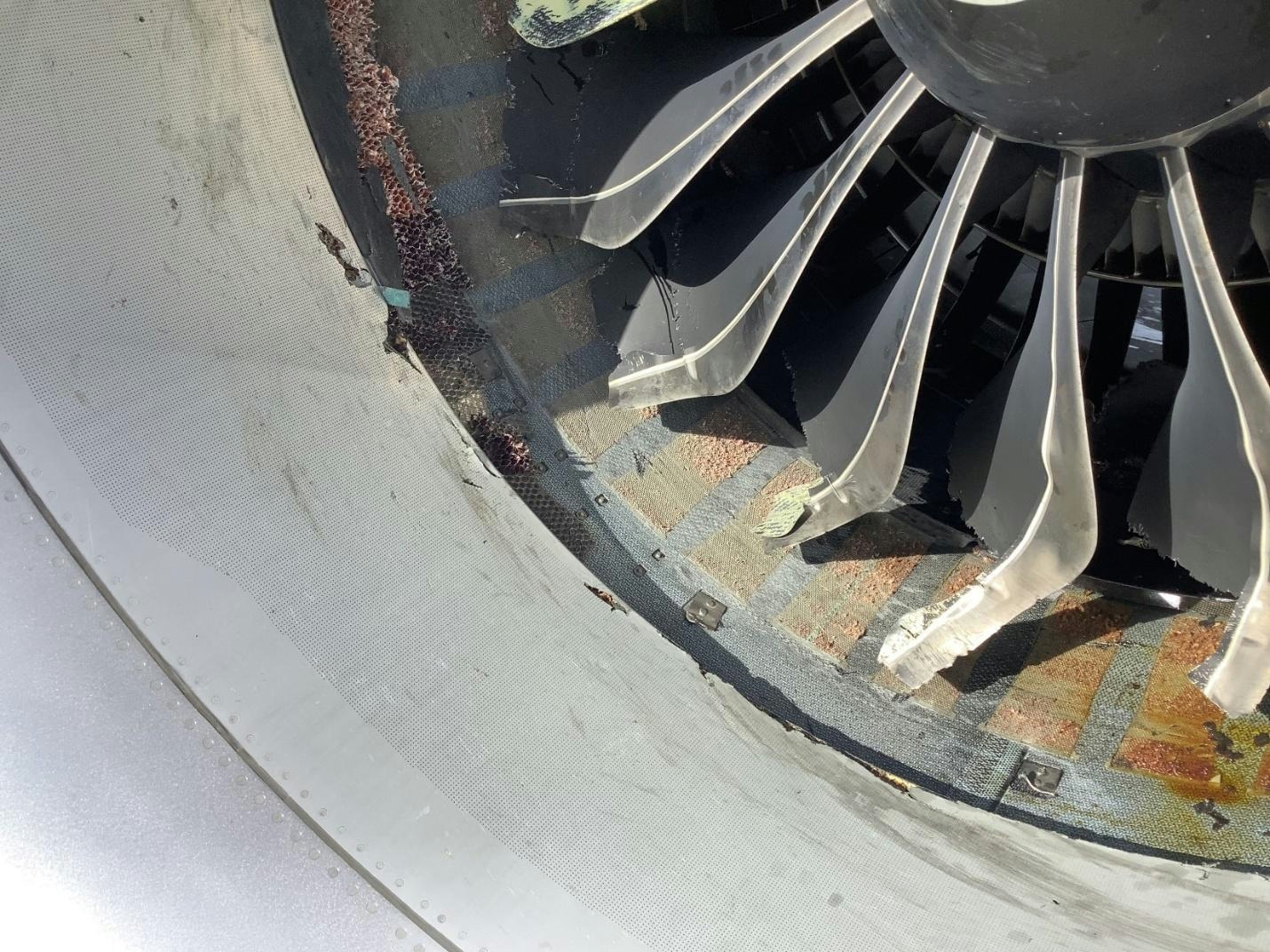
Ascend Airways Confronts Reliability Challenges with CFM LEAP Engines on 737 Fleet
Ascend Airways is currently facing significant reliability issues related to the CFM International LEAP-1B engines installed on its Boeing 737 Max 8 aircraft. The UK-based wet lease operator, which specializes in short-term ACMI (aircraft, crew, maintenance, and insurance) contracts, has reported that while it remains generally satisfied with the Max 8 airframes, the LEAP engines have demonstrated a pronounced sensitivity to operating environments. Chief Executive Alastair Wilson highlighted that the airline’s operations in dry and dusty regions, particularly across the Middle East and the Indian subcontinent, have exposed the engines to fine sand and harsh conditions that accelerate wear and necessitate more frequent maintenance interventions.
Wilson explained that fine sand is especially damaging to the LEAP engines, significantly reducing their on-wing lifespan compared to the older CFM56 turbofans used on the 737NG series. In some cases, the time between required engine shop visits has been cut by as much as one-third when operating in the Middle East and North Africa. The situation is even more acute on the Indian subcontinent, where engine component lifespans can be halved relative to European operations. This degradation in engine durability presents a direct financial challenge for Ascend Airways, whose business model depends on efficiently managing costs across diverse markets. Wilson noted that the Indian wet-lease market is particularly price-sensitive, with average airfares roughly half those in Europe, making it difficult to absorb the increased maintenance expenses without impacting competitiveness.
Broader Industry Context and Operational Implications
Ascend Airways’ difficulties with the LEAP engines occur amid wider industry challenges affecting engine reliability and supply chains. Leading aircraft manufacturers and airlines have reported similar durability concerns with next-generation powerplants. Airbus CEO Guillaume Faury recently identified shortages of CFM International LEAP-1A engines as a key factor behind delays in A320neo-family deliveries. Embraer has also experienced production slowdowns due to limited availability of GE Aerospace CF34 turbofans. Additionally, a global recall of Pratt & Whitney’s geared turbofan (GTF) engines has grounded hundreds of A320neo-family aircraft since mid-2023, further straining the market.
Although operators of Max jets and A320neos equipped with LEAP engines have generally maintained higher fleet availability than those relying on GTF-powered aircraft, the CFM engines have not been immune to operational setbacks. Supply chain disruptions, compounded by recent labor strikes at GE Aerospace—one of the LEAP engine’s key manufacturers alongside Safran Aircraft Engines—have intensified delivery delays and risk further interruptions. These challenges extend beyond Ascend Airways, threatening to impact the broader aviation sector’s ability to meet demand and maintain reliable schedules.
The ongoing reliability issues have also attracted increased regulatory scrutiny and raised concerns among passengers regarding flight dependability. Competitors may seek to leverage Ascend Airways’ operational difficulties by emphasizing their own service reliability. As engine manufacturers work to enhance durability and resolve production bottlenecks, the aviation industry continues to navigate a period marked by uncertainty and heightened operational risk.
Comments

Etihad Airways Suspends Airbus A380 Flights on Key Route

Aditya Birla Group Seeks Approval for Aircraft Leasing in GIFT City

Qatar Airways Highlights Innovation and Connectivity at Arabian Travel Market 2026

Hong Kong's Five-Year Plan Includes Andrew Fan's Aircraft Parts Processing Hub Proposal

ACIA Aero Leasing Delivers ATR72-600 to Air Nostrum

RTX Appoints Jill Albertelli as Head of Pratt & Whitney

TAT Technologies Joins Beyond Aero Hydrogen Aircraft Program

AURAK Study Highlights Barriers to Air Taxi Adoption in Emerging Economies

Xiamen Air Selects Altitude for 787 Maintenance at Heathrow

Etihad and Swissport Extend Global Partnership
