image

AeroGenie — Your Intelligent Copilot.

Ask anything. Analyze everything. Act instantly.

Trending

Categories

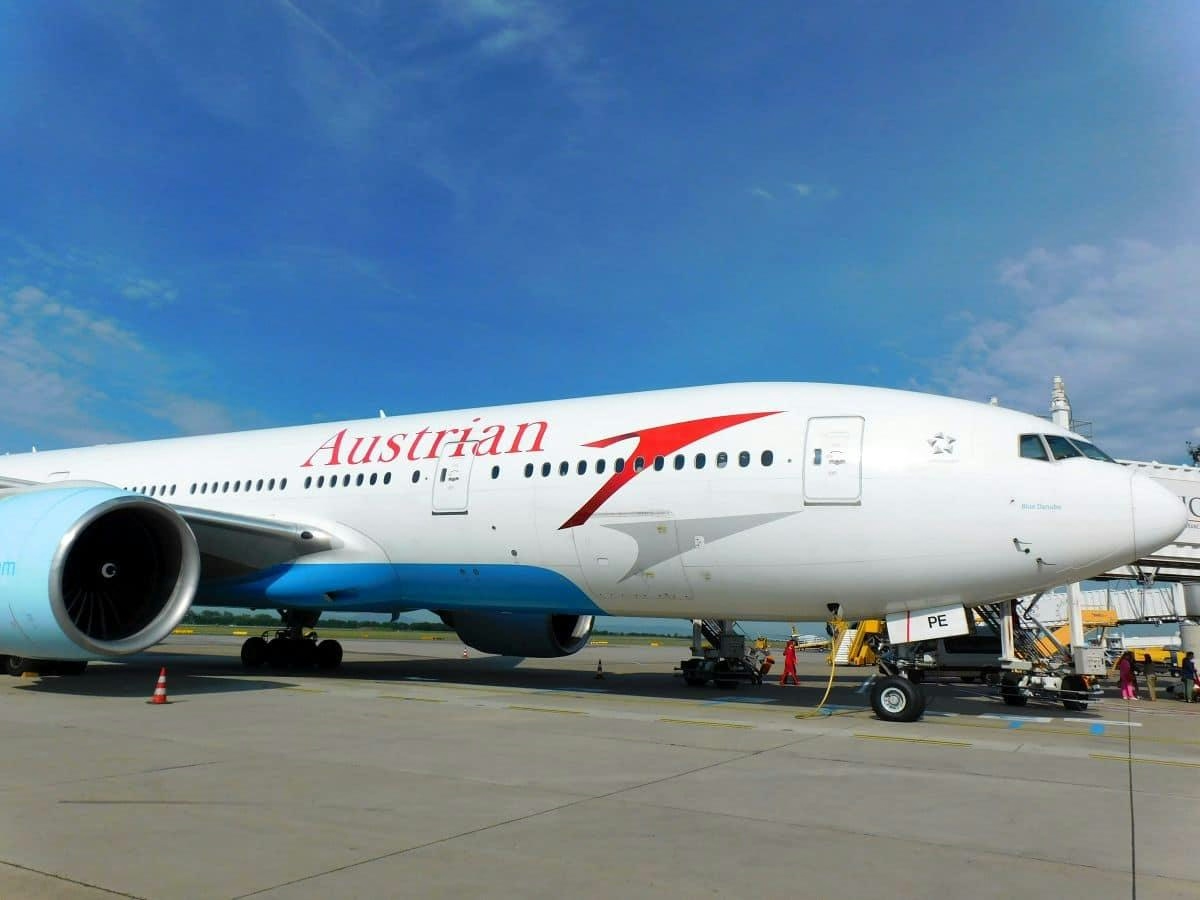
Austrian Airlines Unveils AI-Generated Christmas Song for Holiday Travel
December 22, 2025By ePlane AI
Austrian Airlines Unveils AI-Generated Christmas Song for Holiday Travel
0
0
Austrian Airlines
AI In Aviation
Holiday Travel Trends

Austrian Airlines Unveils AI-Generated Christmas Song for Holiday Travel

Innovation in Holiday Marketing

Austrian Airlines has introduced a novel approach to its holiday campaign by releasing an electro-pop Christmas song created entirely through artificial intelligence. The "Merry Flynachten" initiative marks a significant departure from the traditional choral arrangements commonly associated with airline holiday advertising. Both the lyrics and music were generated using advanced AI tools, reflecting the airline’s commitment to embracing digital innovation.

The campaign’s music video, produced internally, features a diverse group of employees, including cabin crew, engineers, and ground staff. This choice highlights the operational realities and camaraderie that define the busy winter travel season. The song itself incorporates urban beats and industrial sounds, such as turbine noise, aiming to evoke the distinctive atmosphere of airport operations during the holidays.

Strategic Positioning and Industry Context

Ingrid Gogl, Head of Brand Communications at Austrian Airlines, explained that the campaign seeks to showcase the professionalism and humor of the airline’s staff during peak travel periods. The airline is positioning itself as a modern, digitally savvy brand within a highly competitive international market. The campaign will be disseminated across social media, digital advertising platforms, and internal channels as part of a comprehensive 360-degree marketing strategy.

However, the use of AI-generated content in holiday marketing carries inherent risks. Recent industry examples illustrate mixed consumer reactions. For instance, McDonald’s AI-generated Christmas advertisement faced criticism for perceived lack of authenticity and inappropriate tone, as reported by The Verge. This underscores a potential challenge for Austrian Airlines, especially as travelers increasingly seek genuine and positive holiday experiences. This demand coincides with a broader trend of rising holiday travel interest and forecasts of lower airfares in 2025, according to Hotel News Resource.

Industry analysts note that airlines are progressively adopting in-house productions and AI-driven content to reduce marketing costs and enhance employee engagement. Austrian Airlines’ strategy blurs the line between internal motivation and external customer outreach by featuring real employees in the music video, thereby aiming to boost authenticity. As competitors may respond by either embracing similar AI-powered campaigns or reinforcing traditional, human-created holiday content, the success of such digital strategies will likely hinge on consumer preferences for emotional resonance and authenticity.

Technological Implications and Future Outlook

From a technical perspective, the campaign exemplifies the expanding role of AI and digitalization within the aviation sector. Beyond operational applications such as route optimization and data transmission, generative AI is now influencing creative marketing processes. These tools enable rapid production of timely, wide-reaching content, signaling a shift from conventional acoustic cues to rhythm-driven communication that reflects the dynamic nature of modern travel.

Austrian Airlines’ AI-generated Christmas song thus functions both as a branding instrument and an experiment in the potential of technological innovation to enhance—or possibly challenge—the authenticity that travelers expect during the holiday season.

More news
Virgin Introduces AI Concierge Service

Virgin Introduces AI Concierge Service

Virgin Atlantic Launches AI Concierge Service to Enhance Travel Experience Virgin Atlantic has introduced an AI-powered digital Concierge aimed at simplifying travel planning for its customers. Developed in collaboration with software company Tomoro and utilizing OpenAI’s advanced multi-modal artificial intelligence, the service is now accessible on both the Virgin Atlantic and Virgin Atlantic Holidays websites. A New Era in Travel Planning The web-based Concierge enables users to plan, book, and explore upcoming trips through natural conversational interactions, accommodating input via tapping, typing, or voice commands. Beyond trip planning, the AI assistant also addresses inquiries related to the Flying Club loyalty program and general customer service, striving to deliver a seamless and personalized experience for travelers. Siobhan Fitzpatrick, Chief Experience Officer at Virgin Atlantic, emphasized the significance of the launch, stating, “Our aim is to deliver brilliantly different experiences while continuing our evolution from challenger to leader in premium travel. The launch of our new Concierge brings that philosophy to life, making travel feel personal, blending the warmth of our people with the power of technology to make every journey effortless.” She highlighted the initiative as a key step toward redefining premium service in the digital era and positioning Virgin Atlantic as the most loved travel company. Balancing Innovation with Service Excellence While the AI Concierge marks a notable advancement in Virgin Atlantic’s digital transformation, it also presents challenges. Integrating the new system smoothly with existing booking and customer service platforms will be essential to maintaining operational efficiency. Moreover, preserving the high standards of service traditionally associated with human concierges remains a priority. The airline must also manage customer expectations, as some travelers may harbor reservations about AI’s capacity to replicate the nuanced and empathetic service delivered by human agents. Industry analysts observe that competitors are likely to respond by either enhancing their own AI capabilities or emphasizing the value of human interaction to distinguish their offerings. Although airlines are increasingly adopting AI to improve operational efficiency, many consumers continue to prefer human contact, particularly in premium travel segments where personalized service is paramount. Currently available as a web application, Virgin Atlantic plans to extend the Concierge’s functionality by integrating it into a new mobile app scheduled for release in 2026. As the airline navigates the intersection of technological innovation and personalized service, the success of the AI Concierge will depend on its ability to adapt to evolving customer expectations in an increasingly digital landscape.
NASA Armstrong Advances Flight Research for 2025

NASA Armstrong Advances Flight Research for 2025

NASA Armstrong Advances Flight Research for 2025 In 2025, NASA’s Armstrong Flight Research Center in Edwards, California, continued to spearhead advancements in aeronautics, Earth science, exploration technologies, and emerging aviation systems. As a principal NASA test site, Armstrong’s multidisciplinary teams progressed projects from initial concept evaluations to comprehensive flight test campaigns. Their efforts focused on refining measurement instruments, enhancing safety protocols, and generating essential data to support NASA’s diverse mission portfolio. Situated in the Mojave Desert, Armstrong’s engineers, technicians, pilots, and mission support personnel applied rigorous engineering principles to address real-world performance challenges. Their work not only informed current aircraft operations but also laid a foundation for the next generation of aviation and exploration systems. The center’s achievements in 2025 highlighted the commitment of its workforce, who successfully navigated complex testing environments while upholding stringent safety and professionalism standards amid demanding conditions. Brad Flick, director of NASA Armstrong, emphasized the team’s dedication, stating, “We executed our mission work safely, including flight of the first piloted NASA X-plane in decades, while under challenging conditions. It tells me our people embrace the work we do and are willing to maintain high levels of professionalism while enduring personal stress and uncertainty. It’s a testimony to the dedication of our NASA and contractor workforce.” Armstrong also strengthened its partnerships with industry leaders, small businesses, and academic institutions, expanding opportunities for students and early career professionals. These collaborations reinforced the center’s reputation as a hub where innovation is validated through flight and research continues to shape the future of aviation and space exploration. Quiet Supersonic Flight and the Quesst Mission A central focus for Armstrong in 2025 was quiet supersonic research supporting NASA’s Quesst mission. The team prepared the X-59 quiet supersonic research aircraft for its inaugural flight by conducting electromagnetic interference tests, engine evaluations, and taxi preparations. The Schlieren, Airborne Measurements, and Range Operations for Quesst (SCHAMROQ) team completed aircraft integration and calibration flights using a shock-sensing probe, enhancing tools designed to characterize shock waves generated by the X-59. These efforts culminated in the X-59’s historic first flight on October 28, marking its arrival at Armstrong for continued testing. Concurrently, the Commercial Supersonic Technology (CST) team validated airborne measurement systems aboard NASA F-15 aircraft, establishing the technical groundwork for forthcoming community response studies. These studies aim to evaluate whether quieter supersonic sonic booms could facilitate the future of commercial supersonic travel. Navigating Technical and Market Challenges Looking forward, Armstrong faces significant challenges in ensuring the precision of new navigation systems and the reliability of advanced sensor technologies, particularly those related to supersonic parachute deployments. Overcoming these technical obstacles is critical as NASA pursues applications for future planetary missions and commercial space communications. The center’s advancements have attracted considerable attention within the broader aerospace sector. Industry observers are closely monitoring the implications of Armstrong’s innovations, while competitors—including other research institutions and commercial aerospace firms—are expected to intensify their development efforts in response. Through its sustained research initiatives and collaborative partnerships, NASA Armstrong remains at the forefront of aeronautics and space technology, actively shaping the trajectory of future exploration and commercial aviation.
Regent Reports Significant Progress in Technology, Business, and Manufacturing

Regent Reports Significant Progress in Technology, Business, and Manufacturing

Regent Reports Significant Progress in Technology, Business, and Manufacturing NORTH KINGSTOWN, R.I., Dec. 22, 2025 — REGENT Craft, the developer and manufacturer of Seaglider™ vessels, has announced a landmark year characterized by substantial advancements across technology, business development, and manufacturing. The company’s achievements in 2025 include the first-ever human operations on a full-scale Seaglider prototype, expanded international customer engagement, new defense contracts, and accelerated progress toward large-scale production. Billy Thalheimer, REGENT’s co-founder and CEO, emphasized the company’s elevated status within the advanced mobility sector. He stated, “We’ve proven the stability and capability of the full-scale Seaglider on the water, expanded our commercial and defense partnerships, advanced certification pathways, and built the infrastructure to produce Seagliders at scale.” Technological Breakthroughs and Certification Progress In 2025, REGENT’s Viceroy Seaglider prototype underwent full-scale testing, marking the world’s first crewed operations of a vessel of its kind. Since March, the prototype has been subjected to frequent on-water trials, enabling the company to validate and refine its technology at an industry-leading pace. REGENT’s intellectual property portfolio has expanded significantly, now including 10 granted and allowed utility patents, four design patents, and over 40 additional patents pending worldwide. Alongside these developments, REGENT has enhanced its simulation and autonomy systems, improving cockpit and training environments to better prepare crews for future commercial service. The company has also made decisive progress on regulatory matters, submitting its Design Basis Agreement to the U.S. Coast Guard and strengthening its collaboration with Lloyd’s Register to harmonize international certification standards. These efforts are critical as REGENT navigates the complex regulatory landscape surrounding new human flight operations. Expanding Global Demand and Defense Initiatives Demand for Seagliders surged throughout 2025, with growing interest from diverse markets including Hawai‘i, Brazil, Scotland, and the United Arab Emirates. While originally designed for coastal passenger transport, Seagliders are increasingly being considered for cargo delivery, last-mile logistics, and offshore energy applications. REGENT currently holds more than $10 billion in customer commitments, underscoring strong market confidence. On the defense front, REGENT established a dedicated business line, REGENT Defense, to support maritime national security missions. The company expanded its product offerings across the Squire and Viceroy platforms, integrating autonomy, AI-enabled hybrid configurations, and mission-specific adaptations. Additionally, REGENT extended its partnership with the U.S. Marine Corps Warfighting Lab, securing $15 million in contracted work. Challenges Amid Market Dynamics Despite its considerable momentum, REGENT faces challenges as it scales production and ensures regulatory compliance for its innovative Seaglider technology. The company must also contend with increasing competition from other autonomous underwater vehicle manufacturers. Market analysts suggest that REGENT’s technological and manufacturing progress may attract heightened investor interest, while competitors could respond with intensified research and development or strategic partnerships to maintain their positions in both defense and commercial sectors. As REGENT continues to advance its technology and broaden its market presence, its achievements in 2025 position the company as a leading force in the evolving landscape of advanced maritime mobility.
Air India to Receive First Boeing 787-9 Dreamliner in Early 2026

Air India to Receive First Boeing 787-9 Dreamliner in Early 2026

Air India to Receive First Boeing 787-9 Dreamliner in Early 2026 Tata Group-owned Air India is set to take delivery of its first Boeing 787-9 Dreamliner, registered as VT-AWA, in early 2026. This acquisition marks a pivotal advancement in the airline’s ongoing wide-body fleet modernization efforts. Scheduled to arrive before the end of the first quarter, the new aircraft will enhance Air India’s long-haul capacity from major hubs such as Delhi and Mumbai, addressing the rising demand for international travel. Fleet Modernization and Aircraft Features The Boeing 787-9 Dreamliner occupies a middle ground between the smaller 787-8 and the larger 787-10 variants, offering a longer fuselage, increased payload, and extended range compared to Air India’s existing 787-8 fleet. Typically configured to seat between 250 and 290 passengers across three classes, Air India’s 787-9s are expected to showcase a refreshed cabin design. This includes an expanded premium economy section and an upgraded business class, recently unveiled to elevate passenger comfort and appeal particularly to business travelers. Constructed with advanced composite materials, the 787-9 is approximately 20% more fuel-efficient than older wide-body aircraft. Its next-generation engines contribute to reduced fuel consumption, lower emissions, and diminished noise levels. With a range of roughly 7,565 nautical miles, the aircraft is capable of nonstop flights to destinations across Europe, East Asia, and North America. Passenger comfort is further enhanced through features such as larger windows, improved cabin pressurization, advanced air filtration systems, and higher humidity levels, all designed to mitigate fatigue on ultra-long-haul journeys. Strategic Expansion and Operational Considerations This delivery represents the first of 20 Boeing 787-9s ordered by Air India as part of its substantial 2023 order exceeding 200 Boeing aircraft. The airline plans a phased induction of these Dreamliners over the next two years. Alongside the 787-9s, Air India anticipates adding Airbus A350-1000s to its fleet in 2026, while simultaneously retiring older leased aircraft to maintain a stable fleet size and reduce the average age of its aircraft. Integrating the new Dreamliners presents both opportunities and challenges. Air India must ensure that the upgraded business class and cabin enhancements meet the evolving expectations of passengers, while seamlessly incorporating the aircraft into its operations to avoid disruptions. Maintaining competitive pricing will be essential, particularly as rival carriers may respond by upgrading their own fleets or adjusting fares to protect market share. Industry analysts expect heightened interest in Air India’s services, especially among premium travelers. Boeing’s recent stock surge and forecasts for increased 787 deliveries in 2026 underscore strong market confidence in the Dreamliner program, a development that could indirectly benefit Air India as it expands its international reach. Industry Challenges and Future Outlook Despite these positive developments, broader industry constraints persist. Boeing has emphasized that aircraft supply is only one factor influencing capacity growth in India. Infrastructure readiness at major airports, availability of landing and parking slots, regulatory approval timelines, and global maintenance capacity remain critical considerations. Additionally, challenges related to pilot availability and engine maintenance bottlenecks continue to affect operational efficiency. As Air India prepares to welcome its first 787-9, the airline is positioning itself to better align international demand with available capacity, aiming to strengthen its competitive position in the rapidly evolving global aviation landscape.
PACE Aerospace & IT Releases Updated VAPS XT ARINC 661 DO-178C Certification Kit

PACE Aerospace & IT Releases Updated VAPS XT ARINC 661 DO-178C Certification Kit

PACE Aerospace & IT Releases Updated VAPS XT ARINC 661 DO-178C Certification Kit **Montreal, Canada – December 22, 2025** – PACE Aerospace & IT, a prominent provider of aviation software and services, has announced the release of an updated version of its VAPS XT ARINC 661 DO-178C Certification Kit. This latest iteration extends certification support to DO-178C Design Assurance Level A (DAL A) for the new human-machine interface (HMI) and ARINC 661 Part 1 features introduced in VAPS XT 5.0. The update underscores PACE’s dedication to assisting avionics teams in meeting the most stringent safety and certification requirements within the aerospace industry. Enhancing Certification and Development Efficiency The VAPS XT-178 Certification Kit is engineered to facilitate the development and certification of cockpit display systems (CDS) by providing a comprehensive suite of qualifiable and certifiable tools. It includes ARINC 661-compliant commercial off-the-shelf (COTS) development tools and software components, enabling automatic generation of certifiable widget code directly from VAPS XT-178 models. The kit also offers certifiable ARINC 661 CDS Kernel and Platform Abstraction Layer components, along with qualifiable ARINC 661 Binary Definition File and CDS Binary Resource Generators. This integrated toolset supports global CDS data configuration through downloadable binary files, allowing efficient management of styling elements such as colors, symbol tables, and animation tables. By streamlining updates to the CDS appearance and look and feel, the kit significantly reduces certification effort. It also supports ARINC Supplement 2-9 system design and build, providing certification credit for generated code, binary data files, and software components, which in turn minimizes verification activities. The kit enables rapid deployment of ARINC 661 CDS look and feel, with fast turnaround times for changes through automated code and resource generation. Early validation of system requirements is facilitated through simulation, helping to identify potential issues at an earlier stage. By eliminating manual coding and bug-fixing cycles, the kit ensures reliable code generation and supports direct deployment to multiple embedded certification platforms. Comprehensive DO-178C Compliance Support PACE’s updated certification kit delivers a full range of artifacts to support compliance with DO-178C standards. Key components include the VAPS XT-178 Code Generator and ARINC 661 BinaryDF Generator, both qualifying as development tools under DO-330 TQL-1. The kit also features certifiable software components such as the VAPS XT-178 Standard Coded Objects, Runtime Kernel, and Platform Abstraction Layer, all certified to DO-178C Level A. As regulatory scrutiny intensifies across the aviation sector, PACE’s enhanced kit addresses not only software certification challenges but also broader compliance issues, including stringent head injury criteria that have complicated seat manufacturing. Recent industry developments, such as Airbus’s swift resolution of a software crisis, have highlighted the operational and market risks associated with inadequate certification processes. In this competitive environment, PACE’s advancements are expected to encourage similar initiatives among other providers striving to meet DO-178C standards and mitigate costly disruptions. With over 25 years of experience in supporting certifiable development, PACE’s VAPS XT-178 remains a leading COTS tool for HMI certification worldwide. This latest update aims to enable faster, smarter, and more scalable HMI development while reducing risk and engineering effort. For further details, visit https://vaps.txtgroup.com/. About PACE A subsidiary of TXT e-solutions, PACE develops engineering software solutions tailored for high-technology markets. Its offerings support mission- and business-critical processes throughout the product lifecycle and are widely employed in aircraft design, HMI and embedded graphics, product configuration, aircraft analysis, operational efficiency management, and XR/AI-based training.
New American eVTOL Aims to Transform Air Taxi Industry

New American eVTOL Aims to Transform Air Taxi Industry

New American eVTOL Aims to Transform Air Taxi Industry A Strategic Entry into Urban Air Mobility LIFT Aircraft, a Texas-based startup, is making a distinctive entrance into the commercial air taxi sector by adopting a measured and innovative approach that diverges from the strategies of established industry leaders. Instead of immediately developing a complex, heavy-duty air taxi subject to prolonged certification processes, LIFT began with the Hexa-U, an ultralight, non-commercial personal eVTOL. This initial step enabled the company to validate its core technologies and collect valuable real-world data without the immediate pressures associated with commercial certification. Building on this foundation, LIFT expanded its portfolio with the Hexa-S, a sport version designed for broader recreational applications. The company has now unveiled its most ambitious model to date: the Hexa-C. This type-certified eVTOL is engineered specifically for fully autonomous air taxi service. The Federal Aviation Administration (FAA) certification process for the Hexa-C is currently underway, positioning the aircraft to enter the commercial market in the near future. Innovation and Competitive Positioning LIFT asserts that the Hexa-C distinguishes itself through cost efficiency, claiming it is the only air taxi with operating expenses comparable to those of ground-based ridesharing services. This cost advantage is a critical differentiator in a market where most competitors focus on larger, more expensive aircraft. LIFT’s strategy of leveraging a single, validated platform across all three Hexa models has helped mitigate development risks and reduce costs. Each variant shares the same distributed electric propulsion system and intuitive flight controls, with the Hexa-C featuring long-range battery packs capable of up to 40 minutes of flight and compliance with instrument flight rules (IFR) weather requirements. Despite these advantages, LIFT is entering a rapidly evolving and fiercely competitive market. Established players such as Joby Aviation are scaling production aggressively, targeting a manufacturing rate of four eVTOL air taxis per month by 2027. The sector continues to attract substantial investor interest, exemplified by Beta Technologies’ stock surge following a $1 billion motor supply agreement with Eve Air Mobility. The competitive landscape is further intensified by legal disputes, including Joby Aviation’s lawsuit against Archer Aviation over alleged trade secret theft, highlighting the high stakes involved. Regulatory and Infrastructure Challenges Beyond competition, the eVTOL industry faces significant regulatory and infrastructure hurdles. The FAA’s evolving certification standards present ongoing challenges for all operators seeking to bring air taxis to market. Additionally, the development of suitable landing sites remains a critical obstacle. To address these infrastructure gaps, innovative solutions such as solar-powered water platforms are being explored, aiming to expand the operational flexibility of eVTOL aircraft. LIFT’s incremental approach—progressing from recreational and sport models to commercial service—may provide the company with a competitive edge in terms of cost control and operational adaptability. The ultimate objective is to realize fully autonomous, self-flying commercial air mobility. If successful, the compact, single-seat Hexa-C, with its distinctive 18-motor configuration, could offer an affordable and accessible alternative to traditional urban transportation. Meanwhile, LIFT continues to market the Hexa-U for personal use, which requires no pilot’s license, through its flight experience centers, alongside the Hexa-S for sport applications. As the air taxi industry accelerates, LIFT’s innovative strategy and emphasis on affordability position it to carve out a significant niche within the emerging urban air mobility market.
Trends Point to a Strong Year for M&A in the MRO Sector in 2026

Trends Point to a Strong Year for M&A in the MRO Sector in 2026

Trends Point to a Strong Year for M&A in the MRO Sector in 2026 Ryan Kirby, junior partner at Alderman & Company, provides a comprehensive end-of-year analysis of the mid-market aviation sector, emphasizing several enduring factors that suggest a robust outlook for mergers and acquisitions (M&A) within the Maintenance, Repair, and Overhaul (MRO) industry as 2026 approaches. Stable Demand Amid Constrained Supply Global commercial air travel demand has demonstrated remarkable resilience despite aircraft production remaining below pre-pandemic levels. Data from Airports Council International projects global passenger traffic to reach 9.8 billion in 2025, marking a 3.7% increase year-on-year. International travel is expected to grow by 5.3%, surpassing domestic travel growth, which is forecasted at 2.4%. In the United States, Transportation Security Administration (TSA) figures reveal that 828 million passengers were screened from January to November 2025, representing a 6.9% increase compared to the same period in 2019. However, the modest 0.3% rise from 2024 suggests a stabilization in travel demand. This balance in demand is influenced by a combination of economic factors, pricing strategies, capacity limitations, and shifting travel behaviors. Conversely, the supply side presents a more constrained picture. The International Air Transport Association (IATA) reports that commercial jet production remains significantly below historical averages, with order backlogs exceeding 17,000 aircraft—equivalent to nearly 60% of the active global fleet, compared to 30-40% prior to 2019. Engine availability continues to be a critical bottleneck, compounded by broader production challenges. IATA forecasts that the disparity between production capacity and airline requirements may not resolve until between 2031 and 2034. Aftermarket Strength and M&A Momentum These supply constraints have contributed to an aging global airline fleet, which now averages 15.1 years, up from 11.1 years in 2019. This trend has sustained strong demand for commercial aircraft aftermarket services. Contrary to early pandemic predictions of a slowdown, ongoing production delays and heightened safety concerns have maintained elevated demand for MRO offerings. Valuations within the sector reflect this sustained momentum. As of late 2025, trailing twelve-month price-to-earnings (P/E) ratios for leading MRO companies remain notably high: AAR Corp at 103, Heico Corp at 68, StandardAero at 49, and TransDigm Group at 40. These robust valuations, coupled with persistent aftermarket demand, are attracting significant buyer interest and are expected to drive active M&A activity throughout 2026. Challenges and Competitive Dynamics Despite the optimistic outlook, several challenges could moderate enthusiasm for M&A transactions. Regulatory scrutiny, particularly concerning antitrust issues, is anticipated to intensify as consolidation accelerates within the sector. Inflationary pressures and rising costs of living may also influence deal structures and valuations. Furthermore, potential supply-side disruptions stemming from a weakening labor market could prompt increased caution among investors. In response to these challenges, industry competitors are likely to pursue aggressive consolidation strategies, including platform roll-ups, to achieve greater scale and foster innovation. Such initiatives aim to strengthen market positions and leverage the sector’s strong fundamentals, even as companies navigate regulatory hurdles and economic uncertainties. Outlook With sustained demand, an aging fleet, and constrained new aircraft supply, the MRO sector is positioned for a dynamic year of mergers and acquisitions in 2026. Industry participants will need to carefully balance growth objectives with regulatory compliance and evolving market risks to fully capitalize on the sector’s potential.
AI and Robotics Transform Aviation Maintenance

AI and Robotics Transform Aviation Maintenance

AI and Robotics Transform Aviation Maintenance Artificial intelligence (AI), robotics, and blockchain technologies are increasingly reshaping aviation maintenance, offering the promise of enhanced efficiency, transparency, and safety. Historically, the aviation sector has been slower than other industries to adopt advanced AI solutions, despite possessing extensive operational data. However, recent advancements indicate a significant shift toward digital transformation within this critical field. Blockchain: Enhancing Security and Transparency in Aviation Records Blockchain technology, a decentralized form of distributed ledger, records data across multiple computers, making retroactive alterations virtually impossible. Each transaction, or “block,” is cryptographically linked to the previous one, creating a continuous, time-stamped chain. This structure ensures transparency, traceability, and data integrity without dependence on a central authority. Originally developed for digital currencies, blockchain has found applications in sectors requiring rigorous verification and auditability, including aviation. Given the aviation industry's stringent safety standards and complex supply chains, blockchain’s attributes of immutability and cryptographic trust are particularly valuable. Currently, aviation compliance often relies on paper-based or siloed digital systems. International studies reveal that up to 60% of critical documents—such as licenses, certificates, and training records—remain in non-integrated formats. This fragmentation results in costly verification delays, documentation inconsistencies, and heightened risks of fraud or counterfeit parts. Blockchain’s tamper-evident audit trails and cryptographic verification mechanisms have the potential to streamline compliance processes, reduce human error, and enable instant authentication of credentials on a global scale. Mindaugas Rainys, CEO of AERVIVA, emphasizes the importance of blockchain in aviation safety: “Compliance and verification are fundamental to safety. Blockchain introduces a layer of trust that is both technological and procedural. It ensures that every credential, entry, and certification can be authenticated instantly, anywhere in the world.” Several industry pilots are already underway. SITA, in collaboration with the International Civil Aviation Organization (ICAO), has demonstrated privacy-preserving, offline verification of electronic personnel licenses, setting the stage for global standards. Meanwhile, the International Air Transport Association (IATA) is advancing digital identity initiatives that leverage blockchain and decentralized identifiers to create trusted, portable credentials for both staff and passengers. Active pilots are exploring the use of these technologies for staff authentication across various operations. AI and Robotics: Tackling Workforce Shortages and Improving Efficiency Despite the transformative potential of AI and robotics, skepticism remains among airline executives, shaped by previous disappointments and the slow maturation of applied AI technologies. Nonetheless, recent deployments of AI-driven engine technologies, such as those introduced by International Airlines Group (IAG), have been met with cautious optimism, helping to rebuild confidence in AI’s practical capabilities. In response, competitors are making substantial investments in robotics, focusing on humanoid robots and AI-enabled enterprise automation. These innovations aim to address critical challenges, including the global shortage of maintenance technicians. Solutions like Zymbly are being introduced to enhance workforce productivity by simplifying documentation and administrative tasks, thereby allowing technicians to concentrate on essential maintenance activities. Outlook for Digital Transformation in Aviation Maintenance Market indicators reflect a growing interest in digital transformation within the aviation sector. Industry surveys from 2021 reveal that nearly 59% of airlines had planned blockchain pilot or research programs. As AI, robotics, and blockchain technologies continue to evolve, their integration is expected to deliver safer, more efficient, and more reliable aviation maintenance—contingent on the industry’s ability to overcome persistent skepticism and operational challenges.
Boeing Strengthens Supplier Oversight to Reduce Defects in Aircraft Production

Boeing Strengthens Supplier Oversight to Reduce Defects in Aircraft Production

Boeing Strengthens Supplier Oversight to Reduce Defects in Aircraft Production Enhanced Supplier Management Amid Supply Chain Challenges Boeing has intensified its oversight of a vast global supplier network in an effort to reduce defects and streamline aircraft production. Company executives report that these measures are already yielding significant improvements as the aerospace giant works to stabilize its complex supply chain. India remains a pivotal market for Boeing, with over 325 suppliers contributing more than $1.25 billion annually in sourcing. The country operates more than 265 Boeing commercial and military aircraft, underscoring its strategic importance within Boeing’s global operations. The aviation industry has faced persistent supply chain disruptions in recent years, largely due to the COVID-19 pandemic and ongoing geopolitical uncertainties. These challenges have resulted in delayed aircraft deliveries and shortages of critical components and materials, prompting Boeing to adopt a more rigorous approach to supplier management. Impact of Increased Oversight and Data-Driven Risk Mitigation Hector Silva, Vice President of Regulatory Compliance & Quality Core for Boeing Commercial Airplanes, revealed that since March 2024, the company has significantly ramped up its supplier oversight. This initiative has contributed to a reduction in defects by as much as 40 percent. Additionally, pending jobs on aircraft prior to delivery have decreased by 60 percent. Silva highlighted the proactive use of data analytics as a key tool in identifying and mitigating supply chain risks, enabling Boeing to address potential issues before they impact production. Scott Stocker, Vice President and General Manager of the 787 Program and Boeing South Carolina Site Leader, emphasized the scale and complexity of Boeing’s supply chain organization, which employs several thousand personnel. He explained that the company continuously monitors factors that could affect suppliers and is prepared to allocate resources to support them when necessary. This includes conducting detailed production reviews focusing on supplier capacity, staffing, and the health of sub-tier supply chains. These efforts form part of Boeing’s “rate readiness” process, designed to support planned increases in monthly 787 production rates. Addressing concerns that heightened oversight might impede production, Stocker stated that the opposite has occurred. The enhanced focus on the supply chain has actually facilitated Boeing’s ramp-up plans by improving operational clarity and responsiveness. Strategic Supplier Partnerships and Future Outlook Katie Ringgold, Vice President and General Manager of the 737 Program and Renton Site Leader, underscored India’s critical role in Boeing’s supply chain. She noted that a robust supply chain is essential for maintaining factory stability and that recent diversification of suppliers has positioned Boeing well for future growth. Key Indian partners include Tata Advanced Systems Ltd, which supplies floor beams for Dreamliners, and Mahindra Aerostructures Pvt Ltd, responsible for inlet outer barrel components. Boeing’s intensified supplier oversight coincides with the company’s broader strategic initiatives, including a shift toward greater vertical integration following its acquisition of Spirit AeroSystems. Managing the seamless integration of new production lines and mitigating potential supply chain disruptions remain top priorities. The market has responded favorably to these developments, with Boeing’s stock rising following the completion of the Spirit AeroSystems deal. Meanwhile, competitors are reassessing their own supply chain strategies, and suppliers to both Boeing and Airbus anticipate increased production demands and potential price adjustments beginning in 2026. As Boeing strives to stabilize production and achieve positive free cash flow by 2026, its supply chain management strategies continue to attract close attention from investors and industry analysts alike.
New $1.5 Billion Infrastructure Plan, Road-Trip App, and Air Taxi Proposal Signal Transport Changes

New $1.5 Billion Infrastructure Plan, Road-Trip App, and Air Taxi Proposal Signal Transport Changes

U.S. Unveils $1.5 Billion Infrastructure Plan Alongside Road-Trip App and Air Taxi Strategy WASHINGTON, D.C. — In a comprehensive effort to reshape the nation’s transportation landscape, U.S. Transportation Secretary Sean P. Duffy announced a series of initiatives last week aimed at modernizing infrastructure and enhancing travel experiences across the country. Central to these efforts is a $1.5 billion funding opportunity under the Better Utilizing Investments to Leverage Development (BUILD) grant program for Fiscal Year 2026, alongside the launch of a nationwide road-trip app and the introduction of the country’s first National Strategy for Advanced Air Mobility. BUILD Grants to Support Large-Scale Transportation Projects The $1.5 billion Notice of Funding Opportunity under the BUILD program is designed to finance significant surface transportation projects, including highways, rail systems, ports, and truck parking facilities. The Department of Transportation emphasized that these competitive grants will prioritize safety improvements, expanded transportation options, increased roadway capacity, and affordability. Revised criteria also highlight infrastructure that enhances the travel experience, supports tourism, improves accessibility for individuals with disabilities, and advances U.S. energy interests. Secretary Duffy framed the initiative as a decisive shift toward practical investments aimed at lowering costs and modernizing aging transportation networks, moving away from the climate and social priorities of previous administrations. He stated, “Under President Trump, America is building again.” Applications for the BUILD grants are due by February 24, 2026, at 5:00 p.m. Eastern. Since its inception in 2009, the program has awarded over $18 billion across 18 funding rounds. The scale of this investment is comparable to international projects such as Kenya’s recent $1.5 billion highway expansion backed by China, underscoring the global competition for infrastructure leadership. Despite the ambitious scope, the plan faces potential challenges, including securing full funding and navigating complex regulatory environments. Market responses have been mixed, with some investors optimistic about the prospects for infrastructure development, while others remain cautious. Competitors may seek to leverage existing infrastructure or invest in complementary technologies to maintain a competitive edge. Explore250 App Encourages National Travel Ahead of 250th Anniversary In conjunction with the funding announcement, the Department of Transportation introduced Explore250, a new mobile application developed in partnership with General Motors and HERE Technologies. Available for free on Apple and Google platforms, the app is designed to inspire Americans to explore the country in anticipation of the nation’s 250th anniversary in 2026. Users can plan road trips, discover more than 250 historic and cultural destinations, and collect digital “stamps” as they travel. Secretary Duffy described Explore250 as a modern tool to reconnect families with America’s geography and history. Mary Barra, Chair and CEO of General Motors, underscored the automaker’s commitment to supporting travel and U.S. manufacturing through this initiative. National Strategy for Advanced Air Mobility Charts Future of Air Travel Looking ahead, Secretary Duffy unveiled the nation’s first Advanced Air Mobility (AAM) National Strategy, which outlines a comprehensive roadmap for integrating highly automated aircraft, including air taxis, into U.S. airspace. The strategy presents 40 recommendations across six key pillars, encompassing airspace integration, infrastructure development, workforce training, and security measures. The emerging AAM market has attracted growing interest, with companies such as Beta Technologies experiencing stock gains following major deals. Archer Aviation’s plans to deploy air taxis in Miami illustrate both the potential and challenges of this sector, as issues related to business aviation infrastructure and regulatory approval remain. The Trump administration’s pilot program aims to accelerate the adoption of new aircraft types and influence market dynamics favorably. Industry groups, airport operators, and technology firms have praised the AAM strategy as a vital step to maintain U.S. competitiveness in next-generation aerospace. Additionally, the Department announced enhanced Federal Railroad Administration oversight of cross-border freight rail operations, addressing safety concerns linked to limited English proficiency among some inbound train crews. Together, these initiatives represent a broad and multifaceted approach to modernizing U.S. transportation, balancing innovation with practical investment while responding to both domestic needs and global infrastructure challenges.
Ask AeroGenie










