Image

Orchestrate AI insights into action

Join the AeroGenie waitlist today!

Trending

Categories

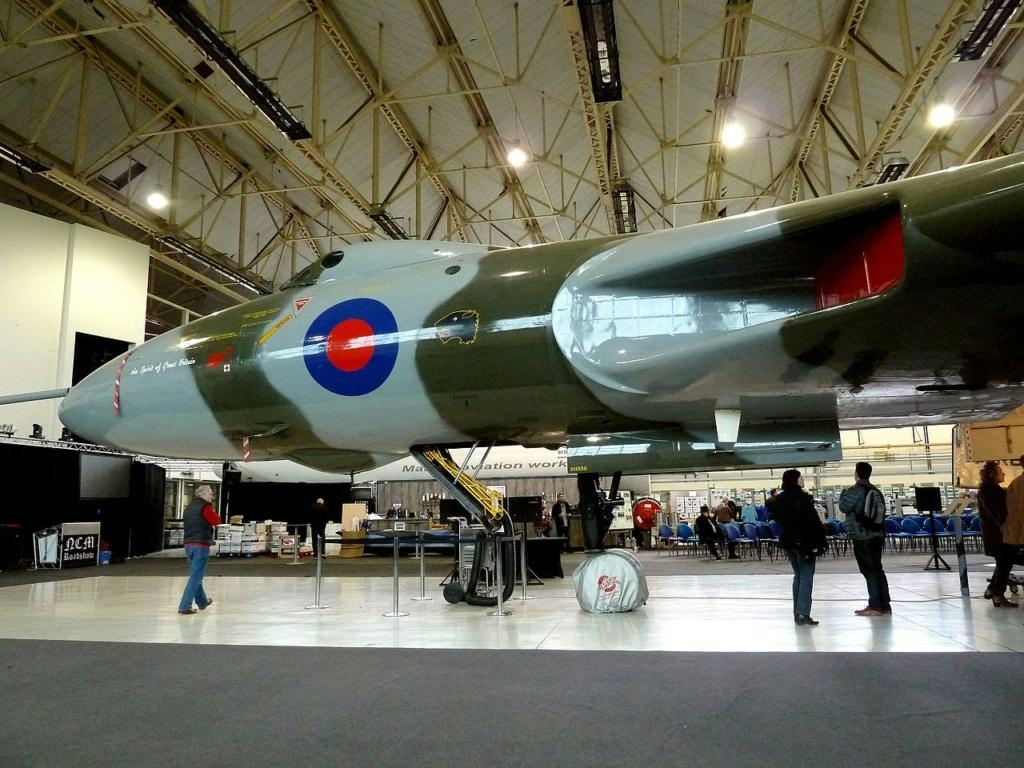
Avro Vulcan XH558 Engine Runs Scheduled at Doncaster Sheffield Airport in 2026
December 5, 2025By ePlane AI
Avro Vulcan XH558 Engine Runs Scheduled at Doncaster Sheffield Airport in 2026
0
0
Avro Vulcan XH558
Engine Runs
Doncaster Sheffield Airport

Avro Vulcan XH558 Engine Runs to Resume at Doncaster Sheffield Airport in 2026

The Vulcan to the Sky Trust (VTST) has announced that the iconic Avro Vulcan XH558 will return to public view through a series of engine runs scheduled for 2026 at Doncaster Sheffield Airport. This development represents a significant moment for British aviation heritage, providing enthusiasts and the general public with a rare opportunity to witness the aircraft’s four Rolls-Royce Olympus engines in operation, albeit while stationary on the ground.

Revival of a Historic Aviation Experience

Engine runs, which involve starting and operating the Vulcan’s engines without flight, have long been a celebrated event among aviation fans. These demonstrations allow visitors to experience the distinctive sound and vibration of the Vulcan’s engines, evoking the aircraft’s operational legacy and highlighting the engineering excellence behind its design. The VTST plans to hold multiple public engine run events throughout 2026, with exact dates to be announced. All activities will take place at Doncaster Sheffield Airport, the aircraft’s home base, and are expected to generate vital funds to support the ongoing preservation of XH558.

Christian Foster, programme director at SY Airport City representing FlyDoncaster, remarked on the significance of the initiative, describing it as a memorable milestone in the airport’s history. He expressed enthusiasm for the project and encouraged public support for the Vulcan to the Sky Trust, emphasizing the unique opportunity to experience this legendary aircraft firsthand. Marc Walters, Chief Executive of VTST, echoed this sentiment, highlighting the importance of the engine runs in reconnecting the public with XH558 and securing essential funding for its preservation. Walters also expressed gratitude to FlyDoncaster for their collaboration in making the events possible.

Challenges and Future Prospects

The resumption of engine runs follows a challenging period for VTST, which has faced considerable financial pressures. Maintaining the Vulcan’s unique engine technology is a complex and costly task, requiring specialized expertise and resources. Organizing large-scale public events also involves logistical challenges, including ensuring safety and managing increased visitor numbers. Despite these obstacles, the announcement has already generated renewed interest among aviation enthusiasts and is anticipated to provide a boost to local tourism.

The Vulcan’s return to public attention coincides with a period of intense focus on technological developments within the aviation industry, as major manufacturers such as Airbus and Boeing navigate their own challenges. Airbus’s recent A320 software recall, for example, has drawn significant industry attention and may impact resource allocation for other projects, including heritage initiatives like the Vulcan engine runs.

Looking ahead, VTST remains committed to its long-term vision of establishing The Vulcan Experience, a dedicated visitor centre and educational hub. In the interim, the return of engine runs is viewed as a critical step in maintaining public engagement and securing the support necessary to preserve XH558 for future generations.

For further details on the Vulcan to the Sky Trust and upcoming events, visit www.vulcantothesky.org.

More news
American Airlines Extends Boeing 777-300ER Service with Major Cabin Upgrade

American Airlines Extends Boeing 777-300ER Service with Major Cabin Upgrade

American Airlines Extends Boeing 777-300ER Service with Major Cabin Upgrade American Airlines has initiated a comprehensive cabin refurbishment program for its Boeing 777-300ER fleet, aiming to extend the operational lifespan of its largest aircraft well into the late 2030s. The first retrofitted aircraft, tail number N718AN—one of the oldest 777-300ERs in the airline’s inventory—returned to service in August following several months of extensive refurbishment. Its inaugural flight with the upgraded interior is scheduled for September 2, operating between New York JFK and Buenos Aires. A Strategic Investment in Fleet Modernization With an average age of 12.4 years, American’s fleet of 20 Boeing 777-300ERs remains relatively young compared to its older 777-200ERs, offering substantial remaining service potential. Rather than pursuing immediate replacement, the airline has opted to invest in a significant cabin overhaul to enhance passenger experience and operational efficiency. This approach reflects a strategic decision to maximize the value of existing assets while aligning with evolving market demands. The refurbishment introduces a notable shift in the aircraft’s cabin configuration. Seating capacity increases from 304 to 366, achieved by eliminating the eight-seat Flagship First cabin and expanding the business class to 70 Flagship Suite seats, each equipped with a privacy door. Premium Economy seating grows from 28 to 44 seats, and Main Cabin Extra now offers 30 seats with additional legroom. Despite the overall increase of 62 seats, the redesign prioritizes a higher proportion of premium seating, which is expected to enhance revenue potential. Enhancing the Premium Experience and Operational Efficiency American Airlines positions the upgraded 777-300ER as offering more Business and Premium Economy seats than any other U.S. carrier’s aircraft. The introduction of the Flagship Suite, already featured on the airline’s Boeing 787-9s and forthcoming Airbus A321XLRs, brings the 777-300ER’s onboard product in line with the carrier’s latest premium offerings. This upgrade targets key long-haul routes including London, Tokyo, São Paulo, Buenos Aires, and Sydney, where demand for enhanced premium cabins remains strong. The increased seating density also delivers operational advantages. American estimates that the new layout will improve fuel efficiency per seat by nearly 8%, primarily by spreading fuel consumption across a larger number of passengers. This efficiency gain supports the airline’s broader goals of sustainability and cost management. Challenges and Market Implications The retrofit program entails significant financial investment and logistical complexity, as modifying the entire 777-300ER fleet presents operational challenges. The removal of the international first-class cabin—Flagship First will no longer be available on the 777-300ER from November 19—may provoke dissatisfaction among passengers accustomed to the highest level of service. As American phases out Flagship First on its premium transcontinental network by March 2027, the Flagship Suite business class will become the airline’s premier onboard product, reflecting a wider industry trend toward enhanced business-class experiences over traditional first-class offerings. Market reactions are expected to be mixed. While some travelers may welcome the expanded and upgraded business class, others could express disappointment over the elimination of first class. Competitors may respond by adopting similar premium seating configurations or by emphasizing alternative service enhancements to maintain their competitive positions. By modernizing its 777-300ER fleet with a larger, more luxurious premium cabin, American Airlines is positioning itself to meet evolving passenger preferences and improve operational efficiency, thereby reinforcing its presence in the long-haul market for years to come.
India’s High Commissioner Visits Larnaca’s UAMCO to Discuss Aerospace and MRO Collaboration

India’s High Commissioner Visits Larnaca’s UAMCO to Discuss Aerospace and MRO Collaboration

India’s High Commissioner Visits Larnaca’s UAMCO to Discuss Aerospace and MRO Collaboration The High Commissioner of India to Cyprus, Manish, accompanied by First Secretary Subhash Jangala, visited the United Aerospace Maintenance Company (UAMCO) in Larnaca on Tuesday, marking a significant step towards strengthening ties between the aerospace and aviation sectors of India and Cyprus. The visit reflects a growing interest in fostering collaboration, particularly in the maintenance, repair, and overhaul (MRO) segment of the aviation industry. Discussions on Future Collaboration During the visit, the Indian delegation engaged in discussions with UAMCO CEO John Savvides, focusing on potential avenues for cooperation in aerospace and MRO services. UAMCO emphasized that the talks were forward-looking, exploring opportunities for joint ventures and the role that companies like UAMCO can play in enhancing commercial relations between the two nations. The dialogue comes amid India’s strategic efforts to bolster its aerospace and MRO capabilities, supported by recent policy reforms such as the reduction of the Goods and Services Tax (GST) on MRO services and significant acquisitions like that of Adani Defence. These initiatives underscore India’s ambition to establish itself as a global hub for aviation maintenance and repair, attracting increased investor interest in its expanding aerospace sector. Challenges and Opportunities in Bilateral Cooperation While the prospects for collaboration are promising, both Indian and Cypriot firms face challenges that must be addressed to realize the full potential of this partnership. Regulatory differences, alignment of technical standards, and logistical complexities associated with international operations remain key issues requiring careful navigation. The evolving relationship may also encourage Cypriot companies to enhance their own MRO capabilities to remain competitive and capitalize on emerging opportunities in the international aerospace market. UAMCO highlighted the significant growth in bilateral ties between Cyprus and India in recent years, noting that visits such as this one serve to reinforce the potential for deeper cooperation. The Indian delegation toured UAMCO’s advanced facilities located in the Aradippou area of Larnaca, gaining insight into the company’s daily operations and engaging directly with its staff. UAMCO expressed appreciation for the delegation’s interest and active engagement during the visit. Founded in 2023 by industry veteran John Savvides, UAMCO operates a cutting-edge aviation maintenance, repair, and overhaul facility, positioning itself as a key player within the regional aerospace sector. The visit by the Indian High Commissioner underscores the shared commitment of both countries to expand commercial and technical collaboration in aerospace, while also highlighting the complexities and opportunities inherent in international partnerships within this rapidly evolving industry.
South Korea Develops Sixth-Generation Stealth Fighter

South Korea Develops Sixth-Generation Stealth Fighter

South Korea Advances Sixth-Generation Stealth Fighter Program South Korea has embarked on an ambitious initiative to develop a sixth-generation stealth fighter, marking a significant escalation in its aerospace and defense capabilities. Building on the recent introduction of the KF-21 Boramae, the country aims to position itself alongside global leaders such as the United States, Europe, and China in the development of next-generation combat aircraft anticipated for deployment in the 2040s. Concept Study and Technological Vision On August 21, the Defense Acquisition Program Administration (DAPA) of South Korea issued a tender for a 14-month concept study, with industry proposals due by October 1, 2026. The study, funded with a budget of approximately KRW 900 million, seeks to define a fighter jet featuring a tailless, highly stealthy airframe capable of broadband radar invisibility across L, S, and X bands. The envisioned aircraft will incorporate two adaptive-cycle engines designed for supercruise, a single-seat cockpit, and internal weapons bays. A key element of the design is the integration of artificial intelligence and manned-unmanned teaming, enabling the fighter to operate as the central node within a swarm of drones. This program builds directly upon the technological foundation established by the KF-21 Boramae. Rather than abandoning its first indigenous fighter, South Korea plans to evolve the KF-21 into a fully stealth-capable fifth-generation platform, leveraging the experience gained to inform the development of a clean-sheet sixth-generation design. The Agency for Defense Development has already revealed an in-house sixth-generation concept at a recent aerospace conference in Daejeon, underscoring the government’s commitment to this advanced project. Global Context and Challenges The specifications outlined by DAPA align with global trends emphasizing enhanced stealth and networked warfare capabilities. Proposed configurations include tailless designs with innovative control surfaces, reflecting approaches seen in the American Next Generation Air Dominance (NGAD) program and Europe’s Future Combat Air System (FCAS) and Global Combat Air Programme (GCAP). The requirement for broadband stealth aims to counter a broader spectrum of radar threats than current stealth fighters can address, while adaptive-cycle engines promise improved efficiency and performance. Despite these ambitions, South Korea faces considerable challenges in closing the technological gap with established Western programs, particularly in areas such as artificial intelligence and advanced defense systems. Experts like KJ Hwang of BOFA Global Research emphasize that overcoming these hurdles will be essential for Seoul to compete on equal footing. The initiative is also expected to intensify competition with established defense technology providers, potentially prompting accelerated development efforts by rivals, especially the United States, to maintain their technological advantage. Broader Defense Ambitions South Korea’s pursuit of a sixth-generation fighter is part of a broader strategy to enhance its military capabilities. Parallel projects include the development of a long-range air-to-air missile by Hyundai Rotem, Korea Aerospace Industries (KAI), and Hanwha Group. These efforts reflect a regional emphasis on advancing military technology and signal South Korea’s determination to emerge as a significant player in next-generation defense systems. As the concept study progresses, South Korea’s sixth-generation stealth fighter program represents a bold declaration of intent that could influence the future balance of air power in East Asia and beyond.
How AI Is Changing Airfare Pricing

How AI Is Changing Airfare Pricing

How AI Is Changing Airfare Pricing The integration of artificial intelligence into airfare pricing is transforming the travel industry, prompting both intrigue and concern among travelers and sector experts. As airlines increasingly adopt AI technologies, questions about transparency, fairness, and regulatory oversight have come to the forefront. AI Adoption and Industry Response Last summer, Delta Air Lines revealed that it was employing AI to determine approximately 3% of its domestic airfares, with ambitions to increase this figure to 20% by the end of 2025. This disclosure ignited immediate criticism, with detractors accusing the airline of exploiting AI to justify price hikes and engage in what some described as corporate greed. In response, lawmakers introduced legislation aimed at banning “surveillance pricing,” reflecting broader unease about the use of AI in fare setting. Since then, the public debate has subsided somewhat, as Delta and other carriers have adopted a more discreet approach to their AI initiatives. Nonetheless, the technology remains a significant and expanding factor in airfare pricing strategies across the industry. The Role of AI and Personal Data in Fare Setting Contrary to popular belief, airlines are not currently using personal data such as search histories or previous purchases to tailor individual ticket prices. The widespread notion that clearing cookies, browsing incognito, or employing VPNs can secure better fares is unfounded. Instead, airfare pricing continues to be governed by a complex, long-established system involving multiple fare classes per flight, each with distinct price points. Airlines rely on a combination of human analysts and increasingly sophisticated algorithms to adjust these fares dynamically, aiming to optimize revenue and maximize seat occupancy. Price fluctuations of $50 or more are common, but these changes stem from this intricate pricing mechanism rather than targeted surveillance of individual consumers. Delta has characterized AI as a “super analyst” that automates and accelerates fare adjustments, a process that previously demanded thousands of hours of manual labor. Other key players in the industry, including technology providers such as Sabre and Amadeus, are also investing heavily in AI-driven pricing tools. However, the financial outcomes of these investments remain largely undisclosed, leaving the full impact of AI on airline profitability somewhat opaque. Industry Challenges: Volatility, Regulation, and Recovery The growing reliance on AI in airfare pricing introduces new complexities for the airline industry. Regulatory scrutiny is intensifying, with AI emerging as a focal point for oversight and potential intervention. This heightened attention could precipitate a market correction as airlines and investors reassess the long-term revenue implications of AI-based pricing models. Simultaneously, market dynamics are evolving. Airlines are shifting away from aggressive pricing strategies aimed at capturing market share, instead prioritizing cost recovery amid recent surges in fuel prices. This strategic pivot has contributed to increased volatility in airfare, a development that has raised concerns among business travelers and corporate travel managers who seek predictability in travel expenses. The industry remains in the midst of a two-year recovery phase, striving to stabilize costs and adapt to new pricing frameworks. While AI offers the promise of enhanced efficiency and responsiveness, it also brings challenges related to unpredictability and regulatory risk, complicating the path forward. Outlook for Travelers For the foreseeable future, travelers should anticipate continued unpredictability in airfare pricing, driven by a combination of traditional algorithms and emerging AI technologies. Although AI is not yet employed to personalize fares based on individual consumer data, its expanding role is reshaping the mechanisms by which prices are determined and the amounts passengers ultimately pay. As airlines, regulators, and technology providers navigate this evolving landscape, the future of airfare pricing is poised to remain dynamic and uncertain.
AkzoNobel Opens New Aerospace Coatings Facility in Thailand

AkzoNobel Opens New Aerospace Coatings Facility in Thailand

AkzoNobel Opens New Aerospace Coatings Facility in Thailand AkzoNobel Aerospace Coatings has officially inaugurated a new color blending and distribution facility in Chonburi, Thailand, marking a strategic expansion to better serve commercial aviation operators, maintenance, repair and overhaul (MRO) providers, original equipment manufacturers (OEMs), and industry partners throughout the Asia-Pacific region. The opening ceremony, held on August 25, 2026, provided attendees with an in-depth tour of the production floor, quality control laboratory, and distribution operations, alongside opportunities to engage with AkzoNobel’s local and regional teams. Strategic Location and Operational Capabilities Situated approximately 90 minutes from Bangkok International Airport and east of Pattaya, the Chonburi facility is purpose-built to blend aerospace topcoats locally while offering streamlined access to primers, thinners, and curing solutions. This local presence is expected to significantly reduce lead times and improve product availability, thereby enhancing both technical and commercial support for customers in the region’s rapidly expanding aviation sector. The facility’s proximity to key transport hubs underscores AkzoNobel’s commitment to operational efficiency and responsiveness. Marius Vasiliu, Regional Sales Director for AkzoNobel Aerospace Coatings Asia Pacific, highlighted the importance of the new site, stating, “The opening of our Chonburi facility is an important milestone as we look to support commercial aviation operators, MROs, OEMs, and industry partners across the region. Customers can expect fast access to the products they need, backed by technical expertise and increased responsiveness for locally blended and stocked coatings solutions at the highest quality.” He further noted that the facility would enhance distribution capabilities, reducing lead times for local blending of topcoats alongside easier access to complementary products. Industry Context and Market Implications The launch of the Chonburi facility comes amid a dynamic period for the aerospace industry, which faces both significant opportunities and challenges. Demand is rising for durable, low-maintenance surface coatings, partly driven by innovations such as self-healing technologies. Manufacturers are under increasing pressure to deliver advanced protective solutions that meet evolving performance and sustainability standards. AkzoNobel’s investment in local blending and distribution is designed to address these needs, although the company must also contend with potential supply chain disruptions—a challenge that has affected other industry players, including Honeywell Aerospace. Market reactions to AkzoNobel’s expansion are likely to include intensified competition, as other coatings manufacturers seek to defend or expand their market share within the Asia-Pacific region. The aerospace sector’s growing emphasis on sustainable and high-performance coatings is expected to stimulate further investment in cutting-edge technologies. Competitors may accelerate their innovation efforts, particularly in areas such as environmentally friendly and self-healing coatings, to maintain relevance in this evolving landscape. By establishing a robust local presence in Thailand, AkzoNobel is positioning itself to better support the region’s aviation industry while responding proactively to shifting market demands and competitive pressures. The Chonburi facility is poised to play a pivotal role in facilitating the sector’s growth and advancing the adoption of next-generation aerospace coatings.
Tata Elxsi Partners with Sarla Aviation to Develop Shunya Air Taxi Platform

Tata Elxsi Partners with Sarla Aviation to Develop Shunya Air Taxi Platform

Tata Elxsi and Sarla Aviation Collaborate on Shunya Air Taxi Platform Tata Elxsi has entered into a strategic partnership with Sarla Aviation to jointly develop the Shunya air taxi platform, marking a pivotal advancement in India’s urban air mobility sector. This collaboration aims to deliver an innovative electric vertical take-off and landing (eVTOL) solution, positioning both companies at the forefront of emerging transportation technologies designed for the future. Advancing Urban Air Mobility in India The Shunya platform is conceived as a sustainable, efficient, and safe air taxi service intended to meet the increasing demand for urban mobility in densely populated cities. By combining Tata Elxsi’s expertise in design and technology integration with Sarla Aviation’s operational experience in aviation, the partnership seeks to expedite the development and deployment of eVTOL aircraft within the Indian market. This initiative reflects a broader commitment to addressing urban congestion through cutting-edge aerial transportation solutions. Despite the promising outlook, the project faces significant technical and regulatory hurdles. Ensuring the safety and reliability of the Shunya air taxi will necessitate comprehensive testing and adherence to evolving aviation standards. The development process will also require substantial innovation in areas such as autonomous flight systems, battery performance, and air traffic management to create a robust and scalable platform. Market Context and Industry Implications The announcement has been met with positive market reactions, stimulating investor interest in urban air mobility ventures. The partnership is anticipated to bolster the market valuations of both Tata Elxsi and Sarla Aviation, reflecting growing confidence in the transformative potential of eVTOL technologies for urban transportation. This development occurs amid intensifying competition in the global air taxi market. International firms like Archer Aviation and Joby Aviation have made notable progress, with Archer acquiring Boeing’s automated air taxi program and Joby reporting strong financial results. These advancements underscore the sector’s rapid growth and may prompt competitors to accelerate their own development efforts or pursue strategic alliances to maintain market relevance. Industry experts emphasize that the success of the Shunya platform will hinge not only on technological breakthroughs but also on effective collaboration with regulatory authorities and urban planners. The integration of air taxis into existing transportation infrastructures will be critical to achieving widespread adoption as cities worldwide explore new mobility paradigms. The Tata Elxsi-Sarla Aviation partnership thus represents a significant milestone for India’s engagement in the evolving urban air mobility landscape. As the project advances, stakeholders will closely monitor how the Shunya platform addresses the complex technical, regulatory, and market challenges inherent in bringing air taxis from concept to reality.
VSE Corporation’s Shift to Aviation MRO Yields Strong Results

VSE Corporation’s Shift to Aviation MRO Yields Strong Results

VSE Corporation’s Strategic Shift to Aviation MRO Drives Significant Growth VSE Corporation (VSEC) has reported a remarkable 65% increase in revenue for the second quarter of 2026, a result largely attributed to its strategic pivot toward aviation maintenance, repair, and overhaul (MRO) services. This surge in commercial demand, combined with a series of targeted acquisitions—including the recent $2 billion acquisition of Precision Aviation Group—has propelled the company’s expansion in the aviation aftermarket sector. Expansion Through Acquisitions and Market Growth VSE’s transformation reflects a deliberate focus on broadening its aviation aftermarket presence. The company’s aggressive acquisition strategy, which includes notable deals for NorthStar and Atech Turbine Components, has significantly enhanced its operational capabilities and extended its market reach. These strategic moves have been well received by investors, with VSE’s shares rising 3.7% following the latest earnings announcement and marking a 26.8% increase since the beginning of the year. Challenges and Integration Risks Despite these encouraging results, VSE faces several challenges as it integrates its newly acquired businesses and adapts to a complex market environment. The aviation aftermarket remains vulnerable to fluctuations driven by global economic and political factors, which could affect demand. Additionally, the company must navigate ongoing supply chain disruptions, intensifying competition from both established firms and emerging entrants, and potential operational setbacks. The successful integration of acquisitions such as NorthStar and Atech Turbine Components is critical to maintaining growth momentum. Workforce management and the realization of anticipated synergies will play pivotal roles in shaping future performance. Furthermore, VSE must guard against investment losses and ensure that its expanded operations remain resilient against interruptions. Market Confidence and Future Outlook Market response to VSE’s strategic realignment has been predominantly positive, signaling confidence in the company’s direction and execution. Nonetheless, sustaining this growth trajectory will require vigilant management of external risks and internal integration processes. As VSE continues to develop its aviation MRO business, investors and industry analysts will closely monitor its ability to navigate an evolving competitive landscape and deliver long-term value.
Could an in-house MRO make Atlas Air more valuable?

Could an in-house MRO make Atlas Air more valuable?

Could an In-House MRO Make Atlas Air More Valuable? Atlas Air has strategically expanded its presence in the large widebody freighter market over recent years, notably acquiring a 49 percent stake in Air Atlanta and, through its Titan Aviation Holdings division, purchasing aircraft from Air Atlanta to lease back. Both Atlas and its owner, Apollo Global Management, regard the widebody freighter sector as structurally constrained, with the Boeing 747 identified as a “strategic asset.” Their recent transactions reflect this outlook, yet another critical and increasingly scarce element of the cargo ecosystem is gaining prominence: the maintenance infrastructure essential to keeping these aircraft operational. The Strategic Importance of Maintenance Infrastructure Atlas Air operates the world’s largest fleet of Boeing 747 freighters, a model whose production ceased in 2023 with the final aircraft delivered to Atlas itself. Despite the global 747 fleet contracting, demand for these aircraft is expected to remain robust well into the next decade, driven by sustained global trade requirements. However, the maintenance network supporting these aircraft is shrinking. As fleets age and experienced specialists retire, maintenance capacity is becoming increasingly constrained and often booked years in advance. For instance, HAECO, a leading 747 maintenance provider, has reserved ten Boeing 747 maintenance slots for SF Airlines spanning 2026 to 2030. Atlas has also extended its partnership with HAECO, securing line-maintenance support through 2030 and base maintenance for its 747s from 2028 to 2030. These developments highlight a new reality: access to hangar space, skilled labor, specialized tooling, engineering expertise, and parts support have themselves become “strategic assets.” Operators with secured access to these resources benefit from greater certainty regarding aircraft availability, maintenance costs, and the ability to meet customer commitments, compared to those competing for limited capacity on the open market. Potential Benefits and Challenges of an In-House MRO In light of these dynamics, Atlas Air could explore the establishment of an integrated in-house maintenance, repair, and overhaul (MRO) platform. This initiative might take the form of an acquisition, joint venture, controlling investment, or dedicated capacity agreements with established providers. The existing 747 fleet would provide a stable base demand, while servicing third-party customers could enhance scale and operational efficiency. Over time, such a platform could expand to support other aircraft types, including the 777 freighter and the Airbus A350F, of which Atlas has ordered 20 units with deliveries commencing in 2029, alongside options for an additional 20 aircraft. Nonetheless, launching an in-house MRO presents significant challenges. According to the Aeronautical Repair Station Association (ARSA), supply chain constraints are already limiting the expansion of aerospace maintenance capabilities. The 2026 Global Fleet and MRO Market Forecast indicates that while an in-house MRO could improve operational efficiency and reduce costs, Atlas would face intense competition from established independent MRO providers. These competitors may respond by developing their own internal maintenance capabilities or strengthening partnerships with third-party providers to preserve their cost advantages. Beyond maintenance services, parts management poses an additional challenge for aging 747 fleets. Although the end of aircraft production does not immediately halt parts manufacturing or technical support, it complicates inventory planning, component repair, and access to specialist suppliers. Integrating airframe maintenance with parts management and engineering functions could afford Atlas greater control over its supply chain and potentially generate value for other 747 operators. Atlas Air’s consideration of an in-house MRO reflects a strategic response to evolving market conditions, balancing potential operational and financial benefits against the complexities of supply chain constraints and a competitive maintenance landscape.
EuroAtlantic Airways Acquires A330-300 from JSA

EuroAtlantic Airways Acquires A330-300 from JSA

EuroAtlantic Airways Strengthens Long-Haul Fleet with Airbus A330-300 Acquisition EuroAtlantic Airways (EAA) has enhanced its long-haul operational capacity through the acquisition of an Airbus A330-300 aircraft, leased from Jackson Square Aviation (JSA). The 15-year-old wide-body jet, configured to accommodate 290 passengers across Business Class, Premium Economy, and Economy cabins, features lie-flat seats in Business Class and personal in-seat entertainment throughout. Pending regulatory approvals, the aircraft will be registered as CS-TGI. Delivery and Strategic Implications The A330-300 completed its delivery flight from Kuala Lumpur to Beja, Portugal, on August 17, 2026. This addition is poised to play a pivotal role in supporting EuroAtlantic Airways’ ongoing operations and strategic expansion. The acquisition aligns with the airline’s broader objective to grow its fleet and reinforce its position within the ACMI (Aircraft, Crew, Maintenance, and Insurance) and charter markets. EuroAtlantic has signaled intentions to further expand its fleet in the coming months as part of its long-term growth strategy. Industry analysts have responded positively to the fleet expansion, recognizing the strategic importance of the move. The integration of the A330-300 elevates EuroAtlantic Airways’ profile within the European low-cost sector and may prompt competitors to accelerate their own fleet modernization initiatives. Operational Considerations and Current Services Despite the benefits, the introduction of the A330-300 introduces operational complexities, particularly in managing maintenance across a mixed fleet that includes older aircraft. Effectively addressing these challenges will be essential for the airline to fully leverage its enhanced long-haul capabilities. EuroAtlantic Airways currently operates a diverse range of services, including LOT Polish Airlines’ daily New York–Warsaw route and Azul’s connections between Lisbon and Campinas, Porto and Recife, as well as Madrid. The airline also provides services to government clients and maintains regular weekly flights to São Tomé and Bissau. The acquisition of the A330-300 represents a significant milestone in EuroAtlantic Airways’ long-term development, underscoring its commitment to growth and improved service offerings within the competitive European aviation landscape.
Aerospace Association Anticipates Quick Resolution on Aviation Leasing Royalty Interpretation

Aerospace Association Anticipates Quick Resolution on Aviation Leasing Royalty Interpretation

Aerospace Association Anticipates Swift Resolution on Aviation Leasing Royalty Interpretation Industry Calls for Unified Taxation Approach The Aerospace Association of Ukraine has expressed cautious optimism following the commencement of substantive discussions aimed at resolving the contentious issue surrounding the taxation of leasing payments made by Ukrainian airlines to non-resident lessors. The industry has long sought clarity on whether these payments should be classified and taxed as royalties, a position currently advocated by the Economic Security Bureau. This interpretation has generated significant concern within the aviation sector, exposing airlines to financial uncertainty and potential criminal liability. Ruslan Melnychenko, chairman of the legal committee of the Aerospace Association, highlighted the importance of the recent meeting convened by the Tax Committee of the Public Council under the Ministry of Finance. He emphasized that it is a critical development for Ukrainian airlines to have both aviation industry representatives and state officials engaged in direct dialogue on this issue. Melnychenko stressed that the sector requires more than fragmented solutions; a clear and unified state position is essential to eliminate the legal risks and contradictions that currently jeopardize airline operations. Implications for the Aviation Market and Regulatory Landscape The ambiguity surrounding the tax treatment of aviation leasing payments carries broader implications for the Ukrainian aviation market. Industry observers warn that inconsistent interpretations could provoke disputes between lessors and lessees, complicating contractual relationships and potentially increasing leasing costs. Such developments may threaten the financial stability of Ukrainian carriers, while some investors view the situation as an opportunity to renegotiate terms and adapt to evolving regulatory frameworks. Competitors are also likely to adjust their leasing agreements and pricing strategies in response to the shifting landscape. Melnychenko underscored the urgency of translating dialogue into decisive action. He noted that the recent meeting revealed a shared understanding of the issue and a collective willingness to pursue practical solutions. The Aerospace Association remains hopeful that a comprehensive tax clarification will be forthcoming, as ongoing inconsistencies in tax interpretation continue to pose operational risks for airlines. The Ministry of Finance has indicated its intention to develop a formal tax clarification, responding to appeals from the aviation industry for clear and consistent regulatory guidance. The Aerospace Association maintains that legal certainty and transparent operating conditions are indispensable for airlines to plan effectively and maintain competitiveness in the market. “The sooner a unified state position on this issue is established, the sooner we can eliminate the risks and contradictions faced by Ukrainian air carriers today,” Melnychenko concluded.
line









