
Orchestrate AI insights into action

Trending
Categories
Boeing Introduces Remote Co-Pilot Technology
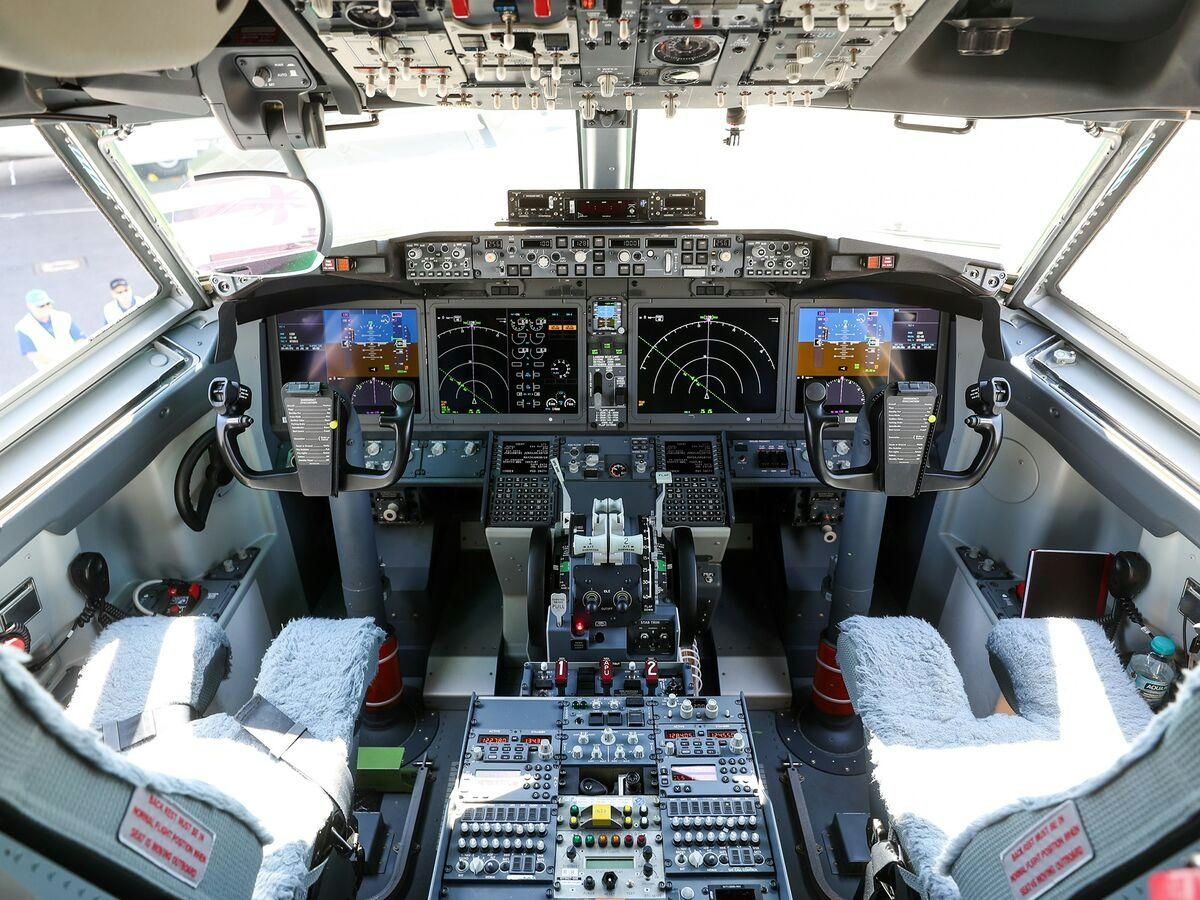
Boeing Introduces Remote Co-Pilot Technology Powered by Artificial Intelligence
Boeing is pioneering a transformative approach in aviation by integrating artificial intelligence as a “remote co-pilot” across its engineering, manufacturing, and maintenance operations. These AI tools, operating under stringent human supervision, are designed to identify defects, expedite design workflows, and improve aircraft reliability. This initiative signals a future where aviation becomes increasingly intelligent without diminishing the essential role of human expertise.
For Boeing software engineer Grace Chrysilla, the impact of this shift is already evident. An internal AI assistant now reviews her code, accelerates analysis, and generates functional software within seconds—tasks that previously required days to complete. Chrysilla describes the technology as “another expert on your team,” underscoring that AI serves to augment rather than replace human effort.
Currently, Boeing has integrated more than 70 generative AI applications into its daily operations, spanning engineering, supply chain management, and internal support functions. This represents a significant transformation for one of the aerospace industry’s most scrutinized companies, particularly in a sector where safety, regulatory compliance, and trust remain paramount.
AI as a Collaborative Partner in Aviation
Boeing’s leadership emphasizes that AI is intended to support human judgment rather than supplant it. The company has centralized its AI initiatives with two primary goals: enhancing internal productivity and improving product quality and customer experience. This centralized approach is designed to prevent fragmented experimentation and ensure that AI deployments adhere to the rigorous standards demanded by regulators and airline customers.
Abhi Seth, Boeing’s Chief AI and Data Officer, along with Chief AI Officer Vishwa Uddanwadiker, stress that AI is meant to extend human capabilities. Uddanwadiker notes, “In aerospace, guessing is unacceptable. If the system doesn’t have sufficient data, it’s designed to hold back—not to invent an answer.” This cautious approach reflects the critical importance of accuracy and reliability in aviation.
Practical Applications and Industry Challenges
The most tangible effects of Boeing’s AI integration are visible on factory floors and maintenance lines. Computer vision systems now analyze engineering drawings to enhance clarity for mechanics and reduce turnaround times. AI-driven visual inspections detect defects earlier in the supply chain, mitigating costly delays and safety risks. Predictive maintenance models enable airlines to identify potential issues proactively, thereby minimizing downtime and enhancing fleet reliability—a vital advantage as global travel demand recovers.
In digital engineering, AI-powered simulations facilitate virtual testing of complex systems before physical components are produced, shortening development cycles and reducing costs. Internal virtual assistants manage thousands of daily support requests, allowing engineers and technicians to focus on higher-value tasks. Boeing estimates that some AI co-pilot tools save employees up to two hours per day. To date, over 8,000 Boeing employees have completed training through the company’s GenAI Academy, with more than 2,600 certified as advanced users capable of developing AI solutions independently.
Despite these advancements, Boeing faces considerable challenges. Regulatory approval processes may delay the widespread adoption of AI technologies, and integrating AI with existing aircraft systems presents significant technical complexities. The company also contends with competition from other aviation technology firms, many of which are accelerating their own AI development efforts or forming strategic partnerships.
Market responses to Boeing’s AI initiatives have been mixed. Some investors express concern about the financial costs and the potential implications for traditional pilot roles, while others regard the technology as a significant advancement in aviation safety and operational efficiency.
As Boeing continues to refine its remote co-pilot technology, its approach offers insight into how AI may reshape the aviation industry—enhancing human capability while navigating the intricate demands of safety, regulation, and competitive dynamics.

Etihad Airways Suspends Airbus A380 Flights on Key Route

Aditya Birla Group Seeks Approval for Aircraft Leasing in GIFT City

Qatar Airways Highlights Innovation and Connectivity at Arabian Travel Market 2026

Hong Kong's Five-Year Plan Includes Andrew Fan's Aircraft Parts Processing Hub Proposal

ACIA Aero Leasing Delivers ATR72-600 to Air Nostrum

RTX Appoints Jill Albertelli as Head of Pratt & Whitney

TAT Technologies Joins Beyond Aero Hydrogen Aircraft Program

AURAK Study Highlights Barriers to Air Taxi Adoption in Emerging Economies

Xiamen Air Selects Altitude for 787 Maintenance at Heathrow

Etihad and Swissport Extend Global Partnership
