
Orchestrate AI insights into action

Trending
Categories
Boeing Projects Need for 710,000 New Aircraft Technicians by 2044
Boeing Projects Need for 710,000 New Aircraft Technicians by 2044
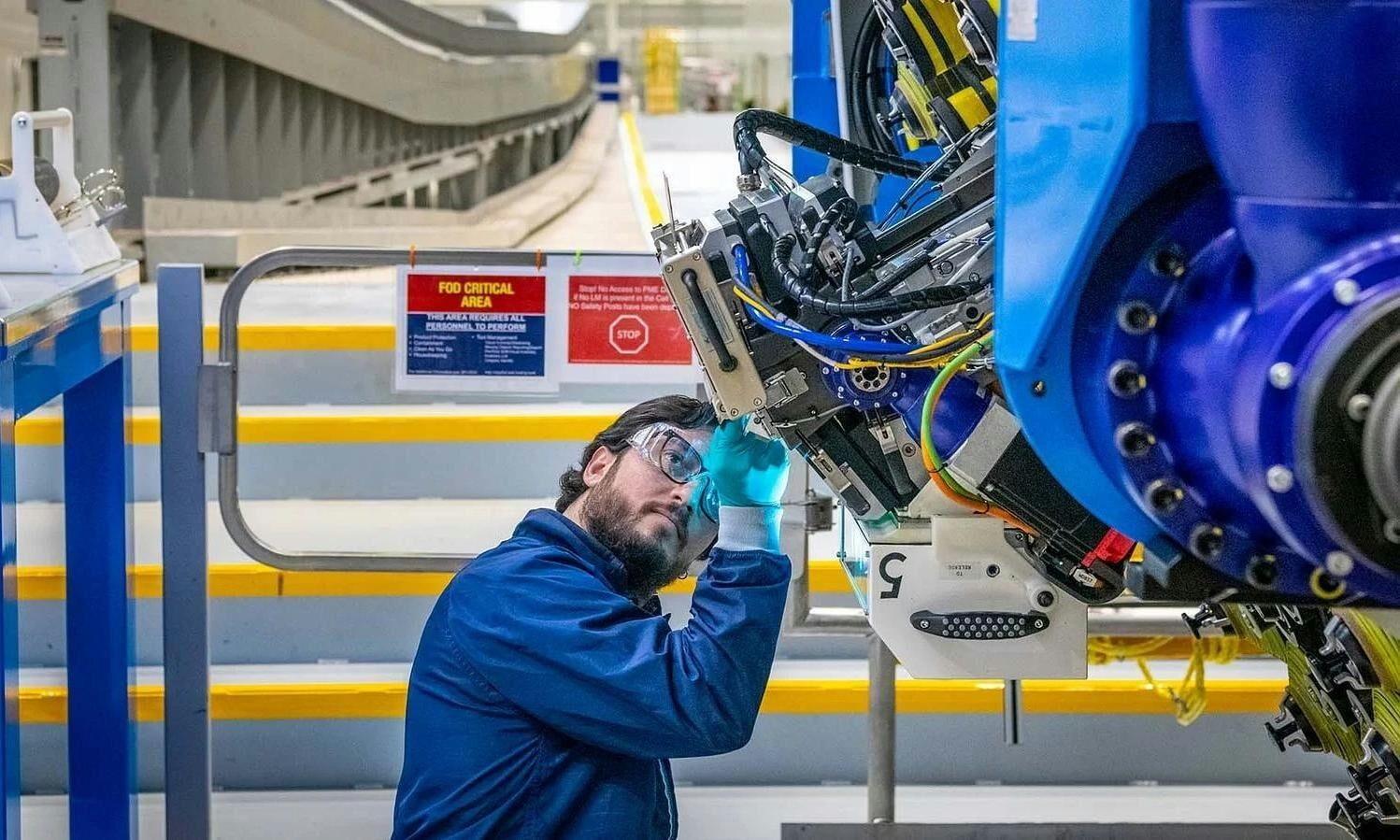
Boeing’s 2025 Pilot and Technician Outlook reveals a pressing global demand for 710,000 new commercial aviation maintenance technicians over the next two decades. This projection highlights the increasing pressure on maintenance, repair, and overhaul (MRO) organizations, as well as training providers, to cultivate a workforce equipped to meet future challenges. The forecast estimates that nearly one-third of the 2.4 million new aviation personnel required worldwide by 2044 will be maintenance technicians, underscoring their essential role amid expanding air traffic and a growing global fleet.
Drivers of Technician Demand and Regional Needs
The anticipated surge in technician demand is largely attributed to the expansion of single-aisle aircraft fleets. Boeing estimates that approximately two-thirds of these new hires will replace retiring technicians, while the remaining third will support the introduction of new aircraft into service. Regional breakdowns reveal substantial needs across all continents, with North America requiring 123,000 technicians, Eurasia 165,000, China 131,000, Southeast Asia 78,000, South Asia 45,000, Africa 24,000, Latin America 42,000, the Middle East 63,000, Northeast Asia 27,000, and Oceania 12,000.
While the outlook for technicians remains strong, Boeing’s report notes a modest decline in demand for pilots and airline technicians, indicating a potential shift in industry priorities. This evolving landscape is expected to drive airlines, MRO providers, and competitors to increase investments in training and education programs aimed at addressing the technician shortfall. Industry players may respond by expanding advanced training facilities and establishing new partnerships to secure a steady pipeline of skilled labor.
Training Innovation and Industry Implications
Boeing’s forecast arrives amid heightened scrutiny of its production processes, particularly following the National Transportation Safety Board (NTSB) investigation into the Alaska Airlines incident. This ongoing inquiry may influence market dynamics, prompting Boeing and its competitors to reassess workforce strategies and training standards in light of regulatory and reputational considerations.
The report also emphasizes the urgent need to modernize training frameworks. The integration of virtual, mixed, and augmented reality technologies is expected to accelerate technician learning and enable the practice of complex procedures within immersive environments. As MRO operations become increasingly data-driven and technologically sophisticated, stakeholders are encouraged to invest not only in recruitment but also in agile training systems capable of adapting to the evolving skill requirements of future aviation technicians.
With the global aviation sector confronting workforce shortages alongside rising regulatory demands, Boeing’s projection serves as a critical call to action. The industry must prioritize comprehensive training and workforce development to ensure the safe and efficient maintenance of an expanding global fleet.

Etihad Airways Suspends Airbus A380 Flights on Key Route

Aditya Birla Group Seeks Approval for Aircraft Leasing in GIFT City

Qatar Airways Highlights Innovation and Connectivity at Arabian Travel Market 2026

Hong Kong's Five-Year Plan Includes Andrew Fan's Aircraft Parts Processing Hub Proposal

ACIA Aero Leasing Delivers ATR72-600 to Air Nostrum

RTX Appoints Jill Albertelli as Head of Pratt & Whitney

TAT Technologies Joins Beyond Aero Hydrogen Aircraft Program

AURAK Study Highlights Barriers to Air Taxi Adoption in Emerging Economies

Xiamen Air Selects Altitude for 787 Maintenance at Heathrow

Etihad and Swissport Extend Global Partnership
