
Orchestrate AI insights into action

Trending
Categories
Can Stable LEAP Engine Deliveries Strengthen Safran’s Position in Aerospace?
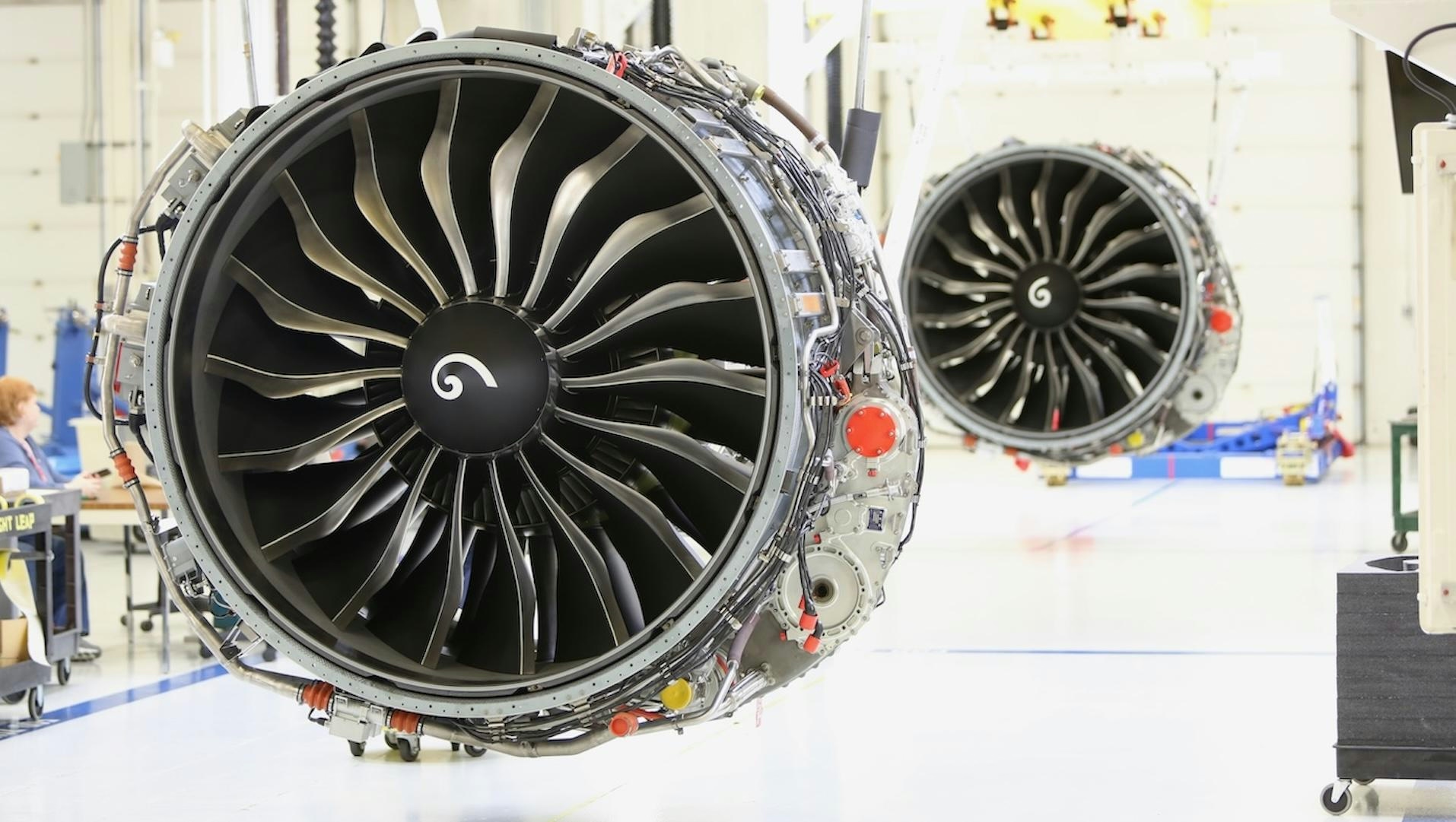
Can Stable LEAP Engine Deliveries Strengthen Safran’s Position in Aerospace?
Operational Stability Amid Market Challenges
Safran’s CEO recently indicated that fourth-quarter deliveries of LEAP engines are expected to closely mirror those of the third quarter, signaling a notable degree of operational stability within the company’s core engine business. This steady delivery outlook arrives at a critical juncture as Safran seeks to consolidate its leadership in the commercial aviation engine sector. Concurrently, CFM International—a joint venture between Safran and GE Aerospace—is engaged in ongoing negotiations for a potential Boeing 737 engine contract with a Turkish airline, underscoring Safran’s active pursuit of new commercial opportunities.
Investor sentiment has responded favorably to these developments, buoyed by Safran’s upward revision of its 2025 earnings guidance and its demonstrated commitment to execution quality amid ongoing capital projects and recent acquisitions. However, the company’s ability to sustain this momentum faces significant headwinds. Persistent supply chain disruptions and the threat of industrial actions pose risks to Safran’s capacity to deliver engines on schedule. Additionally, the competitive landscape remains intense, with established aerospace players such as Honeywell and GE Aerospace exerting pressure. Honeywell has forecasted low double-digit percentage growth in aerospace sales, while GE Aerospace recently raised its 2025 profit outlook, citing strong aftermarket demand.
Strategic Expansion and Market Outlook
In response to these challenges and to support its ambitious growth objectives, Safran is actively expanding its production capacity. A cornerstone of this strategy is the new engine production facility in Morocco, which aims to increase annual LEAP engine output to 2,500 units by 2028. This expansion is integral to Safran’s targets of achieving €39.3 billion in revenue and €5.0 billion in earnings by 2028, representing a compound annual revenue growth rate of 10.2% and an earnings increase of €0.7 billion compared to 2023 levels.
Market analysts and investors remain attentive to Safran’s exposure to global supply chain vulnerabilities and its ability to scale production efficiently. Fair value estimates for Safran’s stock vary considerably, ranging from €220.07 to €320.35, reflecting divergent assessments of the company’s future capacity and risk profile. Despite these uncertainties, the prevailing consensus suggests that stable LEAP engine deliveries, coupled with strategic investments in production capacity, position Safran for sustained growth. Some analysts project potential upside of up to 6% from current share prices.
As Safran navigates a complex and competitive aerospace environment, its capacity to maintain consistent engine deliveries, mitigate supply chain risks, and execute expansion plans will be pivotal in preserving its market position and delivering shareholder value.

Etihad Airways Suspends Airbus A380 Flights on Key Route

Aditya Birla Group Seeks Approval for Aircraft Leasing in GIFT City

Qatar Airways Highlights Innovation and Connectivity at Arabian Travel Market 2026

Hong Kong's Five-Year Plan Includes Andrew Fan's Aircraft Parts Processing Hub Proposal

ACIA Aero Leasing Delivers ATR72-600 to Air Nostrum

RTX Appoints Jill Albertelli as Head of Pratt & Whitney

TAT Technologies Joins Beyond Aero Hydrogen Aircraft Program

AURAK Study Highlights Barriers to Air Taxi Adoption in Emerging Economies

Xiamen Air Selects Altitude for 787 Maintenance at Heathrow

Etihad and Swissport Extend Global Partnership
