
Orchestrate AI insights into action

Trending
Categories
Chinese Cargo Drone Reaches Market Ahead of U.S. Competitors
Chinese Cargo Drone Reaches Market Ahead of U.S. Competitors
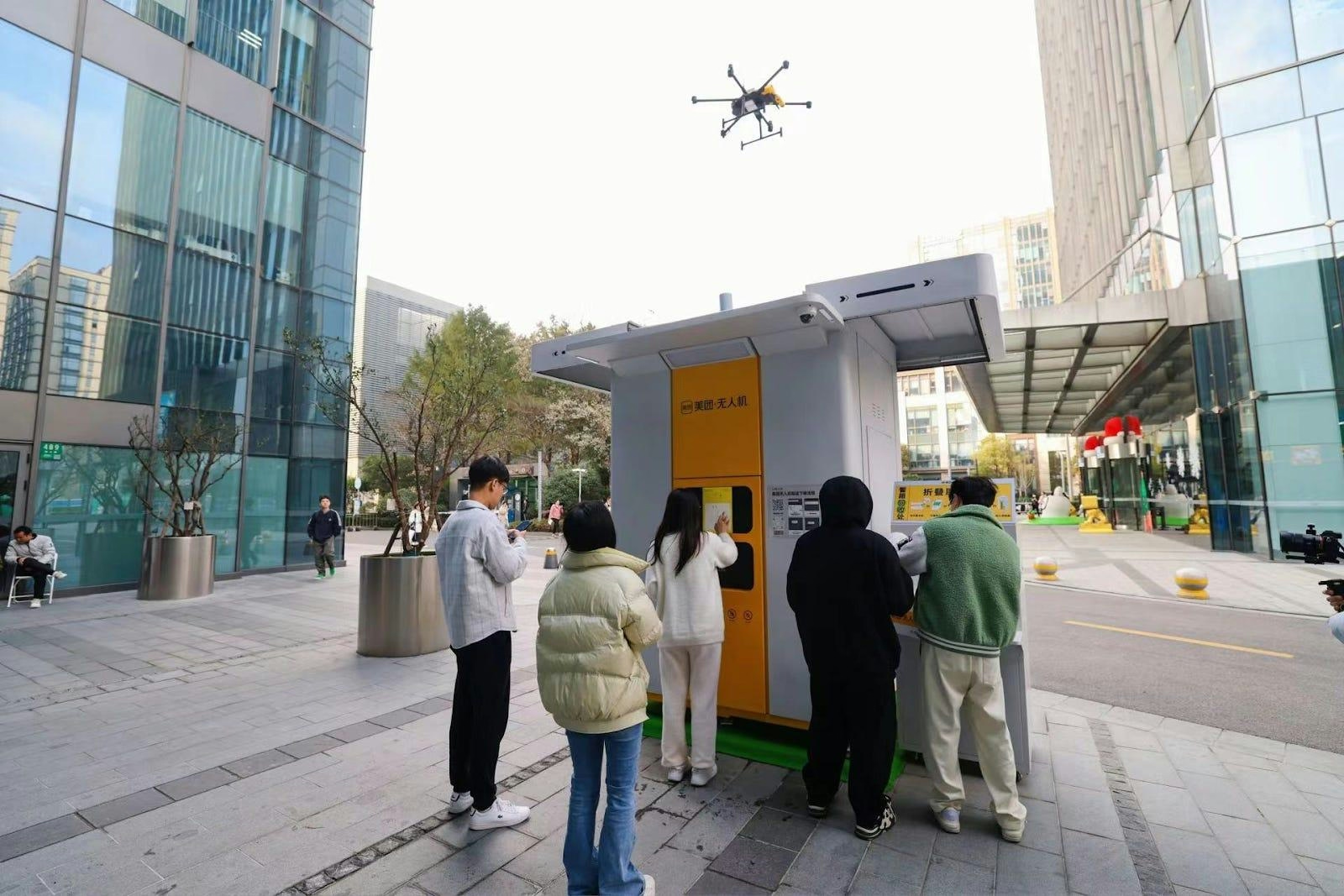
Last month, a shipment of fresh spring tea traveled from the remote mountains of Guizhou to Shanghai in less than 24 hours. The initial leg of this journey was particularly notable: a pilotless electric aircraft transported 400 kilograms of cargo over 120 kilometers of rugged terrain in just 37 minutes. This operation required no runway, no crew, and produced zero emissions. The company behind this achievement, Shanghai-based AutoFlight, has quietly secured a significant milestone that no American competitor has yet matched. AutoFlight owns the world’s first fully certified 2-ton-class unmanned electric vertical takeoff and landing (eVTOL) aircraft, having obtained type, production, and airworthiness certificates from China’s aviation regulator. Its CarryAll drone is now authorized for commercial operations.
For U.S. startups such as Joby Aviation and Archer Aviation—both valued in the billions and long regarded as leaders in the eVTOL sector—this successful tea delivery represents more than a technological novelty. It serves as a stark reminder of the competitive challenges they face. While these American companies remain entangled in the Federal Aviation Administration’s (FAA) complex certification process, their Chinese rival is already conducting commercial flights, employing a fundamentally different and potentially more viable business model.
Rethinking the Air Taxi Narrative
Joby and Archer have built their futures on the promise of electric air taxis: quiet, four-passenger aircraft designed to shuttle travelers between city centers and airports, reducing hour-long commutes to mere minutes. However, analysts are increasingly skeptical about the size and sustainability of this market. Helicopters already provide a comparable premium service, yet demand remains limited and niche. For eVTOL air taxis to gain traction, fares would need to undercut helicopter prices—a formidable challenge given the uncertainties surrounding maintenance costs and the infancy of the technology. As the initial excitement fades, air taxis risk becoming a solution searching for a problem.
In contrast, AutoFlight has circumvented these demand uncertainties by focusing on cargo rather than passengers. Instead of competing on routes well served by ground transportation, the company targets regions where road infrastructure is unreliable or nonexistent. The Guizhou trial exemplified this strategy: mountain villages producing high-value, time-sensitive goods such as tea, fresh produce, and medical supplies can now access urban markets within hours rather than days. By flying directly over difficult terrain that would otherwise delay trucks, AutoFlight’s drone offers a practical infrastructure upgrade with a clear customer base, rather than a luxury gadget for affluent consumers.
China’s Drone Dominance and Global Implications
AutoFlight’s breakthrough is part of China’s broader ambition to dominate the drone industry. Recent tightening of drone regulations in China has raised international concerns regarding cybersecurity and data privacy, especially as countries like Israel increasingly rely on Chinese-made drones. Meanwhile, the global agricultural drone market is projected to reach $23.1 billion by 2032, driven by advances in precision farming and artificial intelligence—fields where Chinese manufacturers are expected to compete aggressively.
China’s ambitions extend beyond light cargo drones. The recently tested Changying-8 cargo drone, capable of carrying a 7-tonne payload over a range of 1,850 miles, signals the country’s intent to lead in heavy unmanned aviation as well. This development could significantly reshape global logistics networks and compel U.S. competitors to reconsider their strategic approaches.
A Shift in the Competitive Landscape
The geographic conditions that make air mobility attractive—mountainous regions with poor road infrastructure—also favor rugged, point-to-point cargo drones over passenger air taxis. While Joby and Archer have explored international markets such as Kazakhstan and Serbia, local logistics operators in these regions may prioritize payload capacity and operational reliability over passenger comfort. As China’s certified cargo drones commence commercial operations, U.S. companies face increasing pressure to adapt or risk falling behind in a rapidly evolving and highly competitive market.

Etihad Airways Suspends Airbus A380 Flights on Key Route

Aditya Birla Group Seeks Approval for Aircraft Leasing in GIFT City

Qatar Airways Highlights Innovation and Connectivity at Arabian Travel Market 2026

Hong Kong's Five-Year Plan Includes Andrew Fan's Aircraft Parts Processing Hub Proposal

ACIA Aero Leasing Delivers ATR72-600 to Air Nostrum

RTX Appoints Jill Albertelli as Head of Pratt & Whitney

TAT Technologies Joins Beyond Aero Hydrogen Aircraft Program

AURAK Study Highlights Barriers to Air Taxi Adoption in Emerging Economies

Xiamen Air Selects Altitude for 787 Maintenance at Heathrow

Etihad and Swissport Extend Global Partnership
