
Orchestrate AI insights into action

Trending
Categories
DGCA Investigates After Air India A320 Pilots Grounded for License Issues
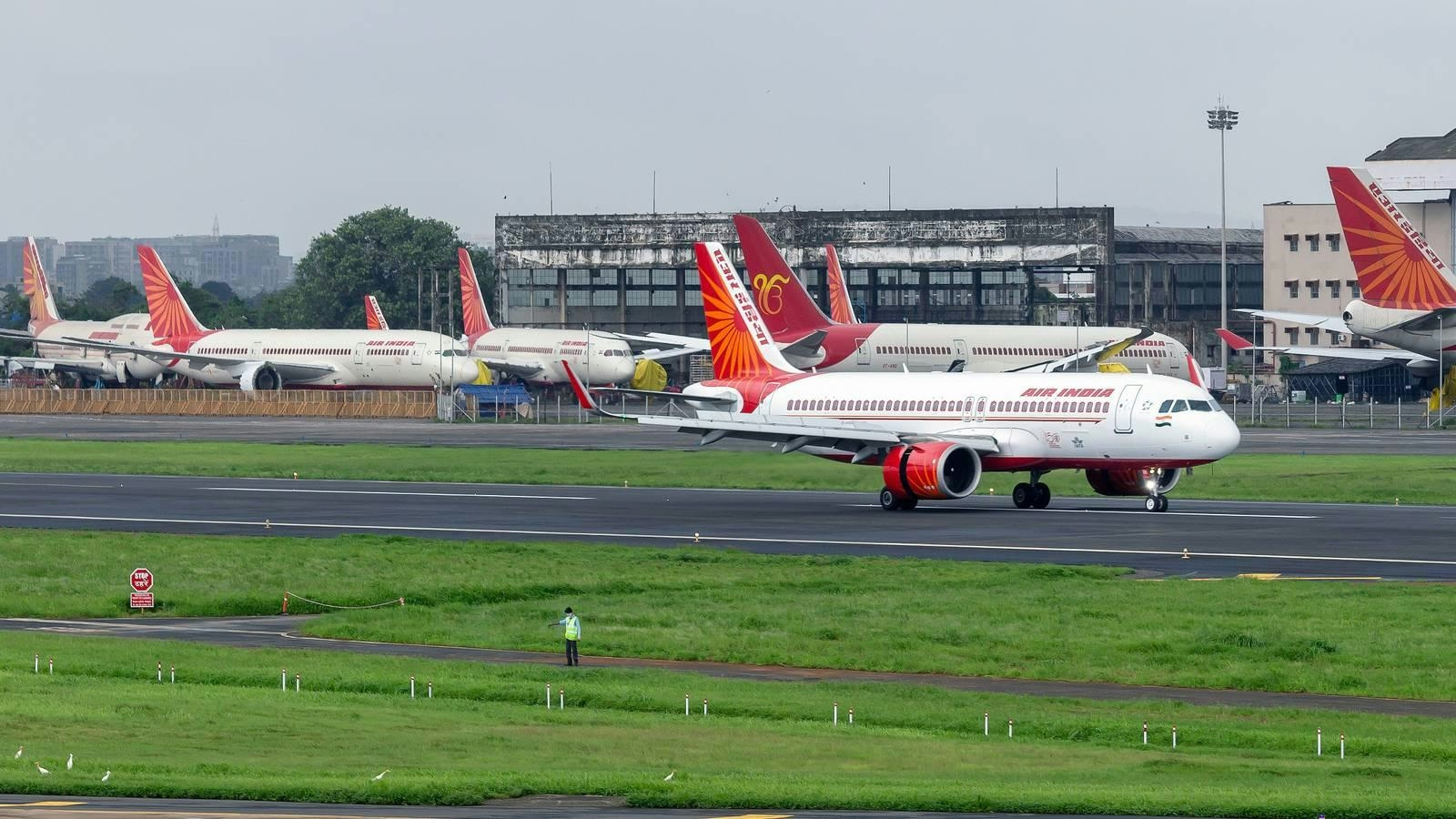
DGCA Investigates Air India A320 Pilots Grounded Over License Violations
Regulatory Breaches Prompt Immediate Action
The Directorate General of Civil Aviation (DGCA) has launched an investigation into Air India following the grounding of two Airbus A320 pilots due to serious licensing violations. These incidents have intensified scrutiny of the airline’s compliance and scheduling systems, which were already under the regulator’s watch after previous findings of systemic failures. The DGCA’s renewed focus on Air India coincides with heightened global concerns over aviation safety, particularly in the wake of a recent midair emergency involving a Boeing 787 Dreamliner.
Air India confirmed that one of its A320 co-pilots operated a flight despite failing the mandatory Instrument Rating–Pilot Proficiency Check (IR–PPC) and neglecting the required retraining. Regulations stipulate that pilots who do not pass the PPC must undergo corrective training and successfully complete a re-evaluation before resuming flight duties. Both the co-pilot and the scheduling officer responsible for rostering the pilot were immediately removed from duty, and disciplinary proceedings have been initiated. The airline has formally reported the matter to the DGCA for further examination.
In a separate case, a senior Air India captain was found to have flown an A320 with an expired English Language Proficiency (ELP) certificate, a compulsory qualification for all commercial pilots. The airline acknowledged the breach, grounded the pilot, and notified the aviation regulator accordingly.
DGCA Demands Accountability Amid Systemic Concerns
The DGCA has demanded comprehensive reports on both incidents, categorizing them as serious violations of flight safety regulations. Earlier this year, the regulator identified systemic shortcomings within Air India’s crew scheduling processes, including lapses related to licensing, rest periods, and recency requirements. Following a near-miss event in June, the DGCA removed three senior officials from the airline’s crew scheduling department and issued stern warnings that further infractions could lead to substantial penalties or even suspension of Air India’s operating license.
These recent compliance failures emerge at a time when the DGCA is also addressing broader safety issues in the Indian aviation sector. Notably, the regulator is scrutinizing Boeing 787 Dreamliners after a recent in-flight emergency, which has sparked industry-wide concerns. Market analysts suggest that these developments may influence airline fleet preferences, potentially benefiting the Airbus A320, which is already the world’s most-delivered aircraft and is perceived by some as a safer alternative. Experts predict that Airbus could strengthen its market position as airlines and passengers increasingly prioritize safety records.
Persistent Oversights Highlight Need for Stronger Controls
Aviation safety experts argue that the repeated licensing oversights at Air India indicate deeper flaws in the airline’s internal monitoring and compliance mechanisms. They stress the importance of implementing automated systems capable of flagging expired qualifications before pilots are assigned to flights. Although Air India has committed to enhancing its audit and compliance procedures, the recurrence of such violations raises ongoing concerns about the reliability of its operational management.
The DGCA’s vigilance extends beyond licensing issues. Earlier in 2023, the regulator grounded the entire crew of an Air India Delhi–Dubai flight after the pilot-in-command allegedly violated cockpit safety protocols by allowing a companion into the cockpit during flight. Disciplinary actions in that case remain underway.
As investigations continue, the DGCA’s firm stance signals mounting pressure on Indian carriers, particularly Air India, to demonstrate stringent compliance with safety regulations and to restore public confidence in the nation’s aviation standards.

Etihad Airways Suspends Airbus A380 Flights on Key Route

Aditya Birla Group Seeks Approval for Aircraft Leasing in GIFT City

Qatar Airways Highlights Innovation and Connectivity at Arabian Travel Market 2026

Hong Kong's Five-Year Plan Includes Andrew Fan's Aircraft Parts Processing Hub Proposal

ACIA Aero Leasing Delivers ATR72-600 to Air Nostrum

RTX Appoints Jill Albertelli as Head of Pratt & Whitney

TAT Technologies Joins Beyond Aero Hydrogen Aircraft Program

AURAK Study Highlights Barriers to Air Taxi Adoption in Emerging Economies

Xiamen Air Selects Altitude for 787 Maintenance at Heathrow

Etihad and Swissport Extend Global Partnership
