
Orchestrate AI insights into action

Trending
Categories
Emirates and Delta Adjust Fleets as Superjumbos Decline
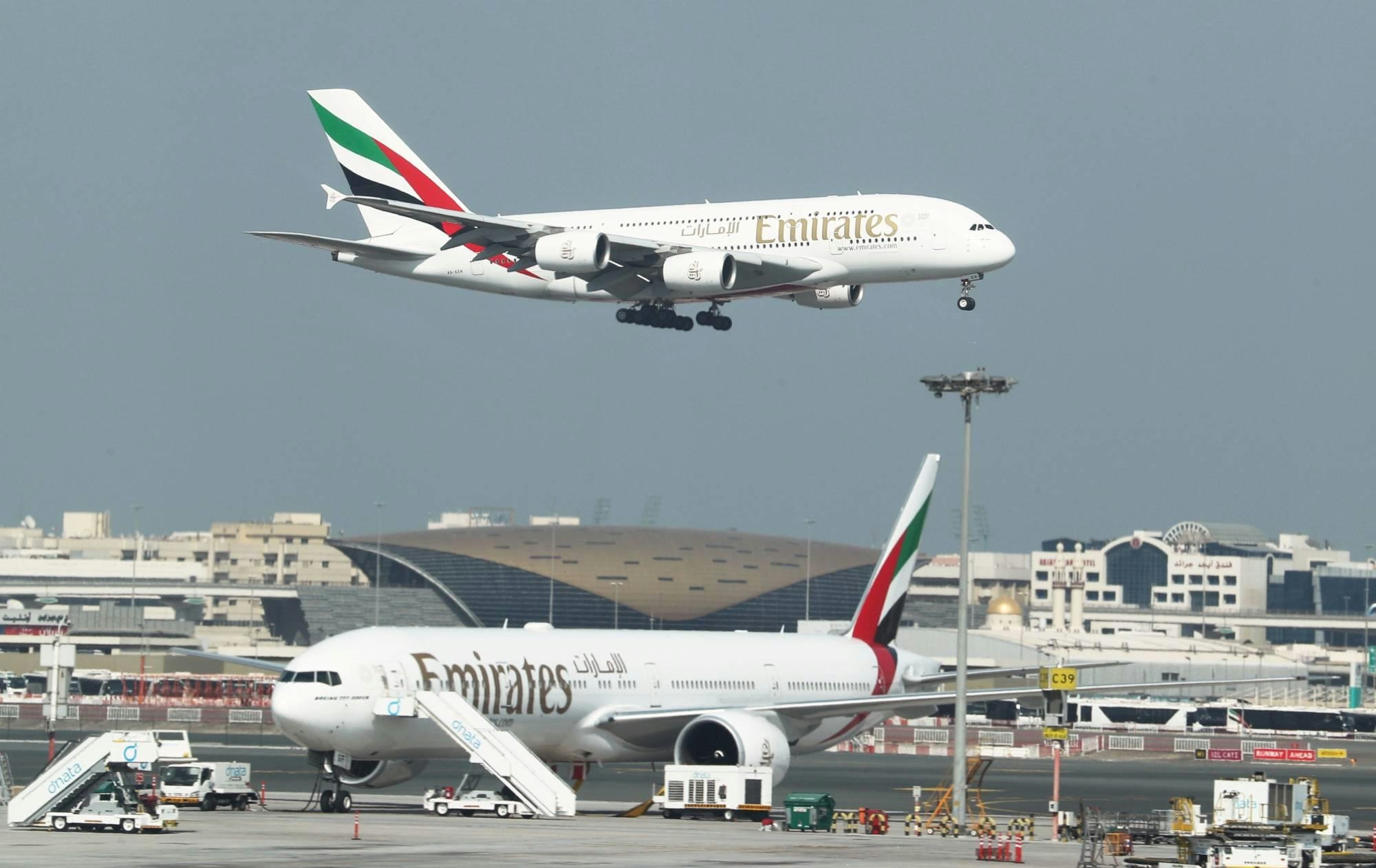
Emirates and Delta Adjust Fleets as Superjumbos Decline
As the aviation industry moves away from the era of the superjumbo jet, Emirates and Delta Air Lines are undertaking significant adjustments to their long-haul fleet strategies. The cessation of Airbus A380 production and the retirement of large-capacity aircraft are compelling both carriers to respond to shifting market demands and operational challenges.
Emirates Faces a Strategic Crossroads
Emirates, the world’s largest operator of the Airbus A380, is at a critical juncture. With a fleet exceeding 100 A380s, the Dubai-based airline has historically leveraged the aircraft’s vast capacity and luxury features to serve high-demand, long-haul routes. However, the average age of Emirates’ A380s has now reached nearly 11 years. The discontinuation of the A380 program by Airbus, without a direct replacement, has left Emirates needing to redefine its fleet strategy.
The absence of a successor to the A380 presents a complex challenge. Despite Emirates President Tim Clark’s assertions that rival airlines may have undermined the A380 program to diminish Emirates’ competitive advantage, the broader industry trend has shifted towards more efficient twin-engine widebodies. Airbus and Boeing have prioritized these models, leaving Emirates’ calls for an “A380neo”—a next-generation, fuel-efficient variant—unanswered. Proposals for new superjumbo aircraft have yet to materialize.
In response, Emirates has initiated a comprehensive refurbishment program, upgrading the interiors of its A380 and Boeing 777 fleets to sustain high service standards and extend the operational lifespan of these flagship aircraft. This interim measure aims to bridge the gap until newer widebodies, such as the Airbus A350 and Boeing 777X, enter service. However, delays to the Boeing 777X, now expected no earlier than 2027, could complicate Emirates’ renewal plans and result in significant financial repercussions for Boeing.
Looking forward, Emirates is advocating for larger, more efficient variants of existing widebodies, including the proposed Boeing 777-10 and an extended Airbus A350 model. These aircraft, however, remain unconfirmed, leaving the airline’s long-term fleet strategy uncertain.
Delta’s Fleet Recalibration and Industry Trends
Delta Air Lines is also realigning its widebody fleet in response to evolving market conditions. The airline recently retired its highest-capacity Airbus A350-900s, which had been acquired from LATAM during the latter’s bankruptcy and the pandemic downturn. This retirement marks the conclusion of Delta’s use of high-density A350s as the carrier shifts focus toward more flexible and fuel-efficient aircraft. Despite these changes, Delta projects a strong profit outlook for 2026, supported by higher fares and sustained demand for premium travel.
The move away from superjumbos is evident beyond Emirates and Delta. Icelandair, for instance, has accelerated the retirement of its Boeing 767 fleet to 2026 amid ongoing financial losses, reflecting a broader industry pivot toward smaller, more efficient widebody aircraft.
As airlines worldwide adapt to changing market dynamics and technological advancements, the decline of the superjumbo signals the close of one chapter and the opening of another in long-haul aviation.

Etihad Airways Suspends Airbus A380 Flights on Key Route

Aditya Birla Group Seeks Approval for Aircraft Leasing in GIFT City

Qatar Airways Highlights Innovation and Connectivity at Arabian Travel Market 2026

Hong Kong's Five-Year Plan Includes Andrew Fan's Aircraft Parts Processing Hub Proposal

ACIA Aero Leasing Delivers ATR72-600 to Air Nostrum

RTX Appoints Jill Albertelli as Head of Pratt & Whitney

TAT Technologies Joins Beyond Aero Hydrogen Aircraft Program

AURAK Study Highlights Barriers to Air Taxi Adoption in Emerging Economies

Xiamen Air Selects Altitude for 787 Maintenance at Heathrow

Etihad and Swissport Extend Global Partnership
