
Orchestrate AI insights into action

Trending
Categories
FAA Expands Dust-Related Inspections for Leap-1A Engines
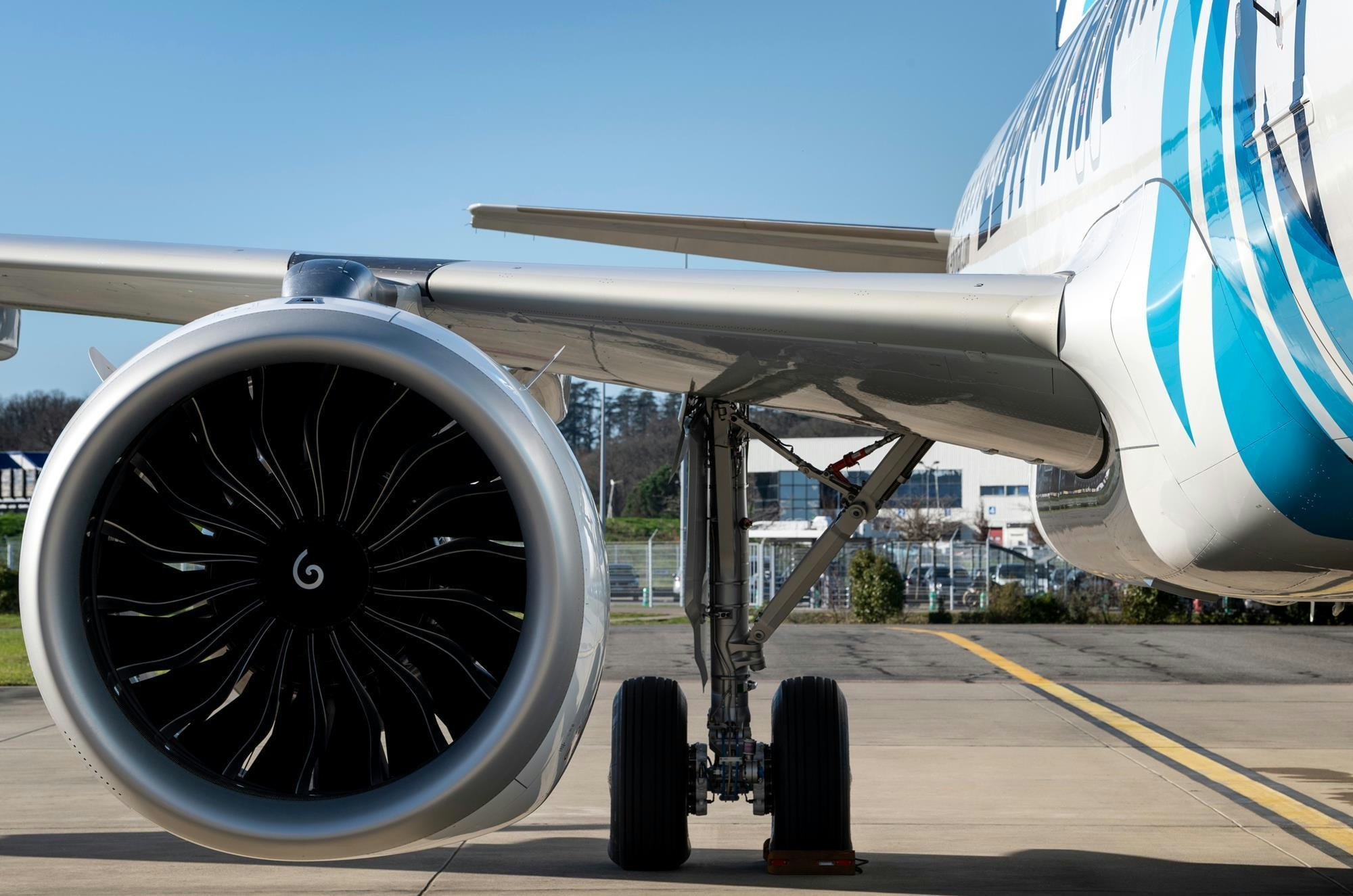
FAA Expands Dust-Related Inspections for Leap-1A Engines
The Federal Aviation Administration (FAA) has expanded its inspection requirements for CFM International’s Leap-1A engines following new findings that turbine blade cracks and failures caused by airborne dust are not confined to the Middle East but also affect engines operating in South Asia. The FAA issued a revised airworthiness directive (AD) on December 11, citing further analysis that revealed similar accelerated deterioration and airfoil damage in South Asian engines, mirroring issues previously documented in the Middle East.
Background and Scope of the Directive
CFM International, a joint venture between GE Aerospace and Safran Aircraft Engines, has acknowledged the dust-related problem as a known issue and previously issued service bulletins to address it. Airlines have been implementing these recommendations for some time, and CFM does not anticipate significant operational disruptions resulting from the expanded FAA directive. The Leap-1A engine powers the Airbus A320neo family, while the directive does not extend to the Leap-1B engines used on Boeing 737 Max aircraft.
The dust-related concerns first emerged after two in-flight shutdowns involving Leap-1A engines in the Middle East and North Africa region. Investigations traced these incidents to cracks in the high-pressure turbine (HPT) rotor stage one blades, caused by accelerated blade deterioration due to dust accumulation. In response, CFM issued a service bulletin in 2022 urging operators in the Middle East and North Africa to conduct borescope inspections of the affected blades. This was followed by an FAA mandate requiring such inspections.
In July, CFM extended similar guidance to operators in South Asia, prompting the FAA’s latest directive. The new order, which will take effect in 16 days, sets deadlines for initial borescope inspections and mandates ongoing checks at intervals of either 150 or 300 flight cycles, depending on the engine configuration. The FAA issued the directive without its usual public comment period, citing the urgency of the safety concern. Notably, no U.S.-registered aircraft are affected by this order.
Implications for Airlines and Industry Response
The expanded inspection requirements are expected to increase operational costs for airlines in South Asia, as more frequent inspections may disrupt maintenance schedules and add to overall expenses. This development has also drawn market attention to the reliability and performance of Leap-1A engines, potentially influencing their market share as airlines and lessors scrutinize engine durability in challenging environments.
In response to these challenges, GE Aerospace and Safran have intensified their support for operators. Safran recently inaugurated a new maintenance, repair, and overhaul (MRO) facility in Hyderabad, India, while GE has introduced its 360 Foam Wash technology to enhance engine cleaning and maintenance processes. Additionally, CFM has launched a Leap-1A durability kit featuring redesigned high-pressure turbine blades and upgraded fuel nozzles, aimed at improving engine resilience in dusty conditions. As of June, approximately one-third of the Leap-1A fleet had received these upgrades, with similar improvements underway for the Leap-1B engines.
Experts emphasize that while Leap engines offer significant fuel efficiency gains over their predecessors, their operation at higher temperatures and pressures can accelerate wear, particularly in dusty environments. CFM maintains that the FAA’s directive aligns with its proactive safety management strategy and ongoing efforts to enhance engine durability under harsh operating conditions.

Etihad Airways Suspends Airbus A380 Flights on Key Route

Aditya Birla Group Seeks Approval for Aircraft Leasing in GIFT City

Qatar Airways Highlights Innovation and Connectivity at Arabian Travel Market 2026

Hong Kong's Five-Year Plan Includes Andrew Fan's Aircraft Parts Processing Hub Proposal

ACIA Aero Leasing Delivers ATR72-600 to Air Nostrum

RTX Appoints Jill Albertelli as Head of Pratt & Whitney

TAT Technologies Joins Beyond Aero Hydrogen Aircraft Program

AURAK Study Highlights Barriers to Air Taxi Adoption in Emerging Economies

Xiamen Air Selects Altitude for 787 Maintenance at Heathrow

Etihad and Swissport Extend Global Partnership
