
Orchestrate AI insights into action

Trending
Categories
Former Pilot Says AI Complicates Flying
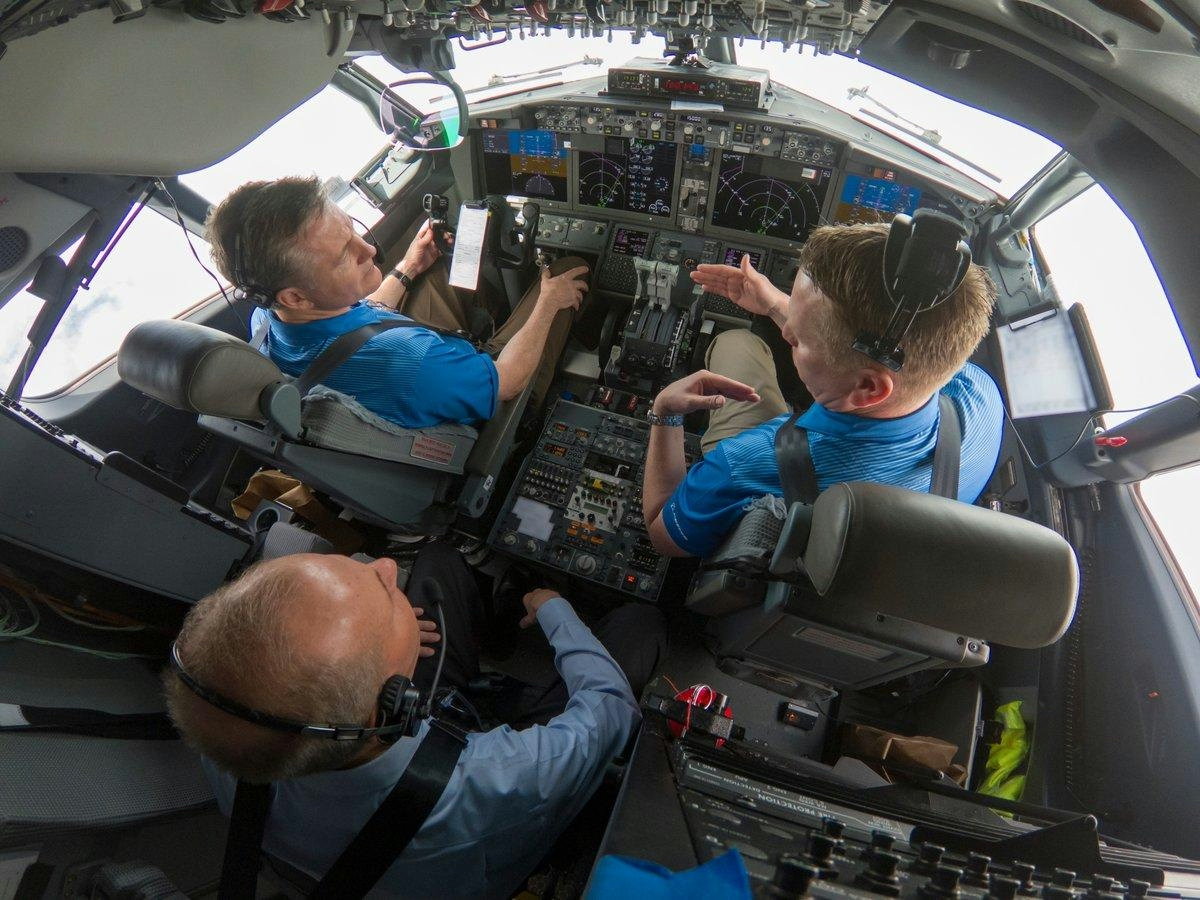
Former Pilot Highlights Challenges of AI in Aviation
A Harrowing Flight and the Limits of Automation
On November 4, 2010, Qantas Flight 32 departed Singapore under what Captain Richard Champion de Crespigny described as "perfect" flying conditions. However, just four minutes after takeoff, the Airbus A380 suffered a catastrophic failure when engine number two exploded. The blast sent shrapnel tearing through the aircraft, damaging critical systems and triggering dozens of alarms. The five-person crew faced an overwhelming situation: 21 system failures, 120 checklists, 650 severed wires, and structural damage to the wing. Despite the chaos, all 469 passengers and crew survived.
De Crespigny, a former Royal Australian Air Force pilot, attributes their survival to the crew’s ability to balance trust in the aircraft’s automated systems with decisive manual intervention. He emphasized that automation, rather than simplifying flying, often complicates it. “When black-box computers fail, and they do fail, pilots must be able to identify the failed systems, disconnect them, and fly manually,” he explained.
Automation’s Double-Edged Sword
The root cause of the incident was later identified as a manufacturing defect in the Rolls-Royce engine. This event profoundly shaped de Crespigny’s views on the increasing reliance on automation and artificial intelligence in aviation. While acknowledging that automation is now an integral part of modern flight, he cautions that it can hinder decision-making, particularly in emergencies. During the Flight 32 crisis, the aircraft’s digital monitoring system inundated the crew with numerous checklists. De Crespigny noted that while some were followed without question, others were deliberately ignored because completing them could have jeopardized the outcome.
This experience underscores a broader industry concern about over-reliance on AI and automated systems. As airlines and manufacturers push to integrate AI into cockpit operations to enhance safety and efficiency, skepticism remains. Investors express caution, wary that the lofty promises of AI-driven safety improvements may not materialize fully, potentially causing market instability. Meanwhile, competitors in the aviation sector adopt varied approaches, but a shared priority endures: preserving strong human oversight in critical flight operations.
The Enduring Role of Human Judgment
Following the engine explosion, de Crespigny and his crew spent nearly two hours circling above Singapore, carefully evaluating which systems remained operational before executing a safe landing. Their measured response highlights the indispensable role of human judgment when automated systems become overwhelmed or unreliable.
Since retiring from active flying in 2020, de Crespigny has authored two bestselling books, launched the FLY! podcast, and become a global speaker on resilience and crisis management. His message to the aviation community is unequivocal: as AI and automation become more prevalent, the expertise and decisiveness of skilled pilots remain crucial, especially in emergency situations.

Etihad Airways Suspends Airbus A380 Flights on Key Route

Aditya Birla Group Seeks Approval for Aircraft Leasing in GIFT City

Qatar Airways Highlights Innovation and Connectivity at Arabian Travel Market 2026

Hong Kong's Five-Year Plan Includes Andrew Fan's Aircraft Parts Processing Hub Proposal

ACIA Aero Leasing Delivers ATR72-600 to Air Nostrum

RTX Appoints Jill Albertelli as Head of Pratt & Whitney

TAT Technologies Joins Beyond Aero Hydrogen Aircraft Program

AURAK Study Highlights Barriers to Air Taxi Adoption in Emerging Economies

Xiamen Air Selects Altitude for 787 Maintenance at Heathrow

Etihad and Swissport Extend Global Partnership
