
Orchestrate AI insights into action

Trending
Categories
Honeywell Highlights the Growing Importance of Supply Chain Resilience
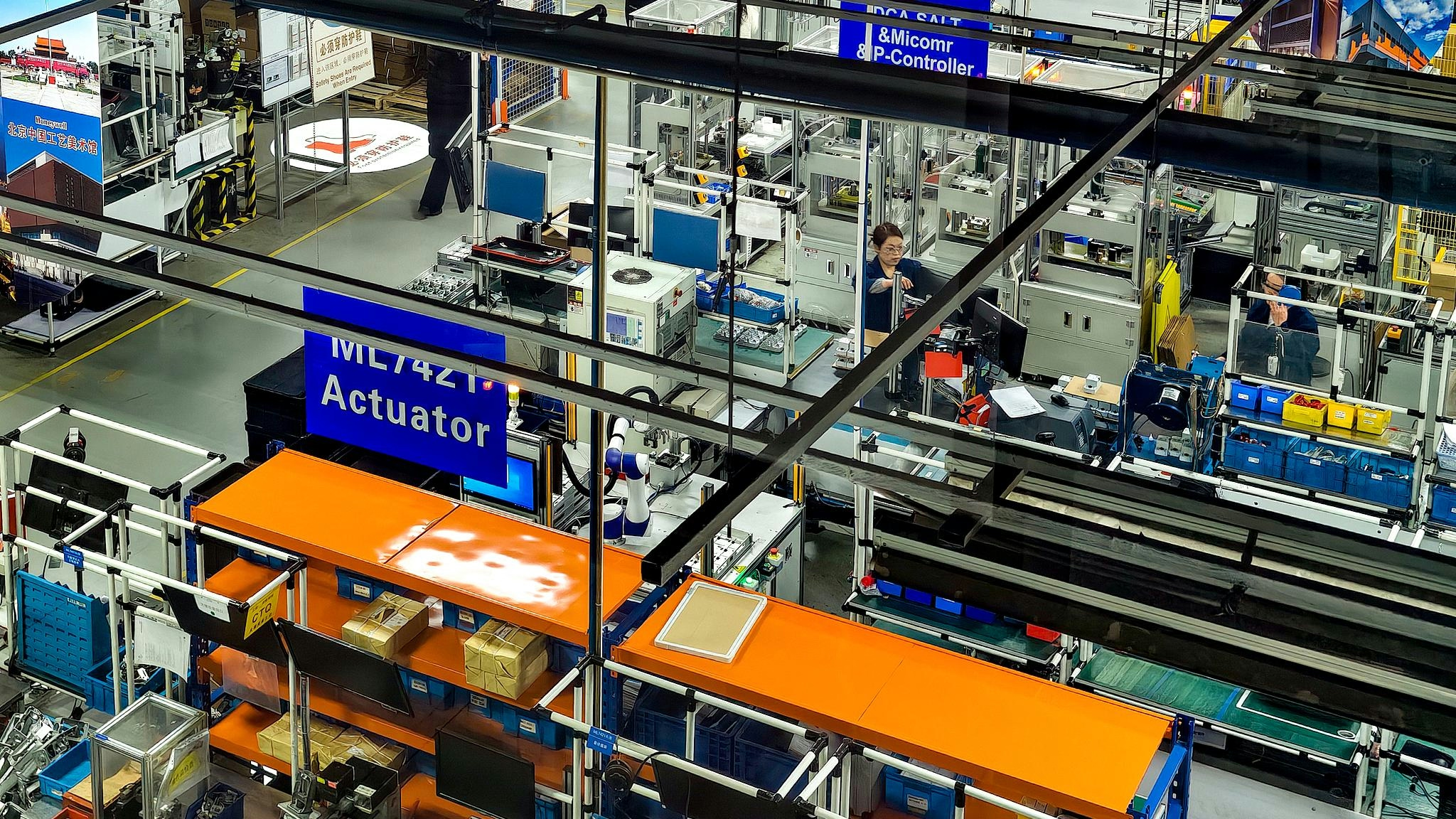
Honeywell Highlights the Growing Importance of Supply Chain Resilience
As U.S. policies increasingly prioritize the development of robust industrial supply chains, Honeywell International Inc. (ISIN: US4385161066) stands at a strategic inflection point. The company’s expertise in automation and aerospace uniquely positions it to capitalize on government-backed reshoring initiatives and the broader global emphasis on supply chain resilience. Investors in the United States and other English-speaking markets are closely monitoring Honeywell’s capacity to convert these favorable policy trends into sustained earnings growth.
Diversified Business Model and Industry Positioning
Honeywell operates as a diversified technology leader, structured around four principal segments. Its Aerospace Technologies division supplies engines, avionics, and systems to both commercial and military aircraft manufacturers, maintaining a strong presence in a recovering aviation sector. The Honeywell Building Technologies segment focuses on automation and control systems for commercial buildings, emphasizing energy efficiency and occupant comfort. Performance Materials and Technologies produces specialty chemicals and process solutions tailored to refining and petrochemical industries. Meanwhile, Safety and Productivity Solutions delivers warehouse automation, barcode scanning technologies, and personal protective equipment.
This balanced portfolio mitigates the risks associated with dependence on any single industry, providing resilience against sector-specific downturns. Honeywell’s strategic focus on high-margin software and recurring aftermarket services supports margin expansion and ensures stable free cash flow, even amid economic disruptions. The company’s commitment to innovation is underscored by annual research and development investments amounting to approximately 2% of sales, enabling it to remain at the forefront of technological advancement and to scale in line with global infrastructure demands, thereby delivering consistent returns to shareholders.
Market Drivers and Challenges in Supply Chain Resilience
Honeywell’s product range spans from avionics systems for leading aircraft manufacturers such as Boeing and Airbus to building management solutions for smart offices and advanced catalysts designed to produce cleaner fuels. The company holds a dominant position in commercial aviation, which is experiencing a post-pandemic rebound, and in industrial automation, a sector growing in importance amid global labor shortages. Key megatrends—including urbanization, the energy transition, and the surge in e-commerce—are fueling demand for Honeywell’s connected building systems, warehouse robotics, and sustainability-oriented solutions.
Nevertheless, the drive toward supply chain resilience faces significant challenges. Geopolitical tensions, particularly ongoing conflicts in the Middle East, continue to disrupt global supply networks, resulting in increased transportation, energy, and raw material costs that ultimately translate into higher consumer prices. Manufacturers are contending with upstream supply interruptions and fluctuating consumer demand, with 89% reporting substantial impacts from tariffs and trade policy shifts. In the United Kingdom, an over-reliance on a limited number of supply chain sources has emerged as a critical vulnerability.
In response to these pressures, competitors are intensifying investments in supply chain due diligence and deploying AI-enabled oversight tools to identify emerging risks. Honeywell’s diversified business model and focus on integrated digital solutions position the company well to assist customers in navigating these complex challenges.
Outlook Amid Evolving Market Dynamics
As industries continue to digitize and governments place greater emphasis on securing supply chains, Honeywell’s integrated solutions and diversified portfolio offer a degree of stability in an increasingly uncertain environment. The company’s ability to adapt to evolving market conditions and geopolitical risks will be pivotal in sustaining long-term value for investors.

Etihad Airways Suspends Airbus A380 Flights on Key Route

Aditya Birla Group Seeks Approval for Aircraft Leasing in GIFT City

Qatar Airways Highlights Innovation and Connectivity at Arabian Travel Market 2026

Hong Kong's Five-Year Plan Includes Andrew Fan's Aircraft Parts Processing Hub Proposal

ACIA Aero Leasing Delivers ATR72-600 to Air Nostrum

RTX Appoints Jill Albertelli as Head of Pratt & Whitney

TAT Technologies Joins Beyond Aero Hydrogen Aircraft Program

AURAK Study Highlights Barriers to Air Taxi Adoption in Emerging Economies

Xiamen Air Selects Altitude for 787 Maintenance at Heathrow

Etihad and Swissport Extend Global Partnership
