
Orchestrate AI insights into action

Trending
Categories
How jet engines are being repurposed to feed AI’s power hunger
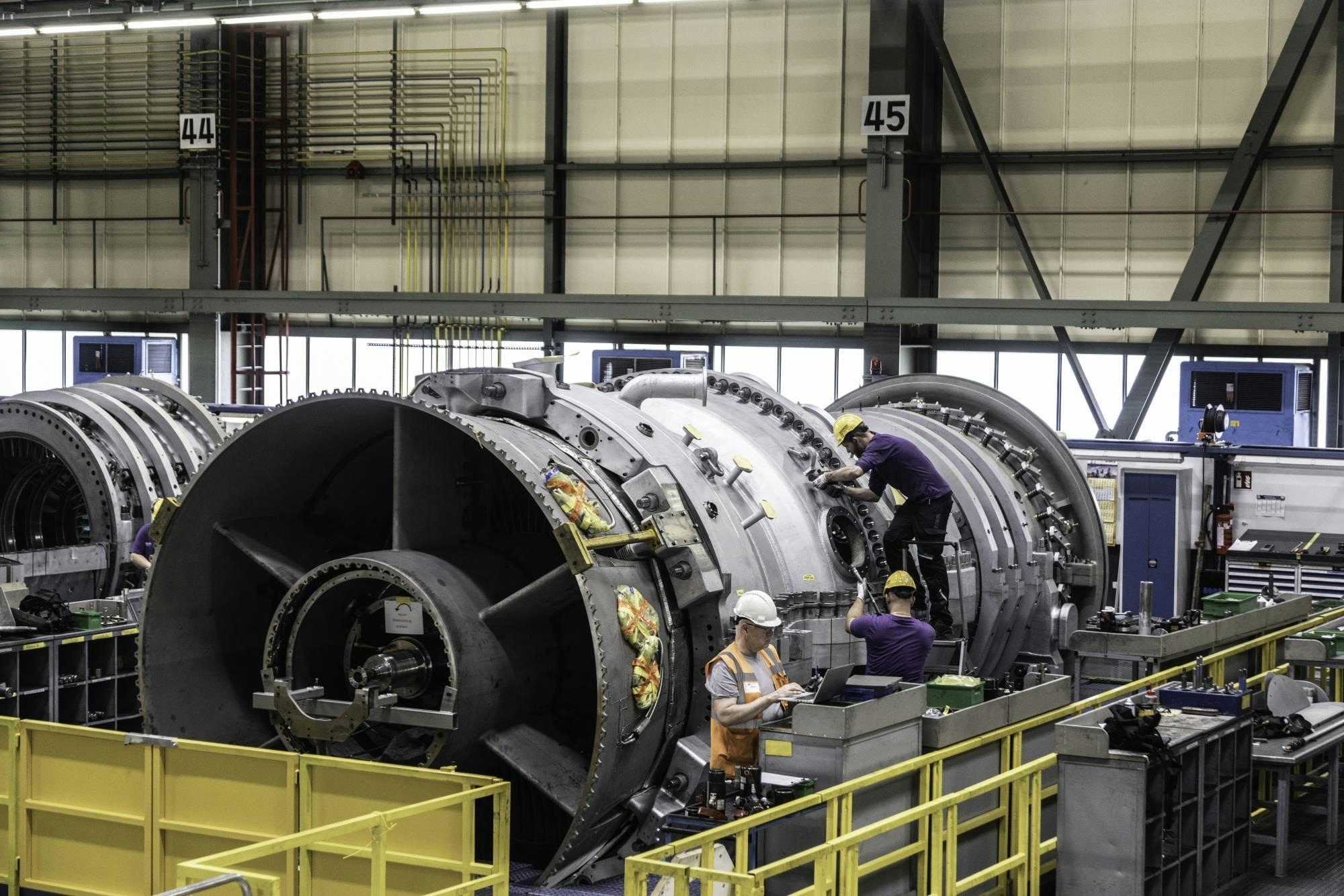
How Jet Engines Are Being Repurposed to Feed AI’s Power Hunger
FTAI Aviation Ltd. (NASDAQ: FTAI) has unveiled a new initiative, FTAI Power, focused on converting CFM56 aircraft engines into aeroderivative gas turbines to meet the escalating electricity demands of AI-driven data centers worldwide. Production of these repurposed turbines is slated to begin in 2026, capitalizing on FTAI’s extensive experience as one of the largest owners and aftermarket maintenance providers of the CFM56 engine.
Transforming Aviation Engines into Power Solutions
The CFM56 engine, originally designed for commercial aviation, is being adapted into a 25-megawatt gas turbine intended to offer grid operators enhanced flexibility and more precise output control compared to traditional, larger turbines. With over 22,000 CFM56 engines produced globally, FTAI aims to deliver a scalable and cost-effective alternative for industries grappling with multi-year backlogs in securing new power sources. Joe Adams, Chairman and CEO of FTAI, emphasized the strategic advantage of the CFM56’s market dominance and reliability, highlighting the company’s vast maintenance facilities and substantial engine assets as key enablers for this new power solution.
David Moreno, FTAI’s Chief Operating Officer, underscored the urgency behind the initiative, noting that the rapid expansion of AI hyperscalers has created an immediate need for flexible and reliable power. FTAI Power is positioned to become a critical partner in the AI economy, which demands unprecedented amounts of electricity delivered with speed and adaptability.
Industry Trends and Broader Implications
FTAI is not alone in exploring the conversion of jet engines for power generation. Boom Supersonic is developing Superpower turbines—modified versions of its Symphony engines—to supply energy to data centers, potentially supporting both the power sector and funding for its Overture aircraft program. These innovations suggest a growing trend toward leveraging aerospace technology to address energy challenges posed by AI infrastructure.
However, this repurposing effort faces significant challenges. The surging energy consumption of AI data centers intensifies competition for renewable energy resources, which are also critical for airlines pursuing net-zero emissions through sustainable aviation fuels. This competition raises concerns about electricity scarcity, social inequality, and geopolitical tensions, particularly if Western nations fail to innovate in alternative energy sources.
Market responses have been varied. While companies like FTAI and Boom are rapidly advancing new power solutions, established players such as GE Vernova have maintained stable stock performance amid a shift toward on-site power generation, including aeroderivative gas turbines, to meet AI data center demands.
FTAI Power plans to leverage its existing fleet of over 1,000 engines and comprehensive maintenance infrastructure to produce more than 100 power units annually. By employing a modular maintenance model, the company aims to maximize operational uptime and provide integrated service support for its turbines.
As the AI economy’s appetite for electricity continues to grow, the adaptation of jet engines for power generation may become a pivotal strategy in bridging supply gaps, while also influencing the broader energy landscape and the global pursuit of sustainability.

Etihad Airways Suspends Airbus A380 Flights on Key Route

Aditya Birla Group Seeks Approval for Aircraft Leasing in GIFT City

Qatar Airways Highlights Innovation and Connectivity at Arabian Travel Market 2026

Hong Kong's Five-Year Plan Includes Andrew Fan's Aircraft Parts Processing Hub Proposal

ACIA Aero Leasing Delivers ATR72-600 to Air Nostrum

RTX Appoints Jill Albertelli as Head of Pratt & Whitney

TAT Technologies Joins Beyond Aero Hydrogen Aircraft Program

AURAK Study Highlights Barriers to Air Taxi Adoption in Emerging Economies

Xiamen Air Selects Altitude for 787 Maintenance at Heathrow

Etihad and Swissport Extend Global Partnership
