
Orchestrate AI insights into action

Trending
Categories
How Student Partnerships Fuel Aerospace Innovation
How Student Partnerships Fuel Aerospace Innovation
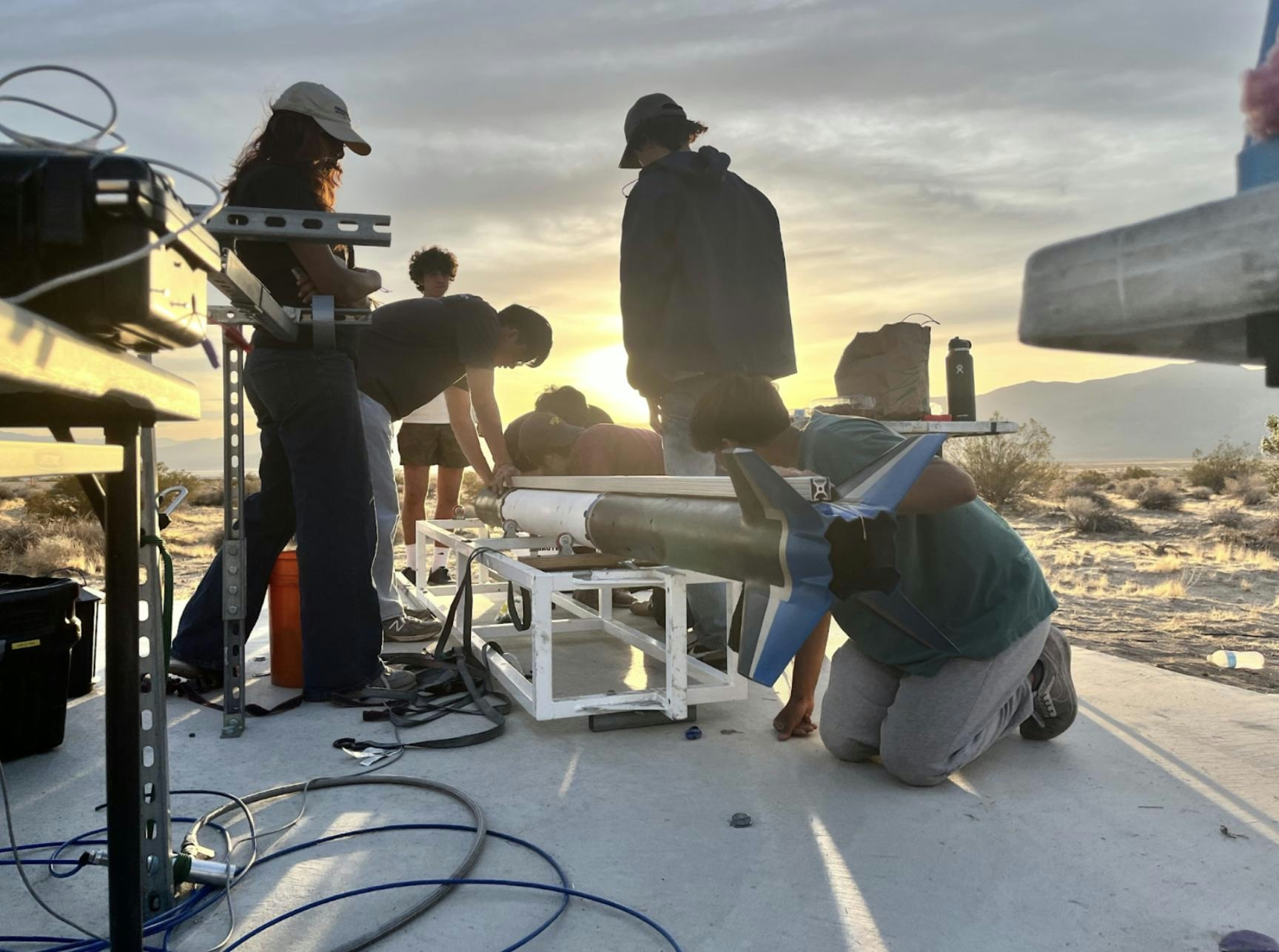
Inventive collaborations between universities and aerospace companies are increasingly driving technical breakthroughs while nurturing the next generation of industry talent. By infusing fresh perspectives into complex aviation challenges, student teams are contributing solutions that often elude even the most experienced professionals.
Pioneering Innovations Through Academic Collaboration
At Acron, where surveillance hardware and engineering technology development are overseen, the impact of these partnerships is evident. This year, a team from the University of Arizona developed a passive thermal management system tailored for Urban Air Mobility (UAM) avionics—a critical advancement for the emerging “flying taxi” market. Their innovative design replaces traditional fans with heat pipes and a fin dissipation structure, effectively addressing the stringent size and weight constraints inherent to UAM vehicles. By eliminating fans, the team not only reduced noise and potential reliability issues but also enabled unprecedented electronic packaging density. Their simulation models and physical prototypes successfully maintained safe component temperatures even under extreme conditions of +70°C, a common challenge in compact avionic bays. This technology is now under consideration for integration with Acron Aviation’s forthcoming low-SWaP T3CAS radio. The team’s work was recognized with the University’s capstone award for “Most Unintuitive Design Driven by Physics.”
Other university collaborations have yielded similarly significant results. Students from Western Michigan University engineered a baro-inertial system from the ground up, combining off-the-shelf components with custom software algorithms to deliver precise vertical velocity and position data. Their rigorous methodology, which included flight testing on a company aircraft, directly influenced Acron’s display and sensor product roadmap, accelerating development in this critical domain.
Meanwhile, a team from the University of South Florida designed and constructed a data access interface for a flight data recorder, commonly known as a “black box.” Their hardware prototype and accompanying software demonstrate clear potential for incorporation into Acron’s recorder product line, exemplifying a seamless transition from academic concept to commercial application.
Navigating Challenges and Industry Implications
Despite these successes, leveraging student partnerships for aerospace innovation presents challenges. Securing consistent funding and resources, aligning academic projects with industry standards, and keeping pace with rapid technological advancements require careful coordination. A recurring source of friction lies in mismatched expectations: while industry partners often seek production-ready solutions, universities emphasize student learning and experimental exploration. At Acron, this has been addressed by establishing clear project scopes and realistic goals from the outset.
The broader aerospace industry is increasingly recognizing the value of such collaborations. Market responses underscore the importance of cultivating future talent and acknowledge the potential of student-driven innovations to enhance national security interests. Competitors are responding by forging their own university partnerships or intensifying recruitment efforts targeting top students, reflecting the sector’s competitive dynamics. Recent initiatives, including the Space Force’s collaboration with the Aerospace Industries Association for the Rocketry Challenge and the GAMA Aviation Design Challenge, further highlight the industry-wide commitment to fostering student innovation.
As these partnerships continue to evolve, they promise not only to advance aerospace technology but also to shape the future workforce, demonstrating that student collaborations remain a vital engine for innovation.

Etihad Airways Suspends Airbus A380 Flights on Key Route

Aditya Birla Group Seeks Approval for Aircraft Leasing in GIFT City

Qatar Airways Highlights Innovation and Connectivity at Arabian Travel Market 2026

Hong Kong's Five-Year Plan Includes Andrew Fan's Aircraft Parts Processing Hub Proposal

ACIA Aero Leasing Delivers ATR72-600 to Air Nostrum

RTX Appoints Jill Albertelli as Head of Pratt & Whitney

TAT Technologies Joins Beyond Aero Hydrogen Aircraft Program

AURAK Study Highlights Barriers to Air Taxi Adoption in Emerging Economies

Xiamen Air Selects Altitude for 787 Maintenance at Heathrow

Etihad and Swissport Extend Global Partnership
