
Orchestrate AI insights into action

Trending
Categories
Hundreds of UK Flights Delayed Due to Air Traffic Control System Failure
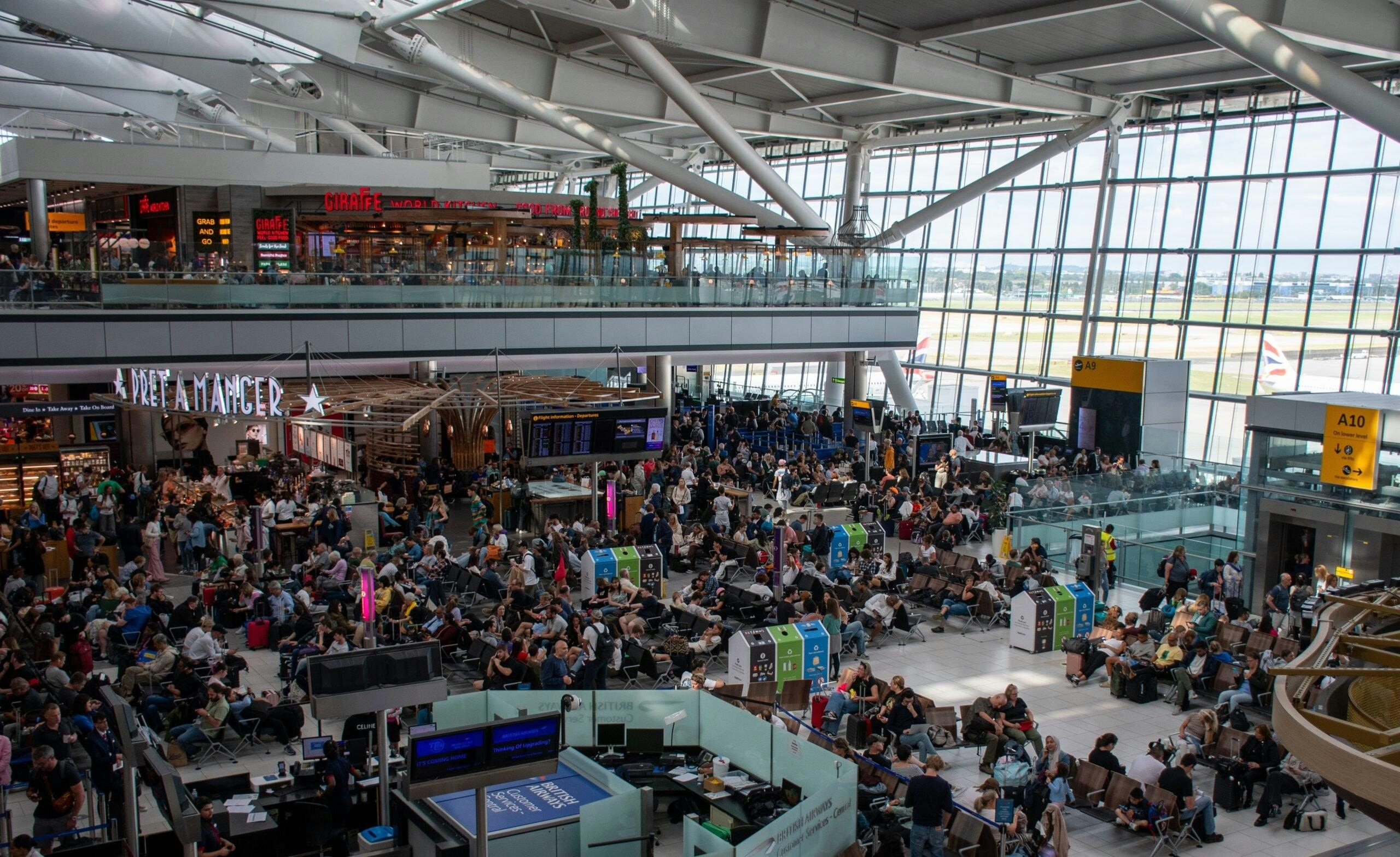
Hundreds of UK Flights Delayed Following Air Traffic Control System Failure
On Wednesday, July 30, hundreds of flights across the United Kingdom experienced significant delays after a technical failure disrupted the country’s air traffic control (ATC) system for approximately 20 minutes. The incident raised concerns of a recurrence of the August 2023 outage, which had left hundreds of thousands of passengers stranded and caused widespread travel disruption.
Technical Fault and Immediate Response
Nats, the organisation responsible for managing the UK’s air traffic control network, identified the cause of the disruption as a technical fault at its Swanwick control centre in Hampshire. The problem was swiftly addressed by switching to a backup system, and Nats was quick to clarify that the incident was not related to any cyberattack. This was corroborated by the UK National Cyber Security Centre, which confirmed there was no evidence of hacking.
Despite the prompt resolution, the outage triggered a ripple effect of delays across the country. Numerous aircraft were forced to hold or divert, while flight crews found themselves out of position, exacerbating operational challenges for airlines. British Airways temporarily reduced its flight operations at Heathrow Airport to 32 flights per hour, down from the usual 45, until 7:15 pm, when normal scheduling resumed. Liverpool’s John Lennon Airport also issued warnings that disruptions could continue into the evening. Passengers nationwide were advised to check with their airlines before travelling.
Impact and Industry Reactions
The disruption caused considerable inconvenience for travellers and is expected to result in financial losses for airlines due to cancellations and delays. The incident has intensified scrutiny of Nats’ operational reliability, prompting calls for enhanced backup systems to prevent similar failures in the future. Some airlines sought to highlight their own operational efficiencies and customer service in contrast to the disruption.
Ryanair was particularly vocal in its criticism, with Chief Operating Officer Neal McMahon describing the situation as “outrageous” and attributing the failure to “continued mismanagement” by Nats’ Chief Executive, Martin Rolfe. McMahon called for Rolfe’s resignation and urged Transport Secretary Heidi Alexander to intervene if the leadership did not change, demanding urgent reform of what he termed Nats’ “shambolic” service.
Transport Secretary Alexander acknowledged the incident and cautioned passengers about “continued disruption” despite the restoration of the system. The latest failure comes less than a year after the August 2023 breakdown, which affected over 700,000 passengers and sparked widespread criticism of the UK’s air traffic control infrastructure.
While the immediate technical issue was resolved, the full extent of the disruption and its consequences remain to be seen. The incident has reignited debate over the resilience of the UK’s air traffic control systems and the necessity for robust contingency measures to safeguard passengers and airlines from future failures.

Etihad Airways Suspends Airbus A380 Flights on Key Route

Aditya Birla Group Seeks Approval for Aircraft Leasing in GIFT City

Qatar Airways Highlights Innovation and Connectivity at Arabian Travel Market 2026

Hong Kong's Five-Year Plan Includes Andrew Fan's Aircraft Parts Processing Hub Proposal

ACIA Aero Leasing Delivers ATR72-600 to Air Nostrum

RTX Appoints Jill Albertelli as Head of Pratt & Whitney

TAT Technologies Joins Beyond Aero Hydrogen Aircraft Program

AURAK Study Highlights Barriers to Air Taxi Adoption in Emerging Economies

Xiamen Air Selects Altitude for 787 Maintenance at Heathrow

Etihad and Swissport Extend Global Partnership
