
Orchestrate AI insights into action

Trending
Categories
IATA Identifies Africa as the Most Expensive Region for Airline Operations
IATA Identifies Africa as the Most Expensive Region for Airline Operations
The International Air Transport Association (IATA) has designated Africa as the most costly region worldwide for airline operations, attributing this status to elevated jet fuel prices, excessive taxes and fees, and a range of operational challenges that collectively drive up expenses for carriers across the continent.
Cost Drivers and Operational Challenges
IATA reports that African airlines incur unit costs nearly double the global average, standing at $140 per available tonne-kilometre compared to approximately $70 globally. A significant contributor to this disparity is the price of jet fuel, which is on average 17% higher in Africa. This premium is largely due to limited local refining capacity, inefficiencies in supply chains, and a heavy dependence on imported fuel. Consequently, fuel expenses can represent up to 40% of an African airline’s operating costs, markedly higher than the 25% typical in other regions.
In addition to fuel costs, taxes and fees impose a substantial burden on African carriers. These charges account for between 12% and 15% of total costs, with statutory levies in some markets adding $60 to $80 to a base fare of $100. Such financial impositions effectively render air travel a luxury for many Africans. Airport and air navigation fees are also notably higher, exceeding those in other regions by 10 to 12%.
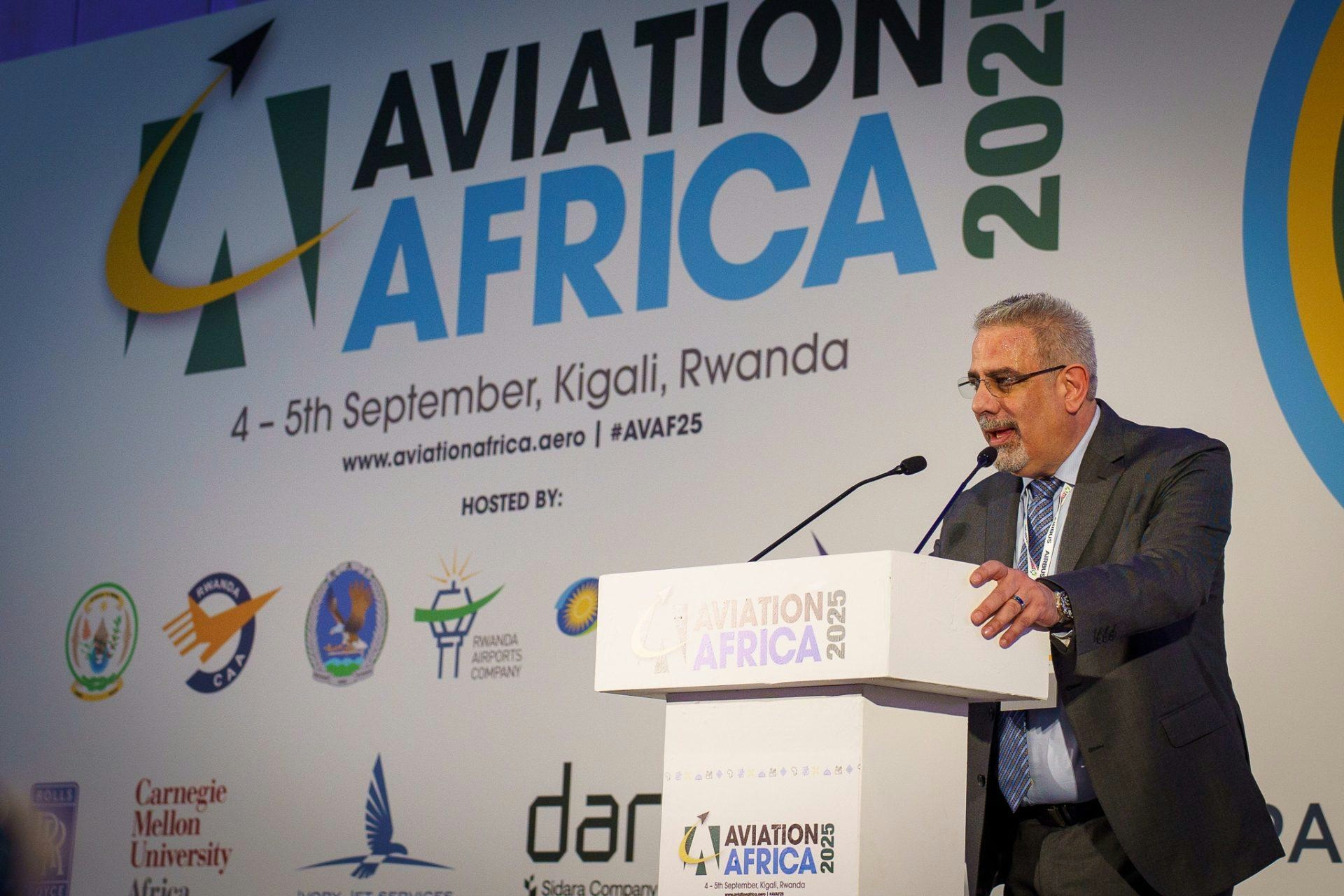
Kamil Alawadhi, IATA’s Regional Vice President for Africa and the Middle East, emphasized these challenges during the IATA Global Media Day. He highlighted that African airlines operate on a razor-thin net profit margin of just 1.3%, the lowest worldwide. On a per-seat basis, African carriers generate only $1.20 in revenue, compared to a global average of $7.70.
The operational difficulties are further compounded by aging fleets, with African aircraft averaging five years older than the global norm. This results in increased maintenance requirements and higher fuel consumption. The scarcity of local Maintenance, Repair, and Overhaul (MRO) facilities forces airlines to procure parts and services from overseas at a premium cost.
Financial Constraints and Market Fragmentation
A critical financial obstacle facing African airlines is the issue of blocked funds. As of late 2025, Africa accounts for approximately 79%—or $954 million—of the world’s total blocked airline funds. Government restrictions on converting local earnings into hard currency severely limit airlines’ ability to meet dollar-denominated expenses such as aircraft leases, fuel purchases, and insurance premiums. This situation creates significant cash flow risks and often compels airlines to reduce or suspend services to affected countries.
Market fragmentation and protectionist policies further impede the development of the continent’s aviation sector. Only 19% of intra-African routes offer direct flights, forcing many passengers to transit through Europe or the Middle East to reach other African destinations. The majority of African airlines are small operators lacking the economies of scale necessary to compete effectively on a global stage.
Initiatives and Future Outlook
In response to these persistent challenges, airlines and regional associations are forming task forces and exploring collaborative strategies aimed at improving safety standards and reducing operational costs. IATA plans to introduce new initiatives focused on safety and efficiency at the upcoming Focus Africa event in April 2026, targeting the structural issues that have hindered the continent’s aviation progress.
Despite forecasts projecting a 6.0% growth in air traffic across Africa in 2026—outpacing the global average—the industry continues to struggle with high costs and minimal profitability. This underscores the pressing need for coordinated reforms to unlock the sector’s full potential.

Etihad Airways Suspends Airbus A380 Flights on Key Route

Aditya Birla Group Seeks Approval for Aircraft Leasing in GIFT City

Qatar Airways Highlights Innovation and Connectivity at Arabian Travel Market 2026

Hong Kong's Five-Year Plan Includes Andrew Fan's Aircraft Parts Processing Hub Proposal

ACIA Aero Leasing Delivers ATR72-600 to Air Nostrum

RTX Appoints Jill Albertelli as Head of Pratt & Whitney

TAT Technologies Joins Beyond Aero Hydrogen Aircraft Program

AURAK Study Highlights Barriers to Air Taxi Adoption in Emerging Economies

Xiamen Air Selects Altitude for 787 Maintenance at Heathrow

Etihad and Swissport Extend Global Partnership
