image

AeroGenie — Uw intelligente copiloot.

Vraag alles. Analyseer alles. Reageer direct.

Trending

Categories

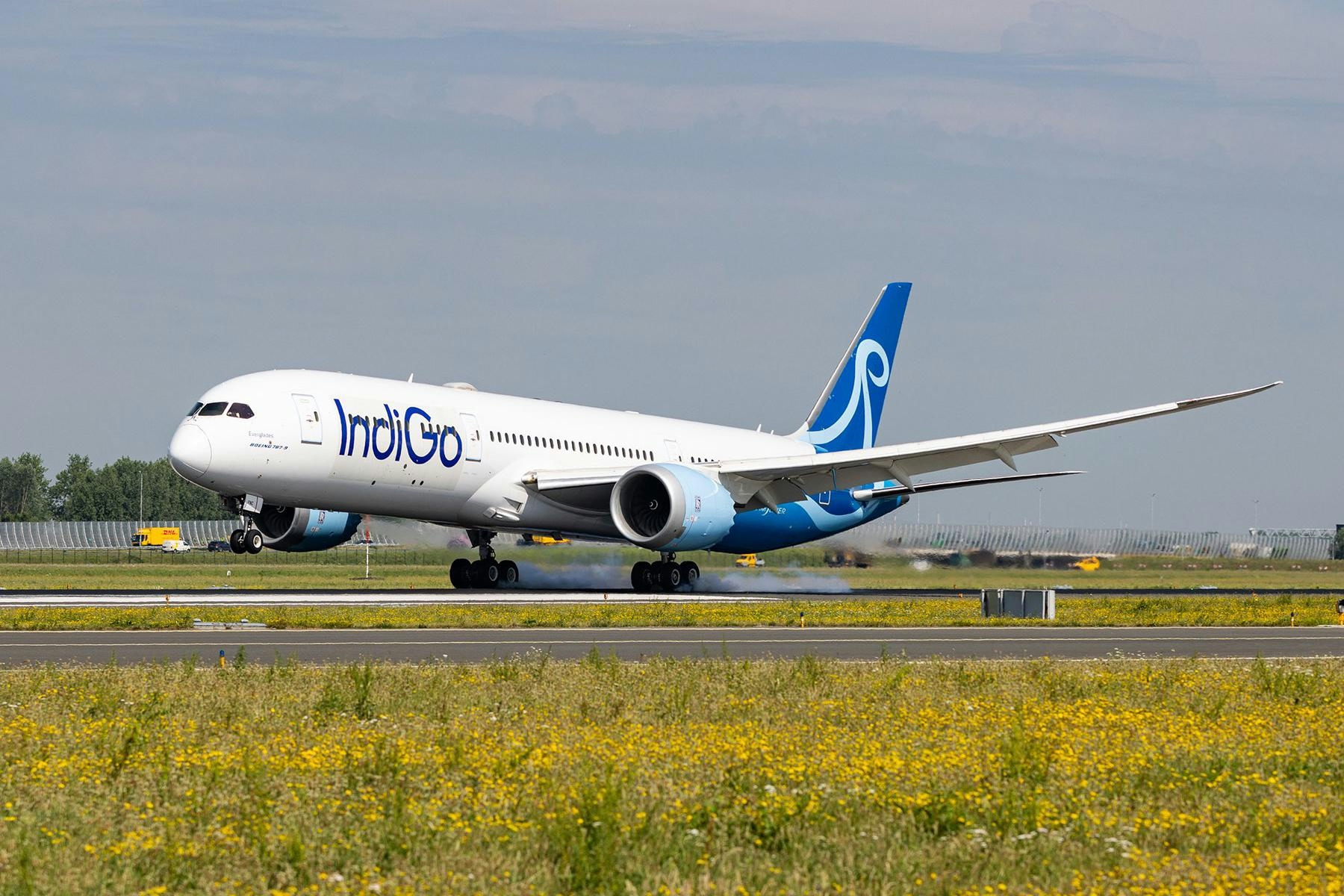
IndiGo Launches New International Flights from Mumbai with Boeing 787
September 16, 2025By ePlane AI
IndiGo Launches New International Flights from Mumbai with Boeing 787
0
0
IndiGo Airlines
Boeing 787-9 Dreamliner
International Route Expansion

IndiGo Expands European Network with New Mumbai–Copenhagen Flights

IndiGo Airlines is set to inaugurate direct international flights between Mumbai and Copenhagen starting October 8, 2025, marking its entry into the Scandinavian market and further expanding its footprint in Europe. The new service will operate three times weekly, employing a Boeing 787-9 Dreamliner on a wet lease from Norse Atlantic Airways. This strategic initiative reflects IndiGo’s ambition to broaden its long-haul international operations and establish a competitive presence in new global markets.

The Mumbai–Copenhagen route will offer a non-stop connection between India’s financial hub and Denmark’s capital, significantly reducing travel time by bypassing traditional layovers in major European transit points such as Frankfurt, Amsterdam, or Doha. Flights will depart Mumbai at 04:35 IST, arriving in Copenhagen at 22:05 local time, with return journeys leaving Copenhagen at 12:30 and landing in Mumbai shortly after midnight. The flight duration is estimated at approximately nine to ten hours, providing a more efficient travel option for both business and leisure passengers.

Strategic Significance and Fleet Deployment

IndiGo CEO Pieter Elbers emphasized that Copenhagen will become the airline’s 44th international destination, expanding its global network to 138 cities. The new route positions Denmark as a critical gateway to the Nordic region, enhancing connectivity not only to Denmark but also to Norway, Sweden, and Finland. This development is expected to facilitate increased tourism, trade, and cultural exchange between India and Scandinavia.

The choice of the Boeing 787-9 Dreamliner underscores IndiGo’s commitment to long-haul operations, leveraging the aircraft’s fuel efficiency, quieter engines, and superior passenger comfort. The wet lease agreement with Norse Atlantic Airways enables IndiGo to rapidly enter the long-haul market without immediate investment in a wide-body fleet. Alongside this, the airline plans to utilize Airbus A321XLR aircraft to further extend its international reach in the near future.

Market Challenges and Competitive Landscape

Despite the promising prospects, IndiGo faces potential challenges as it ventures into new territories. Competition from established carriers, including Aegean Airlines—which has announced plans to launch routes to Greece in 2026—may intensify market rivalry. Additionally, regulatory complexities in unfamiliar regions could present operational hurdles. The introduction of this route is anticipated to stimulate interest among business and leisure travelers seeking direct access to Central Asia and Europe, potentially prompting competitors to reassess their strategic positioning.

Copenhagen: A Gateway to Scandinavia

Copenhagen offers an attractive destination for travelers, with the best visiting months being May, June, and September, when daylight hours are long and weather conditions are favorable. July tends to be quieter as many locals travel abroad, while December features festive attractions such as the illuminated Tivoli Gardens. A typical stay of two to three days allows visitors to experience the city’s main sights, while four to five days provide a more immersive cultural experience.

The city is renowned for its bike-friendly infrastructure, making it easy to explore via public bicycles, hotel rentals, or guided tours. Key attractions include Nyhavn, the historic and colorful waterfront; Rosenborg Castle, a Renaissance-era royal palace; and Tivoli Gardens, one of the world’s oldest amusement parks.

IndiGo’s launch of the Mumbai–Copenhagen route is poised to enhance connectivity between India and Scandinavia, offering faster travel options and intensifying competition within the international aviation sector.

More news
Frontier Airlines A321neo Engine Incident Raises Concerns Over Flight Disruptions

Frontier Airlines A321neo Engine Incident Raises Concerns Over Flight Disruptions

Frontier Airlines A321neo Engine Incident Raises Concerns Over Flight Disruptions Engine Flameout Forces Emergency Return A Frontier Airlines Airbus A321neo was compelled to return to Cleveland International Airport shortly after takeoff due to an engine malfunction. The aircraft, equipped with Pratt & Whitney’s geared turbofan (GTF) engines, experienced a rare flameout—an unexpected loss of engine power. The flight concluded safely with no injuries reported among passengers or crew, averting what could have been a more serious incident. This event has heightened scrutiny of both Frontier Airlines and the wider aviation industry, particularly regarding the reliability of Pratt & Whitney’s GTF engines. These engines have faced ongoing technical challenges, contributing to maintenance delays and flight disruptions across several carriers. Frontier’s rapid expansion of its A320 family fleet to accommodate increasing demand from budget travelers places additional pressure on the airline to maintain operational reliability amid these concerns. Broader Implications for the Aviation Sector and Travelers The incident raises significant questions about potential disruptions for passengers. Airlines operating aircraft with the affected engines have encountered difficulties in maintaining schedules, leading to delays and cancellations that reverberate through the hospitality and tourism industries. Frontier now faces intensified regulatory scrutiny and the prospect of increased maintenance costs, which may result in more frequent schedule adjustments or service interruptions in the near term. Investor confidence has also been affected, as evidenced by a temporary decline in Frontier’s stock price following the incident. Competitors may capitalize on this vulnerability by attracting travelers seeking more dependable service, thereby increasing competitive pressures on Frontier. Should these operational challenges persist, other airlines stand to gain market share at Frontier’s expense. Industry-Wide Challenges and Operational Complexities Compounding Frontier’s difficulties are broader technical issues affecting the aviation sector. Airlines operating Airbus A320-family aircraft are contending with necessary software updates, which demand significant attention and resources. These concurrent challenges risk diverting focus from resolving engine reliability problems, complicating efforts to ensure seamless operations. Guidance for Travelers In light of these developments, passengers are advised to monitor flight statuses closely, particularly when traveling on A320neo family aircraft. Flexible booking options and travel insurance may help mitigate the impact of potential disruptions. Staying informed through official airline communications regarding maintenance updates or schedule changes is also recommended. As Frontier Airlines and the industry at large address these technical and operational hurdles, the incident underscores the critical importance of rigorous aircraft maintenance and reliability. Passengers are encouraged to remain vigilant and plan accordingly to minimize the effects of any unforeseen travel disruptions.
Airbus Employs 3D Printing to Address Aircraft Supply Chain Challenges

Airbus Employs 3D Printing to Address Aircraft Supply Chain Challenges

Airbus Employs 3D Printing to Address Aircraft Supply Chain Challenges Adopting Additive Manufacturing Amid Supply Chain Disruptions Since the onset of the COVID-19 pandemic in 2019, global aircraft manufacturers have grappled with persistent supply chain bottlenecks that have delayed the delivery of critical components and slowed production schedules. In response to these challenges, Airbus has increasingly turned to 3D printing, or additive manufacturing, as a strategic solution to mitigate disruptions and uphold its delivery commitments. Airbus currently produces over 25,000 flight-ready 3D-printed parts annually, collaborating closely with Minnesota-based technology firm Stratasys. This transition has not only helped alleviate supply chain constraints but has also revolutionized the manufacturing and maintenance processes of modern aircraft. To date, more than 200,000 certified Stratasys polymer parts are in active service across airlines and air forces worldwide. Benefits and Implementation Across Key Aircraft Models The integration of 3D-printed components has delivered measurable advantages. For instance, the Airbus A350 long-haul jet has benefited from a 43% reduction in component weight through the use of these parts. Furthermore, Airbus has eliminated minimum order quantity requirements and achieved an 85% reduction in lead times. These improvements have been applied across three major production lines: the A320neo family, the A350, and the A400M military transport aircraft. The parts are manufactured using Stratasys’ industrial-grade printers and Certified Grade (CG) filament, ensuring compliance with stringent aerospace standards. Serge Senac, Airbus Industrial Leader for Polymer Additive Manufacturing, emphasized the significance of this technology, stating, “Stratasys’ additive manufacturing technology is an integral part of our commitment to safe and sustainable aviation. We can produce certified, repeatable parts faster, with less reliance on complex supply chains. This manufacturing flexibility reduces costs and ensures improved response times to meet the needs of our customers around the world.” Senac also highlighted that 3D printing aligns with Airbus’ ambition to achieve carbon neutrality by 2050. Ongoing Challenges and Strategic Advantages Despite these advancements, Airbus continues to confront challenges. Recent quality issues involving metal panels on certain A320 aircraft have exposed ongoing vulnerabilities within the supply chain, contributing to an 11% decline in Airbus shares following the report. These incidents underscore the critical need for continued innovation in manufacturing processes. While competitor Boeing has demonstrated improved performance amid similar supply chain pressures, the adoption of 3D printing may emerge as a key differentiator in the competitive aerospace landscape. Stratasys underscores that distributed additive manufacturing enables Airbus to produce parts on demand and in proximity to where they are needed, thereby reducing aircraft downtime, minimizing inventory storage, and avoiding costly supply chain delays. The flexibility inherent in 3D printing allows for the production of a diverse range of components, irrespective of type or function, providing Airbus with a strategic advantage as it navigates ongoing industry challenges. By leveraging 3D printing technology, Airbus aims to mitigate supply chain risks, reduce operational costs, and maintain its leadership position in the aerospace sector amid persistent market pressures and quality concerns.
PCC Approves Acquisition of Global Aircraft Leasing Firm

PCC Approves Acquisition of Global Aircraft Leasing Firm

PCC Approves Acquisition of Global Aircraft Leasing Firm The Philippine Competition Commission (PCC) has approved the proposed acquisition of aircraft assets of CL Financing Gold Ltd. from subsidiaries of Vmo Aircraft Leasing GP, LLC. In a decision dated November 6, the antitrust regulator determined that the transaction is unlikely to substantially lessen competition in the global dry leasing of aircraft. Transaction Overview and Market Impact The approval follows an extensive review process, including interviews and consultations conducted by the PCC’s mergers and acquisitions office to assess the potential competitive effects of the deal. CL Financing Gold Ltd., a consortium of global investment and asset management firms incorporated in the Cayman Islands, entered into an agreement with Vmo Aircraft Leasing on June 27 to acquire the aircraft assets. Vmo Aircraft Leasing, a multinational commercial aircraft lessor, is supported by private equity and credit groups managed by Los Angeles-based Ares Management Corp. The PCC noted that both CL Financing Gold and Vmo Aircraft Leasing hold minimal market shares within the global dry leasing sector. The Commission emphasized that the industry remains dynamic and competitive, with a sufficient number of existing players and strong market appeal for new entrants. This environment, the PCC concluded, ensures that competition will remain robust following the transaction. Regulatory Context and Industry Implications The approval comes amid increased regulatory scrutiny of large-scale transactions in the aviation sector. Recent deals, such as Boeing’s acquisition of Spirit AeroSystems, have been subject to stringent regulatory conditions aimed at addressing anti-competitive concerns. The PCC’s decision aligns with global regulatory standards, underscoring the importance of safeguarding market competition and consumer welfare. The Commission also acknowledged potential challenges associated with such acquisitions, including regulatory compliance, market competition, and the integration of acquired assets. Market responses to similar transactions have included fluctuations in the stock prices of both acquiring and competing firms, as well as strategic adjustments by competitors to preserve market share and maintain competitive pricing. In its statement, the PCC highlighted that “the presence of sufficient existing players and the attractiveness of the market to new entrants ensure that competition will remain robust.” The Commission reaffirmed that its approval supports its mandate to prevent consolidation in specialized global industries, such as aviation leasing, from harming competition. Under the Philippine Competition Act, the PCC is responsible for reviewing mergers and acquisitions to prevent transactions that could diminish market competition or adversely affect consumer welfare. The Commission reiterated its commitment to protecting consumer interests and promoting a level playing field across diverse markets.
Replica of Wright Brothers’ Engine to Run in San Diego on Wednesday

Replica of Wright Brothers’ Engine to Run in San Diego on Wednesday

Replica of Wright Brothers’ Engine to Run in San Diego on Wednesday The San Diego Air & Space Museum will commemorate the 112th anniversary of the Wright Brothers’ historic flight with a live demonstration of a meticulously crafted replica of their original engine. Scheduled for 9:30 a.m. on Wednesday outside the museum, this event continues a tradition spanning more than two decades, dedicated to celebrating the origins of aviation and fostering public interest in the field. A Faithful Reproduction of Aviation History The demonstration, lasting approximately 30 seconds, is more than a symbolic gesture; it underscores the technical challenges involved in recreating early aviation technology. The replica engine was constructed over two and a half years by volunteer machinists Bud Monfort, Ted Tornesella, and Lee Lowery. Their work faithfully reproduces the engine designed by Charles E. Taylor for Wilbur and Orville Wright, requiring considerable expertise to ensure that the engine not only resembles but also operates like the original. This achievement highlights the complexity and ingenuity of early aviation engineering. The original Wright engine powered the Wright Flyer during its groundbreaking 12-second flight on December 17, 1903, at Kitty Hawk, North Carolina. This milestone marked the dawn of the aviation age, a legacy that continues to influence San Diego’s identity. The city’s aviation heritage was further enriched in 1911 when inventor Glenn Curtiss became the first American to fly a seaplane, journeying from Coronado’s North Island to San Diego Bay. Shortly thereafter, a Curtiss aircraft was mounted on a Navy warship in the bay, prompting the military to recognize the strategic importance of aircraft and establishing San Diego as the birthplace of naval aviation. Honoring the Past and Inspiring the Future This annual demonstration not only pays tribute to the pioneers of flight but also reflects broader trends within the aviation industry. Its educational and historical significance is expected to attract tourists and media attention, reinforcing San Diego’s standing as a center of aviation history. In an industry where engine manufacturers and aviation organizations compete to showcase technological innovation, such events emphasize the enduring impact of early breakthroughs while connecting them to contemporary advancements. As the aviation sector continues to evolve with a focus on innovation and efficiency, the museum’s tribute serves as a reminder of the field’s origins and the technical ingenuity that propelled it forward. The Wright engine replica demonstration stands as both a celebration of history and a testament to the ongoing spirit of innovation that defines aviation today.
Kuehne+Nagel and SWISS Strengthen Sustainable Aviation Partnership

Kuehne+Nagel and SWISS Strengthen Sustainable Aviation Partnership

Kuehne+Nagel and SWISS Strengthen Partnership to Advance Sustainable Aviation Kuehne+Nagel, a global leader in logistics, and Swiss International Air Lines (SWISS), Switzerland’s flagship carrier, have announced an expansion of their strategic partnership aimed at accelerating sustainable aviation initiatives. The two companies have formalized their collaboration through a memorandum of understanding (MoU) that focuses on leveraging innovative technologies to improve operational efficiency while reducing environmental impact. Commitment to Sustainable Aviation Fuel At the heart of this partnership lies a shared commitment to the development and use of sustainable aviation fuel (SAF) produced by Synhelion, a Swiss clean technology firm. Synhelion employs a proprietary process that harnesses concentrated sunlight to convert biogenic and recycled carbon into renewable synthetic fuels, including solar jet fuel. By supporting this cutting-edge technology, Kuehne+Nagel and SWISS seek to contribute meaningfully to the long-term decarbonisation of the aviation sector. To facilitate the scaling of production and foster further innovation, Kuehne+Nagel, SWISS, and its air freight division Swiss WorldCargo have entered into a long-term SAF off-take agreement. This arrangement provides Synhelion with the necessary planning security to expand its production capacity and advance its technology. Such commitments are considered essential for nurturing emerging SAF producers and encouraging wider adoption of sustainable fuels across the industry. Starting in 2027, Kuehne+Nagel will purchase SAF produced by Synhelion from SWISS under a five-year contract, specifically for use in cargo shipments operated by Swiss WorldCargo. This agreement highlights Kuehne+Nagel’s dedication to decarbonising global logistics and offers its customers a tangible means to reduce the carbon footprint of their air freight operations. Challenges and Industry Implications Despite the promising outlook, the transition to sustainable aviation faces significant challenges. Both Kuehne+Nagel and SWISS must navigate potential regulatory obstacles, the complexities of establishing reliable SAF supply chains, and the substantial investments required for new infrastructure. While the partnership is likely to be well received by sustainability-focused investors, some skepticism remains regarding the feasibility and timeline for achieving the ambitious environmental targets set forth. The announcement is expected to prompt competitive responses within the logistics and airline sectors, with other companies likely to increase their investments in sustainable practices to maintain market relevance. This dynamic could accelerate industry-wide efforts toward sustainability, driving further innovation and the adoption of cleaner technologies. Kuehne+Nagel and SWISS present their collaboration as a practical example of how airlines and logistics providers can work together to support innovative solutions and expedite the transition to more sustainable aviation. SWISS CEO Jens Fehlinger emphasized the importance of such partnerships, stating, “Sustainable aviation fuels are a key building block for making air travel more sustainable. They remain scarce and costly—which is exactly why we need strong partners. We are pleased to be working with Kuehne+Nagel to implement the first commercial offtake of Synhelion’s fuel. This marks an important step forward and sends a clear signal that we intend to actively shape this path.”
MD Aircraft Receives 20 Pre-Orders for eViator from UrbanLink

MD Aircraft Receives 20 Pre-Orders for eViator from UrbanLink

MD Aircraft Secures 20 Pre-Orders for eViator from UrbanLink MD Aircraft GmbH (MDA) has announced a significant agreement with UrbanLink Air Mobility, which has signed letters of intent for 20 pre-orders of MDA’s flagship electric aircraft, the eViator. This commitment raises MDA’s global pre-order count to 110 aircraft, underscoring strong international demand and reinforcing the company’s growing influence in the sustainable regional aviation sector. Strategic Partnership and Market Expansion UrbanLink Air Mobility plans to integrate the eViator as a core element of its future network, aiming to provide zero-emission regional connectivity across key markets. Ed Wegel, Founder and CEO of UrbanLink, emphasized the alignment between the two companies’ visions, stating that the pre-orders reflect a firm commitment to sustainable operations and set a new industry standard. For MD Aircraft, the partnership represents a crucial step in expanding market access beyond Europe, particularly targeting the U.S. and Caribbean regions. Gregor Müller, CEO of MD Aircraft, highlighted UrbanLink’s expertise as instrumental in accelerating the company’s presence in these markets and strengthening its foundation for zero-emission regional aviation. Positioning Amidst Growing Competition Headquartered in Germany, MD Aircraft focuses on developing quiet, cost-efficient, and environmentally responsible electric aircraft optimized for short-haul routes. The MDA1 eViator is designed to transform regional aviation through advanced all-electric propulsion and a customer-centric operating model aimed at reducing emissions and operating costs. However, the company faces increasing competition as the electric aviation sector gains momentum. Rivals such as Smartflyer and Boeing-backed Evio are advancing their own electric aircraft programs, while established manufacturers like Bombardier, with its recent Global 6500 deal, and Pegasus, active in Germany, add further competitive pressure. These players may accelerate their development of electric or hybrid-electric aircraft in response to MDA’s expanding order book. Despite these challenges, UrbanLink’s pre-orders have been met with a positive market response, signaling growing confidence in the viability of electric commuter aircraft. Nonetheless, broader market acceptance and the ability to scale production remain critical challenges for MDA and its competitors as the industry moves toward sustainable regional air mobility.
Tech Companies Propose Flying Taxis for Military Use

Tech Companies Propose Flying Taxis for Military Use

Tech Companies Advance Flying Taxi Technology for Military Applications US technology firms are accelerating the development of flying taxis, also known as vertical takeoff and landing vehicles (VTOLs), targeting both commercial and military markets. Leading companies such as Archer Aviation, Joby Aviation, and Beta Technologies are pioneering hybrid, autonomous air taxis designed to transport passengers on short urban routes, such as between Manhattan and LaGuardia Airport, while simultaneously exploring their potential utility on the battlefield. Innovations in VTOL Design and Military Potential These VTOL aircraft combine the vertical takeoff and landing capabilities of helicopters with the speed and efficiency of fixed-wing airplanes. Although commercial operations have yet to commence in the United States, industry experts anticipate that these vehicles could become operational within the next few years. The Pentagon has increasingly turned to the tech sector in search of faster, more cost-effective solutions than those traditionally provided by established defense contractors. In response, the Department of Defense has committed billions of dollars toward emerging technologies and issued requests for information on hybrid and autonomous VTOL platforms. The military envisions these aircraft fulfilling a variety of roles, including cargo transport, intelligence gathering, surveillance, and the discreet movement of supplies. Some battlefield VTOL prototypes incorporate advanced autonomous systems capable of threat detection and avoidance. For instance, Beta Technologies’ military model allows a human operator to input destination coordinates while artificial intelligence manages navigation. Removing the need for onboard pilots reduces aircraft weight by eliminating seats and passenger safety systems, enhancing operational efficiency. While commercial VTOLs are generally fully electric, military variants are being developed with gas-electric hybrid engines to extend range and increase payload capacity—critical factors for defense missions. Beta Technologies CEO Kyle Clark emphasized the strategic advantage of these capabilities, stating, “When we can fundamentally go further and faster than a helicopter, then we have a tool that's more powerful than what the Chinese are going to bring to the fight.” Global Competition and Regulatory Challenges The global race to develop advanced VTOL technology is intensifying, with Chinese companies such as EHang competing alongside American innovators. Although China currently dominates the market for smaller aerial combat drones, the VTOL sector remains highly contested, with US firms eager to establish leadership. Despite significant technological progress, the industry faces substantial regulatory challenges. Certification processes in the United States and Europe are protracted, prompting some companies to pursue approvals in regions like the Middle East, where regulatory frameworks are less restrictive. This approach has raised concerns among industry leaders about the potential risks of premature deployment. Market responses to these developments have been varied. Beta Technologies experienced a surge in its stock price following a $1 billion motor supply agreement with Eve Air Mobility, while other air taxi companies have seen declines. As the Pentagon evaluates potential contracts, manufacturers of air taxis are positioning themselves to become key suppliers in both commercial and defense sectors. With billions of dollars in prospective defense funding and rapid advancements by global competitors, the coming years will be pivotal for the integration of flying taxis into civilian transportation and military operations alike.
Emirates and GAMECO Expand Heavy Maintenance Partnership

Emirates and GAMECO Expand Heavy Maintenance Partnership

Emirates and GAMECO Strengthen Heavy Maintenance Collaboration Emirates and Guangzhou Aircraft Maintenance Engineering Company (GAMECO) have reinforced their longstanding partnership through the signing of new multi-year agreements aimed at expanding heavy maintenance services for Emirates’ fleet. This collaboration, initiated in September 2023 with a dedicated agreement for the Airbus A380—of which Emirates is the largest global operator—has seen GAMECO establish a comprehensive nose-to-tail heavy maintenance line in Guangzhou. The facility has been tailored to meet Emirates’ specific operational requirements, delivering notable improvements in reliability, efficiency, and technical excellence. Expansion of Maintenance Capabilities Building on this initial success, the partnership was extended in April 2025 to include a similar nose-to-tail heavy maintenance line for the Boeing 777, aligning with Emirates’ extensive widebody aircraft operations. The latest agreements further prolong the maintenance services for both the A380 and 777 fleets, underscoring a relationship founded on mutual trust, shared standards, and a strategic long-term vision. The growing role of the Guangzhou facility within Emirates’ global maintenance network reflects the airline’s confidence in GAMECO’s technical expertise and operational capabilities. Despite these advancements, the expanded partnership introduces new challenges. As Emirates prepares for intensive heavy checks on its Airbus A350 fleet, ensuring the availability of materials and the reliability of supply chains will be critical. The complexity of these operations is expected to test both partners’ ability to uphold stringent standards of safety, quality, and operational performance. Strategic Shifts and Industry Implications Market responses to the expanded collaboration have generally signaled increased confidence in Emirates’ maintenance capabilities. However, this development is likely to prompt competitors within the aviation maintenance sector to strengthen their own partnerships or enhance service offerings to maintain competitiveness. Some industry players may leverage existing alliances to provide more attractive solutions, thereby intensifying competition. Concurrently, Emirates is undertaking a strategic move to internalize some maintenance work on Trent 900 engines. This shift aims to grant the airline greater control over maintenance timelines, costs, and innovation priorities. Nevertheless, it demands significant investment and operational adjustments, adding complexity to Emirates’ broader maintenance strategy. Dr. Marc Szepan, General Manager of GAMECO, remarked, “We are honoured to extend our partnership with Emirates, one of the world’s most respected airlines. This collaboration underlines GAMECO’s commitment to delivering world-class maintenance solutions and reflects our shared emphasis on safety, quality and efficiency. Together, we will continue to set new benchmarks for excellence in aircraft maintenance.” As Emirates and GAMECO advance their expanded partnership, they navigate both the opportunities and challenges inherent in maintaining one of the world’s largest and most technologically advanced fleets amid evolving industry dynamics and competitive pressures.
Inside Vietjet’s 32-Hour Emergency Response to Keep Airbus Fleet Operational

Inside Vietjet’s 32-Hour Emergency Response to Keep Airbus Fleet Operational

Inside Vietjet’s 32-Hour Emergency Response to Keep Airbus Fleet Operational In late November, the global aviation industry faced an urgent crisis when Airbus issued a critical technical alert at 11:00 p.m. on November 28. The alert identified a serious software glitch affecting over 6,000 Airbus A319, A320, and A321 aircraft. The European Union Aviation Safety Agency (EASA) swiftly responded with a mandatory Emergency Airworthiness Directive (EAD), requiring all operators to update or replace the ELAC flight-control software by 6:59 a.m. on November 30. This directive addressed a rare but significant risk: under certain conditions, solar radiation could interfere with the software, potentially causing uncommanded nose-down inputs, posing a safety hazard. In Vietnam, the directive impacted 81 aircraft, with Vietjet operating 69 of them. The airline confronted an unprecedented 32-hour technical challenge to keep its fleet operational and minimize disruption. This effort was part of a broader industry-wide scramble as airlines worldwide dealt with grounded flights and complex logistical hurdles. The incident also triggered notable market reactions, including a sharp decline in Airbus shares and a public apology from the manufacturer for the inconvenience caused. Rapid Mobilization and Emergency Operations Upon receiving the alert, Vietjet immediately activated its Emergency Response Committee, mobilizing teams across engineering, flight operations, scheduling, and technology. Utilizing its AMOS maintenance management system, which integrates big data and artificial intelligence, the airline conducted a real-time assessment of its fleet. This enabled the identification of aircraft configurations, locations, and operational constraints. Contingency plans were swiftly developed to maintain network stability, including aircraft redeployment and schedule optimization aimed at minimizing passenger disruption. The operation faced significant logistical challenges. Airbus estimated that each software update would require two to three hours per aircraft, specialized equipment was limited, and the affected aircraft were dispersed across multiple countries. Airlines worldwide adopted an “all hands on deck” approach, with some competitors collaborating and pooling resources to address the issue promptly. Breakthrough on the Hangar Floor A pivotal moment occurred in Da Nang, where Vietjet engineer Nguyen Van Trung, leveraging over 15 years of experience, completed a full ELAC software update in just 45 minutes without omitting any mandatory safety procedures. The software update process is inherently complex, involving verification, standardization, testing, and cross-checking for each aircraft’s unique configuration. Trung emphasized, “Nothing can be skipped. But experience allows you to know exactly where time can be optimized—and where it absolutely cannot.” The first aircraft to complete the update, VN-A644, represented a decisive breakthrough. The optimized 45-minute procedure was immediately standardized and disseminated to engineering teams at Noi Bai, Tan Son Nhat, Da Nang, and international stations, significantly accelerating progress across the fleet. Technology, Teamwork, and Industry Collaboration In addition to software updates, Vietjet prepared hardware contingency measures by pre-positioning ELAC units from grounded aircraft for immediate replacement if necessary. The airline also received support from Vietjet Thailand and other carriers, including Vietnam Airlines and Bamboo Airways, which provided additional equipment to scale the operation. Digitalized technical documentation accessible on iPads, standardized software libraries, and real-time fleet visibility enabled Vietjet to compress administrative timelines while maintaining full compliance with Airbus and EASA safety requirements. Through rapid mobilization, technological innovation, and industry collaboration, Vietjet successfully navigated one of the most challenging operational crises in its history, ensuring passenger safety and network continuity amid a global aviation emergency.
Frontier Airlines Airbus A321neo Returns to Cleveland After Engine Fire

Frontier Airlines Airbus A321neo Returns to Cleveland After Engine Fire

Frontier Airlines Airbus A321neo Returns to Cleveland Following Engine Fire An Airbus A321neo operated by Frontier Airlines was compelled to return to Cleveland Hopkins International Airport (CLE) this morning after experiencing an engine flameout shortly after takeoff. The aircraft, a two-year-old model powered by Pratt & Whitney PW1100G Geared Turbofan (GTF) engines, encountered the incident approximately 15 minutes into the flight. The event was initially reported by aviation watchdog JonNYC on the social media platform X. Incident Details and Immediate Response The flight crew responded promptly to the engine failure, safely returning the aircraft to Cleveland without any reported injuries or further damage. While specific details remain limited, it appears the flameout involved a single engine, as the aircraft landed without incident and no reports indicated a dual-engine failure. Engine flameouts are infrequent occurrences, and modern commercial jets are equipped with advanced safety systems and emergency protocols designed to manage such situations effectively. Pilots receive extensive training to handle power loss scenarios, enabling them to execute safe returns to airports, as demonstrated in this case. Broader Context: Engine Reliability and Industry Challenges This incident adds to ongoing concerns regarding the reliability of Pratt & Whitney’s GTF engines. The engine type has faced significant operational challenges, including manufacturing defects such as powdered metal contamination, which have led to the grounding of approximately one-third of the global GTF-powered fleet. The scale of these issues is unprecedented, with some airlines opting to retire relatively new A320 family aircraft to salvage and lease their engines. Lee McConnellogue, CEO of UK-based aerospace recycling firm eCube, described the situation as unparalleled in the history of the aviation industry. Complicating matters further, Airbus recently issued a recall affecting hundreds of US-based aircraft, including those operated by American Airlines, Delta, and Frontier. This recall stems from a software issue unrelated to the engine problems but has necessitated widespread updates to onboard systems to prevent potential operational disruptions. Frontier Airlines is currently assessing the recall notice, while the broader industry has prioritized swift implementation of software updates to maintain safety and minimize delays. For Frontier, the convergence of engine reliability concerns and the Airbus software recall highlights the operational pressures confronting airlines operating the latest generation of narrowbody jets. As the aviation sector navigates these overlapping technical challenges, the emphasis remains firmly on ensuring passenger safety and minimizing disruptions to flight schedules. Ongoing Investigation The Federal Aviation Administration (FAA) and Frontier Airlines have yet to release further information regarding the Cleveland incident. Investigations are ongoing as both the airline and regulatory authorities work to determine the root cause and uphold safety standards across the fleet.
Ask AeroGenie










