
Orchestrate AI insights into action

Trending
Categories
IndiGo Overtakes Air India Group in International Passenger Numbers Following June 2025 Crash
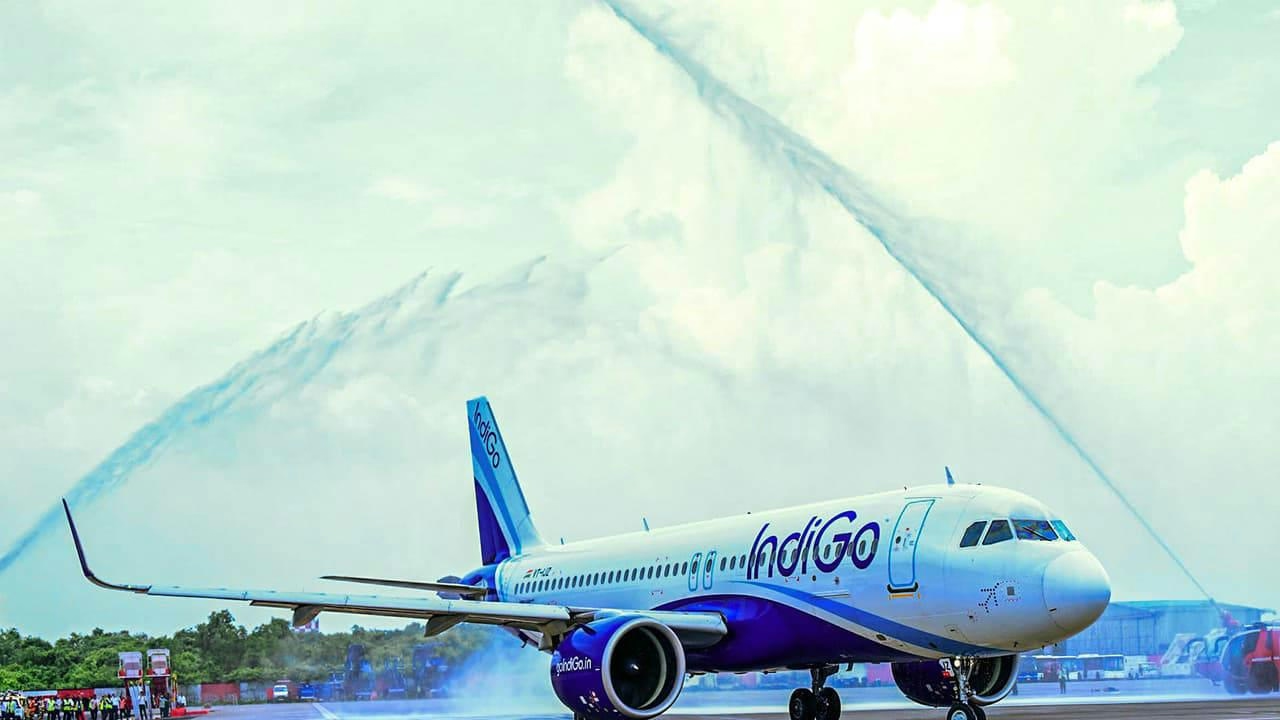
IndiGo Surpasses Air India Group in International Passenger Traffic Following June 2025 Crash
Market Shift After Ahmedabad Tragedy
The aviation sector in India has undergone a significant transformation in the wake of the June 12, 2025 crash of Air India flight AI 171, a Boeing 787 Dreamliner, which tragically claimed 260 lives shortly after departing Ahmedabad. This disaster precipitated an immediate operational contraction and a crisis of confidence for the Tata-owned Air India Group. In the months following the incident, IndiGo (6E) capitalized on the disruption, overtaking the combined international passenger numbers of Air India and Air India Express (IX) for the first time, according to data released by India’s aviation regulator.
During the July to September 2025 quarter, IndiGo transported 4.136 million international passengers, narrowly exceeding the 4.1 million carried by Air India and Air India Express combined. This development signals a structural shift in market dynamics rather than a transient fluctuation. Air India responded to the crash by reducing its long-haul wide-body flights by 15%, particularly from key hubs such as Delhi. Additionally, passenger hesitancy to fly on Boeing 787-operated routes further dampened demand, creating an opportunity for IndiGo’s extensive short- and medium-haul international network to expand its footprint.
Operational Challenges and Regulatory Response
IndiGo’s ascent has not been without its own difficulties. In early December 2025, the airline experienced a severe operational crisis, canceling approximately 3,000 flights—nearly 25% of its domestic schedule—due to a combination of stricter crew regulations, adverse weather conditions, technical issues, and a constrained pilot roster. Despite these challenges, IndiGo managed to maintain near-normal international operations, canceling only 2.4% of its 2,702 scheduled overseas flights between December 1 and 9. This strategic prioritization of international routes was instrumental in preserving its market share during a turbulent period.
The Directorate General of Civil Aviation (DGCA) has initiated a review of IndiGo’s decision to prioritize international flights over domestic services. In response to the December disruptions, the government imposed fare caps, rolled back certain regulations, and launched an official inquiry. The market reacted swiftly, with shares of InterGlobe Aviation, IndiGo’s parent company, declining by 7% as investors assessed the implications. Nonetheless, IndiGo’s chief executive has affirmed that the airline is regaining stability, supported by a DGCA exemption aimed at improving crew availability and restoring operational normalcy.
Capacity Adjustments and Future Prospects
Looking forward, both IndiGo and Air India face further capacity adjustments. Air India plans to temporarily withdraw several older Boeing wide-body aircraft for refurbishment or return them to lessors, which will constrain its long-haul capacity until new aircraft are introduced. Concurrently, the aviation ministry is finalizing a mandate requiring IndiGo to reduce its overall flight operations by at least 10% following recent operational lapses. The distribution of these cuts between domestic and international routes remains uncertain, casting doubt on the sustainability of IndiGo’s recent lead in international passenger numbers.
IndiGo’s emergence as the leader in India’s international passenger traffic highlights its tactical network management and resilience amid industry upheaval. For Air India, the Ahmedabad crash represents its most severe reputational setback in decades, with ongoing repercussions for fleet deployment and passenger confidence. As regulatory scrutiny intensifies and capacity adjustments continue, the hierarchy of India’s international aviation market remains unsettled, even as the industry anticipates record profits in 2026.

Etihad Airways Suspends Airbus A380 Flights on Key Route

Aditya Birla Group Seeks Approval for Aircraft Leasing in GIFT City

Qatar Airways Highlights Innovation and Connectivity at Arabian Travel Market 2026

Hong Kong's Five-Year Plan Includes Andrew Fan's Aircraft Parts Processing Hub Proposal

ACIA Aero Leasing Delivers ATR72-600 to Air Nostrum

RTX Appoints Jill Albertelli as Head of Pratt & Whitney

TAT Technologies Joins Beyond Aero Hydrogen Aircraft Program

AURAK Study Highlights Barriers to Air Taxi Adoption in Emerging Economies

Xiamen Air Selects Altitude for 787 Maintenance at Heathrow

Etihad and Swissport Extend Global Partnership
