
Orchestrate AI insights into action

Trending
Categories
Iran Aseman Airlines Wins Court Case on Aircraft Ownership
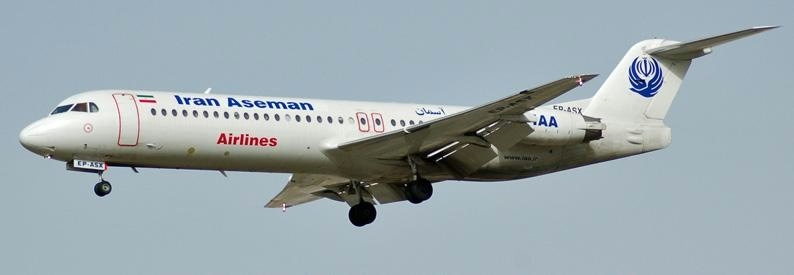
Iran Aseman Airlines Secures Legal Victory on Aircraft Ownership
Iran Aseman Airlines has announced a significant legal triumph, having prevailed in three court cases within Iran that grant the airline ownership of critical aircraft assets. These include three Rolls-Royce Tay 650-15 engines designated for its Fokker 100 fleet, one CFM International CFM56 engine intended for a Boeing 737, and one unidentified Boeing 737 aircraft. The airline also successfully resolved a major legal dispute that could have resulted in a financial liability of AED104 million (approximately USD 28.3 million), according to spokesperson Seyyed Mohammad Javad Razavi.
Razavi highlighted that the resolution of these cases represents a vital milestone in Iran Aseman Airlines’ ongoing efforts to expand and modernize its fleet. However, he refrained from disclosing further details regarding the nature of the disputes or the opposing parties involved.
Fleet Composition and Operational Challenges
Data from ch-aviation indicates that Iran Aseman Airlines currently operates a varied fleet, including five Airbus A320-200s, one Airbus A340-300, two ATR72-200s, two ATR72-500s, three Boeing 737-400s, nine Fokker 100s, and one Falcon 20E. Despite this diversity, only two Boeing 737s and two Fokker 100s are actively in service at present.
While the recent court rulings provide a positive development, the airline continues to face significant challenges. Regulatory barriers in international markets remain a formidable obstacle, particularly as Iran Aseman seeks to strengthen its presence in the competitive long-haul sector. Additionally, operational difficulties persist, including the maintenance of an aging fleet and managing costs amid fluctuating fuel prices.
Industry analysts suggest that Iran Aseman’s enhanced position following these legal victories may prompt rival carriers to recalibrate their strategies, potentially intensifying competition within both domestic and regional markets. Furthermore, the airline’s prospects are closely tied to broader geopolitical dynamics, with any relaxation of international tensions likely to improve its operational environment.
Despite these ongoing challenges, the recent legal successes afford Iran Aseman Airlines greater strategic flexibility as it advances its fleet renewal initiatives, positioning the carrier to better navigate market opportunities and competitive pressures.

Etihad Airways Suspends Airbus A380 Flights on Key Route

Aditya Birla Group Seeks Approval for Aircraft Leasing in GIFT City

Qatar Airways Highlights Innovation and Connectivity at Arabian Travel Market 2026

Hong Kong's Five-Year Plan Includes Andrew Fan's Aircraft Parts Processing Hub Proposal

ACIA Aero Leasing Delivers ATR72-600 to Air Nostrum

RTX Appoints Jill Albertelli as Head of Pratt & Whitney

TAT Technologies Joins Beyond Aero Hydrogen Aircraft Program

AURAK Study Highlights Barriers to Air Taxi Adoption in Emerging Economies

Xiamen Air Selects Altitude for 787 Maintenance at Heathrow

Etihad and Swissport Extend Global Partnership
