
Orchestrate AI insights into action

Trending
Categories
JetBlue Flight to Orlando Makes Emergency Landing After Engine Failure
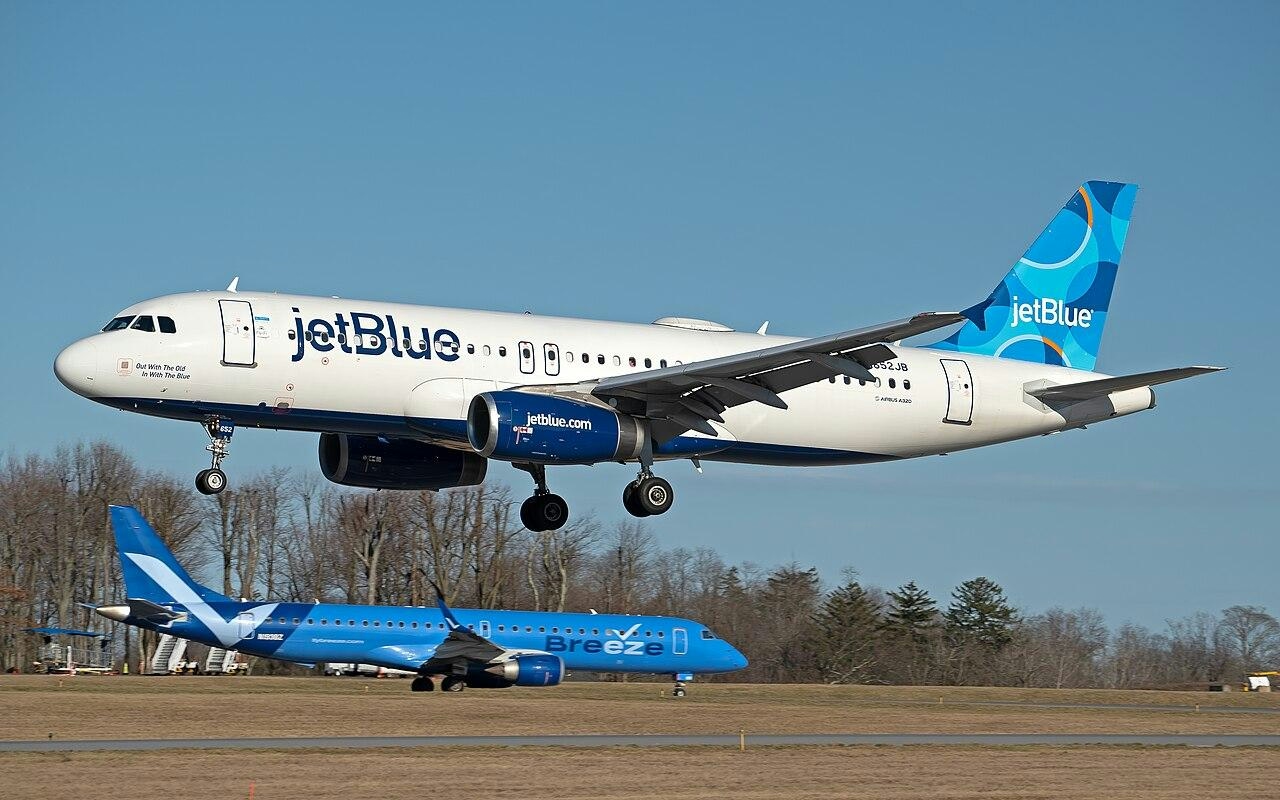
JetBlue Flight Makes Emergency Landing Following Engine Failure
A JetBlue passenger flight en route to Orlando was compelled to make an emergency landing last Wednesday after experiencing engine failure shortly after takeoff. The Airbus A320, carrying 167 passengers and crew, departed Long Island MacArthur Airport in Islip at approximately 1:45 p.m. but was diverted to New York’s John F. Kennedy International Airport (JFK) about an hour into the flight.
Incident Details and Response
Officials reported that the aircraft’s captain identified a critical engine malfunction moments after departure, promptly declaring an emergency and requesting an immediate return to the airport. The plane circled over Long Island before safely landing at JFK. A runway inspector at the scene described one engine as “completely destroyed,” noting extensive damage that left the engine’s interior visible. Despite the severity of the failure, all passengers and crew were evacuated safely after the aircraft was towed to a stand, with no injuries reported.
Aviation experts have commended the pilot’s swift and effective handling of the situation. Flight instructor Michael Canders remarked, “A very impressive outcome to land the aircraft safely. The absolute worst time for engine failure is right after takeoff because the aircraft is heavier with fuel and is full of passengers.”
Broader Context and Industry Implications
This incident follows a series of recent emergency landings linked to engine failures, raising concerns within the airline industry. Just weeks prior, a United Airlines flight bound for Germany diverted to Washington Dulles Airport after a left engine malfunction with 219 passengers on board. Additionally, a collision between two small planes on a Montana airfield resulted in a fiery crash, and a private plane crash off the California coast last month claimed three lives.
These events have prompted increased scrutiny from aviation regulators and may have significant repercussions for airlines, including potential financial liabilities from compensation claims and impacts on stock valuations. Passenger confidence is also at stake, leading some carriers to emphasize their safety records and operational reliability in efforts to reassure travelers.
The JetBlue Airbus A320 involved in the incident is capable of carrying up to 180 passengers and typically cruises at speeds around 520 miles per hour. As investigations into the engine failure continue, industry observers underscore the importance of maintaining rigorous safety standards to address both operational challenges and public perception.

Etihad Airways Suspends Airbus A380 Flights on Key Route

Aditya Birla Group Seeks Approval for Aircraft Leasing in GIFT City

Qatar Airways Highlights Innovation and Connectivity at Arabian Travel Market 2026

Hong Kong's Five-Year Plan Includes Andrew Fan's Aircraft Parts Processing Hub Proposal

ACIA Aero Leasing Delivers ATR72-600 to Air Nostrum

RTX Appoints Jill Albertelli as Head of Pratt & Whitney

TAT Technologies Joins Beyond Aero Hydrogen Aircraft Program

AURAK Study Highlights Barriers to Air Taxi Adoption in Emerging Economies

Xiamen Air Selects Altitude for 787 Maintenance at Heathrow

Etihad and Swissport Extend Global Partnership
