image

AeroGenie — Votre copilote intelligent.

Posez toutes vos questions. Analysez tout. Agissez instantanément.

Tendances

Categories

Joby Aviation Plans to Double U.S. Production to Expand Aerial Travel
December 22, 2025By ePlane AI
Joby Aviation Plans to Double U.S. Production to Expand Aerial Travel
0
0
Joby Aviation
Electric Air Taxi
Urban Air Mobility

Joby Aviation to Double U.S. Production, Expanding the Future of Aerial Travel

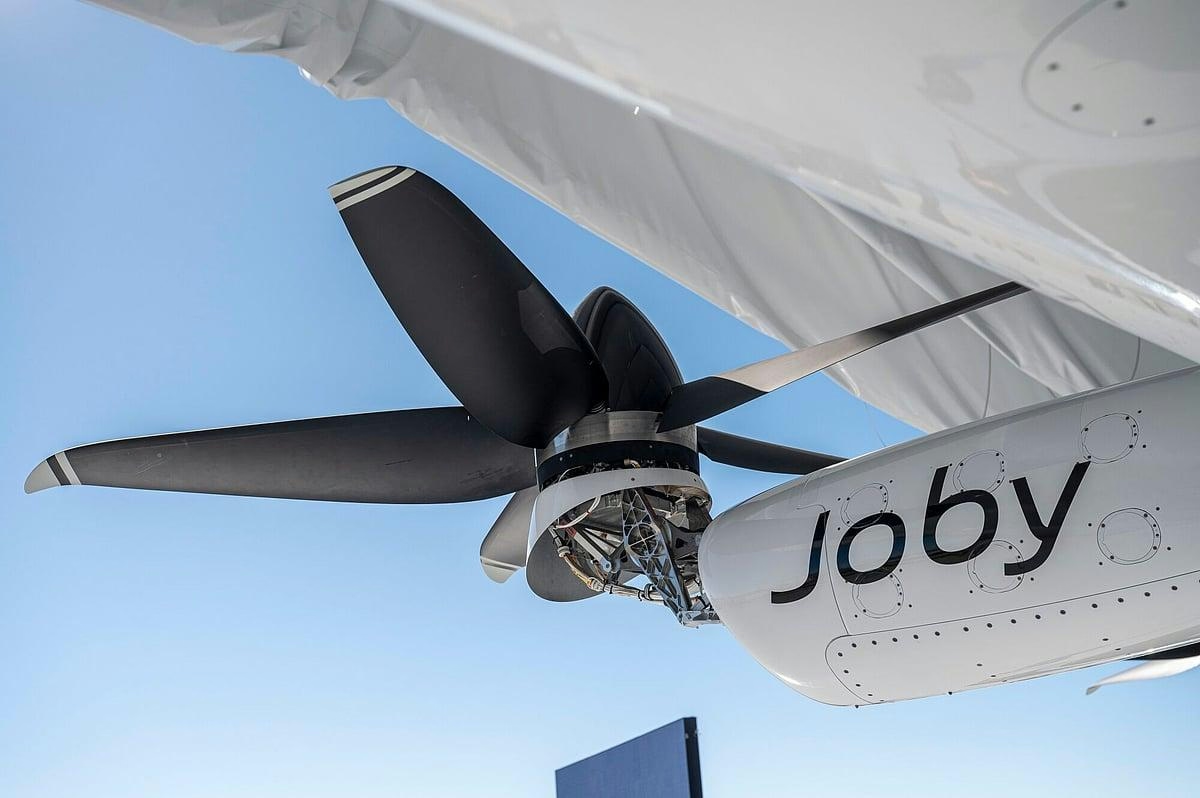
Joby Aviation, a pioneer in electric air taxi technology, has announced plans to double its production capacity in the United States. The company aims to increase manufacturing to four aircraft per month by 2027, a strategic move designed to meet growing demand for faster, environmentally friendly, and visually engaging travel options across American cities.

Responding to Rising Demand Amid Industry Challenges

The planned expansion of Joby’s U.S. production facilities underscores the increasing interest in urban air mobility (UAM) and sustainable tourism. By scaling up output, Joby intends to cater to both domestic and international travelers seeking efficient urban commutes and unique aerial views of major landmarks. The prospect of quietly flying over cities such as Los Angeles, New York, or Miami in an electric air taxi promises to transform routine travel into an immersive sightseeing experience.

Despite the optimism, Joby faces significant challenges. Investor sentiment remains divided, with some expressing confidence in the future of advanced air mobility, while others remain cautious due to regulatory uncertainties and intense competition within the sector. The competitive landscape is further complicated by ongoing legal disputes, including Joby’s lawsuit against rival Archer Aviation over alleged theft of trade secrets.

Strategic Alliances and Regulatory Developments

To bolster its manufacturing capabilities and market presence, Joby has entered into a strategic partnership with Toyota. This collaboration is expected to enhance production efficiency and support the company’s ambitious expansion plans.

Concurrently, U.S. regulatory bodies, notably the Federal Aviation Administration (FAA), are collaborating closely with Joby and other industry players to facilitate the safe integration of air taxis into urban airspace. This cooperation aims to establish regulated routes and guided flight paths, ensuring that safety remains paramount alongside the goals of speed and convenience.

The Promise of Air Taxis for Urban Travelers

Joby’s electric air taxis feature quiet vertical take-off and landing (VTOL) capabilities, making them well-suited for operation in dense urban environments where traditional aircraft are impractical. For tourists, this technology offers novel opportunities to explore cityscapes, waterways, and coastlines in comfort and style. The elevated vantage point is ideal for photography, sightseeing, or simply enjoying a distinctive travel experience.

As more cities consider adopting air taxi services, these aircraft are poised to connect airports with city centers and major attractions, effectively bypassing ground traffic and significantly reducing travel times.

Sustainability and the Future of Urban Tourism

Electric air taxis present a more sustainable alternative to helicopters and conventional car travel, appealing to environmentally conscious travelers. Joby’s commitment to minimizing noise pollution and emissions aligns with broader global trends toward sustainable tourism, enabling passengers to reduce their carbon footprint without compromising on comfort or efficiency.

Looking Forward

Travelers interested in incorporating air taxis into their journeys should stay informed about developments in pilot cities, available routes, and booking options. Early adopters may soon experience a new era of urban travel that combines speed, sustainability, and breathtaking aerial views.

More news
FAA Certifies Bombardier Global 8000 Aircraft

FAA Certifies Bombardier Global 8000 Aircraft

FAA Grants Certification to Bombardier Global 8000 Business Jet Bombardier has announced that its Global 8000 business jet has received certification from the U.S. Federal Aviation Administration (FAA), marking a significant milestone for the Canadian manufacturer. This approval follows the aircraft’s type certification from Transport Canada (TC) on November 5. Certification from the European Union Aviation Safety Agency (EASA) is still pending. Stephen McCullough, Senior Vice President of Engineering and Product Development at Bombardier, attributed this achievement to the collaborative efforts of the company’s skilled workforce, suppliers, and regulatory authorities. He emphasized the commitment to excellence that underpinned the certification process with both Transport Canada and the FAA. Advanced Features and Market Introduction The Global 8000 distinguishes itself in the business aviation sector with its notably low cabin altitude of 2,691 feet, the lowest among production business jets. This feature enhances passenger comfort during flights cruising at 41,000 feet, a condition Bombardier likens to standing atop the Burj Khalifa, the world’s tallest building. The aircraft also offers a top speed of Mach 0.95 and an extended range of 8,000 nautical miles, positioning it as a leader in ultra-long-range business jets. The jet officially entered service earlier this month, with entrepreneur Patrick Dovigi receiving the first delivery at Bombardier’s assembly centre in Mississauga, Ontario. The handover ceremony included a performance by Canadian rock musician Tom Cochrane, presented by Rolling Stone Canada. Market Challenges and Competitive Landscape Despite this certification success, Bombardier faces considerable challenges in the ultra-long-range business jet market. Established competitors such as Gulfstream and Dassault continue to compete aggressively for market share and may expedite their own development programs in response to the Global 8000’s launch. The market’s reception of ultra-long-range jets remains uncertain; while some investors view the FAA certification as a positive development, others express reservations regarding the aircraft’s high price and the niche nature of its target clientele. As Bombardier advances, it will need to address these competitive pressures and adapt to evolving customer expectations to solidify the Global 8000’s standing within the business aviation industry.
Boeing-Backed Autonomous VTOL Air Taxi Completes First Flight

Boeing-Backed Autonomous VTOL Air Taxi Completes First Flight

Boeing-Backed Wisk Aero’s Autonomous Air Taxi Achieves First Flight Wisk Aero, an autonomous aviation company formed through a partnership between Boeing and Larry Page’s Kitty Hawk, has reached a significant milestone in the development of electric vertical takeoff and landing (eVTOL) aircraft. The company’s Generation 6 air taxi, known as Cora, recently completed its inaugural flight at Wisk’s facility in Hollister, California. This achievement marks a crucial step toward the realization of commercial autonomous passenger flights. The Gen 6 Prototype and Flight Testing Described by Wisk as the “world’s first self-flying, all-electric, four-seat air taxi,” the Gen 6 prototype successfully executed a series of vertical takeoffs, hovering, and stabilized flight maneuvers during its initial test. This flight builds upon more than 1,750 test flights conducted with earlier versions of the aircraft and initiates a rigorous new phase of testing aimed at validating the Gen 6 design, simulation models, and overall system performance. Although Wisk has not disclosed specific technical details from the flight, the company confirmed that the next phase of testing will concentrate on the hover regime, including takeoffs, landings, and low-speed stability. If these tests prove successful, subsequent evaluations will expand to higher speeds and altitudes, incorporating more complex maneuvers such as longitudinal and lateral transitions and pedal turns. Market Context and Industry Implications Wisk’s progress arrives at a pivotal moment for the eVTOL sector, which is experiencing intensified competition as companies like Joby Aviation advance their own aircraft testing programs, including operations in the Gulf region. The successful flight of the Gen 6 prototype is expected to influence market dynamics, potentially accelerating development timelines among competitors. Furthermore, this milestone may encourage greater participation in initiatives such as the eVTOL and Advanced Air Mobility (AAM) Integration Pilot Program (eIPP), as industry stakeholders seek to explore real-world eVTOL operations. Design and Operational Features The Cora air taxi is designed to be fully electric and autonomous, equipped with 12 motor-driven propellers—six on each wing—and capable of carrying up to four passengers along with their carry-on luggage. While the aircraft operates without an onboard pilot, flights are monitored remotely from ground stations known as Multi-Vehicle Supervisor centers, ensuring continuous oversight. Wisk is collaborating closely with government agencies and private partners, including the Federal Aviation Administration (FAA), NASA, and SkyGrid, to advance the Cora program. The company asserts that its Generation 6 VTOL is the first candidate for FAA certification as a commercial autonomous passenger aircraft in the United States. Although a certification timeline remains uncertain, Wisk has identified Houston, Los Angeles, and Miami as initial launch markets once regulatory approval is obtained. Advancing Urban Air Mobility As Wisk continues to refine the aircraft’s control laws, structural loads, and dynamics, alongside enhancements to detect-and-avoid and navigation systems, the company is positioning itself at the forefront of the emerging urban air mobility market. The successful first flight of the Gen 6 prototype not only represents a technical achievement for Wisk but also signals a new phase of competition and innovation within the rapidly evolving eVTOL industry.
GD Helicopter Finance Acquires NHV Group

GD Helicopter Finance Acquires NHV Group

GD Helicopter Finance to Acquire NHV Group, Enhancing Mission-Critical Aviation Services GD Helicopter Finance (GDHF) has announced an agreement to acquire NHV Group from the private investment firm Ardian, marking a significant development in the mission-critical helicopter operations sector. The transaction, which remains subject to customary closing conditions and regulatory approvals, is anticipated to be completed in the first quarter of 2026. Strategic Objectives and Operational Focus The acquisition aims to strengthen NHV’s position as a leading helicopter operator, particularly in sectors demanding highly specialized and reliable aviation services. Under a newly formed group structure, NHV will maintain its operational independence and continue to prioritize safety, precision, and operational excellence in complex environments. Meanwhile, GDHF will persist with its global helicopter leasing and finance activities, creating a complementary relationship between the two entities. The combined organization will serve a diverse array of mission-critical sectors, including offshore energy, government and parapublic operations, maritime services, wind energy, emergency medical services (EMS), search and rescue (SAR), maintenance, repair and overhaul (MRO), and training. This broad portfolio underscores the strategic intent to deliver comprehensive aviation solutions across multiple high-demand industries. Integration Challenges and Market Implications While the acquisition is expected to accelerate NHV’s growth trajectory and enhance operational flexibility, the integration of the two companies presents inherent challenges. A key priority will be maintaining the distinct business identities of each organization while leveraging shared technological advancements and operational synergies. The new ownership structure is designed to combine NHV’s operational expertise with GDHF’s financial and leasing capabilities, establishing a platform for sustainable growth and continued delivery of dependable aviation services. Market analysts suggest that GDHF’s expansion into NHV’s service domains could intensify competition, particularly within the offshore transportation sector. Competitors may respond by upgrading fleet capabilities or enhancing service offerings to protect their market positions. Furthermore, the transaction is likely to attract regulatory scrutiny due to its potential to reshape market dynamics and generate operational efficiencies within the industry. Despite these challenges, both GDHF and NHV emphasize their unwavering commitment to safety, service quality, and customer value. The acquisition is positioned as a strategic advancement, enabling NHV to better address evolving customer demands for performance, availability, and value, while reinforcing its reputation for reliability in mission-critical aviation operations.
Russia Tests New Engine on Su-57 Fighter Jet

Russia Tests New Engine on Su-57 Fighter Jet

Russia Tests New Engine on Su-57 Fighter Jet Amid Global Scrutiny Russia’s state defense conglomerate Rostec has announced a significant milestone in the development of its Su-57 Felon fifth-generation fighter jet, revealing that the aircraft has completed its first flight powered by a new engine, designated “izdeliye 177.” This advancement represents a crucial step in the modernization of Russia’s tactical aviation capabilities. Enhanced Performance and Technological Advances The newly tested engine reportedly delivers a maximum afterburner thrust of 16,000 kilogram-force, while also offering improved fuel efficiency and an extended service life compared to its predecessors. The flight testing program is being conducted by the United Aircraft Corporation and United Engine Corporation, both subsidiaries of Rostec, as part of the Su-57’s broader fifth-generation aviation complex development. Rostec confirmed that the inaugural flight proceeded according to plan and successfully met all assigned objectives. Rostec attributes the engine’s enhanced performance to the integration of new technologies, advanced materials, and innovative design solutions. These improvements have resulted in a powerplant with superior technical characteristics relative to earlier engine models. The Su-57 itself is described by Russian officials as a multirole fighter capable of engaging aerial, ground, and maritime targets under diverse operational conditions, including adverse weather and complex electronic warfare environments. Its stealth features are designed to increase survivability against modern air defense systems. According to Rostec, the Su-57 has demonstrated effective performance in real combat scenarios, confirming its compliance with the stringent requirements of fifth-generation aviation complexes, particularly in terms of stealth capabilities. The company also highlighted ongoing modernization efforts informed by operational experience, especially from deployments in the Special Military Operation (SVO) zone, which have led to upgrades in weapons systems and onboard technologies. The introduction of the “izdeliye 177” engine is expected to further enhance the aircraft’s flight performance and serve as a foundation for future development. Challenges and International Implications Despite these advancements, the Su-57 program faces significant challenges. International sanctions and export restrictions imposed on Russia threaten to limit access to critical advanced technologies and materials necessary for the continued development and production of the new engine. These constraints could slow the pace of testing, certification, and eventual mass production of the “izdeliye 177” engine variant. The global defense community is closely observing Russia’s progress with the Su-57. The aircraft’s technological advancements have attracted increased scrutiny from Western defense contractors and may prompt competitor nations, including the United States and China, to accelerate their own development of next-generation fighter technologies. This competitive dynamic has the potential to influence the global balance of military capabilities and drive further innovation within the sector. Despite these obstacles, Rostec asserts that export deliveries of the Su-57 are already underway and that international interest in the aircraft remains robust. While the company has not provided a specific timeline for the certification or mass production of the “izdeliye 177” engine, it emphasized that flight testing will continue as part of the ongoing evolution of the Su-57 platform.
OAG Names Filip Filipov as Chief Executive Officer

OAG Names Filip Filipov as Chief Executive Officer

OAG Appoints Filip Filipov as Chief Executive Officer OAG has announced the appointment of Filip Filipov as its new Chief Executive Officer, succeeding Phil Callow, who is stepping down after thirteen years leading the company. Filipov, previously the company’s Chief Operating Officer and a former executive at Skyscanner, assumes leadership at a pivotal moment for the global travel data provider, which has undergone significant transformation and growth under Callow’s tenure. Leadership Transition Amid Industry Challenges Since joining OAG in 2024, Filipov has been instrumental in steering the company’s strategic focus towards advanced data products and AI-driven intelligence. His extensive experience in travel technology and big-data consulting, including senior roles at Skyscanner, positions him to guide OAG through a competitive and economically uncertain landscape. Filipov expressed his commitment to upholding the company’s reputation for reliability, service, and innovation, emphasizing his enthusiasm for leading OAG into its next phase. The transition occurs against a backdrop of intensified competition and market fragility within the travel data sector. Filipov faces the challenge of maintaining OAG’s market share and investor confidence while responding to increasing demands for high-quality data and AI solutions from clients across the travel ecosystem. Industry experts highlight that OAG’s continued innovation and delivery of trusted data will be crucial as the sector increasingly integrates AI to transform business operations. Endorsements and Future Outlook Gehan Talwatte, Chairman of OAG, underscored the company’s dedication to stability and continuity during this leadership change. He noted that Filipov’s appointment reflects robust succession planning and a commitment to sustained growth. Talwatte also confirmed that Callow will assist with the transition through the first quarter of 2026 before assuming an advisory role on the Board. Ben Johnson, Partner at Vitruvian Partners, praised Callow’s leadership in guiding OAG’s evolution from print to digital platforms and into the AI era, including overseeing strategic technology investments and the acquisition of Infare. Johnson remarked that the emergence of AI as a transformative force in the travel industry positions OAG as an essential data partner, with client demand for high-quality data expected to increase substantially. As Filipov takes the helm, industry observers will be closely monitoring OAG’s ability to navigate shifting market dynamics and competitive pressures, assessing whether the company can maintain its leadership in the rapidly evolving travel data landscape.
Air India 777 Returns to Airport After Engine Oil Pressure Drop, Regulator Reports

Air India 777 Returns to Airport After Engine Oil Pressure Drop, Regulator Reports

Air India 777 Returns to Delhi Following Engine Oil Pressure Drop An Air India Boeing 777-300ER was compelled to return to Delhi shortly after takeoff on Monday due to a sudden drop in oil pressure in one of its engines, according to India’s aviation regulator. The aircraft, which was en route to Mumbai, landed safely after the flight crew shut down the affected engine as a precautionary measure. The Directorate General of Civil Aviation (DGCA) has confirmed that an investigation into the incident is currently underway. Incident Details and Immediate Response The DGCA reported that the oil pressure in the right-hand engine fell to zero during the retraction of the flaps shortly after departure. Following established safety protocols, the pilots promptly decided to return to the airport. The Boeing 777 is engineered to operate safely on a single engine if necessary, which allowed the aircraft to land without further complications. Air India issued a formal apology for the disruption, stating that the aircraft is undergoing thorough inspections. The 15-year-old plane has a history of operating international routes, including flights to Vienna, Vancouver, and Chicago. Context and Regulatory Scrutiny This event occurs amid intensified scrutiny of Air India’s safety standards. Earlier this year, the airline faced significant challenges, including a tragic crash of a Boeing Dreamliner in June that resulted in 260 fatalities. The DGCA has identified multiple safety lapses within the airline, which was state-owned until its recent privatization in 2022. An internal investigation earlier this month uncovered systemic failures after one of Air India’s aircraft operated commercial flights without a valid airworthiness certificate. The airline has acknowledged the need to enhance its compliance and safety oversight. The return of the Boeing 777 is expected to attract further regulatory attention and may raise concerns among passengers regarding operational safety. Such incidents can also influence market perceptions, potentially affecting Air India’s reputation and stock performance. Competitors may leverage this opportunity to emphasize their own safety records. The aviation industry has witnessed similar engine-related issues recently, including incidents involving Boeing 777 aircraft operated by United Airlines, which have contributed to heightened regulatory focus and public apprehension. Boeing has not issued a statement regarding the latest Air India incident. The DGCA has confirmed that a comprehensive investigation is in progress to determine the root cause of the oil pressure loss and to evaluate any wider implications for Air India’s fleet management and maintenance procedures.
Joramco Receives Award for 'Tree for Every Aircraft' Initiative

Joramco Receives Award for 'Tree for Every Aircraft' Initiative

Joramco Honored for Innovative Environmental Initiative Amman-based aircraft maintenance, repair, and overhaul (MRO) provider Joramco, the engineering division of Dubai Aerospace Enterprise (DAE), has been awarded first place at the prestigious Al-Hussein bin Abdullah II Award for Voluntary Service. The accolade recognizes Joramco’s groundbreaking ‘Tree for Every Aircraft’ initiative, which was developed in partnership with the Royal Society for the Conservation of Nature (RSCN). Organized by Jordan’s Ministry of Youth alongside the Crown Prince Foundation and UNICEF, the award is the nation’s foremost platform celebrating exceptional volunteer efforts. This year’s competition attracted over 13,900 applicants across four categories, with only 15 initiatives receiving top honors. A Comprehensive Approach to Environmental Stewardship Launched in 2023, the ‘Tree for Every Aircraft’ program addresses the environmental impact of aviation through a multifaceted strategy that extends beyond traditional tree planting. The initiative focuses on expanding green spaces and supporting ecological restoration, while also incorporating innovative sustainability measures such as manufacturing seating from recycled plastic waste. Additionally, the program includes the installation of a water harvesting system to irrigate newly planted trees and supply water to nearby offices, alongside solar power systems that provide clean electricity to the surrounding area. To date, the initiative has facilitated the planting of more than 1,800 trees in wildfire-affected zones within the Dibeen Forest Reserve. In 2025, Joramco further solidified its commitment by sponsoring a dedicated plot within the reserve, now officially designated as the ‘Joramco Area’. Fraser Currie, Chief Strategy and Commercial Officer at DAE Engineering, highlighted the broader implications of the award, stating, “This award goes beyond recognition. It is a reminder of the responsibility we carry as a leading Jordanian MRO to invest in the future of our environment. ‘Tree for Every Aircraft’ is more than just a planting initiative—it is a long-term sustainability model that we aim to integrate even in our operations. We are proud to contribute to a greener Jordan, and we will continue to grow this initiative as part of our long-term commitment to Jordan’s environmental resilience and to the communities we serve.” While the initiative has received widespread acclaim, Joramco may encounter logistical challenges as it seeks to scale its tree planting and sustainability efforts. Nevertheless, the company’s environmental leadership has garnered positive attention from both environmental organizations and customers prioritizing sustainability, potentially enhancing Joramco’s reputation and appeal among eco-conscious clients. Industry analysts suggest that competitors may respond by bolstering their own environmental programs or launching similar initiatives to remain competitive in a market increasingly focused on sustainability. Joramco’s recognition at the Al-Hussein bin Abdullah II Award for Voluntary Service underscores its role as a leader in environmental responsibility and establishes a benchmark for sustainability within Jordan’s aviation sector.
Airbus Delivers 10 A321neos in a Single Day to Meet Year-End Target

Airbus Delivers 10 A321neos in a Single Day to Meet Year-End Target

Airbus Accelerates Year-End Deliveries with Record A321neo Handover As 2025 nears its close, Airbus is intensifying efforts to meet its annual delivery targets amid significant operational challenges. The European aerospace giant concluded November with 72 aircraft deliveries, bringing its year-to-date total to 657. Initially targeting 820 deliveries for the year, Airbus has since revised this figure downward to 790, yet still faces the formidable task of delivering over 100 aircraft in the remaining weeks. Overcoming Production Hurdles and Market Pressures The urgency to boost output culminated on December 19, when Airbus delivered 10 A321neo jets in a single day—a notable surge reflecting the company’s commitment to closing the delivery gap. This milestone followed a slow start to December, during which only 30 aircraft were handed over in the first half of the month. The pressure to accelerate deliveries is compounded by ongoing quality issues affecting the A320 family, particularly fuselage panel defects identified among suppliers. These defects have disrupted assembly lines and contributed to subdued November figures. The quality concerns have led some airline customers to postpone accepting new aircraft until Airbus provides assurances regarding defect resolution or satisfactory remediation plans. This situation has introduced uncertainty into Airbus’s delivery schedule and financial outlook, attracting scrutiny from regulatory bodies and cautious responses from the market. CEO Guillaume Faury acknowledged the difficulties, describing November as a weak month for production. Industry analysts remain skeptical about the feasibility of meeting the revised target, with one expert noting the challenge of delivering an additional 104 aircraft in the limited time remaining. December 19 Delivery Milestone and Customer Highlights The December 19 deliveries spanned Airbus’s principal final assembly lines in Hamburg, Tianjin, and Toulouse, though none originated from the Mobile, Alabama facility. Among the recipients was Wizz Air, which is transitioning to an all-A321neo fleet by 2033 and took delivery of three aircraft on this significant day, following its 250th A320-family delivery earlier in December. Air China, one of China’s largest carriers, also received three A321neos, including the 800th aircraft produced at Airbus’s Tianjin plant. Additionally, IndiGo, a major global operator of the A321neo, and Singapore-based Scoot, which is phasing out older A320ceos, each took delivery of new jets. As the year draws to a close, Airbus faces mounting pressure to resolve its quality challenges and reassure customers, while striving to meet its delivery commitments. The coming weeks will be pivotal in determining whether the manufacturer can overcome these obstacles and sustain its position as a leader in the global aerospace industry.
Establishing a Global Standard

Establishing a Global Standard

Establishing a Global Standard in Aircraft Recycling The Aircraft Fleet Recycling Association (AFRA) is pioneering a new benchmark for trust and sustainability within the Maintenance, Repair, and Overhaul (MRO) sector by promoting responsible aircraft disassembly and recycling practices. As the aviation industry confronts a critical decade ahead, with thousands of aircraft scheduled for retirement over the next 20 years, pressure is mounting from regulators, financiers, and passengers alike to enhance sustainability and accountability across the sector. Addressing a Regulatory Gap in End-of-Service Management End-of-service management has become central to aviation’s reputation, economic viability, and environmental impact. For the MRO sector, which relies heavily on reliable used serviceable material (USM), the integrity of disassembly and recycling processes is paramount. Unlike maintenance and repair activities, which are governed by established Part 145 regulations, aircraft disassembly has historically lacked a unified global standard. AFRA has emerged to fill this void by representing a global network of companies committed to voluntary Best Management Practices (BMPs). These BMPs have evolved into the industry’s de facto benchmark, prescribing rigorous procedures for part removal, material segregation, documentation, and environmental protection. Independent accreditation audits ensure compliance with these standards, providing lessors, airlines, and MRO providers with confidence that parts re-entering the supply chain meet consistent technical and sustainability criteria. Lionel G. Roques, AFRA’s executive director, emphasizes the complexity of the disassembly process and the risks posed by improper handling. He notes that AFRA’s BMPs offer the industry a shared reference point to guarantee safe part recovery and responsible material recycling, thereby reducing environmental impact. Global Recognition and Technological Innovation AFRA accreditation has gained significant recognition from regulators and industry institutions, becoming a competitive advantage for accredited facilities. A notable development is AFRA’s collaboration with the Civil Aviation Administration of China (CAAC). As China’s fleet expands and aircraft retirements increase, the CAAC has incorporated AFRA’s BMPs into its regulatory framework. This partnership mandates that parts imported into China must originate from AFRA-accredited facilities, marking the first instance of a national authority formally adopting these standards. The initiative also introduces blockchain-based traceability, with each component recorded in a secure digital ledger developed by Block Aero. This technology ensures an unbroken chain of custody, mitigating the risk of counterfeit or poorly documented parts and enhancing supply chain transparency. Navigating Challenges Amid Industry Transformation Despite these advances, establishing a global standard faces considerable challenges. The regulatory environment remains complex and uncertain, with potential developments such as an impending Supreme Court ruling on tariffs threatening market stability. Broader industry trends—including persistent inflation, supply chain volatility, and the emergence of private label brands—are reshaping competitive dynamics across various sectors, including food and insurance, where affordability and economic pressures drive strategic shifts. Competitors are responding by diversifying supply chains, innovating for sustainability, and adapting to evolving regulatory demands. Market responses to these changes are mixed. While cautious optimism is fueled by increased capital expenditure and advances in artificial intelligence validation, economic uncertainties and regulatory fluctuations continue to generate volatility. For AFRA and its partners, upholding rigorous standards and transparent processes remains essential to navigating these challenges and reinforcing trust within the global aviation supply chain. As aircraft materials evolve—from predominantly recyclable aluminium to more complex composites and alloys—the necessity for robust and adaptable standards becomes increasingly urgent. AFRA’s leadership in establishing a global reference for responsible disassembly and recycling positions the aviation industry to meet both present demands and future challenges.
Airbus Faces Supply Chain Challenges in 2025 Deliveries

Airbus Faces Supply Chain Challenges in 2025 Deliveries

Airbus Faces Supply Chain Challenges in 2025 Deliveries Persistent Disruptions Impact Production and Delivery Targets Airbus began 2025 with cautious optimism, anticipating a transition from the lingering effects of the pandemic and geopolitical tensions toward a more stable operating environment. However, the year has instead highlighted ongoing vulnerabilities within the commercial aircraft manufacturing sector. The company was compelled to reduce its annual delivery target to approximately 790 jets, marking a 4% decline from earlier projections. This adjustment stemmed primarily from a supplier quality issue involving fuselage panels on the A320 family, which forms the economic core of Airbus’s product lineup. The situation was further exacerbated by a software malfunction affecting around 6,000 A320 aircraft, resulting in additional delays and the temporary grounding of a significant portion of the narrow-body fleet. These challenges have exposed the fragility of Airbus’s production system, which remains susceptible to single-point failures and upstream execution difficulties. Despite these operational setbacks, Airbus has maintained its financial objectives, with its share price recovering as investors acknowledged the company’s resilience. By the end of November 2025, Airbus had delivered 656 commercial aircraft, predominantly narrowbodies. Yet, beneath these figures lies a more complex scenario: over 600 aircraft required inspections, and nearly 250 were already in final assembly when the fuselage issue surfaced. This widespread disruption has reverberated through delivery schedules, customer planning, and cash flow, causing a pronounced slowdown in November handovers. Airbus now faces the challenge of relying on an unusually strong December performance to meet its revised targets. Market Response and Regional Delivery Trends The delivery delays have attracted scrutiny from regulatory authorities and led some airlines to hesitate in accepting new aircraft without clear assurances regarding the affected fuselage components. Leasing companies continue to play a pivotal and evolving role, increasingly acting as intermediaries for established network carriers rather than emerging start-ups. Regionally, the Asia-Pacific and European markets dominated Airbus’s delivery volumes in 2025. Noteworthy trends include India’s sustained absorption of narrow-body aircraft and China’s distinctive demand for the A319neo model. Conversely, Africa remained largely absent from Airbus’s delivery roster despite experiencing rapid growth in air traffic. The geographic and customer distribution of deliveries underscores both Airbus’s enduring market strengths and its structural limitations. Demand remains robust, with the company’s backlog extending more than a decade into the future. The principal challenge lies in execution, as supply chain fragilities and quality control issues continue to impact operations well beyond Airbus’s headquarters in Toulouse. Industry Outlook Amid Ongoing Challenges The broader aviation industry continues to demonstrate resilience. According to the International Air Transport Association (IATA), global airlines are projected to achieve a record net profit of $41 billion in the coming year, despite persistent supply chain disruptions affecting aircraft deliveries. For Airbus, the path forward will hinge on its capacity to reinforce its production system and restore confidence among customers and regulatory bodies alike.
Ask AeroGenie










