
Orchestrate AI insights into action

Trending
Categories
Kenya Bans Import of F27 and F50 Models Over Safety Concerns
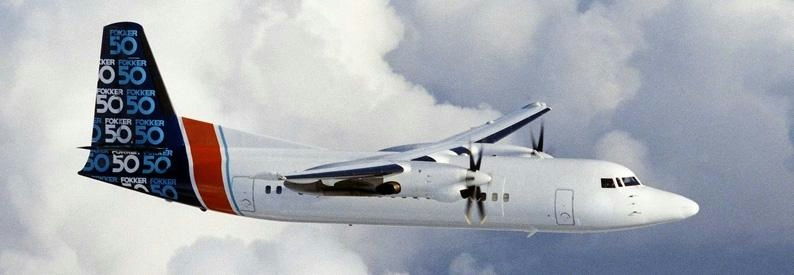
Kenya Bans Import of F27 and F50 Aircraft Over Safety Concerns
Kenya’s Civil Aviation Authority (KCAA) has announced a ban on the importation of Fokker 27 and Fokker 50 aircraft models, citing safety concerns related to the aging fleet and increasing maintenance challenges. The ban, which takes effect on November 1, 2025, prohibits new applications for type acceptance, registration, or certificates of airworthiness for these aircraft. Existing F27 and F50 planes already registered in Kenya may continue to operate only until they are de-registered or permanently grounded, contingent upon ongoing compliance with safety standards and after consultation with relevant stakeholders.
Implications for Operators and the Aviation Market
While the immediate impact on current operators is limited, the KCAA’s decision signals a gradual phase-out of these turboprop models from Kenyan airspace. The authority did not specify the precise safety issues prompting the ban but highlighted the growing difficulties in maintaining older aircraft. Notably, the ban does not extend to F27 and F50 aircraft registered abroad that are merely overflying or making technical stops within Kenyan territory.
According to ch-aviation fleet data, at least 21 F50s and seven F50(F)s remain in service with 11 Kenyan carriers, including Renegade Air, Skyward Airlines, and Jetways Airlines. Safari Express Cargo operates the country’s only F27-400. Some airlines, such as Skyward Airlines, anticipated the ban and have begun adjusting their fleet strategies, although many hope to continue operating the Fokker models for several more years.
The Fokker 27 and 50 have long been favored in Kenya and neighboring countries for their reliability, adaptability to rugged airstrips, and cost-effectiveness on regional routes. However, the phase-out is expected to reshape the regional aviation market. Aircraft manufacturers such as ATR—Avions de Transport Régional—stand to benefit, with Renegade Air already introducing ATR42 and ATR72 freighters and passenger models. Jubba Airways has also announced plans to refleet its Somali operations with ATR turboprops.
Broader Economic and Industry Impact
Beyond the aviation sector, the ban may have wider repercussions for Kenya’s automotive and manufacturing industries. Industry observers caution that restrictions on importing specific models, even within aviation, could set precedents affecting other markets. Potential consequences include delays in the availability of vehicles and equipment, increased costs for consumers, and shifts in demand toward safer or alternative brands. Competitors may respond by promoting newer, safer models or intensifying marketing efforts to reassure customers.
These developments come at a challenging time for Kenya’s manufacturing sector, which is already contending with tax burdens, rising energy costs, and policy uncertainties. The additional strain from regulatory changes could further complicate economic stability and growth prospects.
As the aviation sector adapts to the new regulations, operators and manufacturers are reassessing their strategies to ensure compliance and maintain service continuity. Meanwhile, the broader market remains attentive to potential impacts on supply chains and consumer choice.

Etihad Airways Suspends Airbus A380 Flights on Key Route

Aditya Birla Group Seeks Approval for Aircraft Leasing in GIFT City

Qatar Airways Highlights Innovation and Connectivity at Arabian Travel Market 2026

Hong Kong's Five-Year Plan Includes Andrew Fan's Aircraft Parts Processing Hub Proposal

ACIA Aero Leasing Delivers ATR72-600 to Air Nostrum

RTX Appoints Jill Albertelli as Head of Pratt & Whitney

TAT Technologies Joins Beyond Aero Hydrogen Aircraft Program

AURAK Study Highlights Barriers to Air Taxi Adoption in Emerging Economies

Xiamen Air Selects Altitude for 787 Maintenance at Heathrow

Etihad and Swissport Extend Global Partnership
