
Orchestrate AI insights into action

Trending
Categories
Microsoft Opens Innovation Hub in Dublin to Link Aviation and Startups
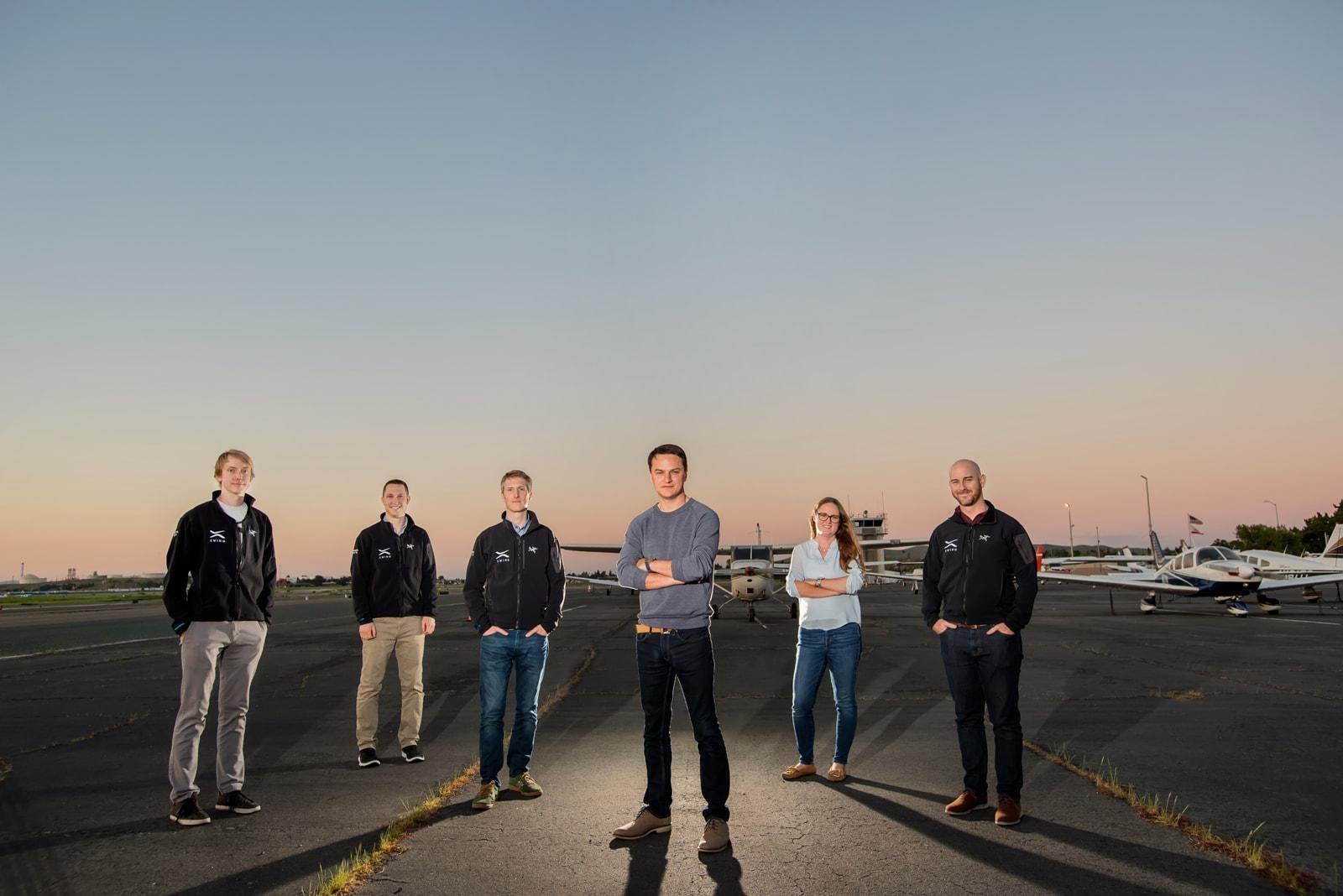
Microsoft Launches Innovation Hub in Dublin to Connect Aviation and Startups
Microsoft has inaugurated its FTE Innovation Hub in Dublin, a strategic initiative designed to bridge the aviation industry with emerging startups. This new center aims to foster collaboration, accelerate technological progress, and support the digital transformation of aviation—a sector facing mounting pressure to innovate amid evolving operational and market challenges.
Fostering Collaboration and Digital Advancement
The FTE Innovation Hub will provide startups with access to established aviation companies, mentorship opportunities, and integration with Microsoft’s cloud computing and artificial intelligence platforms. By establishing Dublin as a focal point for aviation innovation, Microsoft intends to attract both talent and investment, while assisting airlines and airports in adapting to shifting market dynamics and changing consumer expectations. The hub is positioned as a catalyst for driving efficiency and enhancing passenger experiences through advanced technological solutions.
Navigating a Competitive Innovation Ecosystem
Microsoft’s Dublin initiative enters a competitive landscape already populated by prominent tech hubs such as the European Space Agency’s European Space Deep-Tech Innovation Center and Barclays’ London innovation hub. Both centers have forged strong partnerships with Microsoft and other industry leaders, setting high benchmarks for collaboration and technological integration. This environment presents challenges for new entrants seeking to distinguish themselves.
Market responses to the Dublin hub have been mixed. Some investors regard the initiative as a calculated effort by Microsoft to expand its influence within the aviation sector by leveraging its technological expertise. However, concerns linger regarding the company’s recent workforce reductions, which saw approximately 6,000 employees laid off. These developments have prompted questions about Microsoft’s capacity to maintain innovation momentum in a rapidly evolving industry.
Industry Dynamics and Competitive Pressures
Microsoft’s move has drawn close attention from competitors, some of whom may pursue collaborative opportunities, while others are expected to intensify efforts to attract promising aviation startups by capitalizing on their own technological strengths and established market positions. This competitive environment is further complicated by ongoing challenges faced by airlines such as Spirit Airlines, which continue to struggle with financial and operational difficulties.
Despite these obstacles, Microsoft positions the FTE Innovation Hub as a transformative force within aviation. By equipping startups with cutting-edge tools and support, the company aims to assist industry stakeholders in navigating digitalization, improving operational efficiency, and enhancing the overall passenger experience. The ultimate success of the Dublin hub will hinge on its ability to forge meaningful partnerships and deliver measurable outcomes in a crowded and rapidly changing market.

Etihad Airways Suspends Airbus A380 Flights on Key Route

Aditya Birla Group Seeks Approval for Aircraft Leasing in GIFT City

Qatar Airways Highlights Innovation and Connectivity at Arabian Travel Market 2026

Hong Kong's Five-Year Plan Includes Andrew Fan's Aircraft Parts Processing Hub Proposal

ACIA Aero Leasing Delivers ATR72-600 to Air Nostrum

RTX Appoints Jill Albertelli as Head of Pratt & Whitney

TAT Technologies Joins Beyond Aero Hydrogen Aircraft Program

AURAK Study Highlights Barriers to Air Taxi Adoption in Emerging Economies

Xiamen Air Selects Altitude for 787 Maintenance at Heathrow

Etihad and Swissport Extend Global Partnership
