image

AeroGenie — Your Intelligent Copilot.

Ask anything. Analyze everything. Act instantly.

Trending

Categories

Mountain Air Cargo Acquires Royal Aircraft Services, Boosts East Coast MRO Capabilities
May 21, 2025By ePlane AI
Mountain Air Cargo Acquires Royal Aircraft Services, Boosts East Coast MRO Capabilities
0
0
Mountain Air Cargo
Royal Aircraft Services
MRO

Mountain Air Cargo Acquires Royal Aircraft Services, Expanding East Coast MRO Capabilities

Air T, Inc. (NASDAQ: AIRT) has announced that its wholly owned subsidiary, Mountain Air Cargo (MAC), has completed the acquisition of Royal Aircraft Services, a well-established aircraft maintenance provider based in Hagerstown, Maryland. This strategic acquisition is poised to significantly enhance MAC’s maintenance, repair, and overhaul (MRO) capabilities along the East Coast, strengthening its competitive position within the aviation services sector.

Enhancing Operational Capacity and Service Quality

Mike Bandalan, CEO of Mountain Air Cargo, emphasized the alignment of the acquisition with the company’s broader mission. He noted that Royal Aircraft Services has built a strong reputation for excellence in aircraft maintenance and support, and integrating their expertise will improve operational efficiency and service quality for MAC’s partners. Royal Aircraft Services will continue to operate under its existing name, maintaining its focus on delivering high-quality aircraft services. The integration is expected to expand MAC’s operational capacity and broaden its service offerings across key markets.

Pamela and Austin Heffernan, longtime owners of Royal Aircraft Services, expressed optimism about the transition. They highlighted the shared commitment to aviation excellence and anticipated that the acquisition would strengthen service capabilities and enhance value for Royal’s customers and stakeholders. They conveyed confidence that under new ownership, Royal Aircraft Services will continue to build on its legacy of quality and expertise.

Market Impact and Industry Implications

The acquisition is expected to bolster MAC’s market presence and diversify its service portfolio. However, it may also invite regulatory scrutiny and pose integration challenges as the two organizations work to align their operations and corporate cultures. Industry analysts suggest that competitors may respond by enhancing their own MRO services or pursuing expansion opportunities to protect their market share.

Investor response to the acquisition has been favorable, with Air T, Inc.’s stock price experiencing an uptick amid expectations of increased operational capacity and revenue potential stemming from the expanded MRO footprint.

Company Background and Future Outlook

Air T, Inc., founded in 1980, manages a diverse portfolio of businesses including overnight air cargo, aviation ground support equipment manufacturing and sales, and commercial jet engines and parts. The company’s strategic focus remains on expanding and diversifying its core operations to deliver sustained value to stakeholders.

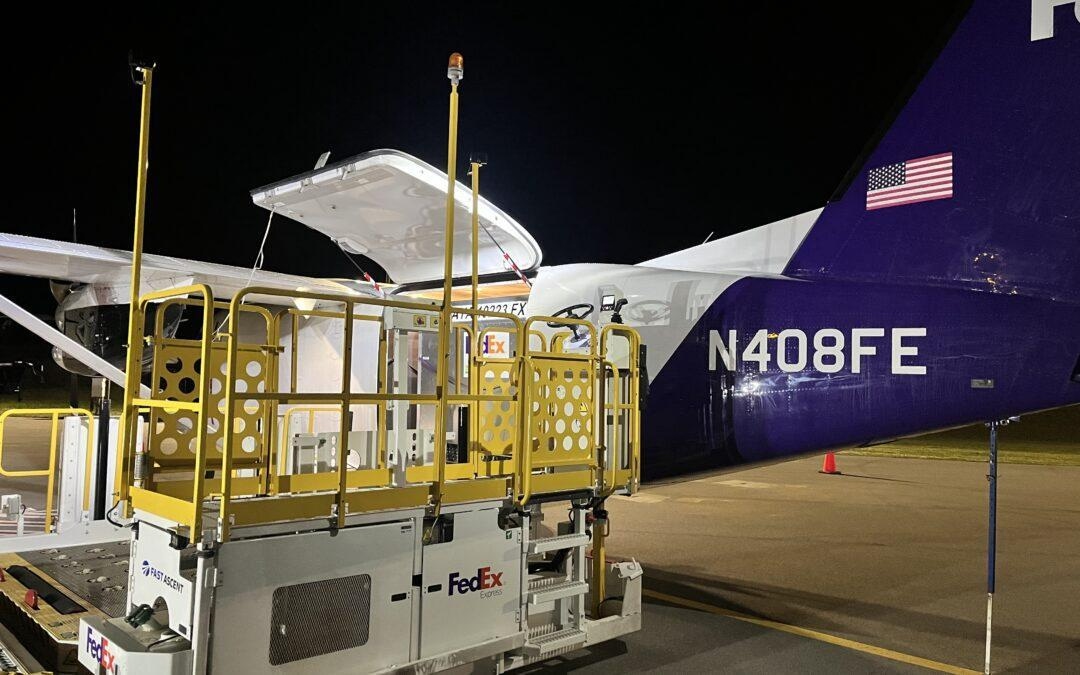
Mountain Air Cargo, with over 40 years of experience, operates a varied fleet comprising ATR and Cessna aircraft, providing air cargo services and maintenance solutions to both domestic and international clients. The acquisition of Royal Aircraft Services is anticipated to further strengthen MAC’s capabilities and reinforce its commitment to service excellence within the aviation industry.

Stakeholders and shareholders seeking further information about the acquisition or other matters related to Air T, Inc. are encouraged to engage through the company’s interactive Q&A platform available via Slido.com, accessible through Air T’s official website. The company will address inquiries during its Annual Meeting and provide written responses on a quarterly basis, subject to legal and practical considerations.

More news
Airline Operated Largest Widebody Fleet in 2025

Airline Operated Largest Widebody Fleet in 2025

Emirates Operates World’s Largest Widebody Fleet in 2025 Emirates, the flag carrier of the United Arab Emirates, has reinforced its status as a global aviation leader in 2025 by operating the world’s largest widebody fleet. Since its inception in 1985 with just two aircraft, the Dubai-based airline has grown into a dominant force in international air travel. Its strategic focus on long-haul routes and premium service, combined with its advantageous geographic position, enables Emirates to efficiently connect passengers across Europe, Asia, Africa, and the Americas. Fleet Composition and Service Excellence The airline’s fleet is composed exclusively of widebody aircraft, prominently featuring the Airbus A380 and Boeing 777 models. This composition allows Emirates to serve high-demand international routes with substantial passenger capacity while maintaining a high standard of onboard comfort. Emirates’ dedication to innovation is reflected in its continuous investment in modern aircraft, cutting-edge in-flight entertainment systems, and enhanced onboard connectivity, delivering a superior travel experience across all cabin classes. Dubai International Airport (DXB) functions as Emirates’ primary hub, equipped with state-of-the-art facilities that accommodate millions of travelers annually. Its strategic location at the crossroads of Europe, Asia, and Africa enables the airline to optimize its global network, facilitating efficient transfers and supporting rapid expansion. The airport’s modern terminals, advanced baggage handling systems, and luxurious lounges contribute to a seamless and high-quality service environment, further establishing Dubai as a premier global aviation hub. Industry Challenges and Competitive Landscape Despite its remarkable growth and operational scale, Emirates faces several industry-wide challenges in 2025. Notably, supply chain disruptions, including delays in Boeing’s widebody aircraft deliveries, pose potential obstacles to fleet expansion and scheduling. These issues are not unique to Emirates; other major carriers such as Delta Air Lines and Alaska Airlines are encountering similar difficulties as they seek to expand their widebody fleets. In response, these airlines are enhancing their international route offerings and leveraging strategic partnerships to improve operational efficiency and maintain competitiveness. Market sentiment towards Emirates’ growth strategy remains optimistic, with strong investor interest underscoring confidence in the airline’s long-term prospects. Delta Air Lines, in particular, has demonstrated resilience in its stock performance amid industry disruptions, indicating a robust outlook for leading carriers operating within the widebody segment. As Emirates continues to modernize its fleet and broaden its global network, its emphasis on quality, connectivity, and passenger comfort positions it to maintain its leadership role in international aviation. The airline’s capacity to adapt to evolving market dynamics and operational challenges will be critical to sustaining its prominence in the years ahead.
Tel Aviv Plans First Vertiport to Support Air Taxi Services

Tel Aviv Plans First Vertiport to Support Air Taxi Services

Tel Aviv to Establish Israel’s First Vertiport for Air Taxi Services Tel Aviv is preparing to construct Israel’s inaugural vertiport dedicated to aerial taxis at Atidim Park, a prominent business and high-tech district. The ATIDIM Vertiport, anticipated to become operational within three years, will serve as a critical infrastructure hub for electric vertical takeoff and landing aircraft (eVTOLs). This development marks a significant advancement in urban air mobility for the region. Initial Focus on Medical Aerial Logistics In its initial phase, the vertiport will prioritize medical aerial logistics, functioning as a specialized center for the rapid transport of medical equipment, pharmaceuticals, and laboratory samples. A recent demonstration flight highlighted the project’s capabilities, featuring an autonomous drone that flew between temporary landing pads at Atidim Park and Medica Rafeal Hospital within the complex. The event, organized by Dronery—a company specializing in urban drone delivery—received approval from Israel’s Civil Aviation Authority and was attended by key municipal officials, including Tel Aviv-Jaffa city engineer Udi Carmeli and city architect Yoav David. The initiative seeks to alleviate transportation challenges in Israel’s densely populated metropolitan area. Project leaders estimate that aerial transport could reduce travel times by 60 to 80 percent compared to private vehicles, potentially saving millions of hours monthly and generating substantial economic benefits. Development and Regulatory Challenges The project is led by Atidim Park Tel Aviv through ATI (Air Taxi Israel), an entity focused on the development, regulation, and future operation of advanced aerial mobility infrastructure. ATI operates within CityZone, an urban innovation laboratory and smart-city technology testing ground located at the park. The vertiport has been designated as a primary pilot site in a national initiative spearheaded by the Israel Innovation Authority. Despite the promising outlook, several challenges remain. Regulatory approval for passenger-carrying eVTOL operations is a significant obstacle, alongside the necessity for comprehensive infrastructure development and rigorous safety protocols applicable to both medical and future passenger flights. Additionally, the efficient integration of aerial mobility with existing urban transportation systems will be essential for the project’s success. Market Interest and Future Prospects The project has garnered positive market reactions, with increasing interest from urban air mobility companies eager to engage in Israel’s emerging sector. International competitors such as Joby Aviation and Archer are concurrently expanding their vertiport networks, and Tel Aviv’s initiative may accelerate their development and regulatory efforts to secure a foothold in the region. Looking forward, the ATIDIM Vertiport is expected to extend its services beyond medical logistics. Regulatory and planning processes are underway to certify the facility for commercial electric air taxi operations. Eyal Zahavi, CEO of ATI, emphasized the transformative potential of the technology, stating, “Quiet, electric aircraft with accessible operating costs represent a revolution. Commercial public service is expected within about three years, which makes now the right time to plan, build and regulate national and municipal infrastructure.” If successful, this project could establish Tel Aviv as a pioneer in urban air mobility, setting a benchmark for other cities in Israel and internationally.
Pilot’s Distress Call Captures Near-Engine Failure Incident

Pilot’s Distress Call Captures Near-Engine Failure Incident

Pilot’s Distress Call Captures Near-Engine Failure Incident A Harrowing Account from Alaska Airlines Flight 2059 Newly released cockpit voice recordings have shed light on a terrifying episode aboard Alaska Airlines Flight 2059, operated by Horizon Air, on October 22, 2023. The audio, made public in January 2026 following the conclusion of legal proceedings, reveals the tense moments when off-duty pilot Joseph Emerson attempted to shut down the aircraft’s engines mid-flight. The Embraer 175 was en route from Everett, Washington, to San Francisco when the incident unfolded. The recording captures Emerson, seated in the cockpit jump seat, breathing heavily before declaring, “I’m not okay.” Initially misunderstood by the captain, Emerson’s repeated assertion of distress escalated into a physical struggle as he lunged for the two red fire suppression T-handles—critical controls that, if fully engaged, would have cut fuel to the engines and rendered the aircraft powerless. The flight crew intervened swiftly, restraining Emerson and preventing a potential disaster. Timeline and Emergency Response Flight 2059 departed Everett at 5:45 PM. Approximately thirty minutes into the flight, Emerson expressed his distress to the crew. Within moments, he attempted to pull the T-handles, prompting the pilots to physically restrain him. The crew promptly declared an emergency to air traffic control, reporting, “We’ve got a jump seater who tried to shut our engines off.” The aircraft then initiated an emergency descent to Portland International Airport, where it landed safely at 6:42 PM. Emerson was immediately taken into custody by Port of Portland Police. Investigation and Industry Repercussions Subsequent investigations revealed that Emerson was undergoing a severe mental health crisis at the time of the incident. His condition was reportedly exacerbated by the use of psilocybin mushrooms two days prior and a prolonged period of sleep deprivation exceeding 40 hours. Emerson described feeling trapped in a “dream” from which he desperately sought to awaken. The incident has prompted intensified scrutiny of aviation safety protocols, particularly concerning cockpit access and mental health screening for flight personnel. Regulatory authorities are reportedly considering new investigations and potential revisions to existing safety measures. Airlines across the industry have responded by reinforcing internal protocols and launching public communications aimed at reassuring passengers and preserving consumer confidence. Market reactions have been immediate, with airline stock prices experiencing volatility amid investor concerns over safety and regulatory implications. Industry analysts emphasize that the airline’s transparent handling of the event may influence both public perception and forthcoming regulatory decisions. The episode has also intensified calls for enhanced mental health support for flight crews and more stringent oversight to prevent similar occurrences. As the aviation sector confronts renewed pressure to bolster safety standards, the events aboard Flight 2059 underscore the critical importance of vigilance, preparedness, and comprehensive mental health resources within the industry.
The Small Cold War Helicopter Considered by the Marines for Combat

The Small Cold War Helicopter Considered by the Marines for Combat

The Small Cold War Helicopter Considered by the Marines for Combat The 1950s were a transformative era in aviation, characterized by rapid technological advancements as the world adjusted to the post-World War II landscape. Amid the escalating tensions of the Cold War, the United States military pursued innovative solutions to gain strategic advantages. Among these efforts were pioneering experiments in personal rotorcraft, notably the Hiller YROE-1 Rotorcycle and the Hiller Flying Platform. These early single-person aircraft concepts aimed to revolutionize reconnaissance, personal mobility, and combat tactics. The Drive for Personal Helicopters In the aftermath of World War II, the U.S. military identified a critical need for enhanced battlefield mobility. While traditional helicopters had already demonstrated their value, their size and logistical demands limited their deployment in certain combat scenarios. This spurred interest in developing compact, collapsible helicopters capable of rapid, tactical movement, particularly in environments where larger aircraft faced operational constraints. Hiller Aircraft Corporation, a prominent innovator in rotorcraft technology, undertook two ambitious projects sponsored by the U.S. Navy and the Office of Naval Research: the Hiller YROE-1 Rotorcycle and the Hiller Flying Platform. These designs sought to expand the possibilities of vertical takeoff and landing (VTOL) technology by creating lightweight, portable aircraft for individual use. The Hiller YROE-1 Rotorcycle The Rotorcycle was conceived as a small, single-seat helicopter emphasizing portability and ease of operation. Its primary role was envisioned as reconnaissance and liaison for the U.S. Marine Corps rather than direct combat or heavy transport. A distinctive feature of the Rotorcycle was its collapsible frame, which allowed it to be packed for transport or even delivered by parachute to isolated personnel such as downed pilots or small units in the field. This capability promised to provide dispersed forces with unprecedented rapid mobility. Designed for simplicity, the Rotorcycle could reportedly be piloted by individuals with minimal training—Hiller claimed that a nonpilot could master solo flight after approximately eight hours of instruction. The aircraft cruised at around 52 miles per hour and had an operational range near 40 miles, marking a significant step toward practical personal vertical flight. Modern Parallels and Continuing Challenges Although the Rotorcycle never entered active service, its conceptual legacy persists in contemporary efforts to develop agile, deployable aerial platforms. The U.S. Marine Corps continues to investigate advanced technologies such as the Neros Archer unmanned aerial vehicles (UAVs) to enhance battlefield reconnaissance and mobility. However, these modern systems face challenges reminiscent of those encountered in earlier experimental programs. Regulatory constraints imposed by the Federal Aviation Administration complicate scheduling for UAV training ranges, while technical difficulties including communication link losses and mechanical failures remain ongoing concerns. Simultaneously, the broader aerospace and defense sectors are advancing with programs like the U.S. Army’s Future Long-Range Assault Aircraft and the U.S. Air Force’s Collaborative Combat Aircraft initiative. These developments unfold amid economic uncertainties shaped by internal Federal Reserve divisions and volatile market conditions, factors expected to influence defense procurement and innovation through 2026. A Legacy of Innovation While the Hiller Rotorcycle and Flying Platform never saw combat deployment, their development represents a pivotal chapter in the evolution of vertical flight and personal aviation. The enduring pursuit of enhanced battlefield mobility and adaptability continues to drive military innovation, underscoring the relevance of these early Cold War experiments in today’s defense landscape.
Boeing and Airbus Orders Race in 2025: Who Leads?

Boeing and Airbus Orders Race in 2025: Who Leads?

Boeing and Airbus Orders Race in 2025: Who Leads? The commercial aircraft market in 2025 remains firmly dominated by two industry titans: Boeing and Airbus. While other manufacturers such as Embraer and China’s COMAC maintain a presence, they do not rival the scale or global influence of these aerospace giants. This year, the competition between Boeing and Airbus intensified, with Boeing ultimately emerging as the leader in overall aircraft orders. Market Performance and Order Statistics Airbus, established in 1970, has long been Boeing’s principal competitor. The company marked a significant achievement in October 2025 when its A320 family became the most-delivered aircraft globally, surpassing Boeing’s 737 series. Data from September 2025 revealed that the Airbus A320 family logged 1,414,516 total flights, outstripping the Boeing 737 family’s 1,102,536 flights. This milestone underscores Airbus’s dominance in the narrowbody segment, particularly bolstered by the A220, a model without a direct Boeing counterpart. Despite Airbus’s strong showing in narrowbody aircraft, Boeing demonstrated notable resilience and regained momentum throughout 2025. In November alone, Boeing secured 149 new orders, nearly doubling Airbus’s 75 orders for the month. This surge was instrumental in Boeing’s overall lead in the annual orders tally, with the company selling 812 commercial aircraft compared to Airbus’s 640. Segment-Specific Dynamics In the small narrowbody category, Airbus maintained its lead, largely driven by the A220, which Boeing does not directly compete against. The large narrowbody segment saw Airbus narrowly outpace Boeing, with 504 orders for the A320neo family compared to 461 for Boeing’s 737 MAX series. However, Boeing dominated the medium widebody segment, where the 787 Dreamliner secured 351 orders, significantly surpassing the Airbus A330neo’s 96 orders. While Airbus experienced a decline in A320neo deliveries in November, Boeing benefited from strong demand for its 787 models. This positive market momentum was reflected in Boeing’s stock performance, which closed at $204.38 on December 12, 2025, marking a 1.2% increase for the week. The stock gains were supported by factors including the integration of Spirit AeroSystems and ongoing Federal Aviation Administration (FAA) scrutiny of the 737 MAX 10. External Influences and Defense Contracts Boeing’s resurgence in 2025 was also shaped by broader geopolitical and trade factors. Efforts by the Trump administration to negotiate trade agreements and address trade deficits contributed to increased international orders for Boeing aircraft. Despite challenges such as safety concerns related to the 737 MAX, Boeing’s reputation as a reliable global supplier remained intact. In addition to its commercial aviation success, Boeing secured significant contracts in the defense sector. The U.S. military awarded Boeing a $2.7 billion contract for post-production support of the Apache helicopter fleet, following a previous $4.7 billion contract for the Apache AH-64E attack helicopter and associated systems. These defense contracts further bolstered Boeing’s position in 2025. Outlook While Airbus continues to excel in narrowbody aircraft and maintains a strong global footprint, 2025 saw Boeing reclaim the lead in overall aircraft orders. With sustained demand for its widebody jets and key defense contracts, Boeing appears well-positioned to maintain its momentum as the year concludes.
Air China Shares Rise After $9.5 Billion Airbus Jet Order

Air China Shares Rise After $9.5 Billion Airbus Jet Order

Air China Shares Rise Following $9.5 Billion Airbus Jet Order Air China’s shares listed in Shanghai closed 3.3% higher at 9.37 yuan after the airline announced a significant order for 60 Airbus A320neo aircraft, valued at approximately $9.5 billion at list prices. The jets are scheduled for delivery between 2028 and 2032, according to a filing with the Shanghai Stock Exchange. This purchase, revealed just before the Chinese stock markets closed for the New Year holiday, underscores the airline’s commitment to fleet expansion despite ongoing challenges in the aviation sector, including fare pressures and intense competition. Growing Demand for Airbus Amid Industry Challenges The order adds to a recent wave of Airbus purchases by Chinese carriers, with Spring Airlines and Juneyao Airlines also announcing substantial acquisitions of Airbus aircraft in recent weeks. This trend reflects strong demand for the A320neo, Airbus’s updated, fuel-efficient single-aisle model, even as the manufacturer grapples with operational difficulties. Airbus is currently addressing a software issue affecting approximately 6,000 A320-family jets, alongside quality concerns related to fuselage panels. These problems have contributed to a sharp decline in Airbus’s share price and raised doubts about its ability to meet delivery targets for 2025. Nevertheless, the positive market reaction to Air China’s order indicates sustained confidence in Airbus’s product offerings. The purchase is part of a broader 2022 framework agreement between China Aviation Supplies Holding Company and Airbus, which encompasses 132 A320-family aircraft and eight A350 widebodies. Li Hanming, a U.S.-based independent aviation analyst, noted that “negotiations for individual contracts take time,” highlighting the ongoing nature of these procurement discussions. Strategic Shifts in China’s Aviation Market The order also reflects shifting dynamics within China’s aviation industry, where Airbus has gained a competitive edge over Boeing amid persistent geopolitical tensions between Beijing and Washington. These tensions have hindered Boeing’s ability to secure new orders in China, thereby strengthening Airbus’s market position. Investor attention remains focused on Air China’s long-term capital expenditure and fleet renewal strategy, with deliveries commencing in 2028. The airline’s move coincides with a broader recovery among China’s three largest carriers—including China Southern Airlines and China Eastern Airlines, which saw share gains of 4.6% and 5.8% respectively—following a return to collective profitability in the third quarter of 2025, supported by robust summer travel demand. However, analysts caution that the recovery remains fragile due to intense domestic competition and the impact of high-speed rail on short-haul routes. In addition to the aircraft order, Air China has announced plans to raise up to 20 billion yuan through a private placement aimed at strengthening its balance sheet. This initiative keeps investor focus on the airline’s cost management and pricing power as the industry continues to rebuild international routes and expand capacity. Market participants are closely monitoring passenger yields and fuel prices amid this evolving landscape. China’s stock and interbank foreign exchange markets remain closed for the New Year holiday and are expected to resume trading next week. Despite recent setbacks faced by Airbus, the strong market response to Air China’s order signals enduring optimism about the future prospects of China’s aviation sector.
Why Airbus Chose Four Engines for the A380

Why Airbus Chose Four Engines for the A380

Why Airbus Chose Four Engines for the A380 The Airbus A380 remains one of the most iconic aircraft in aviation history, distinguished by its two full-length passenger decks, an expansive wingspan of nearly 80 meters (262 feet), and four powerful high-bypass turbofan engines. Despite its engineering marvel and impressive size, the A380 faced significant operational challenges. Its large dimensions often rendered it unprofitable for many airlines, and its fuel consumption was notably higher than that of its twin-engine competitors. The Four-Engine Configuration and Its Implications A central factor contributing to the A380’s operational difficulties was its four-engine design. The aircraft was equipped with either the Engine Alliance GP7200 or Rolls-Royce Trent 900 engines, both advanced for their time. However, the presence of four engines inherently resulted in greater fuel consumption and elevated maintenance costs compared to twinjets such as the Boeing 777. The complexity and expense of maintaining two additional engines increased the overall operating costs, making the A380 less appealing to airlines prioritizing efficiency and cost-effectiveness. This dynamic is evident in the aircraft’s sales performance. Airbus delivered only 251 A380s, a stark contrast to the over 800 units sold of Boeing’s largest 777 variant, the 777-300ER. The market’s preference for twin-engine aircraft has only intensified, as demonstrated by the commercial success of the Airbus A350 and Boeing 787, both designed around the principle of maximizing efficiency with just two engines. The Necessity Behind Four Engines Airbus’s decision to equip the A380 with four engines was driven primarily by the aircraft’s unprecedented scale. With a maximum takeoff weight (MTOW) of 575 tonnes—significantly heavier than the 777-300ER’s 351 tonnes—the A380 required more thrust than the most powerful twinjet engines available could deliver. Each of the A380’s engines produces up to 76,752 pounds of thrust, enabling the aircraft to generate over 307,000 pounds of thrust at takeoff, a level unattainable with a twin-engine configuration. The timing of the A380’s development further influenced its design and commercial trajectory. Its engines were based on late-1990s technology, introduced after earlier widebody aircraft but before the advent of the next generation of highly efficient engines featured on the Boeing 787 and Airbus A350. Consequently, the A380 was caught between technological eras, unable to capitalize on the latest advancements in fuel efficiency. Market Response and Airbus’s Broader Challenges Reactions within the aviation industry to Airbus’s four-engine strategy have been mixed. Some carriers, such as Global Airlines, continue to operate the A380 despite skepticism and rising operational costs. Meanwhile, competitors have intensified their focus on developing more fuel-efficient twinjets, further diminishing the A380’s market share. Compounding Airbus’s challenges are recent issues with its A320 family, including a software recall and concerns over the quality of metal panels. These problems have complicated Airbus’s position in an increasingly competitive market. In essence, the A380’s four-engine configuration was a technical necessity born of ambition and the aircraft’s immense size. However, it also came to symbolize the commercial difficulties faced by the A380 in an era dominated by the pursuit of efficiency.
Key Defense Aviation Trends to Watch in 2026

Key Defense Aviation Trends to Watch in 2026

Key Defense Aviation Trends to Watch in 2026 As the defense aviation sector moves beyond the exploratory phase of emerging technologies witnessed in 2025, 2026 is set to be a year where these advancements translate into concrete operational decisions. Air forces around the world are shifting focus from debating the relevance of autonomy, artificial intelligence, and immersive training to determining how rapidly these technologies can be trusted, integrated, and scaled. Several key trends are expected to define the landscape of defense aviation in the coming year, shaped by evolving market and strategic dynamics. Autonomous Aircraft and Loyal Wingmen Assume a Central Role Significant progress in autonomy was achieved in 2025, with loyal wingman programs advancing notably in the United States, Australia, and Europe. Uncrewed aircraft have transitioned from niche assets to essential force multipliers. In 2026, autonomy will become increasingly critical as air forces grapple with persistent pilot shortages and escalating platform costs. Programs associated with the U.S. Air Force’s Next Generation Air Dominance (NGAD) initiative and Australia’s MQ-28 Ghost Bat are anticipated to make further strides in weapons integration and distributed sensing capabilities. The pivotal question has shifted from whether autonomous systems can operate effectively to the extent of decision-making authority commanders are prepared to delegate to these systems. Artificial Intelligence as an Operational Imperative Artificial intelligence quietly became embedded within defense aviation infrastructure throughout 2025, evolving from experimental applications to indispensable operational tools. In 2026, AI will serve as a vital decision accelerator, enabling air forces to compress the observe–orient–decide–act (OODA) loop in contested environments. There will be increased emphasis on AI-driven battle management, threat prioritization, and coordination across multiple domains. However, as AI’s operational role expands, scrutiny regarding explainability, verification, and trustworthiness will intensify, reflecting the critical need for transparency and reliability in high-stakes scenarios. Immersive Training Revolutionizes Pilot Preparedness Pilot training emerged as a critical focus in 2025, with immersive technologies gaining prominence amid challenges in producing sufficient trained aircrew while preserving frontline aircraft. Virtual reality (VR) and high-fidelity simulation platforms now facilitate complex mission rehearsals and emergency scenario training. In 2026, VR will be indispensable for maintaining readiness, offering accelerated training throughput, reduced costs, and the capacity to simulate rare or high-risk situations. The integration of VR with digital twins and live-virtual-constructive environments is expected to deepen, enhancing the realism and effectiveness of training programs. Electronic Warfare and GPS Resilience as Fundamental Priorities The events of 2025 underscored that airpower can no longer rely on uncontested electromagnetic environments. Persistent threats such as GPS jamming, spoofing, and electronic attacks have become commonplace. Consequently, electronic warfare (EW) resilience will be a defining priority in 2026. Upgrades to defensive aids, alternative navigation systems, and spectrum management tools are increasingly regarded as essential, on par with new aircraft acquisitions. Air forces are now treating EW survivability as a baseline operational requirement rather than a specialized capability. Challenges in Fleet Sustainment and Readiness Amid Modernization While modernization efforts accelerate, sustaining fleet readiness remains a significant challenge. The competition for fighter aircraft contracts is intensifying, representing an $83 billion market opportunity. The U.S. Air Force’s decision to cancel the E-7 program in favor of other priorities signals a shift in procurement strategies. Meanwhile, Europe has allocated €1 billion to its 2026 defense fund, focusing on hypersonic defense capabilities, and South Korea is increasing its defense budget alongside munitions procurement. These developments are prompting rapid responses from competitors and are shaping the global defense market landscape. Market Outlook and Industry Adaptation The positive outlook for defense stocks reflects these evolving trends. Industry analysts, including Scott Helfstein of Global X ETFs, identify companies such as BAE Systems and BWX Technologies as well-positioned to capitalize on the growing demand for advanced defense capabilities. As air forces and defense industries adapt to new operational realities, 2026 is poised to be a pivotal year for innovation and investment in defense aviation.
Body Lotion Additive Significantly Enhances Aircraft Anti-Icing Performance

Body Lotion Additive Significantly Enhances Aircraft Anti-Icing Performance

Body Lotion Additive Significantly Enhances Aircraft Anti-Icing Performance Innovative Approach to Extending Anti-Icing Fluid Effectiveness Researchers at the University of York have identified a cost-effective and highly efficient method to improve the performance of anti-icing fluids used in aviation. Their study demonstrates that low-molecular-weight gelators (LMWGs)—molecules commonly found in everyday products such as body lotions and adhesives—can nearly double the duration these fluids prevent ice formation on aircraft surfaces. This discovery offers a notable advancement in enhancing aviation safety. Ice accumulation on aircraft remains a critical safety issue, as even a thin layer can disrupt airflow, increase drag, and reduce lift, potentially leading to hazardous situations including failed takeoffs or mid-flight stalls. To mitigate these risks, airlines employ various deicing and anti-icing fluids, categorized from Type I to Type IV. Type I fluids, generally a glycol-water mixture, are designed to remove existing ice but do not prevent new ice formation. Types II through IV function as anti-icing agents by creating a protective coating that delays ice buildup. However, the effectiveness of these coatings is limited, typically lasting no more than 70 minutes, which necessitates frequent reapplication and increases operational costs. Research Collaboration and Experimental Findings In an effort to extend this "holdover time," the University of York collaborated with Kilfrost, a leading supplier of anti-icing fluids. Their research focused on incorporating LMWGs into existing anti-icing formulations. Known for their ability to thicken and stabilize products at low cost and in minimal quantities, LMWGs were added at a concentration of just 0.25 grams to three different types of anti-icing fluids. Laboratory tests conducted under freezing conditions (23°F or -5°C) revealed that this addition nearly doubled the holdover time to 120 minutes. Furthermore, the enhanced fluids maintained their performance under simulated flight conditions, where shear forces replicate those experienced by aircraft in operation. Challenges and Industry Implications Despite the promising results, the widespread adoption of LMWG-enhanced anti-icing fluids faces several challenges. Regulatory approval processes in aviation are stringent, requiring comprehensive validation to ensure any new additives meet rigorous safety and performance standards. Market acceptance will depend on the demonstrated reliability of these enhanced fluids and the readiness of airlines and manufacturers to incorporate new technologies into established maintenance protocols. The introduction of this additive may also trigger competitive responses within the industry, prompting rival companies to accelerate the development of alternative anti-icing technologies to preserve their market share. Market dynamics will likely be influenced by the additive’s cost-effectiveness and the tangible improvements in performance. Should these benefits be confirmed in operational settings, demand for such innovations could increase substantially, potentially transforming the aircraft anti-icing landscape. As the aviation sector continues to emphasize safety and operational efficiency, the use of LMWGs represents a promising advancement. Ongoing testing and regulatory review will determine the pace at which this technology transitions from laboratory research to practical application on the runway.
Why the Boeing 747-400 Uses Three Different Engine Types

Why the Boeing 747-400 Uses Three Different Engine Types

Why the Boeing 747-400 Uses Three Different Engine Types The Boeing 747-400, introduced in the late 1980s, represented a significant advancement for the iconic jumbo jet. It featured state-of-the-art avionics, enhanced aerodynamics, and improved fuel efficiency. Among its most notable characteristics was Boeing’s decision to certify the aircraft with three distinct engine options: the General Electric CF6-80C2, Pratt & Whitney PW4000-94, and Rolls-Royce RB211-524. This choice was not merely about redundancy but was a strategic response to the complex demands of the global aviation market and the intense competition prevailing at the time. Catering to Diverse Airline Requirements Airlines operate under a variety of strategic frameworks, maintenance capabilities, and cost structures. By providing multiple engine options, Boeing allowed carriers to select powerplants that aligned with their existing fleets and operational preferences. Fleet commonality is a critical factor for many airlines, as utilizing the same engine family across different aircraft reduces training expenses for pilots and maintenance personnel, streamlines spare parts inventories, and simplifies simulator requirements. Familiarity with a particular engine type enhances operational efficiency and mitigates the need for costly retraining programs. This approach enabled airlines to maintain loyalty to their preferred engine manufacturers, integrating the 747-400 into their operations without disrupting established maintenance regimes or renegotiating support contracts. Such flexibility broadened the aircraft’s appeal, maximizing sales potential and fostering long-term satisfaction among operators. Addressing Market and Regulatory Complexities The decision to offer three engine types was also influenced by varying market demands and regulatory environments across different regions. Airlines often maintain longstanding relationships with specific engine manufacturers or have existing maintenance agreements that heavily influence their purchasing decisions. In numerous instances, the choice of engine serves as a decisive factor in aircraft procurement. Nonetheless, supporting multiple engine variants introduced additional challenges. It increased complexity within Boeing’s supply chain and maintenance logistics. While some investors expressed concerns regarding the operational burdens this entailed, others regarded the strategy as a competitive advantage, enabling Boeing to accommodate a wider spectrum of customer preferences. Industry Competition and Strategic Implications Boeing’s multi-engine certification strategy attracted attention from competitors. Airbus, for example, responded by adjusting its delivery targets and emphasizing tailored engine options for its own aircraft. This dynamic reflects a broader industry trend wherein manufacturers must continuously adapt to diverse operational and regulatory landscapes, balancing the benefits of flexibility against the challenges posed by increased complexity. The Boeing 747-400’s adoption of three different engine types thus exemplifies how aircraft design decisions are shaped by economic considerations, competitive pressures, and the imperative for operational adaptability. While this approach introduced logistical complexities, it ultimately expanded the aircraft’s market appeal and demonstrated Boeing’s commitment to addressing the varied needs of airlines worldwide.
Ask AeroGenie










