
Orchestrate AI insights into action

Trending
Categories
Qantas Returns A380 to Service
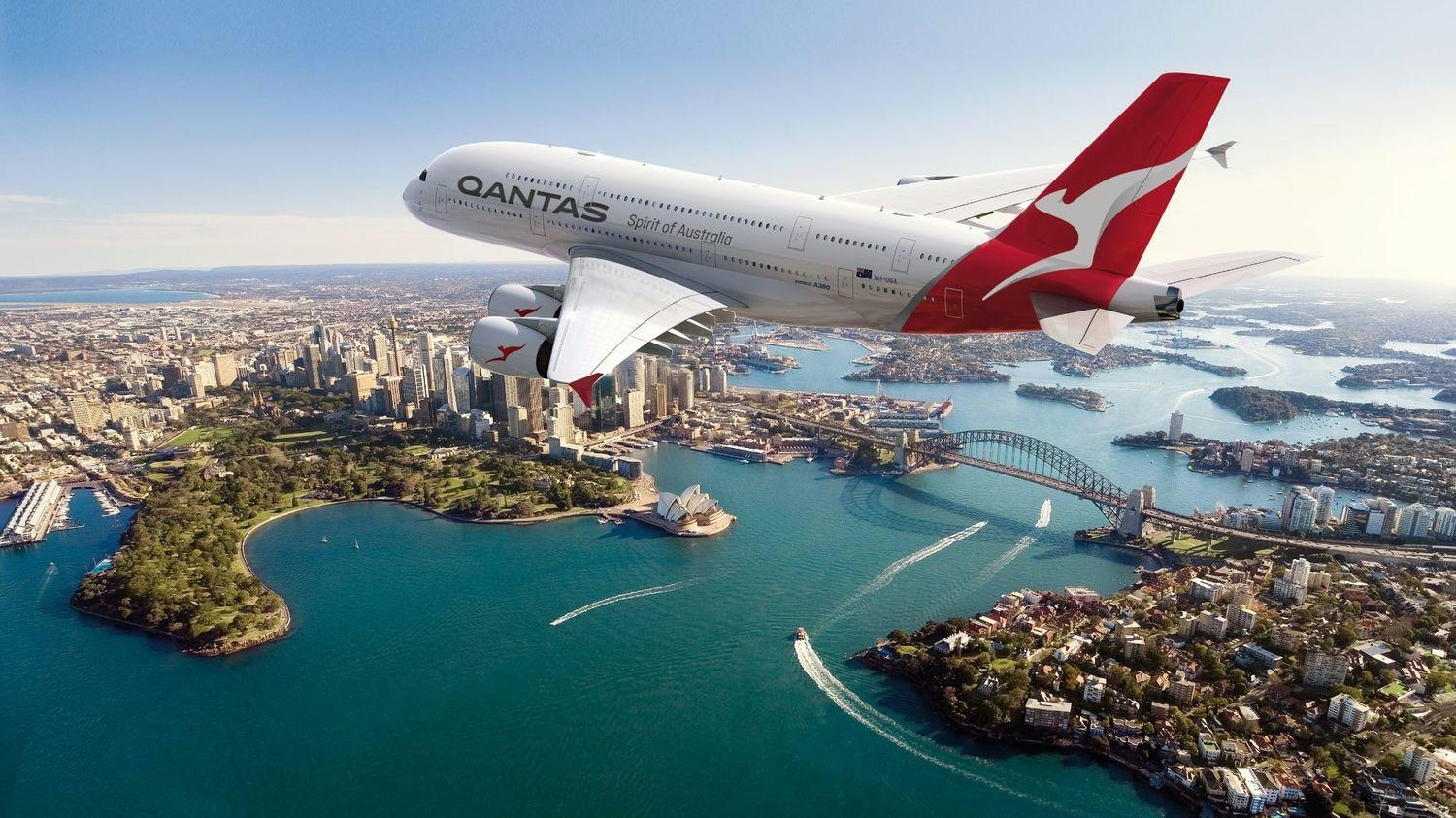
Qantas Returns Final A380 to Service Amid Fleet Renewal and Industry Challenges
Qantas has reintroduced its tenth and final Airbus A380 to service, marking the end of nearly six years of storage and completing the largest maintenance undertaking in the airline’s 105-year history. The aircraft, named in honour of Qantas co-founder Paul McGinness, has arrived in Sydney and will initially operate as an operational spare during the busy Christmas period. Beginning January 1, 2026, it will enhance international capacity by enabling daily A380 flights on the Sydney–Dallas route.
Extensive Maintenance and Fleet Strategy
The return of the A380 represents a significant achievement for Qantas, both from an engineering perspective and as part of its broader fleet renewal strategy. Maintenance and engineering teams from across the globe dedicated over 100,000 hours to the project, which encompassed a full cabin refurbishment, heavy maintenance checks, landing gear replacement, and assessment flights. The complexity of the work required the transportation of parts by land, sea, and air to ensure the aircraft met operational standards.
Qantas International CEO Cam Wallace emphasised the strong customer preference for the A380, noting that the superjumbo fleet carried more than one million international passengers in the past year alone. The reintroduction of the final A380 will allow the airline to increase seat availability on high-demand long-haul routes, including Dallas, Singapore, and Johannesburg. Each A380 now features a reconfigured cabin layout with 14 First Class, 70 Business, 60 Premium Economy, and 341 Economy seats. All aircraft have undergone comprehensive upgrades, including refurbished First Class cabins, an enhanced upper-deck lounge, and expanded premium seating options.
Navigating Industry Challenges and Future Plans
Qantas’s investment in the A380 fleet comes amid a challenging operating environment marked by geopolitical uncertainty and fuel price volatility, factors that continue to affect international carriers worldwide. Despite these headwinds, the airline has proceeded with its fleet renewal programme, gradually returning its A380s to service following extensive engineering and cabin upgrades. The scale of the project underscores Qantas’s commitment to operational excellence and long-term growth.
The airline’s efforts also reflect wider industry dynamics. Competitors such as American Airlines have demonstrated resilience through rapid operational responses during recent Airbus recalls, highlighting the importance of fleet flexibility and maintenance readiness. Meanwhile, Qantas is preparing for the next phase of its long-haul strategy with Project Sunrise, which aims to launch nonstop flights from Sydney to London and New York using specially modified Airbus A350-1000 aircraft. This initiative is poised to redefine ultra-long-haul travel and further modernise Qantas’s international network.
As Qantas celebrates the return of its final A380, the airline continues to balance the challenges of the current aviation landscape with strategic investments in fleet renewal and future growth, reaffirming its dedication to enhancing capacity and passenger experience on key international routes.

Etihad Airways Suspends Airbus A380 Flights on Key Route

Aditya Birla Group Seeks Approval for Aircraft Leasing in GIFT City

Qatar Airways Highlights Innovation and Connectivity at Arabian Travel Market 2026

Hong Kong's Five-Year Plan Includes Andrew Fan's Aircraft Parts Processing Hub Proposal

ACIA Aero Leasing Delivers ATR72-600 to Air Nostrum

RTX Appoints Jill Albertelli as Head of Pratt & Whitney

TAT Technologies Joins Beyond Aero Hydrogen Aircraft Program

AURAK Study Highlights Barriers to Air Taxi Adoption in Emerging Economies

Xiamen Air Selects Altitude for 787 Maintenance at Heathrow

Etihad and Swissport Extend Global Partnership
