Image

Orchestrate AI insights into action

Join the AeroGenie waitlist today!

Trending

Categories

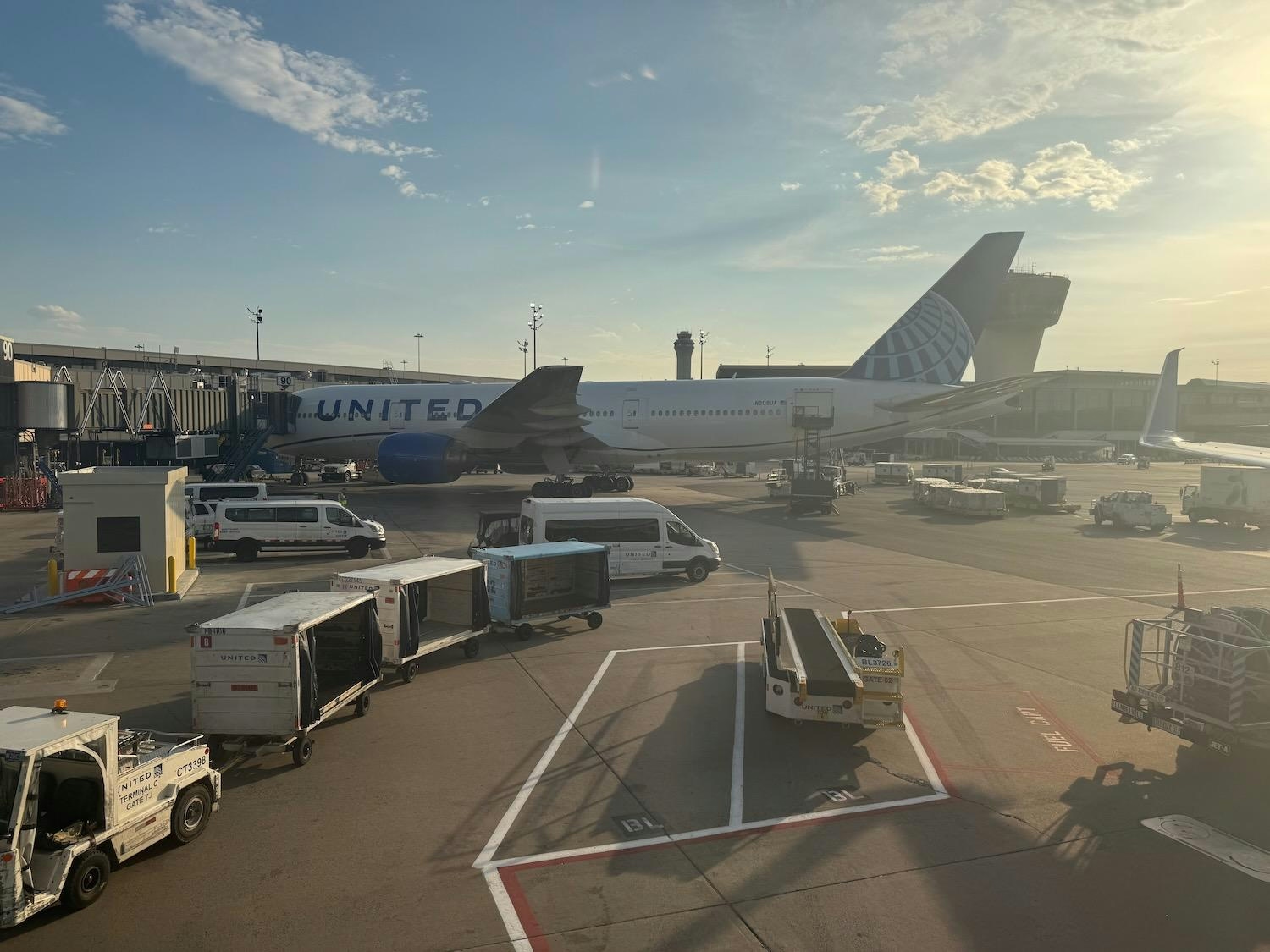
Regulation Grounds United Airlines’ Boeing 777-200 Fleet
July 14, 2026By ePlane AI
Regulation Grounds United Airlines’ Boeing 777-200 Fleet
0
0
United Airlines
Boeing 777-200
European Carbon Regulation

Regulation Grounds United Airlines’ Boeing 777-200 Fleet

European Carbon Regulations and Industry Impact

Europe’s evolving carbon regulations are significantly altering the economics of transatlantic aviation, compelling carriers such as United Airlines to expedite the retirement of older, less fuel-efficient aircraft like its nearly 29-year-old Boeing 777-200s. Although the European Union’s new environmental policies do not explicitly ban aging aircraft or impose direct taxes on jet fuel, 2026 represents a critical juncture as these regulations begin to influence the viability of widebody aircraft on long-haul routes.

United Airlines has long intended to phase out its oldest 777-200s, replacing them with more fuel-efficient models such as the Boeing 787 Dreamliner and, eventually, the Airbus A350-900. This transition is driven not by any single regulatory mandate but by broader shifts in industry economics that increasingly favor aircraft with lower fuel consumption and reduced emissions.

The Role of the Carbon Border Adjustment Mechanism

A central factor in this shift is the European Union’s Carbon Border Adjustment Mechanism (CBAM), which will enter its definitive phase in 2026. While CBAM does not currently apply to aviation fuel, its implications for the aviation sector are substantial. The mechanism targets imports of carbon-intensive materials, including steel and aluminum, which are essential components in aircraft manufacturing, engine parts, and airport infrastructure. As suppliers incorporate the costs of embedded carbon pricing, airlines face increased expenses across their supply chains, affecting everything from new aircraft deliveries to maintenance and infrastructure projects.

CBAM also reflects a broader regulatory trajectory in Europe. Industry experts, including those from the Florence School of Regulation and aviation consultancy Ishka, highlight ongoing discussions about extending carbon pricing to aviation and ensuring that non-European carriers adhere to comparable environmental standards. Although CBAM’s direct impact on airlines remains limited at present, it signals the growing acceptance of carbon costs as a permanent element in airline economics.

Immediate Pressures from the EU Emissions Trading System and Operational Challenges

The most immediate regulatory pressure on airlines arises from the EU Emissions Trading System (EU ETS), which already mandates that carriers operating on covered routes account for their carbon emissions. The gradual phaseout of free aviation allowances, coupled with stricter Sustainable Aviation Fuel (SAF) requirements, is intensifying the financial burden on airlines, rendering older, less efficient aircraft increasingly expensive to operate.

In addition to regulatory challenges, United’s 777-200 fleet faces operational constraints. For instance, in Canada, concerns over potential interference from 5G networks have led to restrictions on the deployment of these aircraft in certain regions. These limitations reduce fleet flexibility and raise concerns about reliability and service continuity.

Market Implications and Fleet Modernization

These regulatory and operational pressures are reshaping market dynamics. Passengers may gravitate toward airlines operating newer, more reliable fleets, while competitors are likely to intensify marketing efforts to attract travelers wary of potential disruptions. For United Airlines, the convergence of regulatory, operational, and market factors is accelerating the transition to a modern, sustainable long-haul fleet, positioning 2026 as a pivotal year in its fleet renewal strategy.

More news
Air Montenegro Begins Wet-Lease of Boeing 737 Classic

Air Montenegro Begins Wet-Lease of Boeing 737 Classic

Air Montenegro Initiates Wet-Lease of Boeing 737 Classic Amid Fleet Delays Air Montenegro has begun operating a Boeing 737-400 on a wet-lease basis from Turkish charter airline Tailwind Airlines, addressing delays in the delivery of its fourth Embraer E195 aircraft. The 31-year-old jet has been in service for Air Montenegro since last week, providing a crucial interim solution to sustain scheduled operations. Under the terms of the wet-lease agreement, Tailwind Airlines supplies not only the aircraft but also the flight crew, maintenance services, and insurance coverage. Operational Challenges and Industry Context This development occurs against a backdrop of significant challenges confronting Air Montenegro and many other regional carriers. Rising operational costs and geopolitical uncertainties continue to exert pressure on European airlines, accelerating consolidation trends among major industry players. The decision to incorporate an older Boeing 737 into the fleet has sparked discussion regarding the financial ramifications of wet-leasing arrangements. These concerns are heightened by ongoing contract negotiations between Boeing and its engineers’ union, which have the potential to affect aircraft availability and operational expenses further. Market analysts suggest that Air Montenegro’s increased dependence on wet-leasing may attract scrutiny from investors and other stakeholders focused on the airline’s cost structure and long-term viability. At the same time, regional competitors are likely to implement strategic measures to protect their market positions amid fluctuating demand and shifting regulatory frameworks. Despite these pressures, Air Montenegro’s prompt deployment of the wet-leased aircraft highlights its determination to ensure uninterrupted service for its passengers while awaiting the expansion of its fleet. The airline’s forthcoming decisions will be closely monitored as it navigates the complex dynamics shaping the European aviation industry.
ICBC Moves to Deregister Four 737 MAX Jets Leased to SpiceJet

ICBC Moves to Deregister Four 737 MAX Jets Leased to SpiceJet

ICBC Moves to Deregister Four 737 MAX Jets Leased to SpiceJet Leasing Firms Seek Deregistration Amid Financial Struggles Two Irish leasing companies affiliated with the Industrial and Commercial Bank of China’s (ICBC) leasing division have formally requested India’s aviation regulator to deregister four Boeing 737 MAX aircraft currently leased to SpiceJet. This development, revealed through filings with the Directorate General of Civil Aviation (DGCA), signals a critical step toward repossessing the jets amid the Indian carrier’s ongoing financial difficulties. The applications were submitted by Sky High LXXX Leasing Company Ltd and Sky High LXXVIII Leasing Company Ltd, both owned by ICBC Financial Leasing, a subsidiary of the state-owned ICBC, which is the world’s largest bank by assets. Although the filings did not specify the reasons behind the deregistration requests, the move tests the efficacy of India’s recently enacted aviation legislation designed to facilitate lessors in reclaiming aircraft from financially distressed airlines. The outcome of this case may set a precedent for future repossessions under the new regulatory framework. SpiceJet’s Financial Woes and Operational Impact SpiceJet, India’s fourth-largest airline, has been contending with severe liquidity challenges. The carrier has scaled back its flight operations, grounded multiple aircraft, delayed pilot salaries, and sought financial relief through a government-backed credit scheme. According to sources familiar with the matter, SpiceJet has already received 1.5 billion rupees (approximately $15.6 million) from this scheme and anticipates an additional 3.5 billion rupees in the near term. The airline has not publicly commented on these funding arrangements. This year, at least two lessors have issued payment default notices to SpiceJet, underscoring the airline’s persistent cash flow problems. In response to the deregistration requests, a SpiceJet spokesperson explained that the four Boeing 737 MAX jets have been grounded for an extended period due to manufacturing defects affecting the engines’ high-pressure turbines. The spokesperson emphasized that deregistering these aircraft would relieve the airline of lease rental obligations on assets that have remained non-operational for a significant duration and would not impact current flight operations. Despite these assurances, industry analysts caution that the loss of leased aircraft could further strain SpiceJet’s operational capacity. Currently, only 11 of the airline’s 53 aircraft are active, according to aviation data provider Planespotters.net. The potential reduction in fleet size may compel SpiceJet to seek alternative aircraft sources, while competitors could capitalize on the opportunity to increase their market share should the airline’s difficulties persist. Market Response and Broader Implications Investor sentiment has reflected growing concerns over SpiceJet’s financial health. Since the beginning of the year, SpiceJet’s shares have plummeted nearly 63%, in stark contrast to a modest 1% gain for InterGlobe Aviation, the parent company of IndiGo, India’s largest airline. The deregistration requests by ICBC’s leasing entities highlight the mounting pressures on SpiceJet and underscore the challenges faced by lessors in recovering assets amid the evolving regulatory landscape in India’s aviation sector. ($1 = 96.1475 Indian rupees)
ALSIM Introduces ALX Software Update at CAFA Conference in Cyprus

ALSIM Introduces ALX Software Update at CAFA Conference in Cyprus

ALSIM Introduces ALX Software Update at CAFA Conference in Cyprus **Larnaca, Cyprus, July 14, 2026** – Flight simulator manufacturer ALSIM has unveiled its latest ALX software update at the CAFA Flying Training Center in Larnaca, Cyprus. The announcement was made during the CAFA Conference, an event that brought together key stakeholders in the aviation training sector to explore recent technological advancements. This update represents a significant milestone in ALSIM’s ongoing efforts to enhance aviation training through innovative solutions. Enhanced Training Capabilities and Industry Impact The updated ALX software expands the simulator’s versatility, supporting a broad spectrum of training configurations. These include single- and multi-engine piston aircraft with both analog and glass cockpit options, as well as light turboprops, light jets, and medium jets. This flexibility enables training centers such as CAFA to deliver comprehensive pilot instruction tailored to a variety of operational requirements. ALSIM’s commitment to lifecycle services—encompassing software updates, upgrades, certification support, maintenance, and technical assistance—ensures that its customers remain at the forefront of flight training technology. The new software release is viewed as a strategic initiative to strengthen ALSIM’s position in a competitive market. While the update is expected to improve training quality and operational readiness for CAFA’s cadets, it may also prompt rival manufacturers to accelerate their own software development efforts, potentially intensifying competition within the sector. Market responses are anticipated to be mixed, with some investors welcoming the innovation as a positive sign, while others may raise concerns regarding integration challenges and associated costs. CAFA’s Commitment to Advanced Training Christos Limnatitis, Accountable Manager of CAFA - FlyIAA, highlighted the importance of continuous technological advancement in pilot training. He stated, “At CAFA - FlyIAA, we are committed to providing an exceptional training environment that combines experienced instructors with the latest aviation technologies. The deployment of the newest ALSIM ALX software update is another important step in that commitment. We are proud to welcome cadets from across the international network and provide them with advanced simulation capabilities that enhance training quality, operational readiness, and the overall learning experience. Continuous investment in innovation ensures our students are equipped with the knowledge, skills, and confidence required for successful careers in today’s aviation industry.” CAFA classifies the ALX as an FNPT II device within its diverse training fleet, which also includes Aquila AT-01, Diamond DA40, and Tecnam P2006T aircraft. This variety reflects the center’s dedication to offering a wide range of training platforms to meet evolving pilot education needs. ALSIM’s Global Presence and Future Outlook Headquartered in France, ALSIM specializes in the manufacture of FAA- and EASA-certified flight training devices, including FNPT II, FNPT II MCC, and AATD simulators. Since its establishment in 1994, the company has installed and certified over 450 simulators in more than 60 countries, serving a global customer base exceeding 400 organizations. As ALSIM’s latest software update enters the market, the company’s ability to sustain its competitive advantage will depend on the successful integration of new features and its responsiveness to shifting industry dynamics.
NASA Study Points to Smoother Air Taxi Rides

NASA Study Points to Smoother Air Taxi Rides

NASA Study Points to Smoother Air Taxi Rides As the air taxi industry prepares for commercial deployment, NASA has conducted a comprehensive study to better understand passenger comfort during urban air travel. Air taxis—small, vertical-takeoff-and-landing aircraft intended for short trips within cities—face significant challenges in gaining public acceptance, with ride quality emerging as a critical factor. At NASA’s Armstrong Flight Research Center in Edwards, California, researchers have employed a virtual reality passenger ride quality simulator to investigate how sudden aircraft motions impact traveler experience. Investigating Passenger Comfort Through Simulation Volunteers, including NASA employees, participated in a series of simulated flights designed to replicate the abrupt shifts and tilts that air taxis might encounter in operation. These virtual experiences involved four levels of aircraft motion, encompassing pitching, rolling, tilting, and rapid climbs or dives on routes such as the virtual journey between downtown San Francisco and Alcatraz Island. Participants were asked to rate their comfort and indicate their willingness to fly under similar real-world conditions. The study revealed that sudden and sharp movements—particularly pitching, rolling, and rapid acceleration—can significantly diminish passenger comfort. While some individuals tolerated moderate motion changes, others found even these unsettling. These findings suggest that contemporary travelers may have lower tolerance for rough flight conditions compared to airline passengers of previous decades, underscoring the importance of smooth ride quality for the success of air taxis. Implications for Air Taxi Design and Industry Development Using the data collected, NASA developed models that correlate specific aircraft motions with passenger comfort and willingness to fly. These models are expected to inform future air taxi design and operational strategies, enabling manufacturers and operators to identify and mitigate maneuvers that could be perceived as too jarring. Curtis Hanson, lead researcher at NASA Armstrong, emphasized the significance of these insights, stating that the study helps establish passenger comfort thresholds for aggressive flight motions and supports predictions about how air taxis should operate to ensure a pleasant experience. The research arrives amid ongoing challenges for the air taxi sector, including regulatory approval, safety considerations, and technological constraints. Consumer acceptance, driven largely by comfort and perceived advantages over traditional transportation, will be crucial in shaping market dynamics. In response, industry players may intensify research and development efforts or pursue strategic partnerships to enhance their offerings. NASA’s findings have the potential to influence aircraft design, operational protocols, and industry standards, thereby facilitating the emergence of air taxis as a viable and attractive mode of urban transportation in the near future.
Unifly Joins SESAR JU to Advance the Future of the Digital European Sky

Unifly Joins SESAR JU to Advance the Future of the Digital European Sky

Unifly Joins SESAR JU to Advance the Future of the Digital European Sky Unifly, a prominent provider of Unmanned Aircraft Systems (UAS) Traffic Management solutions, has officially become a member of the SESAR Joint Undertaking (SESAR JU), Europe’s leading partnership dedicated to air traffic management research and innovation. This addition expands SESAR JU’s collaborative network to 59 organizations, joining other recent members such as NAV CANADA, Avinor, and Tern Systems. Strengthening the Digital European Sky Initiative By integrating into SESAR JU, Unifly aligns itself with a pan-European initiative aimed at developing the Digital European Sky—a vision for a safe, digital, and interoperable aviation ecosystem. The company will leverage its operational experience in UTM and regulatory expertise to collaborate with air navigation service providers, airports, regulators, manufacturers, and research institutions. This partnership is expected to accelerate the deployment of U-space and UTM solutions across Europe, facilitating the scalable and secure integration of drones into European airspace. Andres Van Swalm, CEO of Unifly, emphasized the significance of this development, stating, “Joining SESAR JU is an important step for Unifly as we continue to contribute to the safe and scalable integration of drones into the European airspace. SESAR JU plays a central role in shaping the Digital European Sky, and we are proud to bring our operational UTM experience, regulatory expertise, and commitment to autonomous aviation into this collaborative ecosystem.” Industry Implications and Challenges Unifly’s membership comes amid a period of considerable financial pressure on the European aviation sector, driven by the costly modernization of air traffic management infrastructure and the integration of emerging technologies. This development is likely to attract heightened attention from investors and stakeholders who are closely monitoring the financial ramifications of such partnerships. The competitive dynamics within the aviation industry are also evolving. As Unifly deepens its involvement with SESAR JU, major carriers such as Lufthansa and Air France-KLM may intensify their own modernization efforts to preserve market competitiveness. This environment could stimulate innovation but also increase financial risks and competitive pressures across the sector. Sustainability remains a critical focus for SESAR JU, particularly regarding the transition to greener and more efficient aviation fuels. This shift presents both opportunities and challenges for Unifly and its industry counterparts as they strive to balance technological progress with environmental responsibility. Unifly’s Role in European Aviation Innovation Over the past decade, Unifly has played a significant role in numerous European research and innovation projects, contributing to the development of U-space concepts and digital airspace services. Its inclusion in SESAR JU further solidifies its position as a key player in delivering the technologies and operational frameworks necessary to support the expansion of the drone economy within Europe and beyond. About Unifly Unifly is an aviation technology company focused on enabling autonomous aviation through advanced UAS Traffic Management. Its platform connects authorities, drone operators, and stakeholders to digitize and automate airspace management, ensuring the safe integration of next-generation aircraft. Additionally, Unifly Consulting provides regulatory guidance and operational strategy, fostering a comprehensive ecosystem for autonomous aviation. About SESAR JU The SESAR Joint Undertaking is a European public-private partnership established to accelerate the realization of the Digital European Sky. It unites public and private aviation stakeholders to develop and implement technological solutions for the future of air traffic management, encompassing the integration of conventional aircraft, drones, air taxis, and higher-altitude vehicles.
AI-Driven Shape-Shifting Wing May Replace Aircraft Tails

AI-Driven Shape-Shifting Wing May Replace Aircraft Tails

AI-Driven Shape-Shifting Wing May Replace Aircraft Tails Innovation in Aircraft Design Engineers at the German Aerospace Center (DLR) are spearheading a transformative development in aviation with the creation of a morphing wing that aims to reduce drag and potentially eliminate the need for traditional aircraft tails. This initiative, part of the Morphing Technologies and Artificial Intelligence Research (morphAIR) project, is supported by a budget of one million Euros and seeks to challenge conventional aircraft design paradigms. The morphAIR team has successfully tested the technology on a 70-kilogram drone outfitted with a three-meter-wide morphing wing. Unlike conventional wings, which depend on fixed surfaces and separate control elements such as ailerons and flaps, this morphing wing features a smooth, continuous surface. Motorized actuators embedded within the wing enable it to alter its shape dynamically, adapting to varying flight conditions and managing pitch control—functions traditionally performed by the tailplane. Martin Radestock, senior adaptive systems engineer at DLR, highlighted the inefficiencies inherent in current aircraft wings, noting that turbulent airflow results from the steps and gaps between control surfaces. He explained that the morphing wing’s seamless design, assembled without screws or rivets, effectively eliminates these disruptions, thereby enhancing aerodynamic efficiency. Advancing Fuel Efficiency and Flight Control Building on the promising results of initial trials, DLR has initiated a follow-up program named UAdapt (Unmanned Aircraft Wing Adaption). This project focuses on further reducing fuel consumption by minimizing drag and investigating the feasibility of removing the tail entirely. While the concept of variable-geometry wings is not unprecedented—historically exemplified by the “swing wing” designs of aircraft such as the F-111 Aardvark and the F-14 Tomcat—the morphAIR project distinguishes itself by integrating modern artificial intelligence and advanced materials to achieve superior adaptability and efficiency. Challenges in Market Adoption Despite the technical promise of AI-driven, shape-shifting wings, significant challenges remain beyond engineering hurdles. Recent surveys, including one from Hotel News Resource, reveal ongoing skepticism regarding AI’s reliability and transparency, factors that could undermine market confidence in adopting such revolutionary technology. Financial markets have also expressed caution about the substantial costs associated with AI integration, as reported by the BBC, which may affect funding availability and slow the pace of adoption. Competitors within the aerospace industry are closely monitoring these advancements. Established manufacturers like Airbus are investing heavily in advanced engineering projects to sustain their competitive edge, as noted in a recent Aviation Week interview. However, broader economic pressures and constraints on IT budgets, also highlighted by the BBC, may influence the speed and extent to which these innovations are embraced across the sector. As the morphAIR project progresses, its ultimate success will depend not only on overcoming technical challenges but also on addressing market skepticism and navigating the financial complexities of AI adoption in aviation. Should these obstacles be surmounted, the shape-shifting wing could represent a significant leap forward in aircraft design, efficiency, and performance.
Sinopec Merges with CNAF to Strengthen Position in China’s Aviation Fuel Market

Sinopec Merges with CNAF to Strengthen Position in China’s Aviation Fuel Market

Sinopec Merges with CNAF to Strengthen Position in China’s Aviation Fuel Market Strategic Consolidation Amid Shifting Energy Demand Aviation fuel is rapidly becoming the primary growth driver for China’s refined oil demand, even as consumption of gasoline and diesel declines due to the rising adoption of electric vehicles and a slowing economy. In this context, Sinopec’s merger with China National Aviation Fuel Group (CNAF) represents a strategic effort to consolidate its foothold in the country’s aviation fuel sector. Sinopec cites projections from S&P Global indicating that China’s domestic jet fuel consumption is expected to increase significantly, from 39.28 million tonnes (309 million barrels) in 2024 to 75 million tonnes (591 million barrels) by 2040. This growth trajectory is further influenced by geopolitical tensions, such as the conflict in Iran, which have heightened supply risks and driven crude prices upward. These factors are accelerating the shift away from road fuels and reinforcing the central role of jet fuel within China’s refining industry. Addressing Fragmentation and Enhancing Competitiveness Before the merger, China’s aviation fuel industry was characterized by a fragmented supply chain, with production, sales, and refueling operations managed by separate entities. Sinopec highlighted that, unlike major international aviation fuel suppliers—typically integrated oil and petrochemical companies—China’s jet fuel sector suffered from divided operations, which limited overall competitiveness. The merger unifies production, supply, sales, trading, and airport refueling under a single operator, aiming to reduce transaction costs and improve service efficiency. CNAF, which operates at nearly all of China’s commercial airports, reported revenues of $33.45 billion in 2024 alongside a remarkable 286.5% increase in net profit over the year. The combination of CNAF’s extensive logistics network with Sinopec’s refining capacity is expected to create a more streamlined and competitive entity in the aviation fuel market. Alignment with Government Policy and Future Challenges The restructuring aligns closely with Beijing’s industrial policy objectives. Approved by the State Council in January 2026 and finalized in July, the merger reflects the government’s intent to streamline the aviation logistics chain and mitigate supply disruption risks. Sinopec asserts that the integration will not only bolster China’s domestic market but also enhance its competitiveness in global jet fuel markets, positioning the merged group as a central player in China’s petroleum strategy through 2040. Nonetheless, the merger faces several challenges. Regulatory approvals remain pending, and investors are closely monitoring Sinopec’s ability to effectively integrate resources and operations. The consolidation is also expected to intensify competition, prompting rival firms to accelerate efforts to secure sustainable aviation fuel supplies and defend their market positions. Furthermore, adapting to evolving sustainability standards will be critical for the long-term success of the combined entity. Market analysts suggest that Sinopec’s merger with CNAF could trigger similar alliances among other companies, potentially reshaping the competitive landscape of China’s aviation fuel sector as it adapts to emerging growth drivers and policy priorities.
Key Developments at Delta Air Lines in Fuel, Loyalty, and AI

Key Developments at Delta Air Lines in Fuel, Loyalty, and AI

Key Developments at Delta Air Lines in Fuel, Loyalty, and AI Delta Air Lines (DAL) continues to navigate a complex landscape shaped by fuel price volatility, evolving customer preferences, and technological innovation. As the airline industry advances into 2026, Delta’s strategic initiatives in premium travel, loyalty program expansion, and artificial intelligence are under close scrutiny by investors, particularly in the context of intensifying competition from United Airlines Holdings, Inc. (UAL) and American Airlines Group Inc. (AAL). Premium Travel and Fuel Cost Challenges Demand for premium travel remains a significant driver of Delta’s revenue growth. In the June quarter, premium revenue increased by 17% year over year, with diverse revenue streams accounting for 61% of total revenues—an improvement of two percentage points compared to the previous year. Corporate travel demonstrated notable resilience, with corporate sales expanding at double-digit rates across all sectors. Premium corporate sales, in particular, surged by more than 25%, fueled by strong demand for Delta Comfort and Delta Premium Select offerings. This strategic emphasis on premium segments and customer segmentation enhances Delta’s ability to maintain revenue quality amid economic uncertainties and fluctuations in fuel prices. Nevertheless, rising jet fuel costs have emerged as a significant headwind. Increased fuel expenses have contributed to a deceleration in overall revenue growth. While Delta has attempted to mitigate this impact by passing some costs onto consumers, early indications suggest that this approach may face resistance, potentially constraining the airline’s future pricing power. Expansion of Loyalty Programs and International Reach Delta’s loyalty program continues to play an increasingly pivotal role in its business model. Loyalty-related revenues grew by 19% in the June quarter, driven by expanded engagement with the SkyMiles program beyond traditional air travel into a broader array of partner activities. Revenues from American Express reached $2.4 billion, marking a 16% increase year over year, supported by accelerated card acquisitions and sustained double-digit growth in cardholder spending. This diversification reduces Delta’s dependence on the cyclical nature of airfare demand. In addition to loyalty program growth, Delta is actively expanding its international route network, with a particular focus on the Pacific region. This expansion aims to capture greater market share from competitors such as United Airlines and is integral to the airline’s broader strategy to grow its loyalty base and diversify revenue streams. Technology and AI: Progress and Investor Skepticism Technology adoption is becoming central to Delta’s efforts to enhance revenue and customer loyalty. The introduction of Delta Sync, which enables logged-in experiences across onboard channels, facilitates deeper customer insights and more personalized engagement during travel. While Delta has highlighted its artificial intelligence initiatives as key to improving customer experience and operational efficiency, these technologies remain in the developmental stage. A disconnect persists between the company’s optimistic projections of AI-driven returns and investor sentiment, reflecting broader skepticism regarding the near-term financial impact of such innovations. Financial Performance and Outlook Delta’s second-quarter earnings surpassed expectations; however, underlying financial pressures remain evident. Both operating margin and free cash flow margin have declined, underscoring the challenges posed by rising costs and competitive market dynamics. As the airline continues to invest in premium services, loyalty programs, and technological advancements, its capacity to control costs and sustain profitability will be a focal point for investors. Looking ahead, the Zacks Consensus Estimate anticipates year-over-year sales growth for Delta through the third and fourth quarters of 2026, as well as for the full years 2026 and 2027. The airline’s ability to balance escalating costs, shifting customer expectations, and competitive pressures will be critical to maintaining its growth trajectory in the coming years.
Indonesia Advances Aviation Decarbonization Through Pertamina-Boeing SAF Partnership

Indonesia Advances Aviation Decarbonization Through Pertamina-Boeing SAF Partnership

Indonesia Advances Aviation Decarbonization Through Pertamina-Boeing SAF Partnership Indonesia is intensifying its efforts to promote sustainable aviation through a strategic partnership between the state-owned energy company PT Pertamina (Persero) and aerospace leader Boeing. The two entities have formalized their collaboration by signing a memorandum of understanding (MoU) aimed at developing a sustainable aviation fuel (SAF) ecosystem within Indonesia. This initiative seeks to increase SAF production, enhance the clean aviation supply chain, and contribute to the country’s broader net-zero emissions objectives. This partnership emerges amid projections of rapid growth in air travel across Southeast Asia over the next two decades, which is expected to significantly increase demand for lower-carbon aviation fuels. Indonesia aspires to establish itself as a regional frontrunner in sustainable aviation, addressing emissions in one of the most challenging sectors to decarbonize. Building a Comprehensive SAF Ecosystem The MoU outlines a collaborative approach whereby Pertamina and Boeing will explore opportunities throughout the entire SAF value chain. Their focus includes identifying sustainable feedstock sources, evaluating SAF production technologies, supporting the development of relevant policies and regulations, enhancing technical expertise and workforce capabilities, and fostering long-term investment in Indonesia’s SAF industry. Rather than concentrating solely on fuel production, the partnership aims to establish a holistic SAF ecosystem that integrates feedstock suppliers, refineries, airlines, policymakers, and technology providers. Pertamina’s President Director, Simon Aloysius Mantiri, highlighted Indonesia’s abundant renewable feedstock resources and the company’s refining expertise, while emphasizing Boeing’s extensive experience in aviation. Together, they intend to accelerate the growth of a competitive domestic SAF industry that supports both economic development and aviation decarbonization. Indonesia’s Potential as a Regional SAF Hub Indonesia is widely regarded as one of Southeast Asia’s most promising markets for sustainable aviation fuel. According to the ASEAN 2050 SAF Outlook, Indonesia ranks among the top three ASEAN countries projected to have the largest SAF production surplus by 2050. The country could potentially produce an estimated 2.2 million barrels of SAF per day by leveraging its extensive agricultural and forestry resources, significant volumes of used cooking oil and palm oil residues, existing refining infrastructure, and a growing domestic and regional aviation market. These factors position Indonesia to become a major SAF producer and exporter, meeting the increasing demand from airlines seeking cleaner fuels to comply with future climate targets. Global SAF Supply Challenges Despite Indonesia’s strong potential, the global SAF industry continues to face considerable challenges. In 2025, SAF accounted for only 0.6% of global aviation fuel demand, with overall production remaining below 1% of total jet fuel consumption. Airlines worldwide have expressed concerns regarding the adequacy of SAF supply to fulfill emerging regulatory mandates. Governments, including the United Kingdom, have responded with substantial funding initiatives such as the recent £219 million fund to stimulate SAF development. Innovations like the SAF book-and-claim system, which may extend to non-EU airports, offer promising avenues to increase SAF adoption. However, these developments underscore the urgent need for robust policy support and technological advancements to scale production and meet the aviation sector’s decarbonization goals. Boeing’s Long-Term Outlook Boeing projects that passenger traffic in Southeast Asia will grow by approximately 7% annually over the next 20 years, necessitating nearly 4,900 new commercial aircraft by 2044. While this growth is a positive indicator of economic development, it simultaneously intensifies the imperative for cleaner aviation solutions. Indra Duivenvoorde, Managing Director of Boeing Indonesia, affirmed Indonesia’s strong position to lead in sustainable aviation and expressed optimism about the partnership with Pertamina in advancing the country’s SAF ambitions. As Indonesia and Boeing progress with their collaboration, their joint efforts highlight both the significant opportunities and the complex challenges involved in scaling sustainable aviation fuel to meet the industry’s climate commitments.
Riyadh Air Considers Orders for 25-30 Boeing 787s and Additional Airbus Jets, Sources Say

Riyadh Air Considers Orders for 25-30 Boeing 787s and Additional Airbus Jets, Sources Say

Riyadh Air Considers Major Fleet Expansion with Boeing and Airbus Orders Plans to Exercise Boeing 787 Options Saudi Arabia’s emerging carrier Riyadh Air is reportedly contemplating a substantial enlargement of its fleet by acquiring between 25 and 30 additional Boeing 787 Dreamliners. This move would involve exercising the majority of its existing contractual options, according to industry sources. The airline, which commenced its first commercial flight only last month, is also exploring the possibility of increasing its Airbus order book, signaling an ambitious growth strategy. Originally, Riyadh Air placed an order in 2023 for up to 72 Boeing Dreamliners, consisting of 39 firm orders and options for 33 more aircraft. Sources suggest that a formal decision to convert most of these options into firm commitments could be announced at the upcoming Farnborough Airshow, although discussions remain ongoing and details are yet to be finalized. Both Riyadh Air and Boeing have refrained from commenting on the potential transaction. Airbus Orders and Market Context Alongside its Boeing commitments, Riyadh Air currently holds orders for 25 Airbus A350-1000 long-haul jets, with options for an additional 25 aircraft. Industry insiders indicate that some of these Airbus options may also be converted into firm orders, though Airbus has declined to provide any comment on the matter. This prospective fleet expansion occurs amid several operational challenges for Riyadh Air, including obtaining regulatory approvals for new routes, managing the integration of a large number of new aircraft, and sustaining competitive pricing against well-established regional carriers. The airline’s growth ambitions are poised to intensify competition among aircraft manufacturers, particularly as recent data reveals Airbus leading commercial aircraft orders for May 2026 with 379 firm orders, compared to Boeing’s 13. This evolving market dynamic is expected to influence the strategic approaches of both manufacturers and may prompt responses from rival airlines operating on overlapping routes. Market analysts observe that Riyadh Air’s assertive expansion plans could trigger strategic recalibrations among competitors as the airline seeks to carve out a significant presence in a highly competitive sector.
line









