image

AeroGenie — Your Intelligent Copilot.

Ask anything. Analyze everything. Act instantly.

Trending

Categories

Regulator Orders Inspections of Select Airbus A320s Over Fuselage Flaw
December 17, 2025By ePlane AI
Regulator Orders Inspections of Select Airbus A320s Over Fuselage Flaw
0
0
Airbus A320
Fuselage Inspection
EASA Directive

Regulator Orders Inspections of Select Airbus A320s Over Fuselage Flaw

European Aviation Authority Issues Inspection Mandate

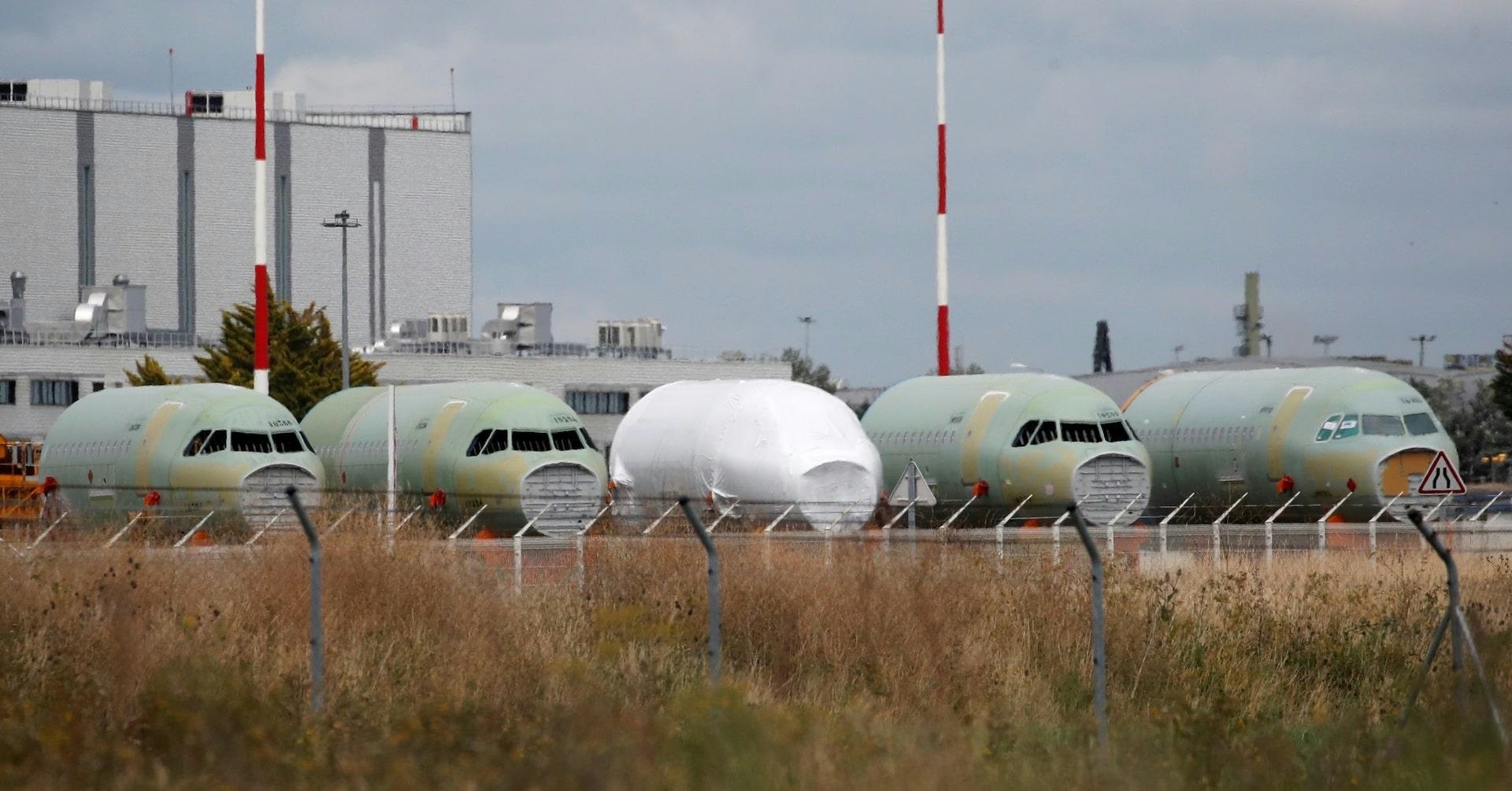
European aviation regulators have mandated inspections of fuselage panels on numerous Airbus A320-family aircraft following the identification of a production defect at a Spanish supplier. The European Union Aviation Safety Agency (EASA) has issued preliminary instructions requiring airlines to verify the thickness of specific panels located near the front of the aircraft. This inspection must be completed within six months, or sooner if the panels have previously undergone repairs. The directive applies to 177 aircraft currently in service and an additional 451 jets still in production at Airbus.

EASA described the inspections as necessary to address a “potentially unsafe condition” related to panels exhibiting incorrect thickness combined with a history of repairs. Although Airbus has maintained that the industrial flaw does not compromise safety, the issue has nonetheless disrupted deliveries of A320neo jets and compelled the manufacturer to reduce its 2025 delivery target by approximately 4%, to around 790 aircraft.

Industry Response and Delivery Challenges

The safety directive follows Airbus’s own technical instructions and establishes a clear timeline for airlines to resolve the problem. Despite this, some carriers remain reluctant to accept new aircraft deliveries until the affected panels are replaced. Several airlines are reportedly seeking compensation or enhanced warranty terms in response to the defect. Lufthansa, for instance, has announced plans to inspect 11 recently delivered A320-family aircraft.

The delivery delays have intensified the challenge for Airbus as it balances addressing the fuselage flaw with maintaining its financial forecasts. The company is currently evaluating the broader implications of the issue, amid concerns from investors and customers regarding the discrepancy between reduced delivery targets and financial projections.

Despite these setbacks, Airbus has historically accelerated deliveries in the final weeks of the year. Industry sources indicate that while deliveries were below average in early December, they have recently gained momentum. Airbus declined to comment on ongoing commercial negotiations or delivery figures ahead of its full-year report, which is scheduled for release on January 12.

More news
BizJet Interiors Zone to Highlight Innovation and Craftsmanship at AIX 2026

BizJet Interiors Zone to Highlight Innovation and Craftsmanship at AIX 2026

BizJet Interiors Zone to Highlight Innovation and Craftsmanship at AIX 2026 Aircraft Interiors Expo 2026 (AIX) has announced further details about its new BizJet Interiors Zone, which will make its debut at the Hamburg Messe, Germany, from 14 to 16 April 2026. Strategically located in a high-traffic central area, this dedicated zone reflects the growing importance of business aviation alongside the rapidly evolving electric vertical takeoff and landing (eVTOL) sector. A Dedicated Platform for Business Aviation Innovation The momentum within the BizJet interiors sector is evident, with this year’s AIX featuring 92 exhibitors focused on this market—a 53% increase compared to 2024. Archana Dharni, Event Director of AIX, emphasized the longstanding demand for a dedicated space to showcase the artistry and innovation inherent in business aviation. She noted that business jets often serve as industry testbeds where new ideas and solutions are first introduced before being adopted in commercial aircraft cabins. The BizJet Interiors Zone aims to immerse visitors in the cutting-edge developments shaping the future of aircraft interiors. This zone will act as a nexus for a diverse range of stakeholders, including business aviation operators, charter companies, completion and refurbishment specialists, designers, original equipment manufacturers (OEMs), and VIP procurement teams. It will present a carefully curated selection of innovators addressing the sophisticated and evolving expectations of high-net-worth travelers. Eric Beverage, Senior Director of Sales at CTT Systems, highlighted the increasing demand for cabins that offer seamless, wellbeing-focused environments tailored to individual lifestyles. He pointed to their cabin humidification system as an example of technology designed to enhance passenger comfort and health, underscoring the BizJet Interiors Zone as an ideal venue to demonstrate such expertise and engage with industry leaders shaping next-generation VVIP cabin experiences. Showcasing Craftsmanship and Advanced Technologies Attendees can anticipate encountering the finest materials, precision craftsmanship, and bespoke design solutions that define contemporary VVIP cabins. Jet Aviation will showcase tailored cabin completions, while Townsend Leather will present artisanal upholstery. High Tech Finishing is set to demonstrate innovative surface treatments, and PolyStone Creations will offer custom composite solutions. SNT-Group Oy will highlight premium seating and textile expertise, underscoring the central role of craftsmanship in business jet interiors. In addition to design and materials, the zone will spotlight technologies that enhance passenger comfort, convenience, and safety. Exhibitors such as SmartTray and Timetooth Technologies will demonstrate digital systems aimed at simplifying cabin controls and personalizing passenger experiences. CTT Systems will present advanced humidification and anti-condensation solutions, while Fokker Services B.V. will showcase maintenance and modification capabilities designed to keep cabins safe, efficient, and stylish. Navigating a Competitive and Evolving Market The launch of the BizJet Interiors Zone comes amid intensifying global competition. Emerging Chinese business jets, including Comac’s C919 and CBJ models, are gaining traction with distinctive cabin interiors. The increasing presence of innovative eVTOL aircraft from both Chinese and Western manufacturers—such as Yivtol and Honda’s hybrid-electric VTOL—may further influence market dynamics and visitor interest. In response, established industry players are expected to further differentiate their interior designs and technologies to maintain market share, particularly as business aviation continues to expand with rising deliveries and aircraft billings. Beyond the BizJet Interiors Zone, AIX 2026 will feature innovations spanning both business and commercial aviation sectors. Participants will include Airbus Urban Air Mobility (UAM), Air X, Embraer, Joby Aviation, JSX, K5-Aviation, and Springjet. A dedicated designer runway will provide a creative platform for leading designers to present BizJet-focused interior concepts, reinforcing AIX’s position as a premier showcase for the future of luxury cabin design.
Forged in innovation: The Wright Brothers’ legacy and the rise of the Flying Tigers

Forged in innovation: The Wright Brothers’ legacy and the rise of the Flying Tigers

Forged in Innovation: The Wright Brothers’ Legacy and the Rise of the Flying Tigers The Dawn of Aviation and Its Military Implications More than 120 years ago, Orville and Wilbur Wright initiated a transformative chapter in human history with their brief but groundbreaking 12-second flight on the dunes of Kitty Hawk, North Carolina. This pioneering achievement not only marked the birth of powered flight but also established a foundation of innovation and relentless pursuit of knowledge that would influence generations of aviators. The Wright Brothers’ legacy extended beyond technological breakthroughs, shaping the strategic mindset of American airpower and setting the stage for the evolution of military aviation. As the 20th century progressed and global tensions intensified, the United States began to reassess the role of aircraft in warfare. The rapid development of aviation technology after World War I prompted significant expansion of the U.S. Army Air Corps throughout the 1930s. By the outbreak of World War II, airpower had become a central pillar of American military strategy, underscoring the importance of innovation and adaptability—principles deeply rooted in the Wright Brothers’ pioneering spirit. The Emergence of the Flying Tigers The escalating conflict in Asia during the early 1940s, particularly the mounting pressure on China from Japanese forces, highlighted the urgent need for new combat tactics and rigorous pilot training. The concept of air superiority as a decisive factor in warfare gained traction, leading to the development of a skilled cadre of aviators prepared to serve in critical theaters. In response to China’s request for assistance, retired U.S. Army Air Corps officer Claire Lee Chennault proposed the creation of an American fighter unit to support Chinese forces. This initiative gave rise to the American Volunteer Group (AVG), famously known as the Flying Tigers. Historian Mark Godwin of the 23d Wing emphasizes Chennault’s pivotal role in challenging the prevailing U.S. Army Air Forces doctrine, which at the time favored high-altitude bombers over pursuit aviation. Chennault’s fighter-centric strategy, initially dismissed by military leadership, advocated for the essential role of fighters in defending bases, protecting bombers, and attacking enemy airfields. His innovative approach ultimately reshaped combat tactics and proved instrumental in the success of the AVG. After his departure from the military in 1937, Chennault became a key advisor to Chiang Kai-shek, contributing to the modernization of the Chinese Air Force. Upon returning to Washington in 1939, he secured support for the AVG, which was equipped with 100 P-40 aircraft—considered by some to be outdated. Employing tactics overlooked by the Army Air Forces, Chennault trained both Chinese pilots and the AVG, achieving remarkable combat effectiveness that solidified the Flying Tigers’ legendary reputation. Enduring Influence on Modern Aviation The intertwined legacies of the Wright Brothers and the Flying Tigers highlight the lasting impact of early aviation pioneers on contemporary technological and military landscapes. Their shared emphasis on knowledge, innovation, and adaptability continues to inform modern aviation and strategic doctrines. In today’s competitive and rapidly evolving environment, organizations draw inspiration from these historical narratives to drive technological advancement and data-driven decision-making. The story of the Wright Brothers and the Flying Tigers remains not only a significant historical account but also a guiding framework for navigating the complexities of innovation in the modern world.
Lunar Blessing Airlines Enters Middle East Air Mobility Market

Lunar Blessing Airlines Enters Middle East Air Mobility Market

Lunar Blessing Airlines Enters Middle East Air Mobility Market Lunar Blessing Airlines, a Dubai-based startup, is preparing to enter the Middle East air mobility sector with a focus on light-aircraft charter flights and an on-demand air taxi service. Embracing a philosophy centered on elegance and reliability, the company aims to provide flexible, private flights catering to both sightseeing and urgent business travel across the UAE and neighboring regions. Operating under the motto inspired by a “Moon Blessing,” Lunar Blessing seeks to establish itself as a smart and dependable aircraft operator within Dubai’s competitive aviation landscape. Strategic Positioning and Fleet Composition Distinct from traditional commercial airlines, Lunar Blessing targets passengers who prioritize privacy, flexibility, and access to smaller or remote airfields often underserved by larger carriers. The airline will operate from Dubai Al Maktoum International Airport (DWC), initially deploying a fleet centered on the twin-engine Piper Seneca V PA-34-220T. This propeller-driven aircraft accommodates up to five passengers and offers a range of approximately 1,300 kilometers, enabling the airline to serve short- and mid-range routes, including destinations with limited infrastructure. This strategic choice allows Lunar Blessing to bridge the gap between ground transportation, scheduled airline services, and business aviation by offering the convenience and confidentiality of private jets at a cost closer to commercial flights. Regulatory and Market Challenges Despite its promising business model, Lunar Blessing faces significant challenges in entering the Middle East air mobility market. Securing the Air Operator Certificate (AOC) remains a critical hurdle, as this regulatory approval is essential for commercial flight operations. The company is actively progressing through the certification process, aiming to complete it by the first quarter of 2026. Achieving this milestone will confirm compliance with stringent safety and operational standards and enable the launch of full commercial services. The competitive environment is intensifying, with established players such as Archer and Sarla already operating in the region. These incumbents may respond to Lunar Blessing’s market entry by forming strategic partnerships or accelerating their own commercial deployments. Furthermore, the sector’s growth is closely linked to broader trends, including the expansion of the lunar space economy and increasing demand for advanced logistics and transport services. Market Reception and Future Prospects Market response to Lunar Blessing’s announcement has been largely positive. The recent Dubai Airshow underscored strong momentum for advanced air mobility, with industry stakeholders expressing optimism about new entrants like Lunar Blessing. The company’s planned participation in the 2025 Dubai Airshow is expected to enhance its visibility and attract potential partners. Looking forward, Lunar Blessing intends to expand its fleet by acquiring additional Piper Seneca V aircraft in the near term, with plans to introduce larger, potentially jet-powered models in the future. Negotiations with leasing companies are underway to support this growth strategy, positioning the airline for a broader role in business aviation and tourist charter services. As Lunar Blessing Airlines advances toward regulatory approval and fleet expansion, it emerges as a promising new entrant poised to reshape private air travel within the UAE and the wider Middle East region.
AELF Acquires Two Boeing 737-800 Aircraft from ICBC Aviation Leasing

AELF Acquires Two Boeing 737-800 Aircraft from ICBC Aviation Leasing

AELF Acquires Two Boeing 737-800 Aircraft from ICBC Aviation Leasing Aircraft Engine Lease Finance Inc. (AELF) has completed the acquisition of two Boeing 737-800 aircraft, both manufactured in 2015, from ICBC Aviation Leasing (ICBC). These aircraft are currently leased to Aerolíneas Argentinas, marking AELF’s first assets placed with the Argentine national carrier. This transaction also represents the inaugural collaboration between AELF and ICBC, underscoring the complementary nature of their business models. AELF’s focus on mid-life aircraft aligns with the objectives of large leasing platforms and Chinese counterparties, who seek to trade, recycle, or phase out assets at specific points in their lifecycle. Industry Context and Strategic Implications The acquisition occurs amid notable shifts within the aerospace sector. Boeing’s recent $4.7 billion purchase of Spirit AeroSystems has driven a surge in its stock price and signals a strategic push toward greater vertical integration. This move is expected to impact production timelines and costs across the industry, potentially intensifying competition among aircraft manufacturers as they adjust to evolving supply chain dynamics. For lessors such as AELF, these developments highlight the growing importance of supply chain resilience and production quality—critical factors for airlines when considering fleet expansion and renewal. Market responses to these industry changes often depend on how effectively companies maintain operational flexibility and asset quality amid shifting conditions. Competitors may pursue strategic acquisitions or modify production approaches to safeguard their market positions. For AELF, vigilant monitoring of these trends and competitor strategies will be vital to sustaining growth and diversifying its portfolio. AELF’s Position and Future Outlook By incorporating two highly sought-after narrow-body aircraft with established operators, AELF continues to strengthen the resilience and adaptability of its leasing platform. Headquartered in the United States, AELF is a seasoned commercial aircraft lessor with over a decade of experience. The company offers tailored and flexible capital solutions to airlines, lessors, banks, and non-traditional aircraft owners. Its operations include acquiring aircraft and engines on long-term leases, as well as purchasing dormant or short-term leased assets, which it returns to service through targeted maintenance and remarketing initiatives. This latest acquisition aligns with AELF’s ongoing strategy to expand a diversified portfolio of aircraft leased to airlines worldwide, positioning the company to navigate the evolving global aviation market.
Spirit Unveils Restructuring Plans

Spirit Unveils Restructuring Plans

Spirit Airlines Secures Additional Financing Amid Restructuring Efforts Spirit Airlines has reached a revised agreement with its senior secured noteholders, resulting in an amendment to its debtor-in-possession (DIP) credit facility that unlocks a third tranche of incremental financing totaling $100 million. Of this amount, $50 million—net of the original issue discount—is immediately accessible, while the remaining funds are contingent upon further progress toward either a standalone reorganization plan or a strategic transaction. The airline is actively pursuing both options as it navigates a critical juncture in its restructuring process. The amended DIP agreement arrives as Spirit confronts a crucial financing deadline. Industry analysts warn that failure to secure the necessary funding could force the airline to shift from an operating reorganization to a rapid shutdown. Competitors have already begun preparing contingency flight schedules and rescue fares to accommodate potentially stranded Spirit passengers, highlighting the broader market implications of the airline’s financial difficulties. Operational Stability and Labor Agreements In response to these pressures, Spirit has abandoned plans to furlough up to 365 pilots and has reduced the scale of captain downgrades, signaling a commitment to maintaining operational stability. The airline also announced that its Pilot and Flight Attendant groups ratified new labor agreements last week, which are expected to support the company’s restructuring objectives. Spirit’s management emphasized that the continued support from lenders reflects confidence in the airline’s transformation and recent progress. Over the past two months, the company has repositioned its fleet and improved its cost structure while developing a diverse range of product offerings—from economical to premium—to enhance value for travelers. Market Impact and Future Outlook Despite these efforts, the airline’s future remains uncertain. Deutsche Bank analysts have noted that Spirit’s restructuring is likely to benefit competitors in most markets, as rivals stand ready to absorb Spirit’s market share should disruptions occur. Meanwhile, Spirit’s stock (SAVEQ) remains highly speculative and disconnected from the company’s legal recovery prospects. Under the proposed restructuring plan, existing equity holders are not expected to receive any recovery. Spirit reaffirmed its commitment to providing high-value travel options for American consumers and maintaining strong operational performance through the holiday season and beyond. The ongoing restructuring efforts, supported by the amended DIP financing, aim to secure the airline’s long-term viability amid a rapidly evolving competitive landscape.
ITP Aero to Acquire Aero Norway

ITP Aero to Acquire Aero Norway

ITP Aero to Acquire Aero Norway in Strategic Expansion of MRO Capabilities ITP Aero, a global leader in aerospace propulsion, has entered into a binding agreement to acquire Aero Norway, a distinguished maintenance, repair, and overhaul (MRO) provider specializing in CFM56 engine services. This acquisition represents a pivotal step in ITP Aero’s broader strategy to expand its global aftermarket services and reinforce its presence across key commercial engine platforms. Strengthening Expertise in CFM56 Engine Maintenance Aero Norway, headquartered in Stavanger, Norway, is renowned for its high-quality maintenance of CFM56 engines. Operating from its advanced facility at Sola Airport, the company serves a diverse international clientele that includes airlines, lessors, and asset managers. With a workforce exceeding 200 skilled professionals, Aero Norway has established a strong reputation for technical excellence and reliability in engine overhaul services. The integration of Aero Norway’s specialized expertise with ITP Aero’s existing MRO capabilities, engineering resources, and advanced component repair services is expected to generate significant synergies. This combination aims to enhance the competitiveness and value proposition of their joint aftermarket offerings, positioning the merged entity as a formidable player in the aerospace MRO sector. Strategic Vision and Industry Implications Eva Azoulay, Chief Executive Officer of ITP Aero Group, emphasized the strategic importance of the acquisition, describing it as a key milestone in the company’s roadmap to becoming a leading independent aerospace aftermarket provider. She highlighted Aero Norway’s capabilities as instrumental in delivering enhanced value to customers moving forward. Neil Russell, Chief Executive Officer of Aero Norway, welcomed the acquisition as the start of an exciting new chapter. He noted that the merger would unlock substantial synergies, improve competitiveness, and enable the delivery of greater value to customers. Russell expressed optimism about joining the ITP Aero Group and collaborating to drive innovation, technical excellence, and sustained growth in the global aerospace aftermarket. This acquisition follows ITP Aero’s recent expansion initiatives, including the 2023 purchase of BP Aero in the United States and its selection to join Pratt & Whitney’s GTF MRO network. These developments underscore ITP Aero’s commitment to broadening its global footprint and enhancing its service capabilities. Challenges and Market Outlook The transaction remains subject to customary regulatory approvals and is anticipated to close in the first half of 2026. ITP Aero faces the challenge of integrating Aero Norway’s operations with its existing MRO infrastructure, ensuring a smooth transition for both staff and clients. Industry observers have expressed some skepticism regarding ITP Aero’s capacity to effectively scale its commercial engine MRO services amid intensifying competition. Competitors are likely to respond by strengthening their own service offerings or pursuing strategic partnerships to counterbalance ITP Aero’s expanding influence in the sector. As the aerospace aftermarket grows increasingly competitive, the acquisition of Aero Norway presents both a significant growth opportunity and a critical test of ITP Aero’s ability to execute its ambitious expansion strategy.
TUI Implements Amadeus Navitaire Stratos Airline Retailing Platform

TUI Implements Amadeus Navitaire Stratos Airline Retailing Platform

TUI Adopts Amadeus Navitaire Stratos to Transform Airline Retailing TUI Airways has forged a strategic partnership with Amadeus’ airline technology division, Navitaire, becoming a launch customer for the newly introduced Navitaire Stratos platform. This advanced airline retailing solution is tailored for low-cost and hybrid carriers, utilizing cloud-native architecture, AI-driven personalization, and contemporary e-commerce principles to revolutionize how TUI designs, sells, and manages its digital channels. Modernizing Airline Retail with Navitaire Stratos The Navitaire Stratos platform is engineered to comply with the latest global standards in airline retailing, notably the IATA Offer and Order framework. This framework replaces traditional booking and ticketing methods with a dynamic, retail-inspired model that enables airlines to generate real-time, personalized offers and manage the entire customer journey through a single order. Moving away from static fares and booking classes, this approach simplifies distribution, enhances product differentiation, and grants airlines greater control over pricing, bundling, and customer relationships across all sales channels. Stratos introduces a shopping cart-centric experience that replaces legacy transactional systems. TUI customers can now search for offers, save their selections, and complete purchases with real-time pricing. The platform’s AI capabilities provide tailored recommendations and seamlessly integrate third-party services such as car rentals, activities, and accommodation directly into the booking process. Digital Transformation Amidst Economic Challenges This technological advancement is part of TUI’s broader digital transformation strategy, which also includes the deployment of a new wireless in-flight entertainment and connectivity system. Passengers can now stream movies, send WhatsApp messages, and book destination activities while airborne. Mirco Fiumene, Chief Marketing Officer of TUI Musement, highlighted the benefits of this integration, stating that it not only inspires guests to envision their destinations but also empowers them to begin shaping their trips during the flight. Despite these innovations, TUI faces a challenging macroeconomic and geopolitical environment that has led the company to adopt a more cautious revenue outlook for 2026, falling short of some market expectations. In response, TUI has initiated a cost-reduction program targeting $290 million in savings by 2028 to mitigate potential risks associated with the platform’s implementation. Competitive Landscape and Future Outlook TUI’s digital ambitions come amid intensifying competition, with rivals such as Fiji Airways advancing their own digital capabilities. Fiji Airways has successfully integrated Amadeus with Salesforce Data Cloud, leveraging AI-driven innovation to enhance operational efficiency and customer engagement. These developments underscore the pressure on TUI to ensure its digital transformation yields measurable benefits. Peter Glade, Chief Commercial Officer of TUI, expressed confidence in the company’s direction, describing the Navitaire Stratos platform as a cornerstone of their modernization efforts. He emphasized that Stratos will enable TUI to deliver contextual and relevant offers, including ancillary services, while elevating retail capabilities through intelligent recommendations, dynamic offers, and a user-friendly shopping cart experience. Cyril Tetaz, Executive Vice President of Airline Solutions at Amadeus, echoed this optimism, underscoring the platform’s potential to enhance customer experience and generate value for both TUI and its passengers.
Rolls-Royce Begins Engine Testing for U.S. Army MV-75 Aircraft

Rolls-Royce Begins Engine Testing for U.S. Army MV-75 Aircraft

Rolls-Royce Advances Engine Testing for U.S. Army MV-75 Aircraft Rolls-Royce has initiated testing of its AE 1107F engines at its Indianapolis facility, marking a pivotal development in the delivery of prototypes for the U.S. Army’s MV-75 Future Long Range Assault Aircraft (FLRAA) program. Each MV-75 FLRAA will be equipped with two AE 1107F engines, a next-generation propulsion system designed to significantly enhance speed, range, and combat effectiveness for Army aviation units. The AE 1107F Engine: A Proven Powerplant for Modern Warfare The AE 1107F represents the latest advancement in a family of engines that have reliably served the U.S. military for decades. Rolls-Royce highlights the engine’s high power density, cyber-compliant controls, and survivability features tailored to meet the demands of contemporary combat environments. The AE series has accumulated over 90 million flight hours across 16 commercial and military platforms, with approximately 80 percent of components standardized across variants. This common core architecture is intended to mitigate technical risks, accelerate development timelines, and simplify maintenance and supply chain logistics. Candice Bineyard, director of U.S. business development and future programs for Rolls-Royce Defense, underscored the significance of the current testing phase. She stated, “We continue working closely with the U.S. Army and our industry partners to deliver an ultra-modern propulsion solution with proven, low-risk AE 1107F engines and a fully integrated system design. Engine testing represents the next critical milestone in bringing this revolutionary capability to our service members.” Strategic Investment and Industry Implications Testing is being conducted at Rolls-Royce’s advanced manufacturing campus in Indianapolis, the company’s largest facility in the United States. Over the past decade, Rolls-Royce has invested more than $1 billion in technology upgrades, facility enhancements, and testing capabilities at this site to support key U.S. Department of Defense programs, including the MV-75 FLRAA. The AE 1107 engine family is already extensively deployed, powering multiple variants of the V-22 Osprey used by the U.S. Marine Corps, Navy, and Air Force. Additionally, a marinized version known as the MT7 powers the U.S. Navy’s Ship-to-Shore Connector landing craft. While the MV-75 FLRAA program aims to replace parts of the Army’s existing rotary-wing fleet with longer-range aircraft, Rolls-Royce faces ongoing challenges. The company must ensure the successful execution of upgrades and meet durability expectations across its Trent engine family. Nevertheless, market sentiment remains optimistic, supported by a recent £200 million share buyback and steady progress in defense engine testing. Competitors are closely monitoring Rolls-Royce’s developments, particularly as the company seeks to regain market share in the Boeing 787 segment by leveraging successful upgrades to the Trent 7000 engine. As testing of the AE 1107F advances, Rolls-Royce is positioning itself to strengthen its foothold in both military and commercial aerospace sectors.
SkyTeam Names Finalists for Aviation Challenge 2025

SkyTeam Names Finalists for Aviation Challenge 2025

SkyTeam Announces Finalists for Aviation Challenge 2025, Emphasizing Industry Sustainability SkyTeam has unveiled the finalists for its fourth annual Aviation Challenge (TAC), spotlighting a broad range of innovative efforts aimed at advancing sustainability within the aviation sector. The 2025 edition, themed “Impact,” underscores the alliance’s commitment to fostering measurable environmental progress through collaboration and innovation. Expanding Participation and Record Engagement This year’s challenge attracted participation from 22 airlines, including subsidiaries, affiliates, and non-SkyTeam members, reflecting the alliance’s ambition to extend its influence beyond its immediate network. Between September 26 and October 26, 2025, these airlines conducted over 80 showcase flights—the highest number since the program’s inception. These flights served as practical demonstrations of cutting-edge solutions designed to promote sustainability, encouraging long-term adoption across the industry. Collectively, participants submitted 224 initiatives addressing critical areas such as carbon emissions reduction, energy efficiency, and waste management. Patrick Roux, SkyTeam’s CEO, remarked on the significance of the event: “Each year, The Aviation Challenge provides participating airlines with a platform to turn innovation into action and take practical steps toward sustainability. This fourth edition has been especially inspiring, with participants demonstrating determination, ingenuity, and initiative throughout the Challenge. Their commitment was reflected in a record number of showcase flights. We congratulate all the airlines on their efforts to help shape a more responsible future for aviation.” Evaluation and Award Categories A panel of aviation and sustainability experts, including representatives from the Netherlands Aerospace Centre (NLR) and PA Consulting, assessed the entries using a rigorous set of technical criteria. Finalists were selected across four principal categories, each encompassing several subcategories. The Direct Impact Awards recognize effective solutions implemented in flight and ground operations, cargo handling, maintenance, catering, and inflight products. Noteworthy initiatives include AI-driven payload optimization, the elimination of single-use plastics in catering, and enhanced potable water management systems. The Organizational Transformation Awards celebrate progress in sustainability training, Sustainable Aviation Fuel (SAF) adoption, procurement strategies, and data-driven efficiency improvements. Highlights feature the scaling of SAF usage and the introduction of comprehensive training programs to elevate sustainability awareness among staff. Leadership Awards honor excellence in leadership, teamwork, and collaboration, with winners determined through peer voting. Shortlisted projects include national SAF roadmaps, emissions reduction strategies, and innovative approaches to converting aviation waste into opportunities for micro, small, and medium enterprises. Finally, the Inspiration Awards acknowledge exceptional showcase flights, storytelling, and knowledge-sharing initiatives. These include regional events and university partnerships focused on emissions reduction and waste management. Challenges and Industry Context While the Aviation Challenge reinforces SkyTeam’s dedication to sustainability, it also highlights ongoing challenges. The alliance faces the task of maintaining its competitive position against other global alliances and individual carriers, ensuring that sustainability efforts do not compromise operational efficiency. Financial and operational risks linked to innovation projects remain significant, particularly as scrutiny from investors and stakeholders intensifies. Competitors such as Star Alliance and Oneworld are expected to enhance their own sustainability programs in response. Recent leadership changes, including the departure of Kenya Airways CEO Allan Kilavuka, may also impact SkyTeam’s strategic direction and the implementation of future sustainability initiatives. The complete list of TAC 2025 finalists is available in the ‘Notes to Editors’ section.
Deutsche Aircraft Focuses on Supply Chain Resilience for Modern Production

Deutsche Aircraft Focuses on Supply Chain Resilience for Modern Production

Deutsche Aircraft Prioritizes Supply Chain Resilience Amid Industry Challenges As the aerospace sector continues to grapple with persistent supply chain disruptions, smaller original equipment manufacturers (OEMs) such as Deutsche Aircraft are confronting a complex landscape of challenges and opportunities. At the Hamburg Aviation Forum in December 2025, Deutsche Aircraft’s CEO Nico Neumann outlined the company’s strategic approach as it prepares to launch the redesigned D328eco regional turboprop. Neumann emphasized the pressing need to translate existing market demand into reliable delivery, stating, “The demand is there, but now we have to find ways to deliver.” The original D328, a 32-passenger aircraft last produced in the early 2000s, saw limited production with only 107 units built, alongside 110 D328Jets. Since acquiring the type certificate from Fairchild Dornier in 2006, Deutsche Aircraft has maintained a modest global fleet, with approximately 40 to 50 D328s and around two dozen D328Jets still in operation. Strategic Focus on Manufacturing and Supply Chain Resilience With the D328eco—a 40-passenger model—targeted for type certification and entry into service by 2027, Deutsche Aircraft is intensifying efforts to bolster manufacturing capabilities and supply chain resilience. This focus emerges amid heightened industry scrutiny of supply chain strategies, particularly as leadership instability has been identified as a significant risk factor undermining resilience, according to recent Gartner surveys. Such vulnerabilities have fueled skepticism regarding the effectiveness of new supply chain initiatives, especially among smaller OEMs. The competitive environment further complicates these challenges. Boeing’s recent acquisition of Spirit AeroSystems and its push toward greater vertical integration have set new standards for supply chain control and efficiency. This development exerts additional pressure on companies like Deutsche Aircraft to enhance their own supply chain robustness in order to remain competitive. Industry analysts highlight that future-proofing manufacturing operations requires not only resilient supplier networks but also enhanced data visibility throughout the supply chain. For Deutsche Aircraft, this translates into substantial investments in digital tools and transparent processes designed to anticipate disruptions and enable rapid response. These capabilities are critical to meeting delivery commitments for the D328eco. As Deutsche Aircraft moves closer to production, its capacity to adapt to evolving supply chain dynamics will be pivotal. The company’s initiatives to strengthen resilience and implement data-driven oversight are likely to play a decisive role in its ability to bring the D328eco to market on schedule, amid intensified industry scrutiny and competitive pressures.
Ask AeroGenie










