
Orchestrate AI insights into action

Trending
Categories
Saab unveils world-first 3D-printed, AI-designed aircraft fuselage
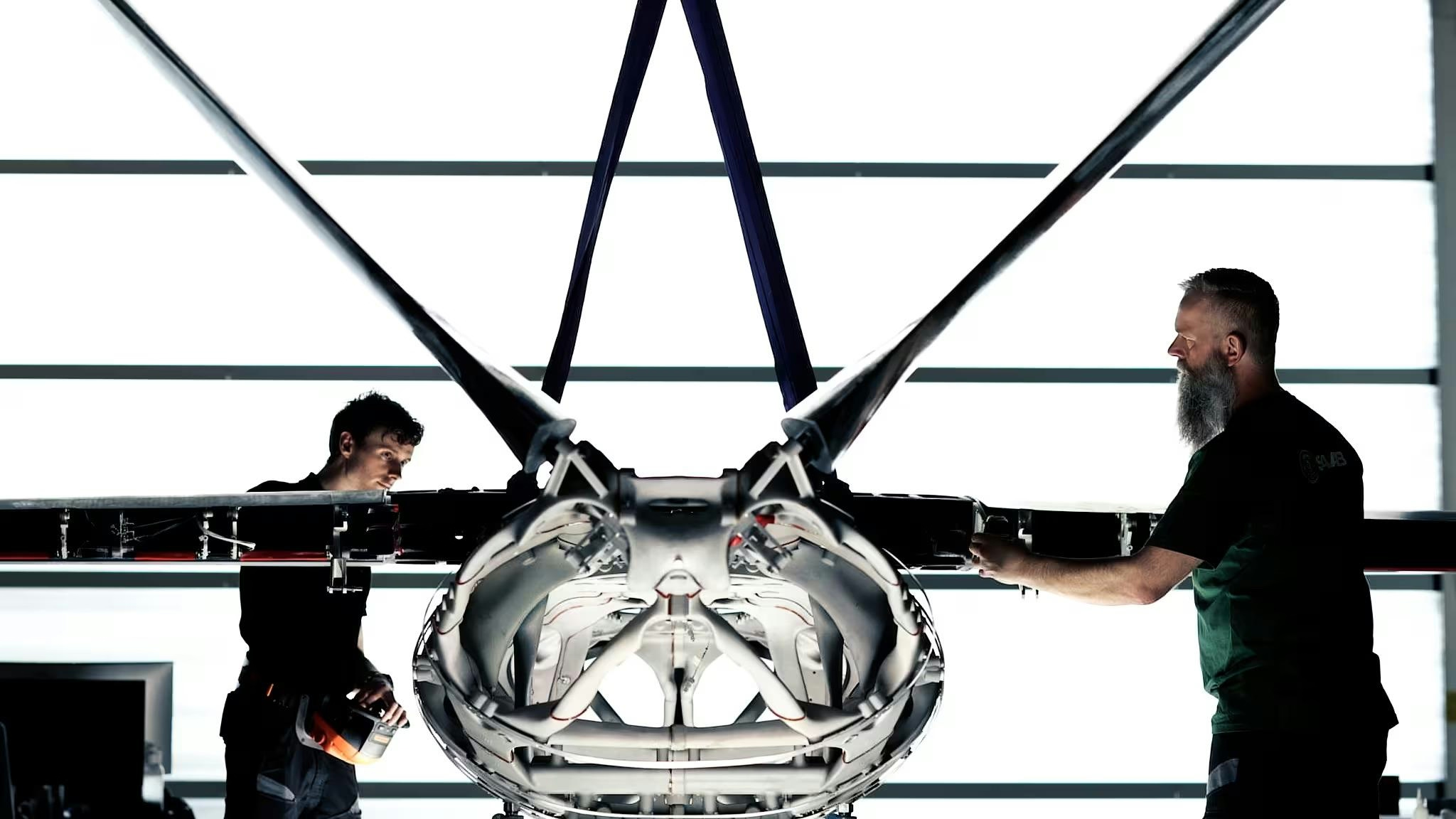
Saab Unveils World-First 3D-Printed, AI-Designed Aircraft Fuselage
Saab has announced a pioneering development in aerospace manufacturing with the unveiling of a five-metre aircraft fuselage produced entirely through 3D printing. Utilizing Divergent Technologies’ additive production system, this demonstrator is slated for flight in 2026 and represents the first instance where an airframer has applied the rapid iteration and flexibility characteristic of software development to physical aircraft hardware. Saab envisions that, if successful, this approach could transform the industry by enabling aircraft to be redesigned, built, and upgraded at a pace previously exclusive to software releases. This innovation aligns with a broader evolution within Swedish aerospace, where Saab has consistently emphasized speed and adaptability as critical factors for battlefield superiority. The company’s strategic philosophy—observe, orient, decide, and act faster than opponents—has influenced everything from the modular design of the original Gripen fighter to its current digital engineering methodologies.
Digital Foundations and Model-Based Engineering
Saab’s latest breakthrough is deeply rooted in the advancements made during the Gripen E program, where model-based engineering became a foundational practice. By employing a shared digital twin of the aircraft, multidisciplinary teams were able to conduct early simulations, perform rapid trade studies, and make well-informed integration decisions prior to manufacturing. This shift from traditional paper drawings to comprehensive digital 3D definitions for every component and procedure facilitated the creation of more complex and optimized designs. The Gripen E’s avionics architecture further propelled this digital transformation by introducing hardware independence and segregating flight-critical from mission-critical software. This separation allowed for accelerated mission software updates and, according to Saab, positioned the Gripen E as the first production fighter to operate with an AI agent on standard avionics computers.
Software-Defined Hardware: The Next Frontier
Building upon these digital foundations, Saab’s Rainforest innovation unit has embarked on extending the flexibility of software development into hardware manufacturing. Axel Baathe, head of Rainforest, explained that while Gripen E customers can code mission-critical applications in the morning and deploy them by afternoon, the current challenge is to replicate this level of agility for physical structures. This concept, termed Software-Defined Hardware Manufacturing, combines model-based engineering with additive manufacturing and AI-driven optimization to render aircraft structures as adaptable as digital code. High-fidelity simulation models enable rapid identification of design improvements; however, traditional manufacturing processes remain a significant bottleneck due to the time and expense involved in producing tools, molds, and jigs.
Industry Impact and Challenges Ahead
Saab’s 3D-printed, AI-designed fuselage signals a potential paradigm shift in aerospace manufacturing, yet considerable challenges persist. The transition to this new model entails substantial upfront investment, regulatory complexities, and the necessity for extensive retraining of engineers to master advanced manufacturing techniques. Industry reactions have been mixed: while some traditional aerospace firms approach the technology with skepticism, more progressive companies are likely to recognize opportunities to reduce costs and accelerate production cycles. Competitors are expected to respond by investing in similar technologies or developing alternative solutions to safeguard their market positions. As Saab prepares for flight testing in 2026, the aerospace sector will be closely monitoring whether this software-inspired approach to hardware can fulfill its promise of enhanced speed, flexibility, and innovation.

Etihad Airways Suspends Airbus A380 Flights on Key Route

Aditya Birla Group Seeks Approval for Aircraft Leasing in GIFT City

Qatar Airways Highlights Innovation and Connectivity at Arabian Travel Market 2026

Hong Kong's Five-Year Plan Includes Andrew Fan's Aircraft Parts Processing Hub Proposal

ACIA Aero Leasing Delivers ATR72-600 to Air Nostrum

RTX Appoints Jill Albertelli as Head of Pratt & Whitney

TAT Technologies Joins Beyond Aero Hydrogen Aircraft Program

AURAK Study Highlights Barriers to Air Taxi Adoption in Emerging Economies

Xiamen Air Selects Altitude for 787 Maintenance at Heathrow

Etihad and Swissport Extend Global Partnership
