
Orchestrate AI insights into action

Trending
Categories
Safran Raises Outlook Following Strong Quarter in Jet Engine Services
Safran Raises Outlook Following Strong Quarter in Jet Engine Services
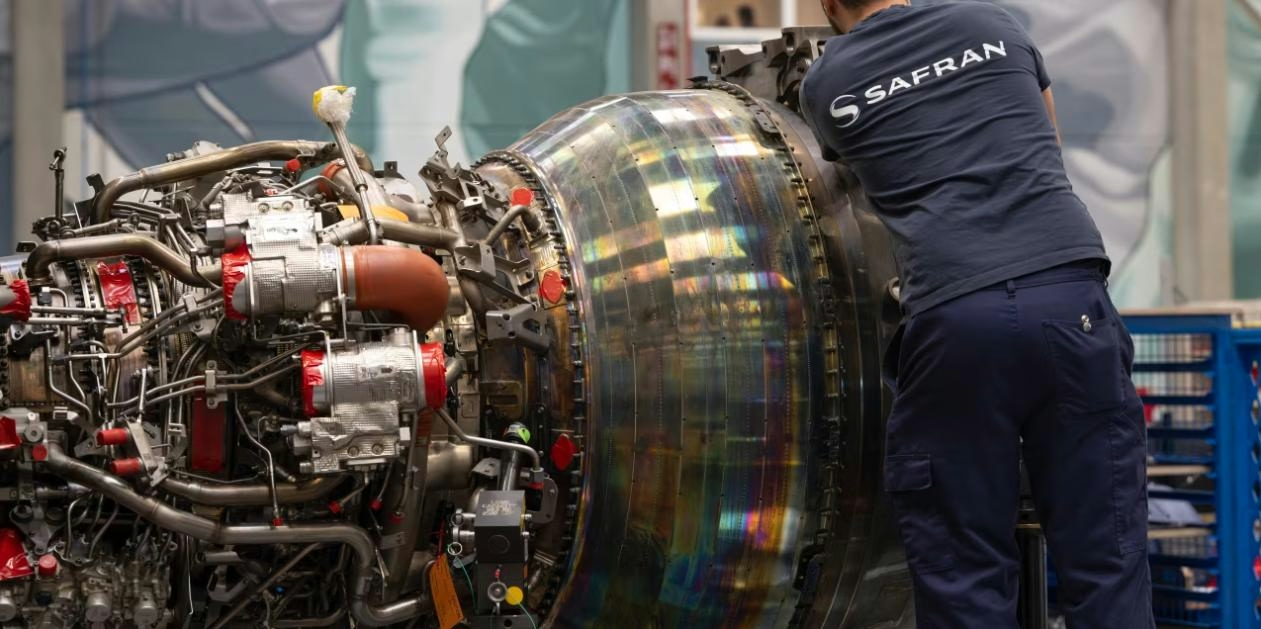
French aerospace giant Safran has revised its full-year forecasts upward after reporting a robust third quarter, driven primarily by heightened demand in its core jet engine division. The company, which co-produces LEAP engines with GE Aerospace through their joint venture CFM International, posted third-quarter revenues of €7.85 billion ($9.15 billion), marking an 18.3% increase compared to the same period last year and surpassing analyst expectations.
Strong Performance Fueled by Aftermarket Demand and Delivery Catch-Up
Safran attributed the impressive results to a "catch-up" in previously delayed engine deliveries, achieving record shipments during the quarter. Revenues in the propulsion segment surged by 25.6%, with aftermarket services—including maintenance and spare parts—rising 21.1%. This growth mirrors a broader industry trend, as airlines extend the operational life of older aircraft amid maintenance bottlenecks and delays in new jet deliveries from manufacturers such as Airbus and Boeing.
CEO Olivier Andries emphasized the sustained strength in demand for aftermarket services and parts for civil jet engines, a sentiment widely shared across the aerospace sector. The competition for limited spare parts has intensified as airlines and aircraft manufacturers vie for constrained supply, heightening rivalry among leading engine producers.
Upgraded Financial Guidance and Industry Context
In light of the strong quarterly performance, Safran raised its full-year revenue growth forecast to a range of 11% to 13%, up from the previous 10% to 12%. The company also increased its operating income target to between €5.1 billion and €5.2 billion, alongside a revised free cash flow forecast of €3.5 billion to €3.7 billion. These updated targets incorporate the impact of existing tariffs.
Safran’s optimistic outlook aligns with similar upward revisions from competitors. GE Aerospace recently boosted its profit forecast, citing robust aftermarket demand, while other industry players such as RTX have also raised their earnings projections. This collective adjustment underscores a competitive drive within the sector to capitalize on the current surge in maintenance, repair, and overhaul (MRO) services.
Future Growth Prospects and Production Adjustments
Looking ahead, Safran followed GE Aerospace in increasing its 2025 growth forecast for LEAP engine deliveries to over 20%, up from the previous 15% to 20% range. Andries indicated that fourth-quarter LEAP engine shipments are expected to remain close to the third quarter’s level, during which CFM delivered 511 engines—a 40% increase year-on-year.
Regarding potential fluctuations in deliveries to Airbus, Andries stated that CFM is prepared to make minor allocation adjustments as necessary. Ongoing discussions with Airbus about future production rates continue, though Andries clarified that Airbus’s target of producing 75 narrow-body jets per month by 2027 does not apply uniformly across the entire year.
While Safran’s outlook benefits from strong aftermarket demand, the company faces the ongoing challenge of sustaining growth amid intensifying competition. As rivals continue to raise their forecasts, Safran’s ability to maintain its momentum will remain a focal point for investors and industry analysts.

Etihad Airways Suspends Airbus A380 Flights on Key Route

Aditya Birla Group Seeks Approval for Aircraft Leasing in GIFT City

Qatar Airways Highlights Innovation and Connectivity at Arabian Travel Market 2026

Hong Kong's Five-Year Plan Includes Andrew Fan's Aircraft Parts Processing Hub Proposal

ACIA Aero Leasing Delivers ATR72-600 to Air Nostrum

RTX Appoints Jill Albertelli as Head of Pratt & Whitney

TAT Technologies Joins Beyond Aero Hydrogen Aircraft Program

AURAK Study Highlights Barriers to Air Taxi Adoption in Emerging Economies

Xiamen Air Selects Altitude for 787 Maintenance at Heathrow

Etihad and Swissport Extend Global Partnership
