
Orchestrate AI insights into action

Trending
Categories
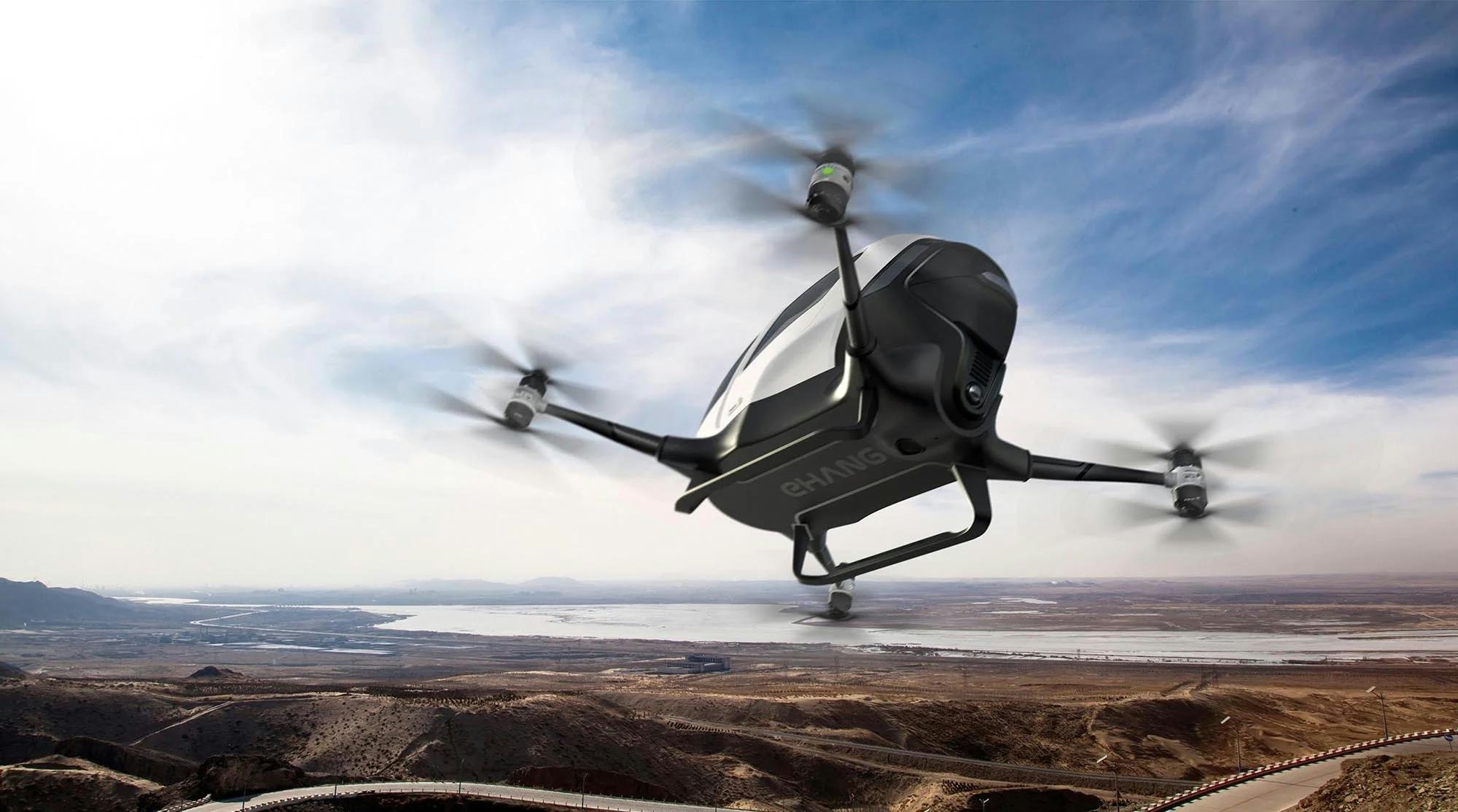
Self-Flying Air Taxis Nearing Launch in Dallas-Fort Worth
Self-Flying Air Taxis Nearing Launch in Dallas-Fort Worth
For decades, the concept of air taxis has been confined to the realm of science fiction, evoking images of futuristic cities with skies bustling with flying vehicles. This vision is now approaching reality in North Texas, where the North Texas Council of Governments is pursuing Federal Aviation Administration (FAA) approval to initiate a pilot program for unpiloted, electric-powered aircraft capable of vertical takeoff and landing.
Pilot Program and Regional Involvement
If granted approval, the pilot program will encompass several major airports in the Dallas-Fort Worth area, including Dallas Fort Worth International Airport, Arlington Municipal Airport, Perot Field Fort Worth Alliance Airport, and Fort Worth Meacham International Airport. Roger Venables, Fort Worth’s aviation director, expressed optimism about the initiative’s timeline, suggesting that regular air taxi services could be operational within the next five years. He emphasized the region’s relatively low airport congestion as a strategic advantage for adopting this next generation of urban air transportation.
Challenges and Industry Landscape
Despite the promising outlook, significant challenges remain before self-flying air taxis can become a routine part of urban mobility. Regulatory approval is a primary obstacle, as authorities must rigorously assess the safety and reliability of autonomous aircraft navigating complex urban airspace. Additionally, the development of supporting infrastructure is essential, requiring new facilities for takeoff, landing, maintenance, and seamless integration with existing transportation networks. Public acceptance will also be critical, as communities adjust to the presence of pilotless vehicles operating overhead.
The market for autonomous air taxis is rapidly evolving, with intense competition among technology and transportation companies. Industry leaders such as Uber have already formed partnerships with firms like Avride and Waymo to explore autonomous mobility solutions in other cities. Meanwhile, companies including Archer Aviation and Vertical Aerospace are expanding their operations, seeking to establish a foothold in the emerging urban air mobility sector.
Transitioning from experimental technology demonstrations to commercially viable air taxi services will demand coordinated efforts across multiple domains, including technological innovation, infrastructure investment, human factors, and regulatory governance. As Dallas-Fort Worth positions itself at the forefront of this transportation revolution, the coming years will be pivotal in determining whether self-flying air taxis become a familiar presence in the region’s skies.

Etihad Airways Suspends Airbus A380 Flights on Key Route

Aditya Birla Group Seeks Approval for Aircraft Leasing in GIFT City

Qatar Airways Highlights Innovation and Connectivity at Arabian Travel Market 2026

Hong Kong's Five-Year Plan Includes Andrew Fan's Aircraft Parts Processing Hub Proposal

ACIA Aero Leasing Delivers ATR72-600 to Air Nostrum

RTX Appoints Jill Albertelli as Head of Pratt & Whitney

TAT Technologies Joins Beyond Aero Hydrogen Aircraft Program

AURAK Study Highlights Barriers to Air Taxi Adoption in Emerging Economies

Xiamen Air Selects Altitude for 787 Maintenance at Heathrow

Etihad and Swissport Extend Global Partnership
