
Orchestrate AI insights into action

Trending
Categories
STV Forms Engineering Partnership to Advance Modern Aviation
STV Forms Engineering Partnership to Advance Modern Aviation
STV has entered into a strategic collaboration with Delta Air Lines, marking a significant advancement in aerospace technology. The partnership aims to modernize aviation by implementing advanced engineering solutions that enhance operational efficiency across Delta’s extensive network. This initiative arrives at a critical juncture as the UK aviation sector grapples with increasing demands for sustainability and operational excellence.
Engineering Innovation at the Core
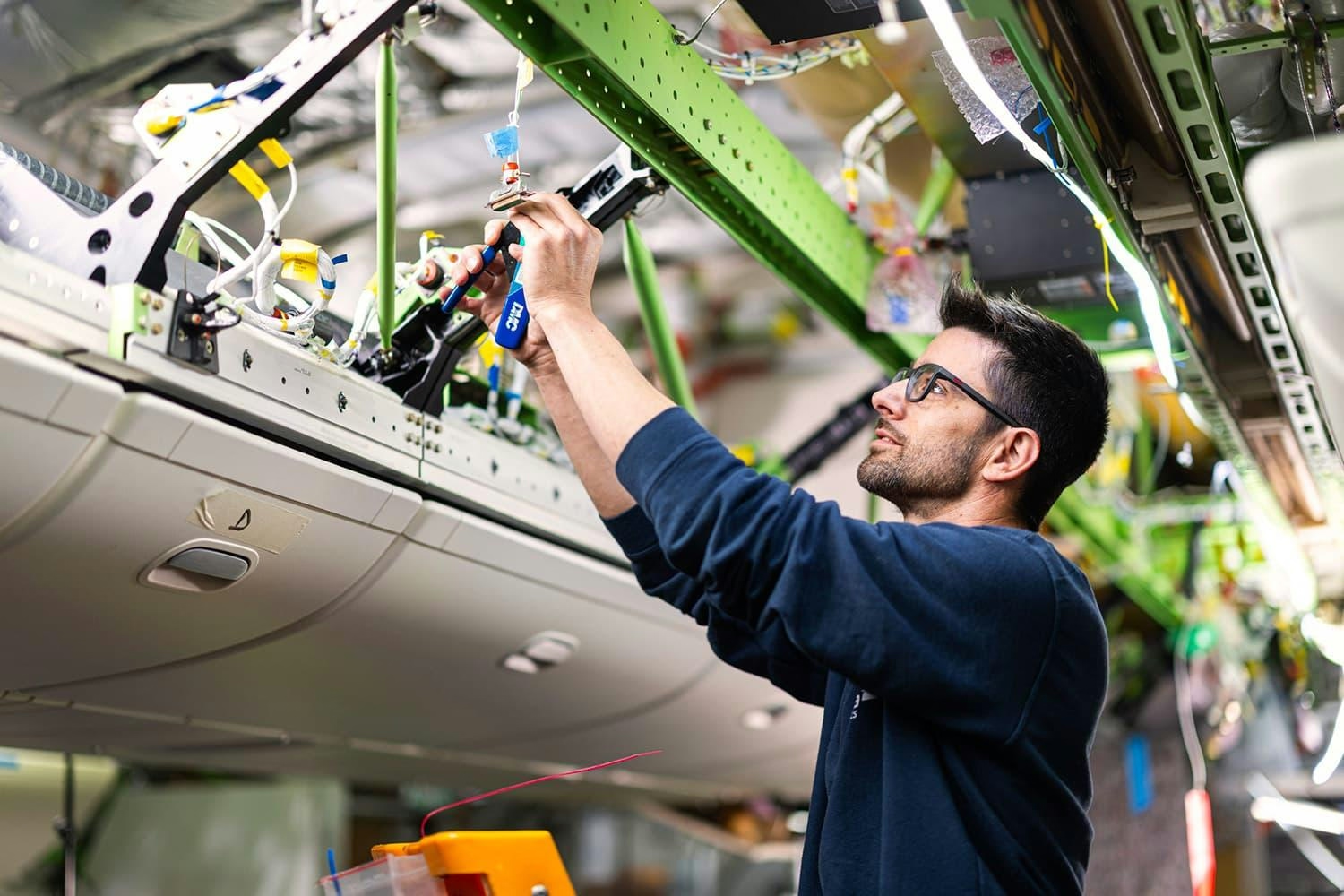
Central to this collaboration is STV’s emphasis on automated design practices. By employing sophisticated software to automate key elements of aircraft design and engineering, STV seeks to improve precision, shorten project timelines, and reduce costs. This methodology not only expedites project delivery but also aligns with a broader industry trend toward smart-design strategies, enabling engineers to anticipate potential errors and optimize solutions prior to implementation.
The partnership is further shaped by emerging trends in aerospace engineering, particularly the integration of artificial intelligence. STV’s adoption of AI-driven tools positions the company at the forefront of innovation, equipping it to tackle complex industry challenges while setting new standards for efficiency and sustainability.
Navigating Challenges and Industry Impact
Despite the promising benefits, the partnership faces challenges inherent in integrating advanced technologies within existing aviation systems. Ensuring regulatory compliance and fostering seamless collaboration between STV and Delta are critical to meeting stringent safety and operational standards amid rapid technological evolution.
The market has responded positively to the STV-Delta alliance, with heightened investor interest reflecting confidence in the potential for innovation and growth. This development is likely to prompt competitors to accelerate their own partnerships or increase investment in research and development to maintain competitiveness.
Beyond Delta Air Lines, the partnership’s implications are far-reaching. By pioneering scalable, automated engineering solutions, STV is setting a precedent that may influence regulatory frameworks and encourage wider adoption of automation throughout the aviation sector. These advancements also hold the potential to stimulate job creation in high-technology fields and support the UK’s national objectives for reducing emissions and enhancing industry resilience.
Setting New Standards for Aviation
The collaboration between STV and Delta Air Lines represents a transformative shift toward modern, automated engineering within the aviation industry. By prioritizing innovation and embracing automation, STV not only improves operational efficiency but also establishes new benchmarks for the sector. As the industry confronts future challenges, such partnerships will be vital in driving technological progress and sustaining the evolution of aviation.
In an era characterized by rapid change and heightened sustainability demands, STV’s forward-looking approach provides a model for how modern aviation can adapt, thrive, and lead in engineering excellence.

Etihad Airways Suspends Airbus A380 Flights on Key Route

Aditya Birla Group Seeks Approval for Aircraft Leasing in GIFT City

Qatar Airways Highlights Innovation and Connectivity at Arabian Travel Market 2026

Hong Kong's Five-Year Plan Includes Andrew Fan's Aircraft Parts Processing Hub Proposal

ACIA Aero Leasing Delivers ATR72-600 to Air Nostrum

RTX Appoints Jill Albertelli as Head of Pratt & Whitney

TAT Technologies Joins Beyond Aero Hydrogen Aircraft Program

AURAK Study Highlights Barriers to Air Taxi Adoption in Emerging Economies

Xiamen Air Selects Altitude for 787 Maintenance at Heathrow

Etihad and Swissport Extend Global Partnership
