
Orchestrate AI insights into action

Trending
Categories
SWISS Grounds Airbus A220-100 Fleet Due to Engine Shortages and Operational Changes
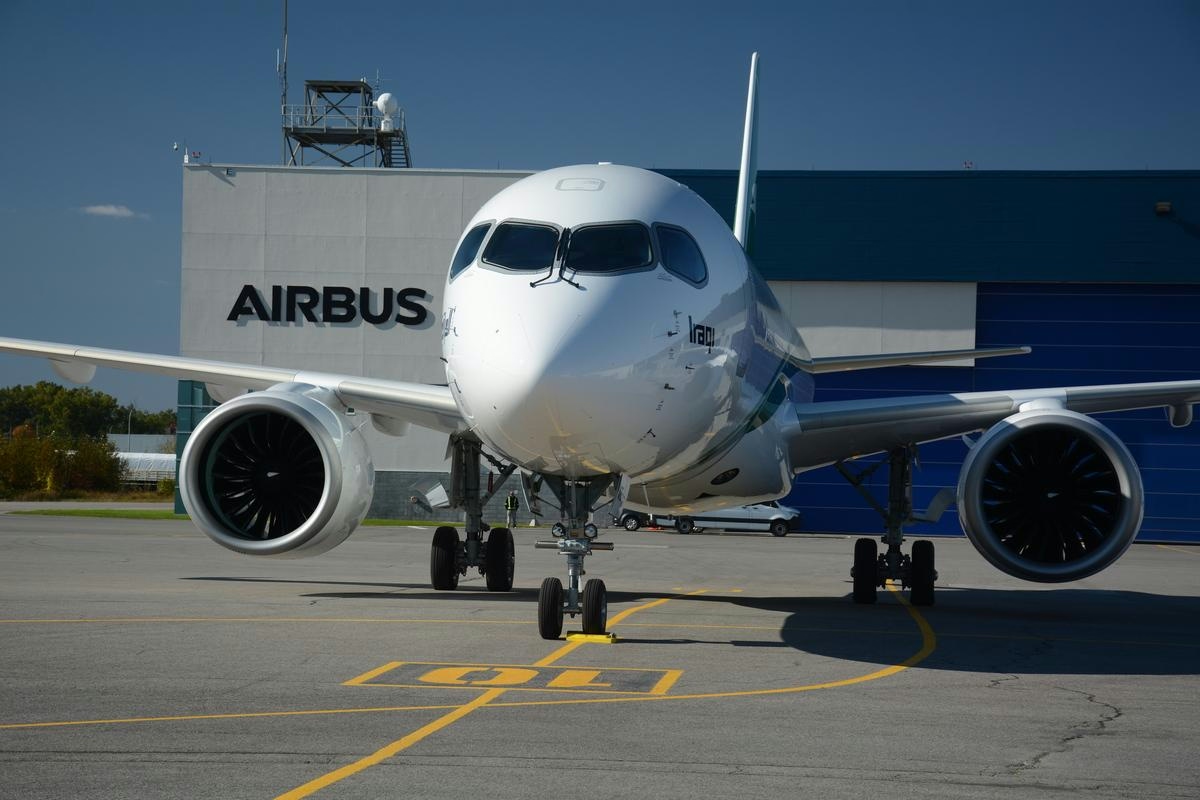
SWISS Grounds Airbus A220-100 Fleet Amid Engine Shortages and Operational Restructuring
Swiss International Air Lines (SWISS) has announced the grounding of its entire Airbus A220-100 fleet, consisting of nine aircraft, for a period of up to 18 months. This decision stems from ongoing engine maintenance difficulties compounded by a global shortage of spare parts. Confirmed by Chief Financial Officer Dennis Weber during the airline’s recent quarterly results call, the move forms part of a broader strategy to streamline operations, concentrate resources on the Zurich hub, and mitigate escalating operational challenges.
The engines removed from the grounded A220-100s will be redeployed to support SWISS’s larger Airbus A220-300 fleet, which currently numbers 21 aircraft. Weber explained that this approach will enhance the availability of the A220-300s while simplifying the airline’s operational complexity by focusing on a single A220 variant. The A220-300 is noted for its superior cost efficiency and better alignment with SWISS’s current network requirements.
This development arises amid rising maintenance expenses and operational disruptions linked to persistent supply chain constraints affecting replacement parts. Approximately 15% of A220 aircraft worldwide are impacted by similar issues, placing pressure on operators and attracting scrutiny from investors and passengers alike. The situation also presents competitive challenges and opportunities within the regional aircraft market.
Shift in London City Operations to Helvetic Airways
The Airbus A220-100s had traditionally been deployed on routes to London City Airport, which demands aircraft certified for its steep approach procedures. However, with SWISS’s partner airline Helvetic Airways now certified to operate at London City, the operational necessity for the A220-100 has diminished significantly. Weber noted that with Helvetic assuming responsibility for London City flights, maintaining the A220-100 fleet in service is no longer justified.
The phased withdrawal of the A220-100 aircraft is scheduled to commence in November 2025 and continue through the summer of 2026. SWISS expects no net reduction in overall operational capacity, as the engines salvaged from the grounded A220-100s will enable additional A220-300 aircraft to return to service.
Network Adjustments and Workforce Challenges
SWISS is also confronting broader operational pressures, including the grounding of more than ten aircraft due to engine and parts shortages, with Geneva Airport particularly affected. The airline plans to reduce its short-haul destinations from Geneva by approximately 25% in the summer 2026 schedule, citing weak profitability and intense competition from low-cost carrier EasyJet. Weber described Geneva as a loss-making operation at present, emphasizing the airline’s strategic focus on Zurich, its most profitable hub. Despite these cuts, SWISS has no intention of withdrawing entirely from Geneva, aiming instead to achieve break-even performance by 2026. The Lufthansa Group, SWISS’s parent company, is exploring whether other group carriers, such as Eurowings, might assume some of the affected Geneva routes.
In addition to fleet and network adjustments, SWISS faces significant workforce challenges. A shortage of pilots, exacerbated by the high costs and time demands of training for new aircraft types, is expected to reduce active flight capacity, with approximately one-third of pilots undergoing training next year. The airline is also managing an excess of around 400 cabin crew members due to a combination of long-term absences and part-time contracts. Consequently, recruitment and training of flight attendants have been suspended until at least the second half of 2026.
Despite these operational and staffing difficulties, SWISS remains committed to Zurich as its core hub and continues to pursue its long-term fleet modernization plans. These include the introduction of the Airbus A350 and the rollout of the new “SWISS Senses” cabin concept, underscoring the airline’s focus on enhancing passenger experience and operational efficiency.

Etihad Airways Suspends Airbus A380 Flights on Key Route

Aditya Birla Group Seeks Approval for Aircraft Leasing in GIFT City

Qatar Airways Highlights Innovation and Connectivity at Arabian Travel Market 2026

Hong Kong's Five-Year Plan Includes Andrew Fan's Aircraft Parts Processing Hub Proposal

ACIA Aero Leasing Delivers ATR72-600 to Air Nostrum

RTX Appoints Jill Albertelli as Head of Pratt & Whitney

TAT Technologies Joins Beyond Aero Hydrogen Aircraft Program

AURAK Study Highlights Barriers to Air Taxi Adoption in Emerging Economies

Xiamen Air Selects Altitude for 787 Maintenance at Heathrow

Etihad and Swissport Extend Global Partnership
