imabge

AeroGenie: il tuo copilota intelligente.

Chiedi qualsiasi cosa. Analizza tutto. Agisci all'istante.

Tendenze

Categories

Tekever Advances UAS Innovation with AR3 Evo Testing
January 2, 2026By ePlane AI
Tekever Advances UAS Innovation with AR3 Evo Testing
0
0
Tekever
AR3 Evo
Uncrewed Aerial Systems

Tekever Advances UAS Innovation with AR3 Evo Testing

Demonstrating Resilience and Autonomy in Challenging Conditions

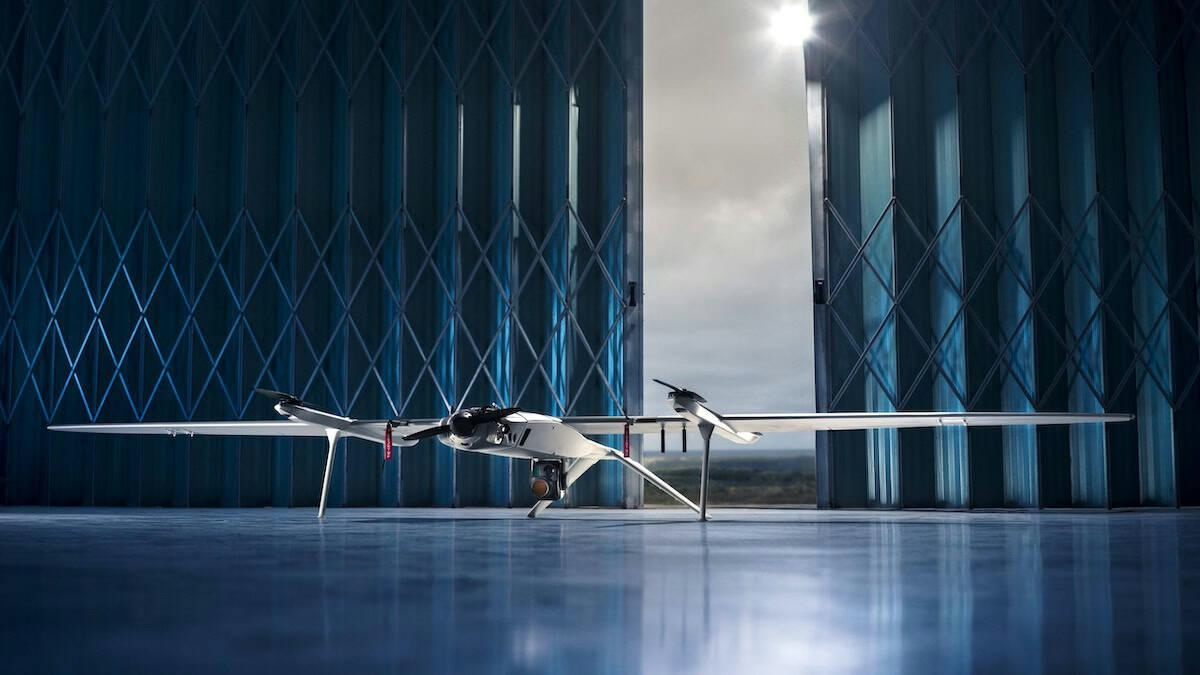
Tekever, a prominent developer of uncrewed aerial systems (UAS), recently showcased the capabilities of its latest model, the AR3 Evo, during a test flight at West Wales Airport. Drawing on over 50,000 hours of operational experience accumulated in Ukraine, the company subjected the 25-kilogram drone to demanding weather conditions, including wind gusts approaching 30 knots (55 km/h) and light rain. Despite these challenges, the AR3 Evo maintained stability at an altitude of 150 feet before transitioning smoothly into forward flight. The drone’s advanced autonomous systems were further demonstrated when it executed a precise vertical landing, highlighting its potential for rapid deployment and recovery in operational settings.

Designed to operate in far more severe environments, the AR3 Evo can remain airborne for up to 16 hours during real-world missions. It delivers tactical intelligence through a modular sensor suite, optimized for persistent intelligence, surveillance, and reconnaissance (ISR) tasks. Unveiled in September 2025, the Evo incorporates hundreds of design improvements based on frontline experience in Ukraine, where its predecessor, the AR3, was first deployed by Kyiv’s military in 2022. The original AR3 played a critical role in transmitting intelligence and autonomously tracking vehicles and vessels in a high-stakes conflict environment.

Stewart Pearce, Tekever’s head of training, regulations, and assurance, as well as operational director at West Wales Airport, emphasized the company’s commitment to agility and integration. “We did very well in Ukraine [with the AR3], and we built on the back of that,” Pearce stated. “We are fully vertically integrated and deliberately designed for agility at scale. That is part of the ethos of Tekever. We want to exploit the agility to develop the best system we can.”

Innovation Amidst Intensifying Competition and Market Uncertainty

Founded in Portugal in the early 2000s as a software specialist, Tekever has evolved into a significant player in the unmanned systems sector. The AR3 Evo is engineered to operate effectively in complex electronic warfare environments, reflecting lessons learned from Ukraine’s attritional conflict. The system is designed for rapid deployment, capable of going from “box to air” in just five minutes, including assembly from its transport container. Launch options include rail-assisted takeoff with parachute and airbag recovery, as well as a vertical take-off and landing (VTOL) kit. Tekever is also exploring innovative concepts such as powering the UAS directly from its transit box and enabling vertical launches from the container itself.

These technological advancements come at a time of heightened competition from other UAS innovators, including Altus-LSA and MBDA. The global defense market is also being reshaped by rapid progress in autonomous combat aircraft and safety-critical artificial intelligence, exemplified by U.S. military programs such as the Army’s Future Long-Range Assault Aircraft and the Air Force’s Collaborative Combat Aircraft initiatives. These developments underscore the imperative for continuous innovation to maintain a competitive edge.

Compounding these challenges are volatile market dynamics. Recent signals from the Federal Reserve have increased sensitivity to policy shifts and economic data, contributing to fluctuations in the U.S. stock market. This volatility may influence defense procurement and investment decisions through 2026, adding an additional layer of complexity to Tekever’s strategic planning.

As Tekever advances the AR3 Evo through its next phases of testing and deployment, the company must navigate not only the technical demands of UAS development but also a rapidly evolving competitive and economic landscape. The outcomes of these efforts will be pivotal in determining the future trajectory of both the Evo platform and Tekever itself.

More news
American Airlines’ Plans for Artificial Intelligence

American Airlines’ Plans for Artificial Intelligence

American Airlines Advances Artificial Intelligence Integration Amid Industry Evolution Last year, American Airlines CEO Robert Isom expressed reservations about employing artificial intelligence for fare pricing. Nevertheless, the airline is actively incorporating AI across various facets of its operations. In a recent interview with Skift, Sam Liyanage, American Airlines’ vice president of digital customer experience, outlined the company’s strategic deployment of AI, particularly in enhancing customer engagement and optimizing operational logistics. Enhancing Customer Experience Through AI Liyanage emphasized the airline’s use of generative AI to assist travelers in selecting destinations. He noted a shift in travel search behavior from rigid filters to more natural, conversational queries. The airline’s AI-powered search tool enables customers to input highly specific requests, such as “somewhere warm under $800.” Early data indicates that users are increasingly posing complex, personalized questions that integrate factors like budget, loyalty status, timing, and desired experiences into a single prompt. The AI then synthesizes these elements into clear, actionable options, fostering deeper engagement with search results. Although Liyanage did not reveal the proportion of customers utilizing the AI-based search tool compared to traditional methods, he stressed that the technology is facilitating a more nuanced and satisfying search experience. Operational Efficiency and Industry Context Beyond customer interaction, AI is playing an expanding role in American Airlines’ flight scheduling and logistics. Liyanage explained that the system now analyzes live operational data—including weather conditions, taxi times, and gate availability—to enable rapid, informed decisions aimed at safeguarding the customer journey. This real-time analysis is intended to enhance operational efficiency and reduce disruptions, potentially improving overall customer satisfaction. American Airlines’ AI initiatives coincide with a broader industry focus on artificial intelligence, driven by high-profile IPOs from companies such as SpaceX, Anthropic, and OpenAI. These developments have spurred increased investment in AI technologies across multiple sectors, including aviation. However, the airline faces challenges as it scales its AI efforts. Market volatility is anticipated to rise in 2026 due to divisions within the Federal Reserve and fluctuating economic indicators, factors that could affect investor confidence. Additionally, market sensitivity to unexpected policy changes remains a concern amid current high valuations. The expected decline in interest rates, coupled with a surge in AI-related spending, may either support or constrain American Airlines’ stock performance, contingent on the company’s ability to manage operational reliability and costs effectively. Competitors are closely monitoring American Airlines’ AI strategy, recognizing that its success could influence wider industry adoption. The impact of these AI-driven transformations on customer satisfaction will become clearer with the release of J.D. Power’s annual North America Airline Satisfaction Survey this May, which is poised to provide valuable insights into traveler responses to American Airlines’ technological advancements.
FAA Issues Airworthiness Directive for GE90 Engines After Powder Metal Contamination Found

FAA Issues Airworthiness Directive for GE90 Engines After Powder Metal Contamination Found

FAA Issues Airworthiness Directive for GE90 Engines Following Discovery of Powder Metal Contamination **Washington, D.C.** – The Federal Aviation Administration (FAA) has issued a critical airworthiness directive (AD) targeting General Electric’s GE90 engines, which power the Boeing 777 fleet. Published on January 2, 2026, the directive addresses a significant manufacturing defect involving iron contamination in powder metal components, a flaw that could precipitate uncontained engine failures. This directive follows an extensive investigation by GE Aerospace, which revealed that certain high-pressure turbine (HPT) disks were manufactured using powder metal material containing iron inclusions. These microscopic impurities compromise the fatigue life of the engine components, heightening the risk of premature fractures that could jeopardize engine integrity. Technical Implications and Safety Concerns The contamination originates from deficiencies in the powder metal manufacturing process. Within the extreme conditions of a jet engine—characterized by high stress and elevated temperatures—these iron inclusions act as focal points for stress concentration, accelerating the initiation and propagation of cracks. Should a turbine disk fracture during flight, the resulting uncontained failure could eject debris beyond the engine casing, posing a severe threat to critical aircraft structures. Although no premature fractures have been reported in GE90 engines to date, the FAA has underscored the necessity of proactive measures. Risk assessments conducted by the agency mandate the removal and replacement of affected disks to ensure continued airworthiness and flight safety. Compliance Requirements and Industry Response Designated as AD 2025-25-07, the directive becomes effective on February 6, 2026, and applies to GE90-90B, GE90-94B, GE90-110B1, and GE90-115B engine models. Operators are required to replace the affected HPT Stage 1 and Stage 2 disks based on specific usage thresholds. The HPT Stage 1 disk must be replaced before reaching 4,650 cycles since new (CSN), with an estimated replacement cost of $932,816 per engine. The HPT Stage 2 disk requires replacement before 11,300 CSN, at an estimated cost of $187,086 per engine. Disks identified with high-risk serial numbers must be removed from service prior to further flight operations. While the FAA estimates that only a limited number of U.S.-registered engines are affected, the directive carries global implications. Major operators such as American Airlines, United Airlines, and FedEx Express have already initiated collaboration with GE Aerospace to phase out the non-compliant components. The directive garnered strong support from Boeing, FedEx, and the Air Line Pilots Association (ALPA) during the public comment period. GE Aerospace has supplemented the directive with Service Bulletins to assist airlines in conducting inspections and managing the replacement process. Market and Regulatory Impact The FAA’s directive has elicited notable responses within the industry and financial markets. Following the announcement, GE Aerospace’s stock experienced a modest after-hours movement on December 12, 2025, as investors balanced the directive’s implications against Citi’s new Buy rating and a $386 price target. This action coincides with heightened regulatory scrutiny, including expanded FAA inspections of CFM LEAP engines in South Asia due to dust-related durability concerns, which may increase maintenance demands amid constrained global aircraft deliveries. Analysts are closely monitoring the 2026 outlook, anticipating elevated maintenance requirements and associated costs for operators. Additionally, the directive aligns with recent U.S. Department of Transportation guidance that exempts airlines from passenger compensation obligations for cancellations or delays resulting from aircraft recalls mandated by airworthiness directives. This policy shift could influence future passenger claims related to operational disruptions. The FAA’s directive on the GE90 engine highlights the aviation industry’s ongoing commitment to manufacturing quality and operational safety, while also reflecting the evolving regulatory and financial environment confronting airlines and manufacturers alike.
Boom Supersonic Uses Jet Engines to Power Off-Grid AI Data Center

Boom Supersonic Uses Jet Engines to Power Off-Grid AI Data Center

Boom Supersonic Repurposes Jet Engines to Power Off-Grid AI Data Centers In response to the surging energy demands of artificial intelligence, Boom Supersonic, a Colorado-based aerospace startup, has embarked on an innovative venture to adapt its jet engine technology for power generation. Originally dedicated to reviving commercial supersonic flight, the company is now addressing a critical challenge faced by AI data centers: the electric grid’s inability to meet the rapidly increasing electricity consumption required to sustain AI workloads. From Supersonic Flight to Ground-Based Power Generation Central to Boom’s new initiative is the Symphony engine, initially developed for the Overture supersonic airliner designed to reduce transatlantic flight times. Recognizing the prolonged delays in securing new grid connections, AI data centers are increasingly turning to off-grid power solutions. Boom’s response is the Superpower turbine, a natural gas-fired, ground-based unit derived from its aviation technology. Each Superpower turbine can generate 42 megawatts—sufficient to power a small city—while maintaining operational efficiency in extreme heat and without the need for water cooling. This approach offers a practical alternative amid the limitations of traditional power sources and the intermittency challenges associated with renewable energy, particularly for the continuous, high-demand nature of AI operations. Boom’s strategy has moved swiftly from concept to commercial application. The company recently secured a significant contract with Crusoe Energy Systems, a firm specializing in modular data centers for AI and cryptocurrency mining. The agreement encompasses 29 Superpower units, delivering a combined capacity of 1.21 gigawatts, supported by a recent $300 million funding round. This development positions Boom as a dual player in both advancing supersonic aviation and providing tailored energy solutions for the technology sector’s most demanding users. Engineering Innovation and Market Challenges Boom’s power generation initiative is deeply rooted in its aerospace expertise. After major engine manufacturers such as GE and Rolls-Royce declined collaboration, Boom independently developed the Symphony engine, employing advanced materials and additive manufacturing techniques to achieve high thrust, reduced noise, and lower emissions. These attributes, optimized for flight, have proven advantageous when adapted for stationary power generation. CEO Blake Scholl has explained that the concept originated from observing AI companies like xAI and OpenAI deploying off-grid power plants using converted jet engines. Boom’s adaptation process involves removing flight-specific components and optimizing the engines for continuous, ground-based operation. Unlike conventional industrial turbines, Superpower units are modular and trailer-mounted, allowing rapid deployment at remote data center locations—a critical benefit given the lengthy grid connection backlogs and regulatory obstacles. Despite its promise, Boom faces significant challenges. The company must contend with established power turbine manufacturers and navigate complex regulatory environments. Extensive testing is necessary to validate the reliability and efficiency of its repurposed engines. Some traditional data center operators remain skeptical about whether jet engine-based power solutions can compete with the cost-effectiveness of conventional energy sources. Additionally, there is concern that Boom’s focus on power generation could divert resources from the development of its Overture airliner, potentially delaying its commercial launch. Meanwhile, competitors in both aerospace and energy sectors may pursue similar technologies to capitalize on this rapidly expanding market. As AI’s electricity consumption continues to escalate—training large language models can require as much power as entire households annually—Boom Supersonic’s cross-industry initiative underscores the urgency and complexity of powering the next generation of digital infrastructure.
Flying taxis could take off this year in Florida

Flying taxis could take off this year in Florida

Flying Taxis Set to Launch in Florida by Year-End ORLANDO, Fla. — Florida is on the cusp of a transformative shift in transportation as the Florida Department of Transportation (FDOT) advances plans to introduce commercial flying taxi services by the end of 2026. This initiative aims to alleviate chronic congestion on some of the state’s busiest highways, including the heavily trafficked I-4 corridor, by moving commuters from ground to air. A New Era of Urban Mobility The initial phase of Florida’s advanced air mobility network will link airports stretching from Daytona Beach through Orlando to Sarasota, with ambitions for statewide expansion in the future. These flying taxis, known as vertical takeoff and landing aircraft (VTOLs), promise a service akin to ride-hailing apps but with the advantage of bypassing ground traffic entirely. Dr. Bob Thomas, a professor of Aeronautical Science at Embry-Riddle Aeronautical University, highlighted the potential of the technology while acknowledging unresolved challenges. He pointed to ongoing questions regarding Federal Aviation Administration (FAA) approval of vehicle types, pilot certification standards, flight durations, and the choice of propulsion systems—whether electric, combustion, or hybrid. The concept has captured the imagination of many, evoking visions of a futuristic commute reminiscent of popular culture’s Jetsons. Frequent I-4 commuter Margaret Ramirez expressed enthusiasm about the prospect, while others remain skeptical. Jeannette Eberle of Winter Haven voiced concerns about affordability, reflecting a broader hesitation among potential users about the cost-effectiveness of such services in their early stages. Regulatory and Infrastructure Challenges Despite the excitement, the project faces significant regulatory and logistical hurdles. Federal authorities must approve new aircraft models and establish pilot certification protocols, while safety remains a paramount concern. Additionally, the development of essential infrastructure—including dedicated vertiports and sophisticated air traffic management systems—is critical to the network’s success. FDOT is currently finalizing its aerial highway network headquarters in Polk County and plans to commence technology testing ahead of passenger operations. Globally, the flying taxi market is becoming increasingly competitive, with companies such as EHang, Archer, and Joby vying to deploy their air mobility solutions. China has made notable advances in this sector, prompting the U.S. government to introduce a regulatory framework aimed at accelerating the integration of flying taxis into American airspace and preserving the country’s competitive edge. As Florida prepares to launch passenger flights within the year, FDOT remains optimistic about overcoming the remaining obstacles. With infrastructure development underway and regulatory processes progressing, the state is positioning itself at the forefront of this emerging mode of transportation.
ASKY and TAAG Angola Airlines Establish In-House MRO Facilities to Support Fleet Expansion

ASKY and TAAG Angola Airlines Establish In-House MRO Facilities to Support Fleet Expansion

ASKY and TAAG Angola Airlines Establish In-House MRO Facilities to Support Fleet Expansion ASKY Airlines and TAAG Angola Airlines are undertaking substantial investments to develop in-house Maintenance, Repair, and Overhaul (MRO) facilities aimed at supporting their expanding fleets and fostering growth within African aviation. These initiatives are intended to enhance operational efficiency, reduce dependence on external maintenance providers, and position both carriers to meet the increasing demand for air travel across the continent. ASKY Airlines’ $100 Million Investment in Lomé MRO Center Headquartered in Lomé, Togo, ASKY Airlines is committing $100 million to establish a cutting-edge MRO facility through a joint venture with Ethiopian Airlines, which holds a minority stake. This new center will primarily serve the West and Central African regions, supporting ASKY’s growing fleet, including anticipated long-haul aircraft such as the Boeing 787. The initial phase of the project will include two hangars dedicated to narrowbody aircraft and component repairs, with plans for future expansion to accommodate widebody aircraft. This facility is expected to transform Lomé into a regional hub for aviation maintenance, providing services not only to ASKY but also to other carriers operating in West and Central Africa. As tourism and business travel increase in the region, the MRO center will be instrumental in ensuring airlines maintain efficient and reliable operations. TAAG Angola Airlines’ Partnership with AVIC for Luanda MRO Facility TAAG Angola Airlines is developing its own MRO facility in Luanda in collaboration with the Aviation Industry Corporation of China (AVIC). The first of three prefabricated hangars is scheduled to become operational by June 2026. This facility will support TAAG’s expanding fleet and address the growing demand for air travel in Southern Africa. By internalizing maintenance operations, TAAG aims to improve turnaround times, enhance operational self-sufficiency, and reduce reliance on external providers. This strategic development aligns with the airline’s preparations for increased international and long-haul operations, while simultaneously strengthening Angola’s aviation infrastructure and contributing to broader regional growth. Challenges and Market Dynamics Despite the promising outlook, both airlines face significant challenges. The substantial initial capital investment required to build and equip MRO facilities, the necessity of recruiting and training skilled personnel, and potential increases in operational costs—compounded by a constrained powerplant market and limited availability of used serviceable materials—pose ongoing risks. Furthermore, some industry stakeholders have expressed skepticism regarding the financial viability of such large-scale projects. Competitors may respond by accelerating their own MRO investments to enhance operational resilience. Nevertheless, ASKY and TAAG remain steadfast in their commitment to these developments, viewing them as critical to securing long-term growth and maintaining competitiveness. Implications for Africa’s Aviation Sector As demand for air travel continues to rise in West and Southern Africa, the establishment of in-house MRO centers by ASKY and TAAG is poised to play a vital role in maintaining fleet health, improving operational efficiency, and reducing costs. These strategic investments not only support the ambitions of the individual airlines but also contribute significantly to the broader advancement of Africa’s aviation industry.
Airbus to Release Audited 2025 Orders and Delivery Data on January 12

Airbus to Release Audited 2025 Orders and Delivery Data on January 12

Airbus to Publish Audited 2025 Orders and Delivery Figures on January 12 Airbus has confirmed it will release its audited full-year commercial aircraft orders and delivery data for 2025 on January 12. This announcement reinforces confidence in the company’s recently updated target of delivering approximately 790 aircraft during the year. The European aerospace manufacturer communicated the release date via email, following industry reports indicating that Airbus had already delivered at least 782 jets in 2025. Delivery Targets and Market Expectations The scheduled publication underscores Airbus’s commitment to its previously stated guidance, with no further revisions announced to date. Delivery figures are closely monitored by investors and analysts, given their substantial influence on market sentiment and the company’s financial outlook. Airbus continues to face challenges in maintaining production efficiency and meeting delivery goals, particularly in light of recent production issues. Market analysts have projected deliveries of around 785 aircraft for 2025, making the forthcoming audited data critical in determining whether Airbus meets or surpasses these expectations. Competitive Context and Industry Implications Industry observers are also closely watching how Airbus’s performance compares with that of its primary competitor, Boeing, which led in new aircraft orders as of November 2025. This competitive dynamic is expected to shape strategic decisions for both companies, especially as Airbus remains heavily reliant on its narrowbody aircraft production while striving to regain momentum in the widebody segment. The upcoming data release will offer a comprehensive overview of Airbus’s commercial performance throughout 2025, providing valuable insights into order trends, delivery execution, and the company’s standing within the global aviation market. Market reactions will likely depend on whether the audited figures meet or exceed analyst forecasts and how effectively Airbus addresses ongoing production and supply chain challenges.
Biman Bangladesh Selects Boeing for New Aircraft Order

Biman Bangladesh Selects Boeing for New Aircraft Order

Biman Bangladesh Selects Boeing for New Aircraft Order Biman Bangladesh Airlines has taken a decisive step in renewing its fleet by choosing Boeing over its long-standing competitor Airbus. The airline’s board has granted policy-level approval to initiate negotiations with the American manufacturer for a potential order that reportedly includes both widebody 787 Dreamliners and narrowbody 737-8 MAX aircraft. This development effectively concludes years of speculation about whether Airbus could challenge Boeing’s dominance at Bangladesh’s national carrier. Fleet Composition and Operational Considerations The proposed deal is believed to encompass 14 aircraft: four 737 MAX jets intended to replace the current 737-800s, and ten 787s, with up to eight being the larger 787-10 variant. The 787-10 models would provide a substantial increase in passenger capacity, accommodating 30 to 40 more travelers than the airline’s existing 787-9s. A key factor influencing Biman’s preference for Boeing is fleet commonality. The airline already operates a predominantly Boeing fleet, utilizing 787s for long-haul routes and 737s for regional services. Maintaining this consistency simplifies pilot training, maintenance, spare parts management, and engineering support, thereby reducing operational complexity and long-term costs. Introducing Airbus aircraft would necessitate parallel training programs, new simulators, and expanded maintenance infrastructure—challenges that could disrupt Biman’s focus on operational stability. Geopolitical and Trade Implications Beyond operational logic, geopolitical considerations have played a significant role in the decision. Bangladesh is actively seeking to ease trade tensions with the United States, particularly concerning potential tariffs on its exports. Large aircraft purchases often serve as instruments of diplomacy, and a Boeing order aligns with broader US-Bangladesh trade negotiations. This strategic dimension elevated the decision to the government level, framing it as both a commercial transaction and a diplomatic gesture. Market Challenges and Competitive Dynamics Despite the policy-level approval, the path to finalizing the agreement may encounter obstacles. Delays remain possible, and Airbus could still present a competitive offer. Boeing itself faces challenges related to production quality and delivery schedules, especially concerning the 737 MAX program and its integration with Spirit AeroSystems. These issues have contributed to volatility in Boeing’s stock price, particularly amid shifting timelines for the MAX 7 variant. Meanwhile, Airbus continues to strengthen its foothold in the region, recently securing contracts with Chinese carriers such as Air China, Spring Airlines, and Juneyao Air. The broader market remains sensitive to policy shifts and economic indicators, factors that could influence investor confidence in both manufacturers. Airbus’s Continued Pursuit Airbus has remained a persistent contender in Bangladesh’s aviation market. The European manufacturer has invested years courting the country, with previous governments expressing interest in Airbus widebodies, notably the A350. High-profile state visits frequently included discussions of potential Airbus sales, and proposals for approximately ten Airbus aircraft were considered, though none culminated in a contract. Biman’s current decision to favor Boeing reflects a combination of operational pragmatism and diplomatic strategy. However, given the evolving market conditions and ongoing negotiations, the final outcome remains subject to change.
Amazon Cancels Italian Drone Delivery Plans Days Before Launch, Setback for U-space

Amazon Cancels Italian Drone Delivery Plans Days Before Launch, Setback for U-space

Amazon Cancels Italian Drone Delivery Plans Days Before Launch, Setback for U-space Abrupt Withdrawal from Italy Just days before the scheduled inauguration of one of the European Union’s first operational U-space areas in San Salvo, Italy, Amazon has unexpectedly terminated its drone delivery plans in the country. The announcement, made in a statement to Unmanned Airspace, represents a significant setback for both the Italian U-space initiative and the broader ambitions of the EU to integrate drones into commercial airspace. Amazon explained that following a strategic review, it decided to halt its commercial drone delivery program in Italy. Despite positive engagement and progress with Italian aerospace regulators, the company cited the broader business regulatory framework in Italy as insufficient to support its long-term objectives for the project. Amazon emphasized that its drone delivery operations in the United States and the United Kingdom remain on course, with ongoing successful test flights and commercial deliveries. The company also reaffirmed its commitment to Italy, highlighting investments exceeding EUR 25 billion and a workforce of 19,000 employees across 60 sites. Regulatory and Industry Implications The decision took Italy’s National Civil Aviation Authority (ENAC), responsible for implementing U-space in San Salvo, by surprise. ENAC described Amazon’s withdrawal as “unexpected” and attributed it to company policy and recent financial developments within the Amazon Group, according to a statement reported by Reuters. Amazon’s exit raises broader concerns about the future of the EU’s U-space program, which has already encountered delays and uncertainties. The San Salvo U-space area, developed since October 2024 through collaboration between ENAC, D-Flight (the U-space service provider), and ENAV (the air navigation service provider), was intended to serve as a flagship project. Amazon Prime Air had commenced its first drone delivery trials in San Salvo in December 2024, working closely with partners on both business and technical aspects. Industry experts suggest multiple factors may have influenced Amazon’s decision. One U-space specialist familiar with the project noted that the scale and structure of Amazon’s delivery network may not align well with the European market in the same way it does elsewhere. Furthermore, the implementation of U-space in Italy has faced criticism for adopting a monopolistic approach, which some argue conflicts with EU Regulation 664’s emphasis on open systems and competition among drone operators. Amazon’s withdrawal from Italy is not an isolated case. In November 2025, the company significantly reduced its planned drone delivery flights in Darlington, UK, by more than 50 percent after receiving only temporary planning permission, necessitating a scale-back of initial operations. Market Reactions and Future Outlook The cancellation has elicited mixed reactions within the market. Some investors interpret it as a strategic retreat in response to challenging regulatory conditions, while others regard it as a temporary obstacle. Although competitor responses remain speculative, Amazon’s departure could open opportunities for other companies in the drone delivery sector. The development has also intensified discussions regarding the regulatory frameworks necessary to support innovative projects such as drone delivery, underscoring the challenges confronting the EU’s vision for U-space. Despite this setback, Amazon reiterated its commitment to serving Italian customers and maintaining a high-quality shopping experience. Meanwhile, the future of U-space in Italy and across Europe remains uncertain.
Lufthansa Celebrates 100 Years of Aviation Innovation

Lufthansa Celebrates 100 Years of Aviation Innovation

Lufthansa Celebrates a Century of Aviation Excellence Lufthansa, a prominent global airline, marks its 100th anniversary, celebrating a century defined by innovation and leadership in the aviation industry. Established in 1926 as Deutsche Luft Hansa AG through the consolidation of several regional carriers, the airline quickly emerged as a pioneer in international air travel. Over the decades, Lufthansa has played a significant role in shaping the trajectory of commercial aviation both within Germany and on the global stage. A Legacy of Innovation and Resilience From its inception, Lufthansa set new standards by expanding international routes and adopting cutting-edge technologies. The airline faced considerable challenges following World War II, including the destruction of much of its fleet. Nevertheless, Lufthansa’s resurgence was marked by a determined focus on modernization, exemplified by the introduction of the Airbus A300. This aircraft brought enhanced efficiency and passenger comfort, reinforcing the airline’s commitment to innovation. Throughout its history, Lufthansa has maintained this forward-looking approach, continuously evolving to meet the demands of a dynamic industry. Advancing Technology and Sustainability Initiatives Looking to the future, Lufthansa remains at the forefront of technological progress and environmental responsibility. The airline has invested in advanced aircraft such as the Airbus A350 and is actively pursuing ambitious sustainability goals, including achieving carbon-neutral operations by 2050. Efforts to reduce environmental impact encompass the development of biofuels and comprehensive fleet upgrades aimed at improving fuel efficiency. A significant component of this strategy involves the planned retrofit of 134 Airbus A320 aircraft to optimize flight paths, with work scheduled to commence in 2026. While this initiative is viewed by some investors as a positive step toward greater sustainability and operational efficiency, it also presents substantial technical and financial challenges. The high costs associated with retrofitting and the aggressive timeline have elicited mixed reactions from the market, with concerns raised about the potential financial strain. This move may prompt competitors to accelerate their own sustainability programs or emphasize their technological advancements, potentially intensifying competition within the sector. Navigating a Complex Industry Landscape Lufthansa’s centennial arrives amid a period of heightened competition and economic uncertainty in the airline industry. Analysts anticipate increased class segmentation and evolving consumer preferences by 2026, factors that will require Lufthansa to carefully manage its strategic positioning. Recent leadership changes at subsidiaries Eurowings and SunExpress have attracted attention, with industry observers closely monitoring these developments for indications of stability and future direction within the Lufthansa Group. Sustained Commitment to Passenger Experience Throughout its evolution, Lufthansa has consistently prioritized customer service excellence. The airline’s investments in premium cabins—including First Class, Business Class, and Premium Economy—alongside exclusive lounges at major hubs such as Frankfurt and Munich, underscore its dedication to passenger comfort. Digital innovations further enhance the travel experience, featuring a comprehensive mobile application that facilitates seamless check-in, personalized services, and advanced in-flight entertainment options. As Lufthansa commemorates its centenary, it reflects on a distinguished legacy of adaptability and excellence, while embracing a future shaped by sustainability, technological innovation, and an unwavering commitment to world-class air travel.
How AI Is Transforming Aviation

How AI Is Transforming Aviation

How AI Is Transforming Aviation Artificial Intelligence (AI) has evolved from a mere buzzword to a strategic cornerstone within the aviation industry, fundamentally reshaping aircraft design, operation, and maintenance. By harnessing AI technologies such as predictive maintenance, autonomous systems, and cloud-based analytics, the sector is achieving significant advancements in accuracy, efficiency, safety, and sustainability. Leading aerospace companies are actively integrating AI to enhance their competitiveness and operational resilience, although the journey is accompanied by notable challenges. Industry Leaders Driving AI Innovation Airbus SE stands at the forefront of AI adoption, embedding the technology across its operations through its Skywise digital platform. This platform utilizes machine learning and data analytics to enable predictive maintenance, thereby reducing downtime and improving fleet reliability. By aggregating extensive datasets from sensors and operational systems, Skywise empowers AI to detect anomalies and forecast maintenance requirements before disruptions occur. Airbus’s AI applications extend beyond maintenance to manufacturing quality control, flight operations, and planning. The company is also pioneering autonomous taxiing, take-off, and landing technologies, while expanding AI capabilities into defense and surveillance through multimodal analysis of data from satellites, drones, and sensors. Similarly, Boeing Company leverages AI extensively within its Airplane Health Management (AHM) suite and digital analytics platforms. AI-driven predictive maintenance processes real-time flight data to identify potential failures early, enhancing both safety and fleet availability. In manufacturing, Boeing employs AI-powered computer vision and robotics to optimize assembly precision and quality control. The use of digital twins—virtual replicas of aircraft systems—allows engineers to simulate performance and anticipate maintenance needs effectively. Boeing continues to advance autonomous systems and AI tools for logistics, setting new benchmarks in commercial and defense aviation. Honeywell International Inc. capitalizes on its domain expertise and integration capabilities through the Honeywell Forge Performance+ suite, which applies AI for predictive analytics, real-time monitoring, and operational optimization across aircraft and ground systems. AI plays a central role in avionics diagnostics, environmental controls, fuel efficiency, and flight optimization, contributing to enhanced safety and cost reduction. Honeywell’s partnerships with semiconductor and avionics firms further support the development of urban air mobility and autonomous operations. Thales Group combines AI innovation with critical systems expertise, focusing on avionics, air traffic management, and airport platforms. The company emphasizes secure and explainable AI tailored for safety-critical environments such as flight control and airspace monitoring. AI applications at Thales include radar interpretation, autonomous system prediction, and automated surveillance, positioning the group as a key player in modernizing aviation infrastructure, particularly across Europe. Navigating Challenges and Market Shifts Despite the rapid advancements, the integration of AI in aviation faces significant obstacles. Rising costs and uncertain business value have led to the cancellation of some AI projects, as noted by industry analysts such as Gartner. Airlines must also reconcile AI’s substantial energy consumption with the imperative to adopt renewable energy sources for sustainable aviation fuel production, a challenge that could jeopardize the sector’s net-zero emissions targets by 2050. Market sentiment is shifting away from AI hype towards a more pragmatic focus on measurable returns on investment. Companies like IBM and Snowflake are advocating for systematic approaches to evaluate AI accuracy and its business impact. Concurrently, competitors are exploring innovative applications of AI within deterministic systems and advancing agentic AI capable of autonomous decision-making. As AI continues to evolve, its successful adoption in aviation will depend on balancing technological innovation with demonstrable business value, sustainability considerations, and rigorous evaluation frameworks to ensure the transformation delivers enduring benefits.
Ask AeroGenie










