
Orchestrate AI insights into action

Trending
Categories
Why Aviation Oil Differs from Automotive Oil
Why Aviation Oil Differs from Automotive Oil
For many years, pilots and mechanics have questioned why aviation piston engine oils provide less anti-rust and anti-wear protection compared to automotive or heavy-duty engine oils. The explanation lies in the distinct operational demands and stringent regulatory framework governing the aviation industry.
Regulatory Standards and Material Compatibility
All oils used in certified piston aircraft engines must adhere to the Mil-L-22851 specification, now updated as SAE 1899. This standard guarantees compatibility with every spark-ignition aviation piston engine ever manufactured, emphasizing safety and reliability above all else. Unlike automotive oils, aviation oils are strictly prohibited from containing certain additives, particularly those that produce ash.
Automotive and heavy-duty engine oils commonly incorporate ash-forming additives such as zinc dithiophosphate (ZDTP) to enhance anti-wear protection. ZDTP functions by chemically reacting with metal surfaces to form a protective layer, which is especially effective under high shear conditions found between components like cams and lifters. This sacrificial lubrication significantly increases the oil’s load-carrying capacity.
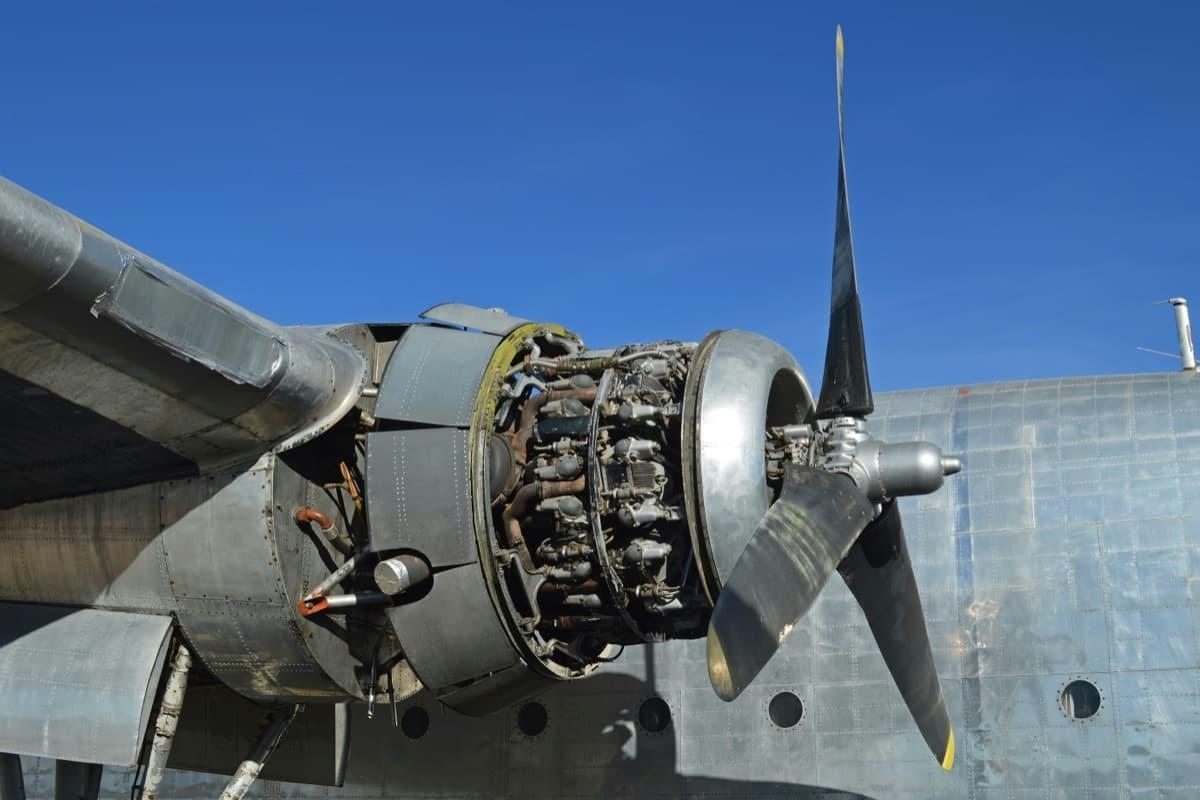
However, these additives pose serious risks in aviation engines, many of which contain components made from softer metals such as copper and silver. Copper alloys are frequently used in exhaust valve guides, while silver is often found in master rod bearings of radial engines. ZDTP can tarnish copper, leading to reduced clearances and valve sticking, and it can corrode silver, resulting in bearing failures. Given the critical importance of safety in aviation, such risks are unacceptable.
Historical Attempts and Lessons Learned
In the 1990s, Phillips Petroleum attempted to improve wear protection in its X/C 20W50 aviation oil by introducing ZDTP, resulting in the X/CII formulation. Because this additive did not comply with the zero-ash requirement, the oil was marketed under a supplemental type certificate (STC). The product was eventually withdrawn after it caused valve sticking and silver bearing failures, underscoring the dangers of applying automotive-style additives in aircraft engines.
Detergents and Dispersants in Aviation Oils
Another notable difference lies in the use of detergents. While some aviation oils are labeled as “detergent oils,” they are technically ashless dispersant (AD) oils. True detergent oils, common in automotive applications, can loosen and suspend carbon and dirt particles, which may lead to engine fouling in aircraft engines. Therefore, aviation oils avoid such formulations to maintain engine cleanliness and reliability.
Industry Challenges and Market Dynamics
Aviation engines operate under higher temperatures and pressures than their automotive counterparts, necessitating specialized oil formulations. The aviation sector is also subject to more rigorous regulatory standards and safety requirements, which translate into stringent testing and approval processes for lubricants. These factors contribute to the demand for specialized aviation oils, often resulting in higher costs and intensified competition among manufacturers. In response, oil companies invest heavily in proprietary formulations designed not only to meet or exceed aviation standards but also to improve cost-efficiency and environmental sustainability.
Conclusion
Although aviation oils may appear to offer less anti-wear and anti-rust protection than automotive oils, these differences are fundamentally driven by the unique materials, operating conditions, and uncompromising safety standards of the aviation industry. Consequently, significant changes to aviation oil formulations remain unlikely, ensuring continued reliability and safety in flight operations.
Comments

Etihad Airways Suspends Airbus A380 Flights on Key Route

Aditya Birla Group Seeks Approval for Aircraft Leasing in GIFT City

Qatar Airways Highlights Innovation and Connectivity at Arabian Travel Market 2026

Hong Kong's Five-Year Plan Includes Andrew Fan's Aircraft Parts Processing Hub Proposal

ACIA Aero Leasing Delivers ATR72-600 to Air Nostrum

RTX Appoints Jill Albertelli as Head of Pratt & Whitney

TAT Technologies Joins Beyond Aero Hydrogen Aircraft Program

AURAK Study Highlights Barriers to Air Taxi Adoption in Emerging Economies

Xiamen Air Selects Altitude for 787 Maintenance at Heathrow

Etihad and Swissport Extend Global Partnership
