
Orchestrate AI insights into action

Trending
Categories
Why the Airbus A320neo Family Uses Multiple Engine Options
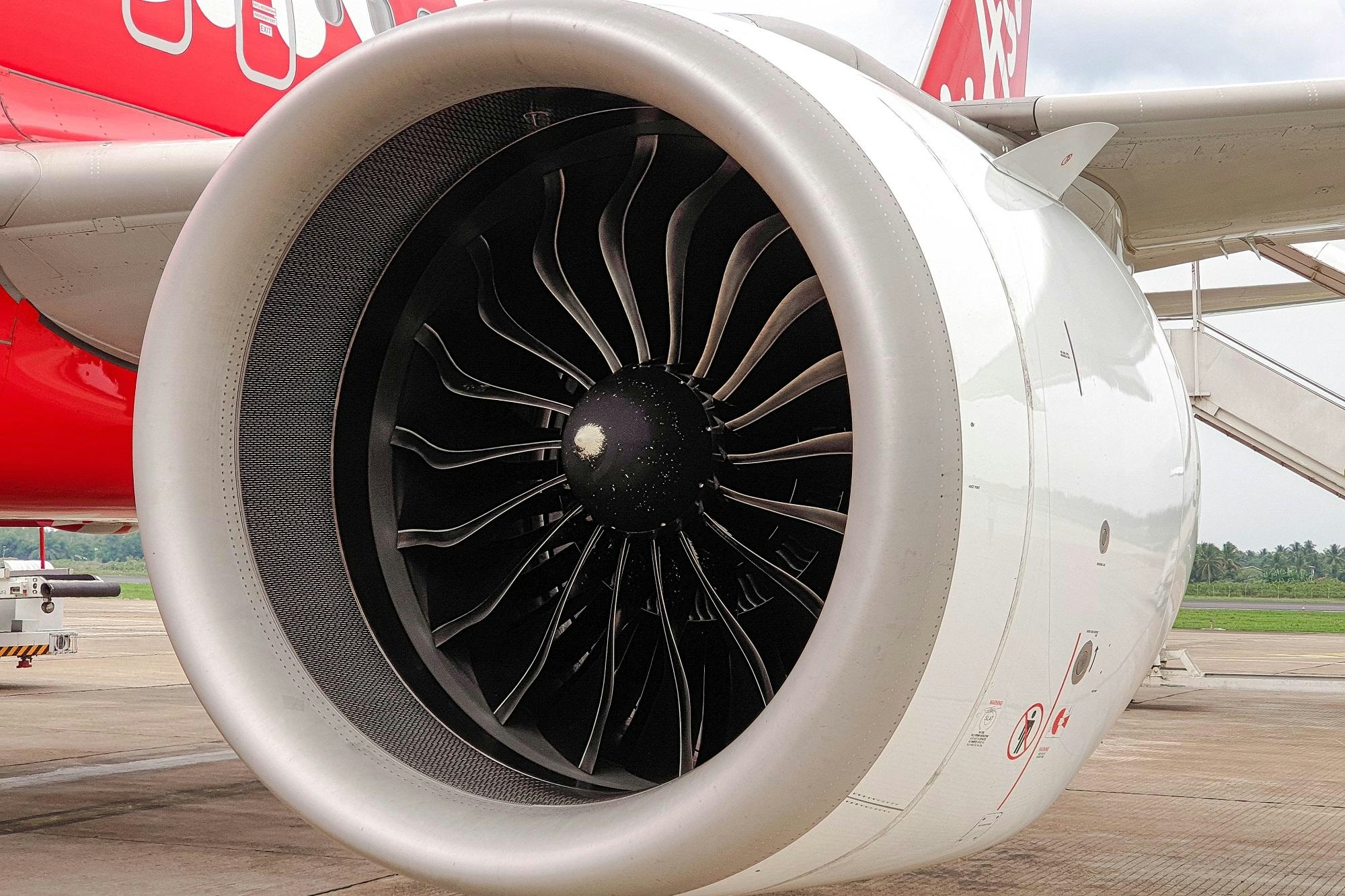
Why the Airbus A320neo Family Uses Multiple Engine Options
Among modern narrowbody airliners, the Airbus A320neo family is unique in offering multiple engine options. Unlike its competitors—the Airbus A220 (formerly Bombardier CSeries), COMAC C919, and Embraer E-Jet E2—which each rely on a single engine type, the A320neo provides airlines with a choice between two engines. Even Boeing’s direct competitor, the 737 MAX, is powered exclusively by the CFM International LEAP-1B engine.
Market Strength and Design Considerations
Airbus’s decision to equip the A320neo with both the Pratt & Whitney PW1100G Geared Turbofan and the CFM International LEAP-1A engines was influenced by several strategic factors, including the size of the market, risk tolerance, and the willingness of engine manufacturers to invest in new technologies. The A320neo’s design, particularly its higher landing gear compared to the Boeing 737, allowed it to accommodate larger, more advanced engines, providing a technical foundation for this dual-engine approach.
The commercial success of the A320 family has been instrumental in enabling this strategy. By 2025, the A320 surpassed the Boeing 737 in cumulative deliveries, becoming the most-produced commercial passenger jet in history. Airbus’s scale and reputation afford it the capacity to absorb substantial development costs and instill confidence in original engine manufacturers (OEMs) to invest in new engine programs without requiring exclusivity. This contrasts with smaller manufacturers like Bombardier, which often face limitations in securing multiple engine partners due to their comparatively modest market presence.
While much attention is given to aircraft manufacturers’ engine choices, less is discussed about OEMs’ decisions to decline participation in smaller programs. The sheer scale of the A320neo program provided Airbus with the leverage to secure two engine suppliers, a rare achievement in the narrowbody segment.
Engine Suppliers and Industry Dynamics
Initially, three OEMs vied to supply engines for the A320neo: Pratt & Whitney, CFM International (a joint venture between GE Aerospace and Safran), and Rolls-Royce. Although Rolls-Royce explored narrowbody engine options during the 2010s, it ultimately withdrew from this market segment to concentrate on business and widebody jet engines. This left Pratt & Whitney’s PW1100G and CFM’s LEAP-1A as the primary contenders.
The following table illustrates the engine options and approximate total orders for several key narrowbody aircraft:
| Aircraft | Engine Option(s) | Total Orders (approx.) |
|---|---|---|
| Airbus A220 | PW1500G | 940 |
| Airbus A320neo | PW1100G or CFM LEAP-1A | 11,366 |
| Boeing 737 MAX | CFM LEAP-1B | 6,814 |
| COMAC C919 | CFM LEAP-1C | 700–1,000 |
| Embraer E2 | PW1900G | 490 |
Challenges and Future Outlook
While offering two engine options grants airlines greater flexibility, it also introduces complexity in production and supply chains. The competition between Pratt & Whitney and CFM International has led to challenges such as engine shortages and aircraft groundings. Recent issues, including software recalls and quality concerns, have raised investor apprehension and contributed to notable declines in Airbus’s share price.
The competitive landscape remains dynamic. Ongoing negotiations between Pratt & Whitney and Airbus focus on securing future engine supplies, while Safran is investing in expanded maintenance facilities to support the growing demand for the LEAP engine. Concurrently, Airbus is preparing to make critical decisions regarding future engine and wing technologies by 2026, aiming to sustain its leadership position in the narrowbody market.
The A320neo’s dual engine strategy thus reflects Airbus’s market strength, design advantages, and capacity to manage risk, even as it navigates the complexities of production and supply that will influence the future of narrowbody aviation.

Etihad Airways Suspends Airbus A380 Flights on Key Route

Aditya Birla Group Seeks Approval for Aircraft Leasing in GIFT City

Qatar Airways Highlights Innovation and Connectivity at Arabian Travel Market 2026

Hong Kong's Five-Year Plan Includes Andrew Fan's Aircraft Parts Processing Hub Proposal

ACIA Aero Leasing Delivers ATR72-600 to Air Nostrum

RTX Appoints Jill Albertelli as Head of Pratt & Whitney

TAT Technologies Joins Beyond Aero Hydrogen Aircraft Program

AURAK Study Highlights Barriers to Air Taxi Adoption in Emerging Economies

Xiamen Air Selects Altitude for 787 Maintenance at Heathrow

Etihad and Swissport Extend Global Partnership
