
图像

将人工智能洞察转化为可执行行动

立即加入 AeroGenie 候补名单!

热门趋势

Categories

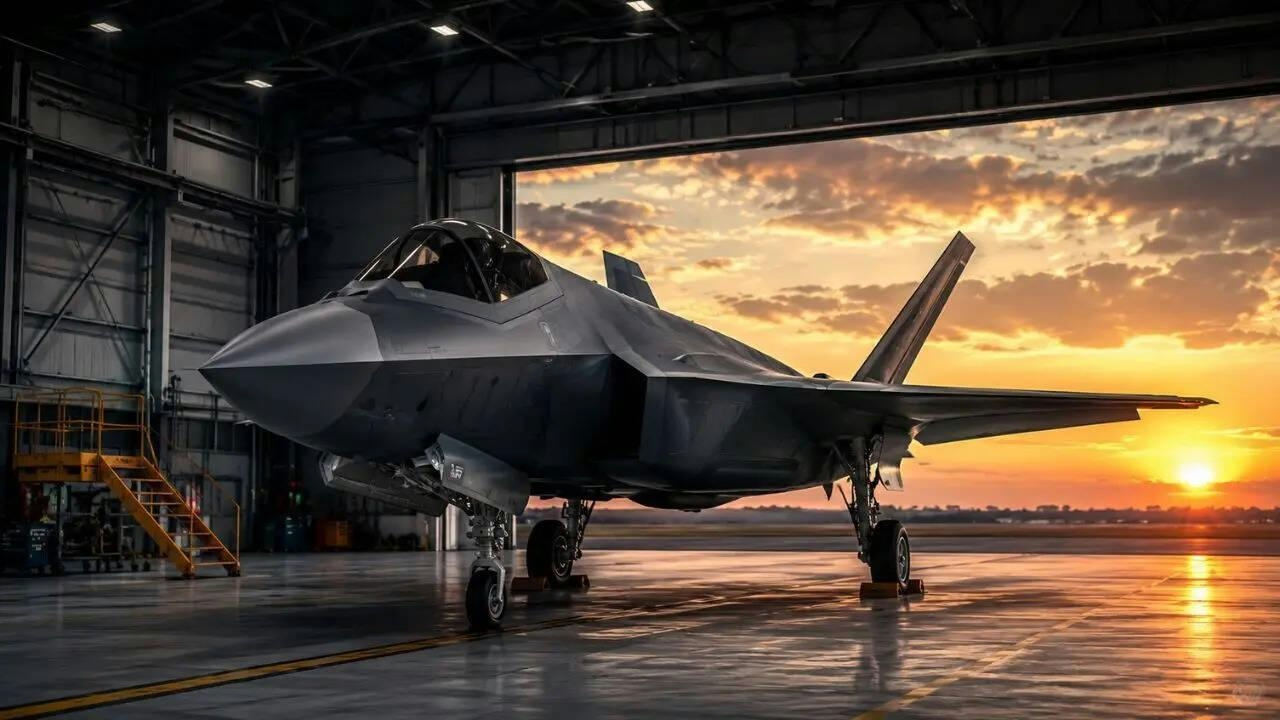
Advanced combat aircraft project faces hurdle over costly GE engines
June 24, 2026By ePlane AI
Advanced combat aircraft project faces hurdle over costly GE engines
0
0
Advanced Medium Combat Aircraft
GE F414 Engine
Engine Procurement

Advanced Combat Aircraft Project Faces Hurdle Over Costly GE Engines

Rising Engine Costs Challenge AMCA Development

The Defence Research and Development Organisation (DRDO) is encountering a significant obstacle in its Advanced Medium Combat Aircraft (AMCA) project due to the escalating costs of General Electric (GE) engines. As the agency progresses with the design and development of this next-generation fighter, the unexpectedly high price quoted by GE for the F414 engines has compelled DRDO to explore more affordable and adaptable alternatives.

While the technical discussions between GE and Hindustan Aeronautics Limited (HAL) regarding a joint venture to manufacture the F414 engine in India have concluded, commercial negotiations remain ongoing and are expected to extend over several months. This partnership aims to cover a comprehensive range of activities including procurement, technology transfer, licensed manufacturing, maintenance, repair and overhaul (MRO), spares, warranties, and delivery schedules. The F414 engines produced under this collaboration are intended to power both the Tejas Mark 2 and the initial variant of the AMCA. A more advanced AMCA variant is planned to utilize a higher-thrust engine currently being co-developed by Safran and HAL.

However, the immediate challenge lies in the cost of the F414 engines for the AMCA’s prototype phase. Initial estimates placed the price at approximately Rs 70–80 crore per engine, but the revised figure is reportedly nearly three times higher. Given the AMCA’s twin-engine configuration, the engine cost alone could escalate to $380–400 million (Rs 3,500–3,800 crore) per aircraft. This substantial increase raises serious concerns about the programme’s overall affordability and its impact on development timelines.

Exploring Alternative Engine Options Amid Global Trends

In response to these cost pressures, DRDO is actively seeking alternative engine suppliers. Globally, engine manufacturers are adapting to the evolving demands of next-generation combat aircraft by pursuing innovative partnerships and technologies. MTU Aero Engines, for instance, is advocating for collaborative ventures tailored to the emerging collaborative combat aircraft (CCA) market, emphasizing rapid and cost-effective market entry with scalable solutions. Rolls-Royce has secured funding from the US Air Force for its Orpheus autonomous fighter engine project, signaling a strategic shift toward alternative propulsion technologies.

Meanwhile, GE Aerospace continues to advance its engine technology, having completed initial ground tests of a hybrid CT7 demonstrator aimed at improving efficiency in future engines. However, these developments do not alleviate the immediate financial challenges posed by the current F414 engine pricing.

Progress and Partnerships in AMCA Prototype Development

The AMCA project remains a cornerstone of India’s future air combat capabilities. Recently, the Ministry of Defence invited three shortlisted consortiums to submit formal commercial and technical bids for manufacturing five prototypes of the aircraft. The contenders include Tata Advanced Systems Ltd (TASL); a consortium led by Larsen & Toubro (L&T) alongside Bharat Electronics Ltd (BEL) and Dynamatic Technologies Ltd; and another consortium comprising Bharat Forge, the public sector undertaking BEML, and Data Patterns.

The selected partner will collaborate closely with the Aeronautical Development Agency (ADA) under DRDO to build five flying prototypes and one structural test aircraft. Although a limited number of F414 engines from GE were initially sought for the design and development phase, the steep cost escalation has intensified efforts to identify viable alternatives. This search underscores the challenges India faces as it advances its flagship fighter programme amid evolving technological and economic constraints.

More news
IATA Calls for Immediate Measures to Address Engine MRO Delays

IATA Calls for Immediate Measures to Address Engine MRO Delays

IATA Calls for Immediate Measures to Address Engine MRO Delays Escalating Challenges in Engine Maintenance and Repair The International Air Transport Association (IATA) has issued a stark warning regarding the growing delays in the maintenance, repair, and overhaul (MRO) of next-generation single-aisle aircraft engines. These delays are increasingly disrupting airline operations on a global scale. A recent IATA study, *Single Aisle Aircraft Engines MRO: Strategic Levers to Address Supply Chain Challenges*, identifies critical issues affecting the latest CFM LEAP and Pratt & Whitney Geared Turbofan (GTF) engines. Airlines are confronting a range of difficulties, including engine durability concerns, shortages of spare parts, limited availability of spare engines, and restricted access to aftermarket services. These factors have culminated in costly operational setbacks, such as reduced engine time on wing, heightened demand for engine shop visits, and more complex maintenance scheduling. The situation has already reached a critical point. In March 2025, the number of grounded Pratt & Whitney GTF-powered aircraft peaked at 648, accounting for 28% of the global GTF fleet. These aircraft were sidelined while awaiting engine shop visits, spare engines, or necessary parts. In response, airlines have resorted to retaining older aircraft, extending leases, leasing additional planes, and adjusting capacity to sustain operations. Industry Response and Calls for Reform IATA’s Director General, Willie Walsh, has strongly criticized engine Original Equipment Manufacturers (OEMs), accusing them of “gouging” airlines and profiting from supply chain disruptions. Walsh highlighted extended turnaround times and a lack of competition in the aftermarket as key issues, urging OEMs to produce more reliable engines and promote fairer market practices. He emphasized that while manufacturers are investing in additional capacity, this alone will not resolve the problem. Airlines require improved access to spare parts, more approved repair options, equitable access to MRO capacity, and increased competition within the aftermarket. These concerns are echoed by industry leaders such as United Airlines CEO Scott Kirby, who has identified engine shortages as a significant constraint for the next five years. In response to rising demand, companies like Collins Aerospace are expanding their presence in the Asia-Pacific region, while Turkish Technic anticipates a long-term shift in aftermarket demand toward engine and component maintenance. Future Outlook and Strategic Recommendations The challenge is expected to intensify as single-aisle aircraft fleets continue to grow. In 2024, deliveries of single-aisle aircraft engines reached 2,000 units, comprising 800 GTF and 1,200 LEAP engines. Between 2030 and 2040, annual deliveries are projected to stabilize at approximately 3,700 engines, significantly increasing maintenance requirements. Annual shop visits for LEAP engines are forecast to rise from 600–800 in 2025 to over 5,000 by 2040, while GTF engine shop visits are expected to double from 1,000 to more than 2,000. To mitigate these pressures, IATA has renewed its call for liberalization of the engine maintenance market and outlined several key actions. These include accelerating the development and approval of repair solutions, expanding licensed production of critical components, and improving access to used serviceable materials. IATA also advocates for removing barriers that limit independent MRO participation and ensuring fair access to parts, repair information, and tools. The recently renewed IATA-CFM agreement serves as a model for supporting customer choice and fostering fair competition. Furthermore, IATA urges the inclusion of provisions in acquisition contracts to guarantee predictable spare parts pricing and protections for selected MRO providers, including independents. Finally, the association calls on all OEMs to adopt transparent and competitive aftermarket principles that uphold customer choice. IATA cautions that without immediate and coordinated action across the value chain, ongoing engine MRO delays will continue to jeopardize airline reliability and growth as the industry recovers and expands.
IATA Unveils Plan to Address Aircraft Delays and Supply Chain Challenges

IATA Unveils Plan to Address Aircraft Delays and Supply Chain Challenges

IATA Unveils Plan to Address Aircraft Delays and Supply Chain Challenges Montreal and Geneva have emerged as pivotal centers in a critical global aviation dialogue as the International Air Transport Association (IATA) introduces a comprehensive framework designed to reinforce airline supply chains. This initiative responds to a surge in international air travel demand, which has outpaced aircraft deliveries, maintenance capacity, and industrial output. Airlines worldwide are contending with delayed aircraft arrivals and overstretched repair systems, resulting in widespread disruptions across global travel networks. Manufacturing Bottlenecks and Operational Impacts A central challenge confronting the aviation sector is the persistent inability of aircraft manufacturers to meet rising demand. Production backlogs continue to impede fleet modernization efforts, compelling airlines to operate older, less fuel-efficient aircraft and thereby increasing operational costs. Shortages of engines and critical components remain significant hurdles. Some engine manufacturers have faced accusations of exploiting the crisis for profit, a concern highlighted by outgoing IATA Director General Willie Walsh. Major carriers, including United Airlines, anticipate that engine shortages will persist as a major constraint for at least the next five years, complicating network expansion and route development. Strain on Maintenance and Repair Systems The Maintenance, Repair, and Overhaul (MRO) sector is similarly under considerable pressure. Airlines’ dependence on manufacturers for spare parts and certified repairs restricts operational flexibility and has led to delays in returning aircraft to service, particularly during peak travel periods. Independent maintenance providers encounter limited access to certified components, which diminishes competition and prolongs turnaround times. Consequently, grounded aircraft and operational inefficiencies have become increasingly common, directly affecting flight schedules, passenger capacity, and ticket pricing. Enhancing Data Transparency and Digital Integration Fragmented information flows across the aviation supply chain present another significant obstacle. Disconnected systems among manufacturers, airlines, and service providers hinder visibility into production, logistics, and maintenance processes, complicating efforts to anticipate shortages or respond swiftly to disruptions. IATA’s plan prioritizes the development of digital systems to improve coordination and data sharing, aiming to reduce unexpected groundings and enhance forecasting accuracy. Increased transparency is expected to stabilize scheduling, improve aircraft availability, and minimize disruptions during peak travel seasons. Workforce Challenges and Industry Consolidation The industry is also grappling with a growing skills gap, as experienced engineers and technicians retire more rapidly than new talent can be trained. This shortage affects production, maintenance, and aircraft turnaround times, with training programs struggling to keep pace with evolving aviation technologies. Concurrently, market dynamics reflect the challenging environment, with European airline giants such as Lufthansa, Air France-KLM, and International Airlines Group pursuing further consolidation. This trend toward greater market concentration signals carriers’ efforts to build resilience amid ongoing supply chain disruptions. Business leaders across the sector remain deeply concerned, underscoring the urgency of IATA’s strategic response. Outlook IATA’s newly unveiled framework seeks to restore equilibrium to an industry essential for global connectivity. By addressing manufacturing bottlenecks, enhancing maintenance flexibility, improving data transparency, and confronting workforce shortages, the plan aims to stabilize airline operations and support the sector’s long-term growth amid persistent challenges.
Seven Airlines Operating the Longest Boeing 737 MAX Flights in 2026

Seven Airlines Operating the Longest Boeing 737 MAX Flights in 2026

Seven Airlines Operating the Longest Boeing 737 MAX Flights in 2026 Boeing’s 737 MAX family, developed as the successor to the 737 Next Generation series, comprises four variants: the MAX 7, MAX 8, MAX 9, and MAX 10. Currently, only the MAX 8 and MAX 9 are in active service, while the MAX 7 and MAX 10 await FAA type certification. This delay is a direct consequence of the 2018 and 2019 MAX crashes, which prompted rigorous regulatory scrutiny of Boeing’s MCAS software and production processes. The resulting heightened oversight and quality control measures continue to influence the program’s development and delivery timelines. The MAX 8 offers a maximum range of up to 3,500 nautical miles (4,027 miles/6,480 km), with the longer MAX 9 variant capable of flying up to 3,300 nautical miles (3,450 miles/6,110 km). These extended ranges represent an increase of approximately 700 nautical miles over previous models, enabling airlines to operate longer routes that were previously impractical for single-aisle aircraft. Longest Scheduled Boeing 737 MAX Flights in 2026 According to aviation analytics firm Cirium, seven airlines will operate the longest scheduled Boeing 737 MAX flights in 2026. Each airline is represented by its single longest route to illustrate the diversity of operators utilizing the aircraft’s extended capabilities. Mauritania Airlines, the national carrier of Mauritania, operates a modest fleet that includes one 737 MAX 8. Its longest route connects Nouakchott, the capital, to Medina in Saudi Arabia, covering 3,592 miles (5,780 km). This route primarily serves religious pilgrims traveling to Islamic holy sites, with a limited schedule of five flights in each direction and a total seating capacity of 800. The service highlights the MAX 8’s potential to open new long-haul markets for smaller carriers. Alaska Airlines, the fifth-largest U.S. airline and a significant Boeing 737 operator, maintains a fleet of 252 Boeing 737 aircraft, including 18 MAX 8s and 80 MAX 9s. Its Seattle to Reykjavík route, spanning 3,622 miles, exemplifies how the MAX’s extended range allows U.S. carriers to connect secondary cities with international destinations, expanding their global reach beyond traditional hubs. Industry Outlook and Competitive Landscape Operating ultra-long flights on the 737 MAX presents several challenges for airlines. They must contend with ongoing supply chain disruptions, production quality concerns, and intensified regulatory oversight. In response, Boeing has announced plans, in consultation with the FAA, to increase 737 production rates from 42 to 47 jets per month to meet growing demand. Market competition is expected to intensify as new variants enter service. Southwest Airlines is preparing to introduce the 737 MAX 7 in 2027, while Virgin Australia anticipates receiving its first MAX 10 aircraft in late 2027. Additionally, carriers such as Arajet are expanding their MAX fleets, with plans to operate 17 jets by the end of the year. As airlines continue to push the operational limits of the 737 MAX, the industry remains focused on balancing ambitious route expansion with stringent safety, reliability, and regulatory compliance standards. The coming years will be critical in testing Boeing’s production capabilities and airlines’ ability to leverage the MAX’s extended range to capture new market opportunities.
Industry Leaders Discuss AI at Scientia 2026

Industry Leaders Discuss AI at Scientia 2026

Industry Leaders Discuss AI at Scientia 2026 On June 18, 2026, Air Link International Aviation College (ALIAC) hosted the Scientia Knowledge Hub Convention 2026, a virtual event that attracted over 680 participants via Zoom. Centered on the theme “Train. Sustain. Explain: Artificial Intelligence for Smarter Skies,” the convention convened leading figures from aviation education, institutional leadership, AI integration, gender equity, and peace education for a day of in-depth dialogue on the evolving role of artificial intelligence in aviation and related sectors. The event commenced at 9 a.m. with Engr. Ivan Lance Casupang and Ms. Ma. Amiella Agpaoa Ablola serving as Masters of Ceremonies. ALIAC President and CEO Atty. Gomeriano Amurao opened the proceedings by reaffirming the institution’s dedication to pioneering advancements in aviation education. This was followed by a succinct overview of Scientia’s history and vision delivered by Dr. Lina Constante, Vice President for Academic Affairs. Navigating AI’s Promise and Challenges The first plenary session featured Mr. Mugunthan Muniandy, founder and CEO of NextGen Pilot Sdn Bhd (Malaysia), who presented “TrAIn: Developing AI-Ready Aviation Professionals.” Muniandy highlighted the pervasive integration of AI within aviation, noting its critical role in adaptive pilot training, predictive maintenance, fuel optimization, and real-time safety monitoring. He cautioned, however, that while automation reshapes human responsibilities, it does not absolve them. Introducing the T.R.A.I.N. Framework—comprising Technical Foundations, Risk and Decision Thinking, Adaptability, Interaction with AI Systems, and Non-Technical Skills—he advocated for a human-centered approach to AI adoption that balances technological innovation with human oversight. This perspective resonated with broader industry debates observed throughout the convention. Participants expressed divergent views: some emphasized AI’s capacity to enhance productivity, while others raised concerns about reputational risks and the imperative for transparency. Media organizations such as USA Today Co. utilize AI to improve operational efficiency but underscore the necessity of accuracy and openness. In the hospitality sector, AI has become indispensable for distribution and customer experience, with transparent AI interactions emerging as a competitive advantage. Similarly, the travel industry is undergoing transformation as AI reshapes customer engagement and operational processes, though challenges in deployment remain. The insurance sector, meanwhile, confronts a digital divide, as AI-driven search results frequently overlook specific brands, presenting opportunities for companies willing to strengthen their digital presence. Diversity, Ethics, and AI’s Role in Aviation’s Future The second plenary session was delivered by Mireille Goyer, founder and CEO of the Institute for Women of Aviation Worldwide (iWOAW). Drawing on her transition from information technology to aviation, Goyer emphasized the critical intersection of AI, sustainability, and inclusion. She argued that diversity extends beyond fairness, serving as a fundamental driver of safety, innovation, and resilience within the industry. Goyer urged students and professionals alike to prioritize ethics and responsibility, underscoring that the future of aviation will be shaped as much by values as by technological advancements. The convention’s plenary sessions concluded with a presentation by Dr. Ma. Eugenia M. Yangco, President of Rizal Technological University, titled “AI on the Flight Deck: Your New Co-Pilot.” Dr. Yangco sought to demystify AI for emerging aviation leaders, stressing the importance of practical understanding and responsible application of AI technologies. As Scientia 2026 drew to a close, a clear message emerged: while AI holds transformative potential across industries, its successful integration hinges on a careful balance between technological progress, human judgment, ethical standards, and institutional transparency.
Dubai, New York, Paris, and Shenzhen Develop Flying Taxi Networks

Dubai, New York, Paris, and Shenzhen Develop Flying Taxi Networks

Emerging Flying Taxi Networks in Global Cities A recent demonstration of a flying taxi between Manhattan and New York’s John F. Kennedy International Airport offered a compelling vision of the future of urban mobility. An electric aircraft departed from downtown, traversed waterways and highways, and completed the journey in just seven minutes. For commuters familiar with congested roads and the stress of tight flight connections, the experience suggested a transformative alternative to traditional transportation. This innovation is not confined to New York. Cities such as Dubai, Paris, and Shenzhen are actively developing their own flying taxi networks, while Japan, South Korea, and China have conducted trial flights and begun establishing operational frameworks. In Japan, a demonstration flight featuring an air taxi against the backdrop of Mount Fuji captured the imagination, symbolizing the global momentum behind this emerging mode of transport. Challenges and Developments in Urban Air Mobility Flying taxis are rapidly evolving from futuristic concepts into tangible components of urban planning. However, integrating aerial vehicles into city infrastructure presents complex challenges. If these services cater exclusively to affluent users, they risk exacerbating urban inequality by creating an airborne elite while the majority remain grounded in traffic congestion. Meaningful progress depends on embedding flying taxis within the broader transportation ecosystem. Dubai is at the forefront of commercial deployment, partnering with California-based Joby Aviation to establish an integrated air taxi network connecting key locations such as the airport, marina, downtown, and leisure districts. This initiative underscores that the aircraft itself is only one aspect; regulatory frameworks, airport integration, noise control, safety protocols, and public acceptance are equally critical to success. In the United States, the Advanced Air Mobility (AAM) pilot program adopts a multi-state strategy rather than focusing on a single urban center. New York and New Jersey contribute expertise in urban airport operations, Texas pursues regional connectivity, Florida and North Carolina emphasize cargo and medical applications, and Albuquerque explores autonomous flight technologies. Joby Aviation, having demonstrated its air taxi in Manhattan and secured Federal Aviation Administration (FAA) approvals across several states, leads this effort. The involvement of major industry players such as Delta Air Lines, which has invested in Joby and plans airport connections in cities including New York and Los Angeles, signals a shift toward mainstream adoption. Nonetheless, the path to widespread implementation remains fraught with obstacles. Legal disputes among key companies like Joby, Archer, and Vertical threaten certification schedules and undermine investor confidence. Despite support from federal initiatives such as the former Trump administration’s eVTOL Integration Pilot Program, these conflicts may delay the broader rollout of electric vertical take-off and landing (eVTOL) aircraft. Market sentiment has been cautious, with share prices of leading air taxi manufacturers declining amid intensifying competition. Archer Aviation aims for a significant market entry by 2026, while Beta Technologies and others pursue varied timelines to integrate flying taxis into urban airspaces. Alternative Approaches and Incremental Progress Shenzhen presents a distinct model with Ehang’s autonomous passenger aircraft poised to operate on short, controlled routes. These flights, designed for scenic tours, tourism loops, and local demonstrations, resemble aerial cable cars more than traditional taxis. This gradual approach may offer a pragmatic path forward as cities navigate the regulatory, technical, and societal complexities involved in incorporating aerial vehicles into public transportation networks.
Tail Strikes Ground Boeing 787 and Airbus A350 for Weeks, While 777 Returns to Service in Days

Tail Strikes Ground Boeing 787 and Airbus A350 for Weeks, While 777 Returns to Service in Days

Tail Strikes Ground Boeing 787 and Airbus A350 for Weeks, While 777 Returns to Service in Days Composite Materials and Their Operational Implications Modern widebody aircraft such as the Boeing 787 and Airbus A350 have significantly advanced long-haul air travel through their extensive use of carbon-fiber composite materials. These composites constitute approximately half of each aircraft’s weight, offering substantial advantages including reduced mass, enhanced fuel efficiency, and superior resistance to corrosion. Consequently, both models have become highly favored by major airlines operating global routes. However, the very composite technology that underpins these benefits also introduces distinct challenges when incidents occur. A notable example is the tail strike, an event where the rear fuselage makes contact with the runway during takeoff, landing, or a go-around maneuver. While minor tail strikes may only affect external components such as the tail skid or panels, more severe impacts risk compromising the aircraft’s pressurized structure, raising significant safety concerns. Differences in Damage Assessment and Repair On traditional metal aircraft like the Boeing 777, tail strike damage is often readily apparent through visible dents, cracks, or buckled panels. This visibility allows maintenance teams to assess and address damage relatively quickly, with repairs sometimes completed within days if the impact is limited. In contrast, the composite structures of the 787 and A350 can conceal internal damage beneath superficial surface scratches, complicating inspection and repair processes. As a result, tail strikes on these newer aircraft models can ground them for several weeks, whereas a 777 might return to service in a matter of days under comparable circumstances. Operational and Market Responses This disparity in repair timelines has tangible operational consequences. Airlines such as Qantas have experienced prolonged groundings of their 787 fleets following tail strike incidents, prompting strategic decisions to redeploy these aircraft as new Airbus A350-1000ULRs enter service. The market is responding accordingly; Singapore Airlines is reportedly considering orders for larger aircraft like the Boeing 777X or Airbus A350-1000 to enhance capacity and operational flexibility. Meanwhile, Cathay Pacific has reaffirmed its commitment to the A350 family by extending its order for A350 freighters. Safety Considerations and Industry Adaptation Safety remains paramount in addressing tail strike incidents. Boeing has previously emphasized that unrepaired tail strike damage, particularly to the pressurized fuselage, can escalate into more severe structural issues if not properly managed. This concern was highlighted by a recent incident involving a Lufthansa Boeing 787, where a nose landing gear collapse underscored the critical importance of rigorous inspection and maintenance protocols for composite aircraft. Despite these challenges, the Boeing 787 and Airbus A350 continue to rank among the safest and most technologically advanced aircraft in operation, having successfully passed extensive structural certification tests. Airlines are adapting to these maintenance complexities while maintaining service reliability. For instance, Qatar Airways recently resumed its Doha-Philadelphia route following American Airlines’ withdrawal, demonstrating sustained demand for dependable, long-range widebody jets. The evolution of composite materials has undeniably transformed modern aviation, necessitating new approaches to maintenance and repair, particularly after incidents such as tail strikes. As airlines and manufacturers navigate these challenges, the industry strives to balance innovation with operational resilience and uncompromising safety standards.
FAA Partners with AI and Software Firms to Modernize Air Traffic Control

FAA Partners with AI and Software Firms to Modernize Air Traffic Control

FAA Partners with AI and Software Firms to Modernize Air Traffic Control The Federal Aviation Administration (FAA) has embarked on a major initiative to modernize the United States’ air traffic control system through a 12-year contract valued at nearly $876 million with Air Space Intelligence (ASI). This agreement aims to revamp the FAA’s core technology infrastructure in response to growing demands from airports and industry stakeholders for urgent upgrades to aging systems and enhanced safety protocols. Developing a New Technological Backbone Under the terms of the contract, ASI will create the Flow Management Data Services (FMDS), a centralized data platform designed to proactively identify and manage flight delays. The Department of Transportation (DOT) described FMDS as the “new technological backbone” of the FAA’s Air Traffic Control System Command Center. Transportation Secretary Sean Duffy highlighted ongoing improvements to radars, radios, and telecommunications infrastructure but emphasized that transforming flight management processes is essential to improving the overall flying experience for the public. A critical element of this modernization is the integration of advanced artificial intelligence. ASI will deploy an AI-driven tool within FMDS called Strategic Management of Airspace, Routes, and Trajectories (SMART). This system will enable controllers to visualize weather patterns and other vital data through a unified interface. The FAA anticipates that SMART will begin initial operations by the fall, with full deployment of both FMDS and SMART expected within the next two years. Challenges and Industry Perspectives Despite the promise of these technological advancements, integrating them into existing systems poses significant challenges. Ensuring robust cybersecurity, managing a seamless transition with minimal disruption to current operations, and aligning new tools with legacy infrastructure are critical factors for the project’s success. Industry observers have expressed skepticism regarding the feasibility and timelines of such an ambitious overhaul, while competitors may accelerate their own AI and software initiatives in response. The urgency of modernization was underscored during a recent Senate Commerce Subcommittee hearing on Aviation, Space, and Innovation. Industry leaders stressed the importance of improved safety tools, particularly those providing accurate weather data and real-time situational awareness. Captain Jason Ambrosi, president of the Air Line Pilots Association International, emphasized the necessity of equipping pilots with the best tools to ensure safety, citing weather information as a prime example. The hearing also highlighted the significance of Automatic Dependent Surveillance-Broadcast In (ADSB-In), a technology that allows aircraft to receive data from other planes to enhance collision avoidance. James Viola, president and CEO of the General Aviation Manufacturers Association, referenced last year’s midair collision near Ronald Reagan Washington National Airport, stating, “Everybody here agrees that ADSB-In could have avoided the accident here in D.C. for sure.” Despite concerns over the retrofit cost of approximately $50,000 per plane, lawmakers and industry representatives largely support the investment, describing the technology as “readily available.” The increasing presence of unmanned aircraft systems (UAS) further amplifies the need for enhanced situational awareness. Chris Sununu, president and CEO of Airlines for America, warned that all types of aircraft—commercial airlines, private jets, and UAS—pose risks that must be managed. He stressed that integrating UAS safety regulations into all aspects of national airspace management is essential, leaving no room for regulatory gaps. While the FAA’s substantial investment signals a strong commitment to modernization, the success of these efforts will ultimately depend on overcoming technical, security, and operational challenges to ensure the nation’s airspace remains safe, efficient, and prepared for future demands.
IndiGo Begins AI Trials to Reduce Fuel Use During Take-Off

IndiGo Begins AI Trials to Reduce Fuel Use During Take-Off

IndiGo Launches AI Trials to Enhance Fuel Efficiency During Take-Off Introducing OptiClimb: AI-Driven Climb Optimization In an effort to address rising fuel costs and reduce carbon emissions, IndiGo has initiated trials of an artificial intelligence (AI) system designed to improve fuel efficiency during aircraft take-offs. Beginning Thursday, the airline will deploy the “OptiClimb” solution across its Airbus fleet, encouraging pilots to optimize climb profiles—the phase of flight known for the highest fuel consumption. Developed in collaboration with global flight operations provider SITA, OptiClimb leverages AI-powered analytics to recommend variable climb speeds tailored to real-time conditions. These include aircraft performance metrics, take-off weight, cruise altitude, and atmospheric factors. By moving away from a fixed-speed climb, IndiGo anticipates saving approximately 60 to 65 kilograms of fuel per take-off. Given the airline’s average of 2,000 daily flights, even partial implementation could translate into substantial fuel savings and a meaningful reduction in carbon emissions. Captain Ashim Mittra, IndiGo’s Senior Vice President of Flight Operations, highlighted the initiative’s significance in a message to the airline’s 6,000 pilots. He noted that the airline has been collaborating closely with SITA over recent months to implement this AI-powered flight optimization tool, which aims to reduce fuel burn and emissions during the energy-intensive climb phase. Challenges and Industry Context The climb phase is traditionally the most fuel-intensive segment of a flight. Advances in aircraft performance analytics have recently enabled more precise climb optimization, allowing airlines to reduce fuel consumption and emissions without compromising safety or regulatory compliance. However, integrating AI technology into established flight operations presents challenges. IndiGo must ensure that OptiClimb aligns with aviation regulations and does not disrupt existing procedures. The airline will closely monitor the trial’s effectiveness before deciding on broader adoption. This initiative comes amid significant operational pressures for IndiGo, as soaring fuel prices—exacerbated by ongoing geopolitical tensions in the Middle East—have compelled the carrier to cut routes and slow capacity growth to safeguard its financial stability. While AI-driven solutions like OptiClimb offer promising avenues for cost reduction, their immediate impact may be constrained by these broader market challenges. Industry analysts suggest that IndiGo’s embrace of AI for fuel efficiency could stimulate greater investor interest in similar technologies. Competitors may accelerate their own digital transformation efforts or emphasize alternative fuel-saving measures. The aviation sector has long pursued fuel reduction strategies, ranging from lighter aircraft interiors to more efficient engines, but the arrival of next-generation fuel-saving aircraft remains years away. Until then, data-driven solutions such as OptiClimb represent a significant step toward operational sustainability. Captain Mittra underscored the initiative’s core objectives: enhancing fuel efficiency, reducing the airline’s carbon footprint, and strengthening operational sustainability, all while maintaining full compliance with Air Traffic Control requirements and safe operating practices. As IndiGo advances with these trials, its experience may serve as a benchmark for the wider adoption of AI in aviation fuel management, demonstrating how innovation can be balanced with the realities of a challenging economic environment.
Japan Airlines Flight JL8012 Diverts Across Pacific En Route from Tokyo to Dallas

Japan Airlines Flight JL8012 Diverts Across Pacific En Route from Tokyo to Dallas

Japan Airlines Flight JL8012 Diverts Mid-Pacific Due to Technical Issues Japan Airlines Flight JL8012, operated by a Boeing 787-9, was compelled to divert back to Tokyo Narita on Wednesday, June 24, 2026, after encountering technical difficulties approximately two hours into its trans-Pacific journey from Tokyo to Dallas/Fort Worth. The incident, rare in its nature, underscores the operational challenges airlines face when managing disruptions over vast oceanic routes. Technical Anomaly and Immediate Response Flight telemetry revealed that while cruising within its designated oceanic corridor, automated systems detected a persistent pressure anomaly in the aircraft’s environmental control system (ECS). Prioritizing passenger safety, the flight crew executed a 180-degree turn, opting to return to Tokyo rather than continue the trans-Pacific crossing. The aircraft remained airborne for a total of 4 hours and 12 minutes, including a holding pattern to safely reduce fuel load, a standard precaution for widebody jets operating with heavy fuel reserves. Upon landing, ground teams at Tokyo Narita promptly facilitated the safe and orderly disembarkation of all passengers without incident. The swift response highlighted the airline’s preparedness in handling in-flight emergencies and ensuring passenger welfare. Operational and Industry Implications The diversion presented significant logistical challenges for Japan Airlines, necessitating rapid coordination to deploy a replacement aircraft and crew. The substitute flight departed Tokyo at 11:10 PM JST the same evening, successfully completing the journey to Dallas/Fort Worth and minimizing further disruption to the airline’s long-haul schedule. This event draws attention to the complexities inherent in managing diversions over the Pacific, including navigating unpredictable weather conditions, adhering to international aviation regulations, and rerouting aircraft far from alternate airports. The incident also attracted scrutiny from aviation authorities and raised concerns among passengers regarding safety and operational reliability. In the competitive landscape, rival carriers may leverage the incident to emphasize their own safety records and operational resilience. The timing is particularly significant as Japan Airlines has recently expanded its long-haul operations to meet growing demand and has actively promoted its commitment to sustainable aviation fuel. The diversion may prompt renewed evaluation of these initiatives alongside the airline’s corporate culture, which is noted for transparency and executive accountability, including senior management pay reductions following operational disruptions. Japan Airlines’ rapid and coordinated response to Flight JL8012’s diversion illustrates the critical role of real-time telemetry and integrated operational control systems. By effectively combining live flight data with ground logistics, the airline managed the disruption efficiently, safeguarding passenger safety while maintaining network integrity. As global aviation networks become increasingly interconnected, incidents such as this highlight the essential need for robust contingency planning and transparent communication between airlines and their passengers.
IATA Identifies Four Priorities to Strengthen Aerospace Supply Chain

IATA Identifies Four Priorities to Strengthen Aerospace Supply Chain

IATA Identifies Four Priorities to Strengthen Aerospace Supply Chain The International Air Transport Association (IATA) has called for enhanced collaboration within the aviation industry to tackle ongoing challenges affecting the aerospace supply chain. Speaking at the inaugural IATA World Maintenance and Engineering Symposium (WMES) in Madrid, Stuart Fox, IATA’s director of flight and technical operations, outlined four critical priorities designed to bolster supply chain resilience and reduce operational disruptions across the global fleet. Addressing Persistent Supply Chain Challenges Fox highlighted the increasing uncertainty faced by airlines, driven by issues such as aircraft delivery delays, concerns over engine durability, shortages of spare parts, and constrained maintenance capacity. He emphasized that airlines are often forced to operate without reliable information, stating, “Airlines can’t run global networks on guesswork, but too often that is what they’re being asked to do.” To confront these challenges, IATA has identified four key areas of focus. The first is enhancing supply chain visibility, which calls for greater transparency from manufacturers regarding delivery schedules, repair turnaround times, and parts availability. Improved visibility would enable airlines to better plan maintenance activities and manage fleet operations more effectively. The second priority involves opening up the aftermarket by promoting increased competition and broader access to third-party maintenance, repair, and overhaul (MRO) providers, alternative parts, and approved repairs. Fox argued that this approach would reduce waiting times and costs while providing operators with greater operational flexibility. Thirdly, IATA stresses the importance of unlocking the value of data, digitalization, and artificial intelligence (AI). Closer integration between airline maintenance systems and external market intelligence is seen as essential for optimizing inventory management, identifying material shortages, and supporting informed repair-or-replace decisions. However, Fox cautioned that the effectiveness of AI depends heavily on the quality of the underlying data. The fourth priority focuses on building human capacity. With projections indicating a need for 710,000 new maintenance technicians over the next two decades, Fox called for the evolution of recruitment, training, and licensing processes to attract a more diverse and capable talent pool. Industry Pressures and Calls for Coordinated Action These priorities emerge amid a complex landscape of additional pressures, including technology-related disruptions that can result in revenue losses, geopolitical and operational challenges, and the imperative to comply with increasingly stringent sustainability requirements. The market is responding with a growing demand for resilient supply chains and adaptable fulfillment networks. Competitors are concentrating on operational efficiency, leveraging technology to enhance supply chain coordination, and investing in energy-efficient infrastructure to meet environmental goals. Fox acknowledged the magnitude of these challenges but maintained an optimistic perspective, urging all stakeholders—including original equipment manufacturers (OEMs), suppliers, MROs, lessors, regulators, and airlines—to collaborate on practical solutions. He remarked, “The supply chain is under real pressure, but this is not a reason for pessimism. It is a reason for action.” While recognizing that the four priorities are not exhaustive solutions, he emphasized their importance as foundational steps toward achieving the resilient aerospace supply chains essential for global connectivity. In addition to these recommendations, IATA called on regulators to adopt realistic and globally coordinated timelines for new aircraft equipment and avionics mandates. Fox stressed that compliance deadlines must take into account equipment certification, availability, installation capacity, and broader supply chain conditions. “This is not about delaying safety,” he explained, “It is about making safety deliverable.”
line









