
将人工智能洞察转化为可执行行动

热门趋势
Categories
Aerospace Maintenance Chemicals Expected to Grow Through 2035 Amid Fleet Expansion and Composite Repairs
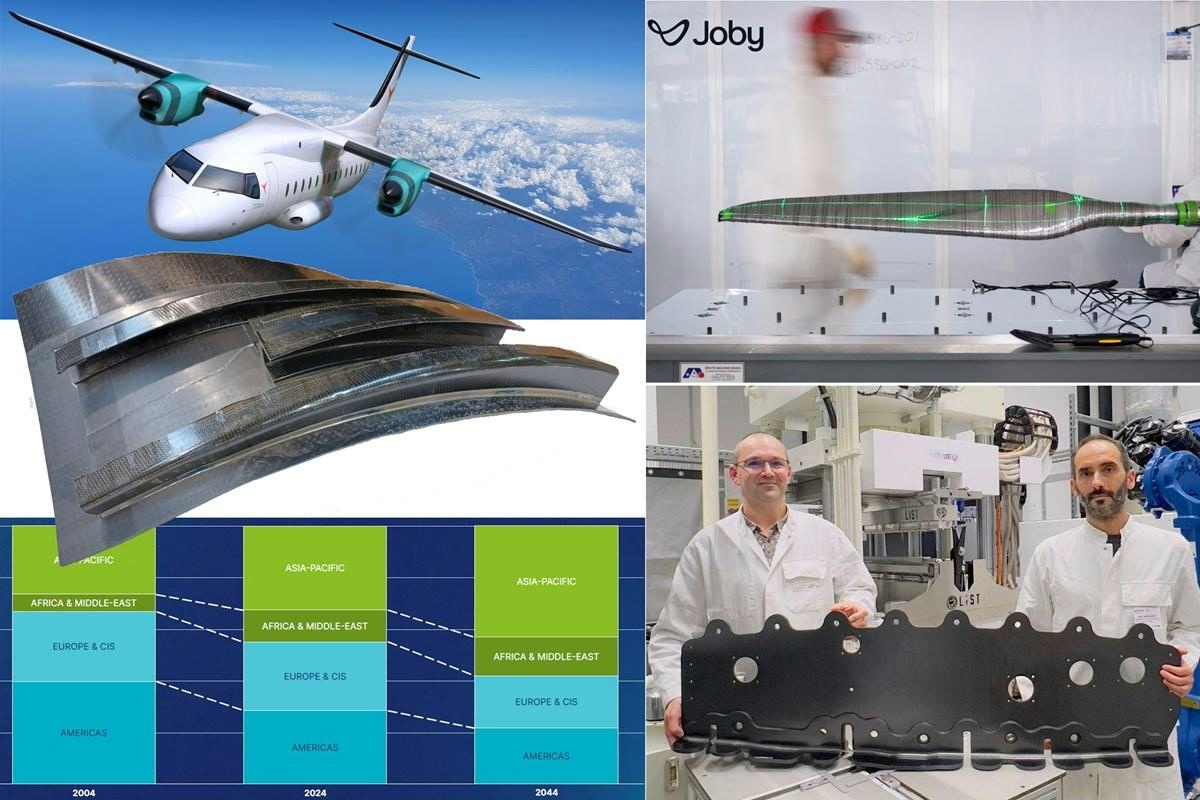
Aerospace Maintenance Chemicals Market Set for Sustained Growth Through 2035
The global aerospace maintenance chemicals market is anticipated to experience robust expansion through 2035, driven by the growth of commercial aviation fleets, the aging of existing aircraft, and increasingly stringent safety and environmental regulations. According to the latest IndexBox report, as the industry moves into 2026, demand dynamics are broadening, procurement processes are becoming more disciplined, and supply chains are diversifying across regions.
Market Segmentation and Competitive Dynamics
Aerospace maintenance chemicals encompass a range of products including corrosion inhibitors, degreasers, sealants, deicing fluids, and composite repair resins. These chemicals are critical for maintaining airworthiness, operational efficiency, and the longevity of key aircraft components such as airframes, engines, landing gear, and cabin interiors. The market is divided into two primary segments: a high-volume, price-sensitive category catering to routine cleaning and non-critical maintenance at regional maintenance, repair, and overhaul (MRO) facilities and airlines; and a low-volume, ultra-premium segment focused on safety-critical applications where certification, traceability, and performance assurance justify higher prices.
Control over distribution channels remains a significant competitive advantage. Specialized chemical distributors and direct sales teams are often integrated into broader MRO supply contracts, reinforcing supplier relationships. Innovation within the sector is largely driven by regulatory mandates and operational challenges, including the adoption of new aircraft materials such as composites and advanced alloys, stricter limits on volatile organic compound (VOC) emissions, and the demand for faster curing times in maintenance processes.
Market Challenges and Strategic Responses
Despite positive growth prospects, the market faces challenges from potential supply chain disruptions. The expansion of fleets and increased use of composite materials are elevating demand for specialized chemicals, intensifying competition among suppliers. This environment is fostering innovation in areas such as self-healing polymers and advanced titanium alloys. In response, industry players are increasingly engaging in strategic partnerships, mergers, and acquisitions to consolidate market share and enhance technological capabilities.
The long-term trajectory of the aerospace maintenance chemicals market is closely linked to global air traffic growth, fleet age, and the complexity of next-generation aircraft. Commercial air traffic is projected to grow at an average annual rate of 3.5% to 4.0%, supported by rising middle-class populations in the Asia-Pacific and Middle East regions, as well as network expansions by low-cost carriers. This growth results in higher aircraft utilization rates and more frequent maintenance cycles.
The global aircraft fleet is expected to increase from approximately 28,000 in 2025 to over 40,000 by 2035. A significant portion of this growth will consist of next-generation models such as the Boeing 787 and Airbus A350, which require specialized composite repair chemicals and advanced sealants. Additionally, the aging of the current fleet—averaging 12 to 14 years in service—heightens the demand for intensive corrosion control, cleaning, and lubrication.
Regulatory and Supply Considerations
Regulatory developments, including tighter VOC emission limits imposed by authorities such as the Federal Aviation Administration (FAA) and the European Union Aviation Safety Agency (EASA), are accelerating the transition toward water-based and low-VOC chemical formulations. On the supply side, raw material costs for specialty silicones, fluoropolymers, and epoxy resins are expected to remain stable with moderate inflationary pressures, while logistics costs are normalizing following the disruptions caused by the COVID-19 pandemic.
The expansion of MRO capacity in the Asia-Pacific and Middle East regions further supports market growth, as new facilities are established to service rapidly growing regional fleets. Provided there are no major geopolitical disruptions or prolonged economic downturns, the aerospace maintenance chemicals market is forecast to grow at a compound annual growth rate (CAGR) of 4.8% from 2026 to 2035. The market index, with 2025 as the base year (index=100), is projected to reach 155 by 2035, reflecting cumulative real growth of 55% over the decade.

Etihad Airways Suspends Airbus A380 Flights on Key Route

Aditya Birla Group Seeks Approval for Aircraft Leasing in GIFT City

Qatar Airways Highlights Innovation and Connectivity at Arabian Travel Market 2026

Hong Kong's Five-Year Plan Includes Andrew Fan's Aircraft Parts Processing Hub Proposal

ACIA Aero Leasing Delivers ATR72-600 to Air Nostrum

RTX Appoints Jill Albertelli as Head of Pratt & Whitney

TAT Technologies Joins Beyond Aero Hydrogen Aircraft Program

AURAK Study Highlights Barriers to Air Taxi Adoption in Emerging Economies

Xiamen Air Selects Altitude for 787 Maintenance at Heathrow

Etihad and Swissport Extend Global Partnership
