
将人工智能洞察转化为可执行行动

热门趋势
Categories
African Airlines Add Surcharges Amid Supply Chain Challenges
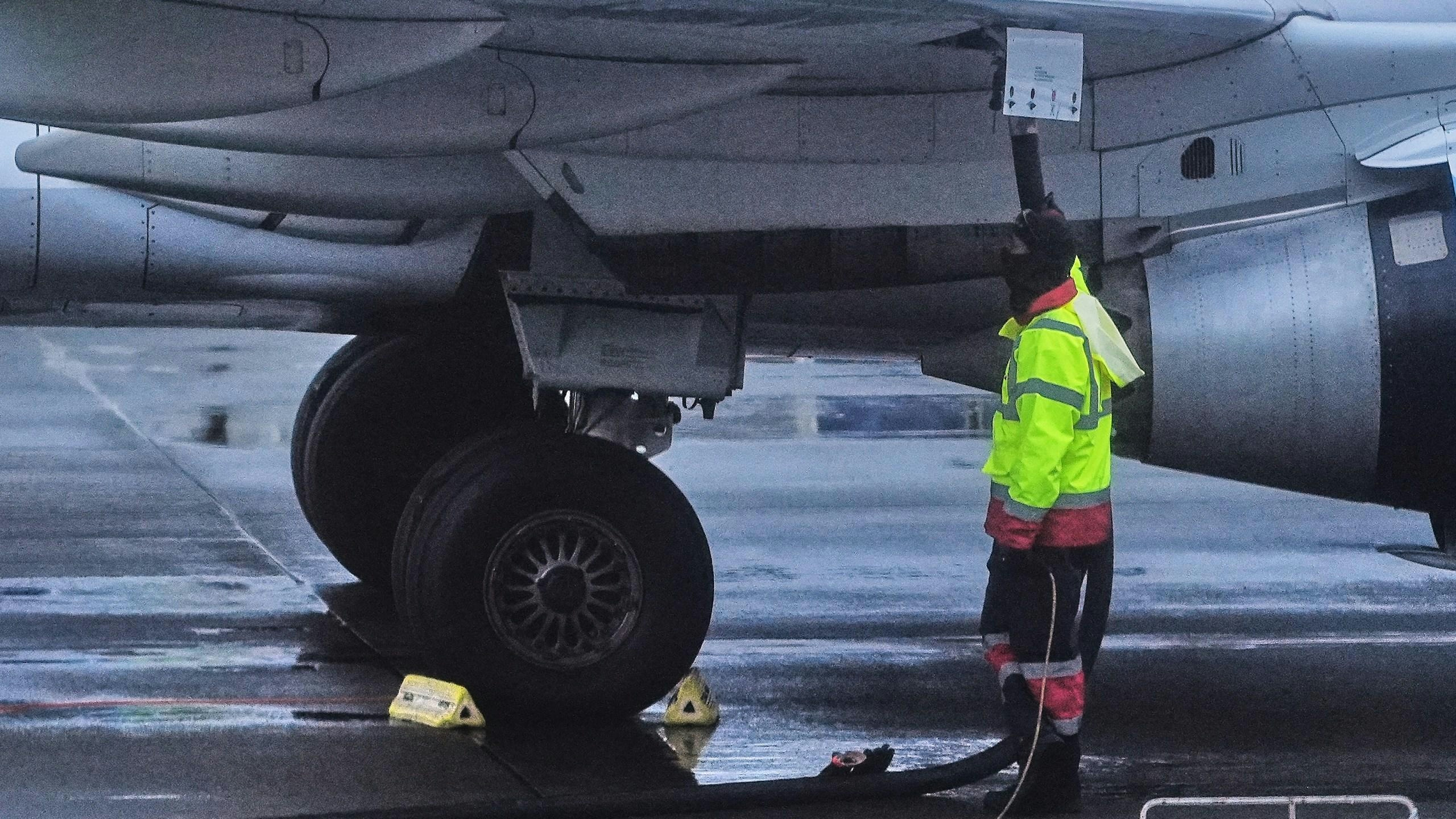
African Airlines Introduce Fuel Surcharges Amid Persistent Supply Chain and Fuel Challenges
South Africa’s aviation industry is facing increasing financial strain as domestic airlines implement fuel surcharges to counter rising operational expenses. Aaron Munetsi, CEO of the Airline Association of Southern Africa, highlighted that this development is a direct consequence of an ongoing global aerospace supply chain crisis, now entering its sixth year. The shortage of new aircraft and spare parts has severely constrained the ability of African carriers to modernize their fleets.
Supply Chain Constraints and Operational Impact
Munetsi explained that manufacturers of aircraft and engines continue to struggle to restore production to pre-pandemic levels. This has compelled many African airlines to extend the service life of older, less fuel-efficient planes, thereby escalating operational costs. Despite Africa’s large population, the continent accounts for just over 2% of global aviation activity. Munetsi attributed this marginal presence to structural challenges, including fragmented markets and limited access to modern aircraft, which hinder growth prospects.
Privately owned South African airlines have shown greater adaptability by swiftly confirming new aircraft orders, outperforming many state-owned carriers. Across Africa’s 52 national airlines, only a few remain fully operational, with Ethiopian Airlines standing out as the sole financially sustainable carrier. Munetsi pointed to government interference as a key factor undermining the performance of state-owned airlines, emphasizing that efficient aircraft utilization is critical to maintaining profitability.
Fuel Supply Risks and Industry Responses
The sector’s difficulties have been exacerbated by rising fuel prices and supply chain disruptions, intensified by geopolitical tensions in the Middle East. Munetsi warned that the security of Jet A-1 fuel supplies is increasingly precarious, with interruptions to vital supply routes diminishing fuel availability across the continent. This vulnerability has prompted airlines to pass additional costs onto passengers through surcharges, while also considering adjustments to flight schedules and routes to manage fuel shortages.
In response to these challenges, industry organizations such as the International Air Transport Association (IATA) and the International Airlines Technical Pool (IATP) have launched a joint strategy to address supply chain disruptions. However, the effectiveness of these initiatives remains uncertain amid the volatile operating environment.
Munetsi underscored that securing a reliable supply of conventional jet fuel is the immediate priority for African airlines. Although there is a broader industry movement toward sustainable aviation fuels, he cautioned that the current supply challenges make such a transition difficult. “We cannot move towards sustainable aviation fuel if we cannot sustain the supply of ordinary fuel now,” he stated.
Compounding these operational challenges are broader economic factors, including sluggish growth and low disposable incomes in parts of Africa, which continue to suppress demand for air travel and complicate the sector’s recovery efforts.

Etihad Airways Suspends Airbus A380 Flights on Key Route

Aditya Birla Group Seeks Approval for Aircraft Leasing in GIFT City

Qatar Airways Highlights Innovation and Connectivity at Arabian Travel Market 2026

Hong Kong's Five-Year Plan Includes Andrew Fan's Aircraft Parts Processing Hub Proposal

ACIA Aero Leasing Delivers ATR72-600 to Air Nostrum

RTX Appoints Jill Albertelli as Head of Pratt & Whitney

TAT Technologies Joins Beyond Aero Hydrogen Aircraft Program

AURAK Study Highlights Barriers to Air Taxi Adoption in Emerging Economies

Xiamen Air Selects Altitude for 787 Maintenance at Heathrow

Etihad and Swissport Extend Global Partnership
