
将人工智能洞察转化为可执行行动

热门趋势
Categories
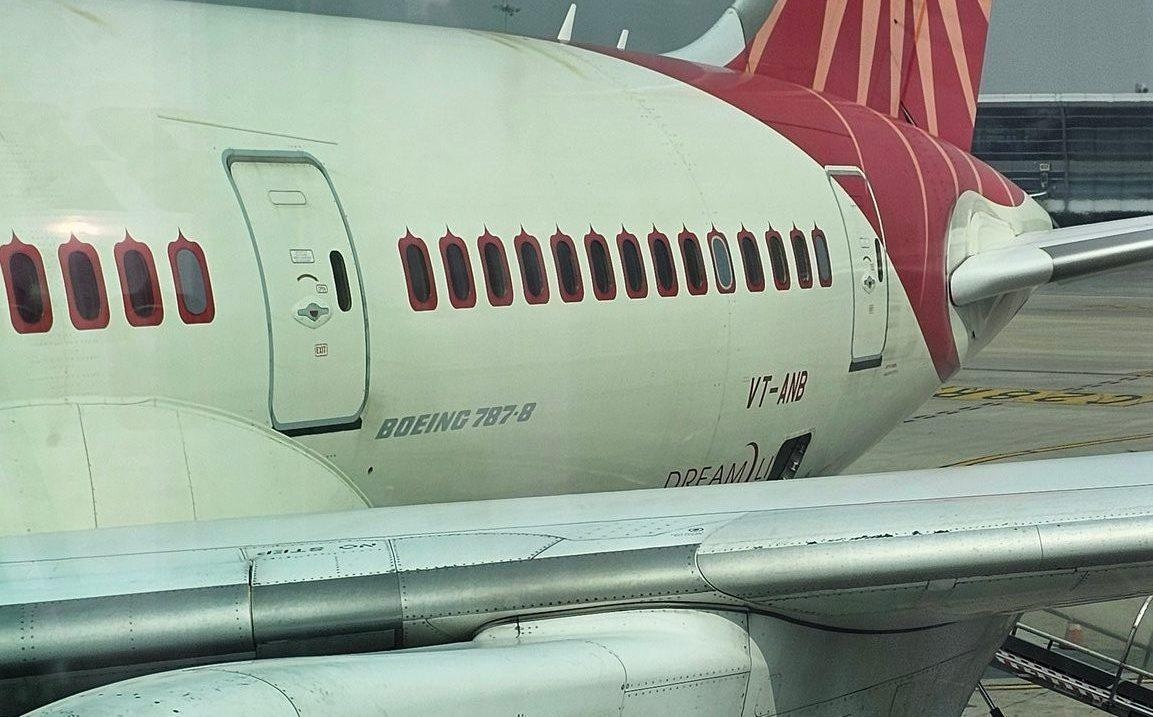
Ahmedabad Plane Crash Raises Questions About Boeing 787-8 Safety
Ahmedabad Plane Crash Raises Questions About Boeing 787-8 Safety
The recent crash of an Air India Boeing 787-8 shortly after takeoff from Ahmedabad has reignited concerns regarding the safety of the Dreamliner aircraft, placing Boeing under intensified scrutiny. This incident, occurring just as Boeing and its European rival Airbus prepare for the upcoming Paris Air Show, has already had immediate market consequences, with Boeing’s shares dropping 8% in premarket trading. The event threatens to impact the company’s reputation and future sales prospects significantly.
Persistent Safety Concerns Surrounding the 787-8
The Boeing 787-8 has been widely praised for its advanced technology and fuel efficiency, yet it has faced ongoing questions about its reliability. The most prominent safety issue dates back to January 2013, when the entire global fleet was temporarily grounded following two separate incidents involving overheating lithium-ion batteries—one on a Japan Airlines flight in Boston and another on an All Nippon Airways flight in Japan. Investigations identified a risk of thermal runaway within the battery systems, leading to a comprehensive redesign of the containment mechanisms.
Despite these corrective actions, the Dreamliner has continued to attract scrutiny over electrical system malfunctions and potential structural weaknesses. The Ahmedabad crash has revived these longstanding concerns, prompting aviation authorities and industry experts to investigate whether previously identified vulnerabilities may have contributed to the latest accident.
Industry Repercussions and Boeing’s Response
The crash is expected to intensify regulatory investigations into Boeing’s safety protocols, particularly those related to the 787-8 model. Heightened oversight could result in stricter operational restrictions, while airlines and passengers may demand greater assurances regarding the aircraft’s safety. Competitors such as Airbus are likely to leverage this moment to emphasize their own safety records and reliability, aiming to reassure customers and capitalize on any erosion of confidence in Boeing’s products.
The timing of the incident is especially critical, as both Boeing and Airbus prepare to unveil new aircraft at the Paris Air Show, a pivotal event for securing orders and influencing industry perceptions. Boeing now faces considerable pressure to address any safety issues promptly and transparently. The renewed focus on the 787-8’s safety record highlights the necessity of rigorous regulatory oversight and clear communication within the aviation sector.
As investigations into the Ahmedabad crash proceed, industry observers are closely watching Boeing’s response and any emerging findings that may clarify the causes of the accident. The company’s handling of this crisis will be crucial in restoring public trust and maintaining its competitive standing in a market where safety remains the foremost priority.

Etihad Airways Suspends Airbus A380 Flights on Key Route

Aditya Birla Group Seeks Approval for Aircraft Leasing in GIFT City

Qatar Airways Highlights Innovation and Connectivity at Arabian Travel Market 2026

Hong Kong's Five-Year Plan Includes Andrew Fan's Aircraft Parts Processing Hub Proposal

ACIA Aero Leasing Delivers ATR72-600 to Air Nostrum

RTX Appoints Jill Albertelli as Head of Pratt & Whitney

TAT Technologies Joins Beyond Aero Hydrogen Aircraft Program

AURAK Study Highlights Barriers to Air Taxi Adoption in Emerging Economies

Xiamen Air Selects Altitude for 787 Maintenance at Heathrow

Etihad and Swissport Extend Global Partnership
