
将人工智能洞察转化为可执行行动

热门趋势
Categories
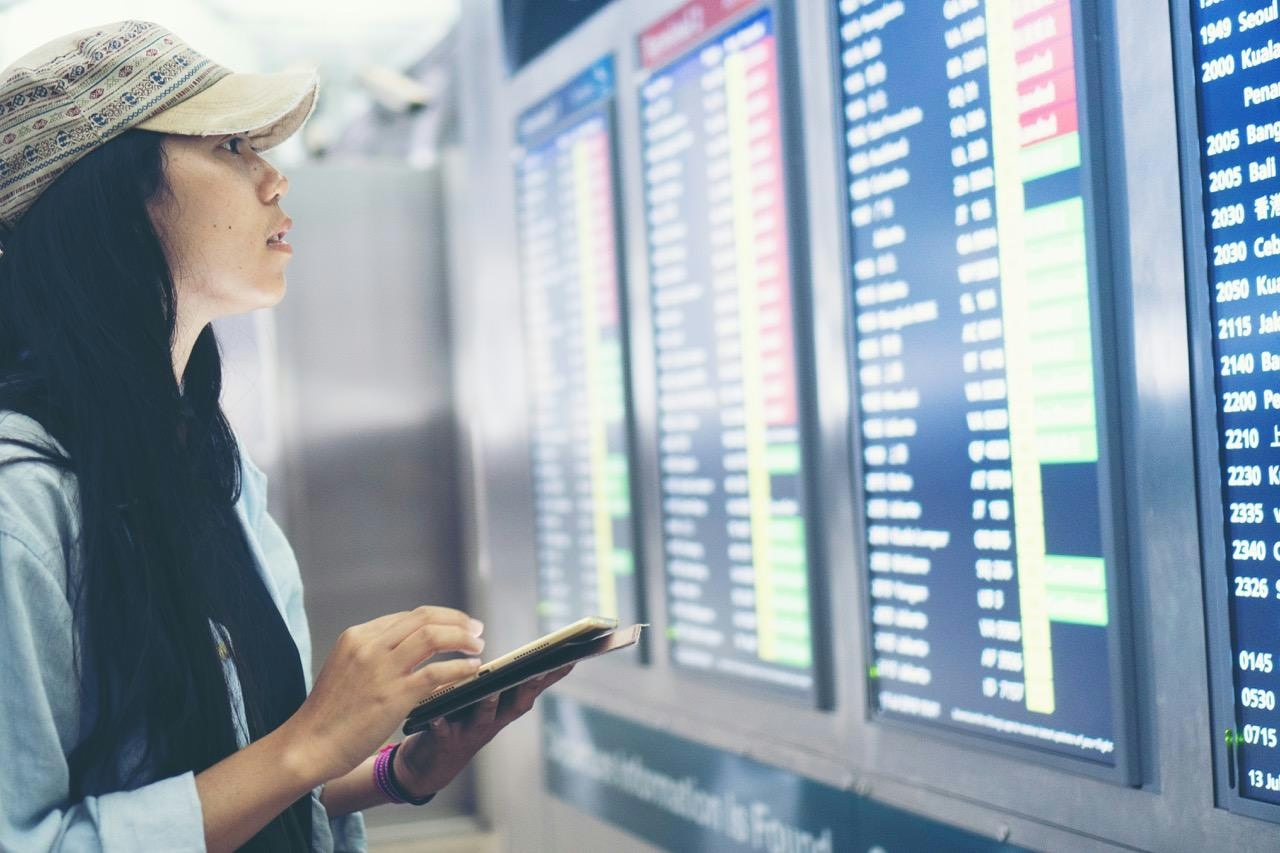
AI Enhances Passenger Experience in Aviation
AI Enhances Passenger Experience in Aviation
Artificial intelligence (AI) is increasingly reshaping the aviation industry, transforming both operational processes and the passenger experience. Airlines worldwide are integrating AI-driven systems into their daily workflows to enhance efficiency and provide smoother, more personalized journeys for travelers. This technological evolution is becoming a fundamental element of modern airline infrastructure, enabling carriers to manage complexity and deliver service at scale.
Real-Time Decision-Making and Operational Efficiency
One of the most significant applications of AI in aviation lies in real-time decision-making aimed at reducing uncertainty and improving precision throughout the travel process. At APEX TECH 2026, Aeroméxico’s Chief Digital and Customer Experience Officer, Andrés Castañeda Ochoa, outlined a vision for 2030 where AI-driven systems maintain a continuous, real-time understanding of each passenger’s journey. This approach emphasizes supporting human service rather than replacing it, with hyper-personalization becoming the new standard in hospitality.
American Airlines exemplifies this philosophy through its in-house AI flight-hold system, designed to protect tight connections. The system identifies departing flights with connecting passengers delayed by disruptions and assesses whether a brief gate hold is feasible without disrupting the broader network. When conditions permit, the system authorizes a short delay and automatically updates affected travelers. Early feedback indicates that passengers appreciate the reassurance provided by AI alerts confirming their connections are secure.
Globally, other carriers are adopting similar innovations. Flydubai’s Turnaround Management Program and Podeba’s humanoid robot Volodya illustrate how AI is being deployed across both operational and customer-facing environments, underscoring its growing role in streamlining airline operations.
AI-Powered Customer Support and Industry Perspectives
Delta Air Lines has introduced AI-powered customer support through its Delta Concierge, an assistant embedded within the Fly Delta app for SkyMiles members. Launched in October 2025, this AI tool addresses routine inquiries related to baggage, gates, and flight updates, aiming to seamlessly blend physical and digital customer experiences. Eric Phillips, Delta’s Chief Digital Officer, described the assistant as more than a digital tool, highlighting its role in integrating AI technology to enhance service delivery.
Despite these advancements, industry leaders remain cautious about AI’s limitations. United Airlines CEO Scott Kirby has expressed skepticism regarding AI’s accuracy in decision-making, warning that AI may sometimes offer reassuring but not entirely reliable responses. This caution reflects broader market uncertainties, with some sectors experiencing selloffs amid concerns that AI could displace traditional software services. Airlines are responding with varied strategies: while some invest heavily in AI to optimize operations, others approach its adoption more conservatively, particularly in areas requiring nuanced judgment.
The aviation sector also contends with external challenges such as geopolitical tensions and economic pressures, which may affect the pace and extent of AI integration. Nonetheless, AI’s expanding role in enhancing passenger experience continues to set new benchmarks for service quality and operational excellence across the industry.

Etihad Airways Suspends Airbus A380 Flights on Key Route

Aditya Birla Group Seeks Approval for Aircraft Leasing in GIFT City

Qatar Airways Highlights Innovation and Connectivity at Arabian Travel Market 2026

Hong Kong's Five-Year Plan Includes Andrew Fan's Aircraft Parts Processing Hub Proposal

ACIA Aero Leasing Delivers ATR72-600 to Air Nostrum

RTX Appoints Jill Albertelli as Head of Pratt & Whitney

TAT Technologies Joins Beyond Aero Hydrogen Aircraft Program

AURAK Study Highlights Barriers to Air Taxi Adoption in Emerging Economies

Xiamen Air Selects Altitude for 787 Maintenance at Heathrow

Etihad and Swissport Extend Global Partnership
