
将人工智能洞察转化为可执行行动

热门趋势
Categories
AI, VR, and Data Transform Pilot Training by 2026
AI, VR, and Data Transform Pilot Training by 2026
As airlines expand their fleets and accelerate recruitment efforts, technological innovation is set to fundamentally reshape pilot training by 2026. Rather than supplanting full flight simulators, the forthcoming transformation will enhance these systems with intelligent, data-driven technologies, establishing a digitally connected training ecosystem. This ecosystem will begin with remote preparation at home, continue through immersive simulator sessions, and conclude with AI-supported performance analysis.
Pilot training has historically evolved in tandem with advancements in aircraft technology, transitioning from analogue cockpits to fly-by-wire systems and from glass displays to synthetic vision. Christian Theuermann, Executive Board Member at Axis Flight Simulation, highlights the rapid acceleration of this evolution. “I’m convinced it will come, and it will come like a storm,” he states. “You have to be ready for these new technologies.”
VR, Mixed Reality, and AI: The New Training Landscape
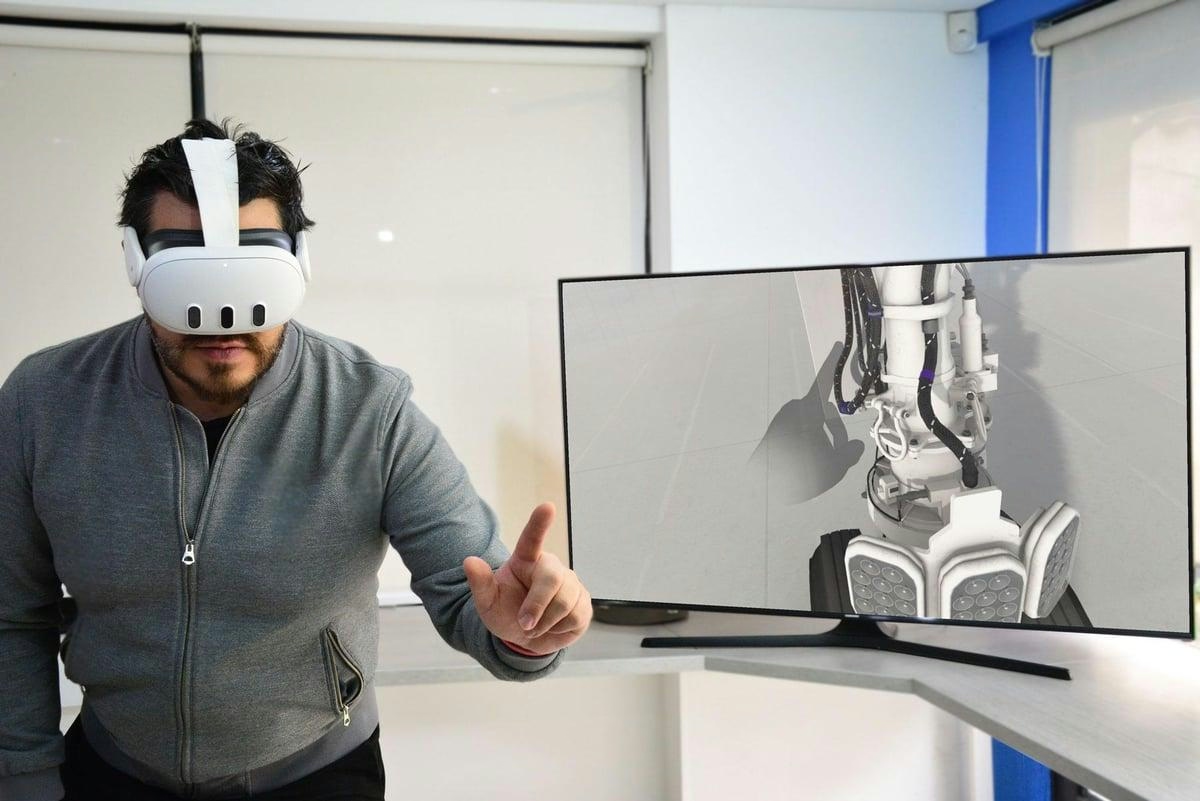
Theuermann observes a marked shift in customer demand toward sophisticated technologies such as mixed reality and AI-based tools. In 2025, Axis Flight Simulation expanded its portfolio to include VR tablet trainers, system familiarisation applications, and AI-supported debriefing solutions. These innovations enable pilots to rehearse essential procedures remotely, including walk-around inspections, cockpit familiarisation, and system flows, prior to arriving at the training centre.
“Pilots can practise procedures and prepare for the simulator remotely on a tablet, so they arrive at the training centre better prepared,” Theuermann explains. This approach enhances efficiency during both the course and simulator sessions. The significance of these tools is underscored by ongoing pilot shortages in certain regions alongside rapid capacity growth in others. While these technologies do not replace the full flight simulator, they serve as valuable complements that can reduce the time pilots spend in the simulator itself.
AI-Powered Debriefing and Data-Driven Feedback
Artificial intelligence is also revolutionising the analytical dimension of pilot training. Axis’s AI-supported debriefing tool automatically evaluates a pilot’s performance during simulator sessions against established procedural standards. “Our AI debriefing solution understands how a manoeuvre should be flown and automatically compares that with how the pilot actually performed it,” Theuermann notes. As more pilots complete training, the system accumulates industry-wide data, enabling structured feedback, benchmarking, and trend analysis. Although the AI can suggest performance ratings, the final assessment remains the responsibility of human instructors.
Market Dynamics and Industry Challenges
The swift adoption of AI and VR in pilot training reflects broader market trends. Major technology companies such as Meta are shifting their focus from virtual reality to augmented reality and AI-enabled glasses, indicating a strategic reallocation of resources. Extended reality (XR) devices are projected to reach 14.5 million units in 2025. Concurrently, the Dutch Air Force is employing AI to dynamically adjust VR training difficulty based on pilots’ brainwave patterns, exemplifying the integration of advanced AI in operational training environments.
Despite these advances, the technological transformation presents challenges. The software industry is experiencing volatility as AI’s disruptive potential becomes increasingly apparent, with new automation capabilities emerging from firms like Anthropic. Organisations are prioritising the development of robust governance frameworks to ensure AI systems operate with fairness, transparency, and security, maintaining clear boundaries and human oversight.
The Future of Pilot Training
Looking ahead to 2026, the full flight simulator remains the cornerstone of pilot training but will no longer function in isolation. The integration of AI, VR, and data-driven tools is fostering a more efficient, adaptive, and accountable training environment, poised to redefine how pilots are prepared for the demands of modern aviation.

Etihad Airways Suspends Airbus A380 Flights on Key Route

Aditya Birla Group Seeks Approval for Aircraft Leasing in GIFT City

Qatar Airways Highlights Innovation and Connectivity at Arabian Travel Market 2026

Hong Kong's Five-Year Plan Includes Andrew Fan's Aircraft Parts Processing Hub Proposal

ACIA Aero Leasing Delivers ATR72-600 to Air Nostrum

RTX Appoints Jill Albertelli as Head of Pratt & Whitney

TAT Technologies Joins Beyond Aero Hydrogen Aircraft Program

AURAK Study Highlights Barriers to Air Taxi Adoption in Emerging Economies

Xiamen Air Selects Altitude for 787 Maintenance at Heathrow

Etihad and Swissport Extend Global Partnership
