
将人工智能洞察转化为可执行行动

热门趋势
Categories
Air Canada Selects 16 Airbus A350-1000s to Replace Aging 777-300ERs Amid Boeing 777X Delays
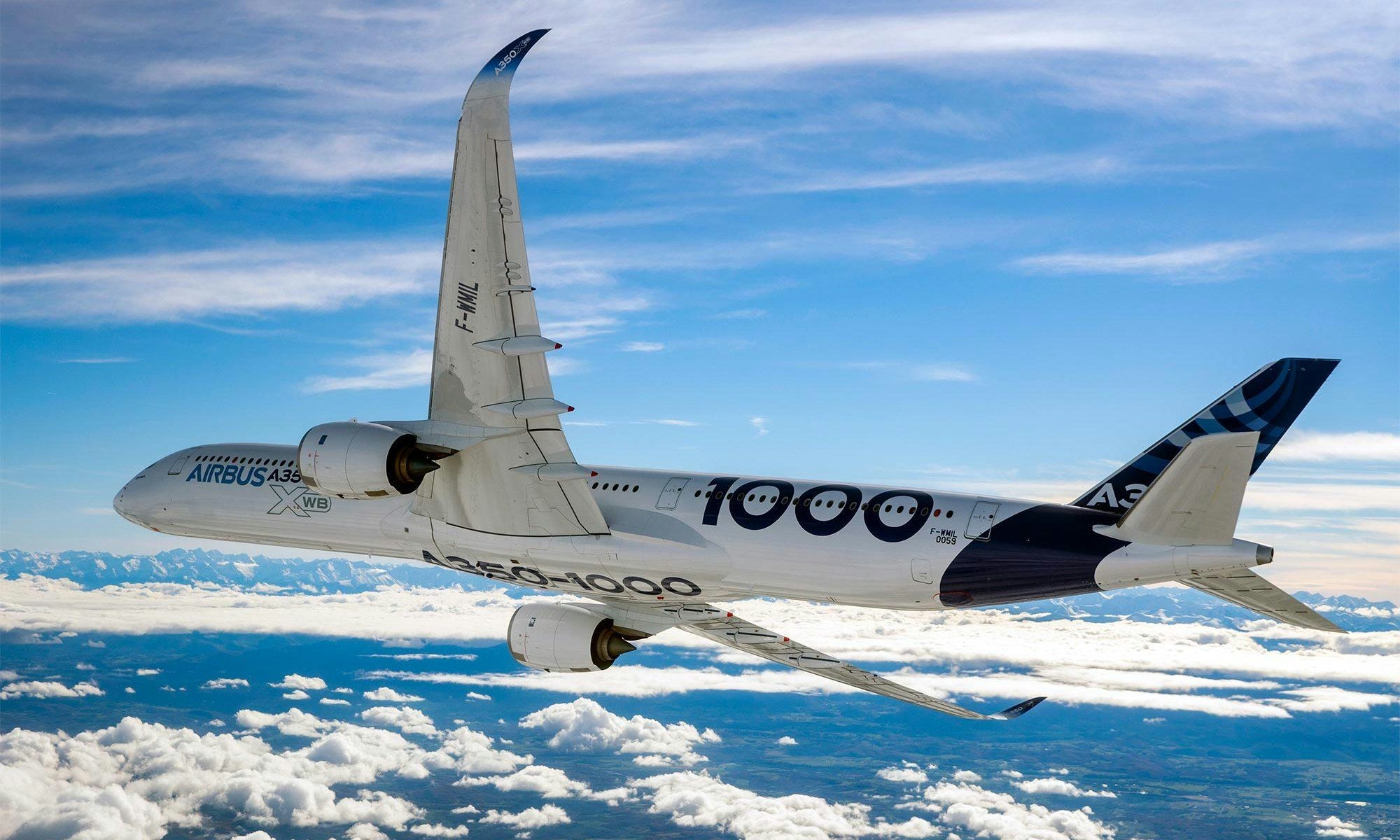
Air Canada Selects Airbus A350-1000s to Replace Aging Boeing 777-300ERs Amid 777X Delays
For nearly twenty years, Air Canada’s long-haul operations have been anchored by the Boeing 777-300ER, a workhorse on transatlantic and transpacific routes departing from Toronto and Vancouver. As this flagship widebody fleet nears retirement, the airline has announced a strategic shift by committing to 16 Airbus A350-1000 aircraft—comprising eight firm orders and purchase rights for an additional eight. This marks a significant departure from Air Canada’s longstanding reliance on Boeing’s twin-aisle jets.
Addressing Fleet Aging and Boeing 777X Delays
The decision comes amid persistent delays and cost overruns in Boeing’s 777X program, which has pushed initial deliveries to late 2026 or 2027, approximately six to seven years behind the original schedule. Air Canada’s current fleet includes 19 Boeing 777-300ERs averaging over 16 years in service, alongside six older 777-200LRs. Extending the operational life of these aging aluminum airframes would entail escalating maintenance costs and diminishing returns in fuel efficiency and reliability. Meanwhile, international competitors are increasingly adopting lighter, next-generation aircraft, intensifying the financial and operational pressures on carriers maintaining older fleets.
Air Canada’s senior leadership, including Executive Vice President and Chief Commercial Officer Mark Galardo and Chief Financial Officer John Di Bert, emphasized delivery certainty and operational efficiency as key priorities in their fleet renewal strategy. The Airbus A350-1000, with its advanced composite materials and fuel-efficient design, offers a modern and reliable solution for the airline’s long-haul requirements. Deliveries are scheduled to commence in the second half of 2030, providing a clear timeline that Boeing has been unable to guarantee.
Industry Implications and Market Response
This move aligns with broader industry trends, as the Airbus A350-1000 has gained traction as a formidable competitor to the delayed 777X. Other major carriers, such as Korean Air, have also expressed interest in the A350-1000 as an alternative amid Boeing’s setbacks. The aircraft’s strong order book and steady production momentum underscore its growing prominence in long-range and ultra-long-range passenger and cargo operations. Nonetheless, Airbus faces its own challenges, including production ramp-up constraints that may impact delivery schedules as demand surges from airlines seeking fleet modernization.
Market reactions to Air Canada’s order reflect a shifting competitive landscape. With the future of the 777X uncertain, the A350-1000 is increasingly regarded as a dependable and technologically advanced option, prompting other airlines to reconsider their fleet strategies. As more carriers pivot toward Airbus, the A350-1000’s role as a cornerstone of next-generation long-haul aviation appears poised to expand.
By bypassing Boeing’s delayed program, Air Canada is not only addressing its immediate operational needs but also signaling a broader industry transition toward proven, next-generation aircraft. This decision highlights the critical importance of delivery certainty and technological innovation in an era marked by rapid change and intense competition within global aviation.

Etihad Airways Suspends Airbus A380 Flights on Key Route

Aditya Birla Group Seeks Approval for Aircraft Leasing in GIFT City

Qatar Airways Highlights Innovation and Connectivity at Arabian Travel Market 2026

Hong Kong's Five-Year Plan Includes Andrew Fan's Aircraft Parts Processing Hub Proposal

ACIA Aero Leasing Delivers ATR72-600 to Air Nostrum

RTX Appoints Jill Albertelli as Head of Pratt & Whitney

TAT Technologies Joins Beyond Aero Hydrogen Aircraft Program

AURAK Study Highlights Barriers to Air Taxi Adoption in Emerging Economies

Xiamen Air Selects Altitude for 787 Maintenance at Heathrow

Etihad and Swissport Extend Global Partnership
